 Get a quote
Resources
What equipment is best for welding stainless steel? Are there risks of weak welds or deformation?
Thanks to its corrosion resistance and aesthetic appeal, stainless steel is widely used in sectors such as kitchenware, piping, medical devices, and automotive parts. However, many professionals often face a dilemma when welding stainless steel: which equipment should they choose? And how can they avoid issues like weak welds or workpiece deformation? In this guide, we’ll break it down in plain, straightforward terms to help you select the right equipment for your specific needs and steer clear of common welding challenges.
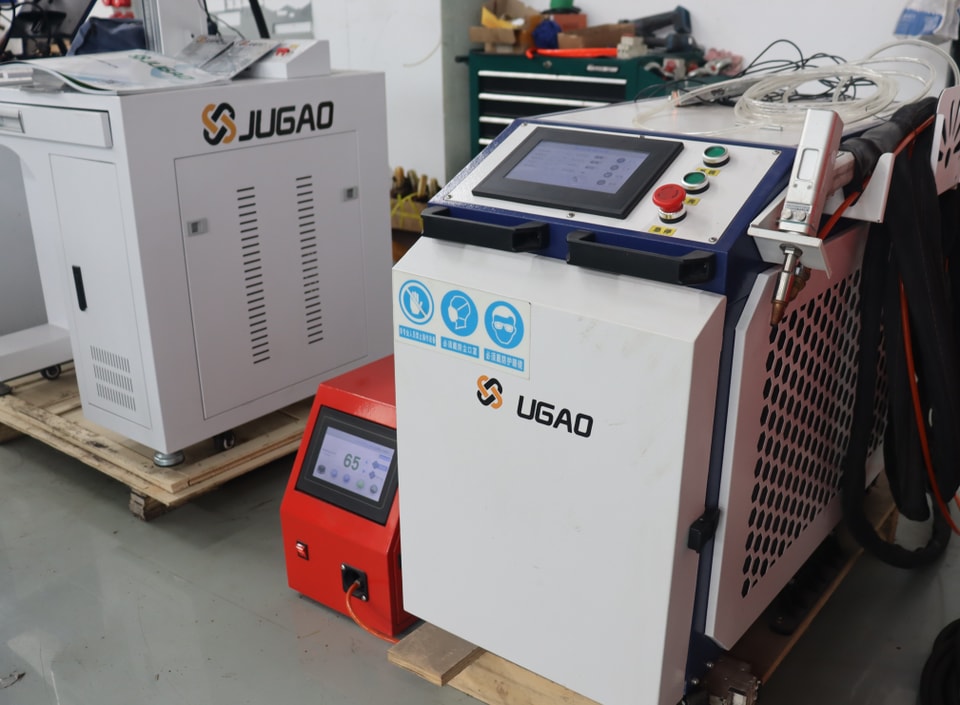
Choosing the Right Equipment for Stainless Steel Welding
There is a wide variety of equipment available for welding stainless steel, each suited to different requirements. Spot welders, laser welders, and robotic laser welding systems—along with more traditional, commonly used equipment—each offer distinct advantages depending on the application. Here is how you can choose the best fit for your needs:
1. Spot Welders: The Top Choice for Thin-Walled Stainless Steel
Spot welders use pressure applied via electrodes to generate heat through contact resistance, causing the stainless steel to melt locally and form a weld spot. Key advantages include high welding speed—taking only a few seconds per spot—low energy consumption, and ease of operation. This makes them ideal for the batch spot-welding of thin-walled stainless steel components, such as attaching handles to stainless steel kitchenware or joining small stainless steel parts.
However, spot welders are limited to point-based connections and cannot produce continuous, long weld seams. They are also sensitive to material thickness; they are generally best suited for thin-walled parts ranging from 0.1 mm to 3 mm. Attempting to use a spot welder on stainless steel thicker than 3 mm often results in "cold" or weak welds (insufficient fusion).
2. Laser Welding Machines: Essential for High-Precision, High-Aesthetics Applications
Laser welding machines utilize a high-energy-density laser beam to melt the stainless steel. This process creates a minimal heat-affected zone (HAZ) and allows for precise control over the shape and dimensions of the weld seam. Laser welding is fast, and the resulting seams are smooth and uniform—often requiring little to no post-weld grinding. This makes it the ideal choice for applications that demand high precision and a superior visual finish, such as the assembly of stainless steel medical device components or parts for precision electronic equipment. Laser welding machines accommodate a wide range of thicknesses, capable of welding stainless steel components from 0.05 mm to 8 mm. They are also well-suited for workpieces with complex geometries. However, they entail a higher initial investment compared to traditional welding equipment and require operators to possess a certain level of technical skill.
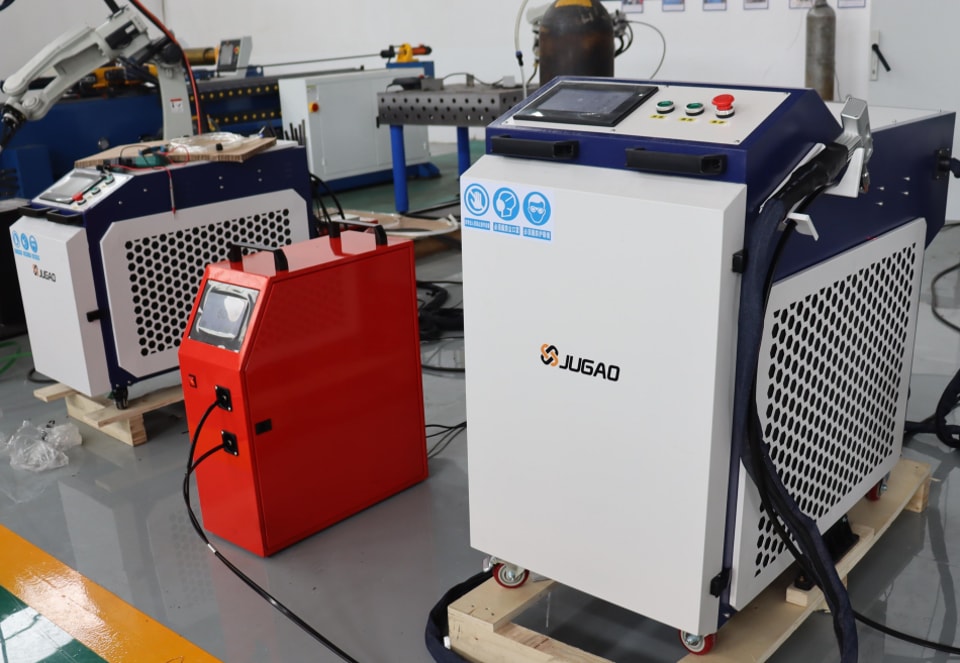
3. Robotic Laser Welding Systems: The Preferred Choice for High-Volume, Standardized Welding
Robotic laser welding systems integrate laser welders with robotic arms to achieve automated, standardized welding. Capable of 24/7 continuous operation, these systems offer consistent welding precision—eliminating quality variations caused by manual operation—and are ideal for the high-volume production of stainless steel components, such as exhaust pipes or chassis parts in the automotive industry.
While the range of stainless steel thicknesses they can handle is similar to that of standard laser welders, these systems are also capable of managing multi-station operations and complex welding paths. Due to their higher capital and maintenance costs, they are best suited for large-scale manufacturing enterprises.
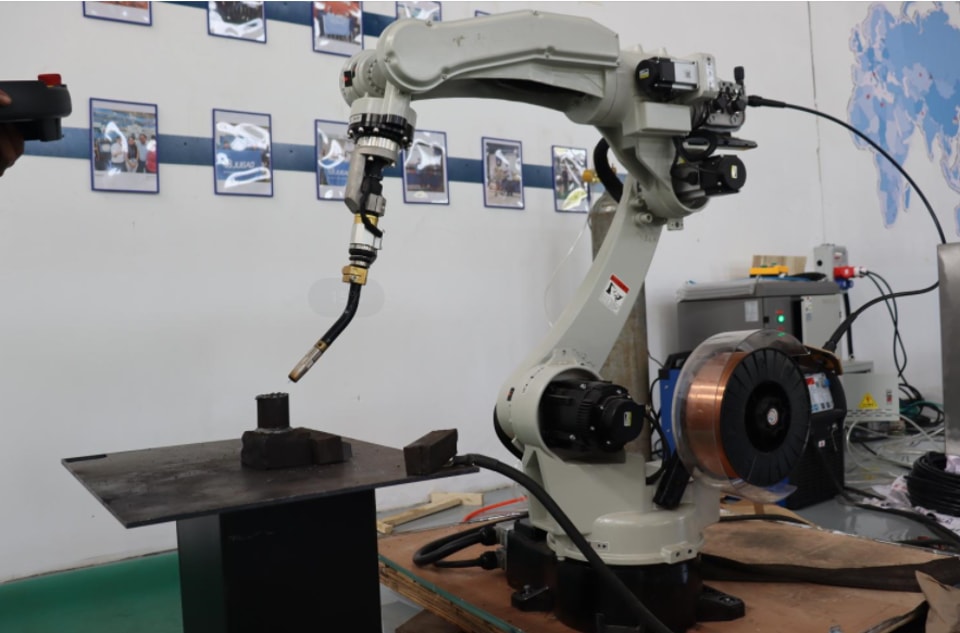
4. Traditional Welding Equipment: Meeting Basic Welding Requirements
Tungsten Inert Gas (TIG) Welding: This process uses a tungsten electrode to generate an arc, with argon gas shielding the weld pool; filler wire is added manually. TIG welding allows for precise temperature control and produces aesthetically pleasing weld seams. It is well-suited for the precision welding of thin-walled stainless steel (0.5–5 mm)—for instance, refining the appearance of weld seams on stainless steel kitchenware—though its relatively low efficiency makes it better suited for small-batch production.
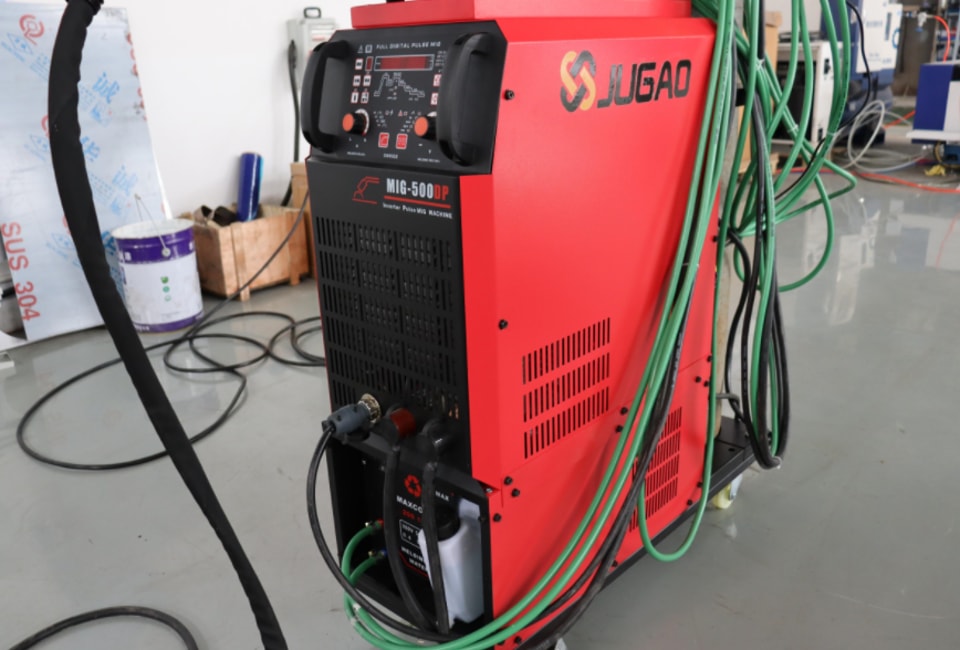
Gas Metal Arc Welding (MIG/MAG): Featuring automatic wire feeding and high welding speeds, this method is suitable for the batch welding of medium-to-thick stainless steel (3–15 mm), such as stainless steel piping or equipment frames. MIG welding uses pure argon as a shielding gas and is compatible with austenitic stainless steels (e.g., 304, 316), while MAG welding uses a mixture of argon and carbon dioxide, making it suitable for martensitic and ferritic stainless steels.
Manual Arc Welding (SMAW): This process generates an arc through the combustion of a coated electrode; the equipment is low-cost and highly portable. However, it leaves significant residue in the weld and is prone to oxidation; it is suitable only for emergency repairs or temporary welding of stainless steel plates thicker than 15 mm, and is not recommended for routine use.
Related
Keep
reading.
 CNC Turret Punch Presses Explained: Architecture and Operation
 Key Factors Governing Optimal Punch Press Tonnage
 Comparison of Laser Welding Results and Application Scenarios Across Different Materials
 How to Choose Between Air-Cooled and Water-Cooled Laser Welding Systems
 Understanding Punching Machines: Principles, Types, and Selection
 How can one effectively follow the installation guidelines for a pipe-bending machine?
 For which types of products is an automatic wire-feeding laser welding machine suitable?
 What Are the Latest Punching Machine Trends and Technological Breakthroughs?
 What Triggers Punching Machine Noise and How Can You Quieten It?
 What factors influence the replacement cycle of wear parts in a pipe-bending machine?
 Beyond price, what key parameters should you consider when purchasing welding equipment?
 4 Common Methods for Inspecting Weld Quality
Engineering review
Send a drawing.
Get an engineer.
Standard selections answered within 4 hours. Parts outside the rules get a written process review within 24 hours.
- Part drawing: DXF, DWG, STEP or PDF
- Material and thickness
- Longest bend or cut length
- Yearly volume
Write to info@ntjugao.com or message the factory on WhatsApp +86 132 2211 1178.
Drawings (DXF, DWG, STEP, PDF): attach them to an email to info@ntjugao.com, quoting your name.