 Get a quote
Resources
What Triggers Punching Machine Noise and How Can You Quieten It?
Table of Contents
1. Working Principle
2. Punch Machine Noise Control Measures
• Source-Level Noise Suppression
• Acoustic Isolation Along the Transmission Path
• Application of Vibration- and Sound-Dampening Materials
3. Conclusion
Excessive acoustic output remains a stubborn challenge across sheet metal fabrication facilities. Mastering practical ways to quieten a punch press goes far beyond operator comfort—it is vital for satisfying workplace health and occupational safety regulations. Typically, this disruptive sound originates from structural resonances, high-velocity metallic collisions during shearing, and unoptimized press settings. Below, we outline field-tested engineering methods to bring workshop decibel levels down, safeguarding staff well-being while keeping production lines running at peak efficiency.

Fundamentally, a punching machine operates as a mechanical or hydraulic stamping press. Across industrial manufacturing, sheet metal stamping offers major advantages over conventional subtractive machining: it conserves raw stock and electrical energy, delivers rapid cycle rates, requires straightforward operator training, and forms intricate geometries via custom dies that milling or turning simply cannot replicate. Consequently, stamping technology continues to expand into new manufacturing sectors.
Stamping workflows focus primarily on flat metal sheets. By pairing the press with specialized tooling, fabricators execute blanking, piercing, forming, deep drawing, edge trimming, fine blanking, coining, riveting, and cold extrusion. These stamped components power everyday goods and advanced hardware alike—from electrical wall switches, sockets, cookware, and cabinetry to computer chassis, aerospace assemblies, and defense systems.
Working Principle
At its core, a mechanical punch press converts rotational kinetic energy into reciprocating vertical motion. The primary drive motor spins a heavy flywheel, and once the clutch engages, torque transfers through reduction gears, a crankshaft (or eccentric shaft), and a connecting rod to drive the ram vertically. Every rotating component from the drive motor down to the connecting rod follows a circular path.
To bridge the shift from rotary motion to straight-line ram travel, engineers incorporate an articulation joint between the connecting rod and the slide block. Press designs generally rely on either a spherical ball-joint coupling or a cylindrical wrist-pin assembly to translate rotation into linear force. Driven downward, the punch forces the sheet metal beyond its yield strength, inducing plastic deformation to achieve exact part contours and tolerances.
Achieving clean cuts and forms requires a matched die set—comprising an upper punch and a lower die—with the metal blank positioned between them under controlled tonnage. The intense upward reaction forces generated at the moment of material fracture are absorbed and stabilized by the rigid press frame.
Among standard workshop machinery, punch presses rank among the loudest assets on the shop floor. Ambient sound levels in active stamping bays routinely reach 90 to 110 dB(A), posing serious auditory risks to nearby personnel and creating acoustic disturbance for surrounding facilities.
Punch Machine Noise Control Measures
1. Source-Level Noise Suppression
The most effective way to tame stamping noise is to engineer out vibration and impact energy directly at the point of origin:
• Select Low-Noise Press Architectures: When specifying new capital equipment within budget parameters, prioritize modern press frames and drive systems engineered for quieter acoustic baselines.
• Optimize Tooling Geometry and Clearance: Die engineers frequently overlook acoustic behavior during tool design. Dialing in the optimal radial clearance between the punch and die cavity alone can trim noise by roughly 5 dB(A). Furthermore, replacing flat-faced punches with stepped profiles or angled shear edges spreads the cutting load, yielding an additional 5 to 10 dB(A) drop—though complex part contours can increase die-machining complexity. Incorporating polyurethane strippers or internal cushioning buffers also softens unloading shock.
• Refine Crank-Slider Drive Tolerances: Mechanical presses depend on crank-slider linkages where loose fits create metallic knocking. Installing bearings strictly to factory preload specifications and maintaining tight assembly tolerances prevents impact slap. Where operating wear has widened clearances, switching to higher-viscosity lubricants at bearing journals increases fluid-film damping and quiets idle running noise.
• Upgrade Clutch and Gear Train Designs: Retrofitting open-back inclinable (OBI) or straight-side presses from rigid mechanical clutches to pneumatic friction clutches eliminates harsh engagement clatter. Likewise, replacing straight-cut spur gears in the drive train with precision helical or herringbone gears virtually eliminates gear-mesh whine.
• Adopt Angled Shear-Edge Dies: Substituting flat cutting faces with beveled or inclined shear blades allows the punch to slice progressively across the sheet rather than impacting the entire perimeter simultaneously. Extending the shearing duration lowers peak impact force. Noise attenuation scales with the bevel angle—an inclination between 3° and 10° typically strikes the best balance between acoustic relief and tool durability.
• Enclose Rotating Drives and Die Zones: Fitting rigid acoustic housings over the flywheel and upper gear train blocks mechanical drive noise at the source. High-horsepower motors benefit from dedicated partial or full acoustic shrouds. Around the lower bolster and die workspace, mounting movable safety guards or transparent sound-shielding enclosures lined internally with acoustic foam dramatically contains punching impact.
2. Acoustic Isolation Along the Transmission Path
When source modifications alone cannot bring decibels within safe thresholds, interrupting airborne sound waves before they reach workers provides reliable, proven protection:
• Overhead Baffles and Wall Absorption: Suspending acoustic baffles from the ceiling or lining concrete shop walls with sound-absorbing panels prevents sound waves from reverberating across the bay, typically lowering ambient workshop noise by around 6 dB(A).
• Localized Acoustic Barriers: Positioning mobile, sound-absorptive partition screens around high-output presses shields adjacent workstations and operator zones, delivering roughly 8 dB(A) of localized attenuation.
• Full-Enclosure Acoustic Cabins: For high-speed continuous stamping lines, enclosing the entire press inside a modular soundproof cabin achieves substantial reductions of 15 to 25 dB(A). Engineered enclosures integrate silenced intake and exhaust ducting to prevent thermal buildup, alongside quick-access acoustic doors and laminated safety-glass viewports for routine die checks and maintenance.
3. Application of Vibration- and Sound-Dampening Materials
• Install Anti-Vibration Isolation Pads: Mount heavy-duty elastomeric or spring isolation pads beneath the press feet to block structure-borne vibration from traveling through the concrete slab.
• Deploy Modular Acoustic Enclosures: Surround high-decibel stamping cells with lined sheet-metal acoustic housings to trap airborne noise close to the machine.
• Mount Acoustic Wall and Ceiling Panels: Line nearby structural surfaces with perforated metal or mineral-wool acoustic panels to soak up reflected sound energy.
• Specify Low-Noise Tooling Designs: Choose shear-angled punches, damped stripper plates, and precision-ground dies built to minimize breakthrough snap.
• Fine-Tune Press Stroke Parameters: Calibrate slide velocity, shut height, and forming tonnage to the lowest effective settings required for clean part quality, avoiding excessive breakthrough shock.
• Fit Dedicated Die-Area Acoustic Shields: Attach hinged or sliding polycarbonate-and-foam guards directly across the bolster opening to muffle noise right at the tooling zone.
Conclusion
Controlling punch press noise calls for a coordinated blend of mechanical upgrades, smart die engineering, and disciplined shop-floor maintenance. By pairing anti-vibration foundation mounts with sharp shear-angled tooling, proper lubrication, and well-trained operators, you can turn a loud stamping press into a quieter, safer, and more productive asset. Looking to optimize acoustic performance in your fabrication shop? Contact JUGAO today for tailored guidance on soundproof enclosures, precision tooling, and turnkey punching systems.
Related
Keep
reading.
 Comparison of Laser Welding Results and Application Scenarios Across Different Materials
 How to Choose Between Air-Cooled and Water-Cooled Laser Welding Systems
 Understanding Punching Machines: Principles, Types, and Selection
 How can one effectively follow the installation guidelines for a pipe-bending machine?
 For which types of products is an automatic wire-feeding laser welding machine suitable?
 What Are the Latest Punching Machine Trends and Technological Breakthroughs?
 What factors influence the replacement cycle of wear parts in a pipe-bending machine?
 Beyond price, what key parameters should you consider when purchasing welding equipment?
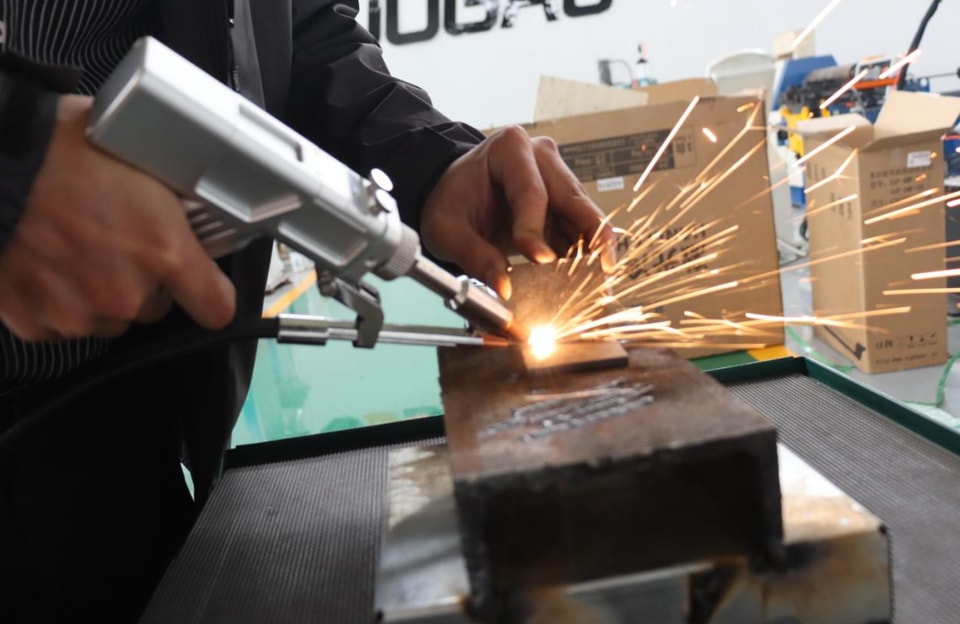 4 Common Methods for Inspecting Weld Quality
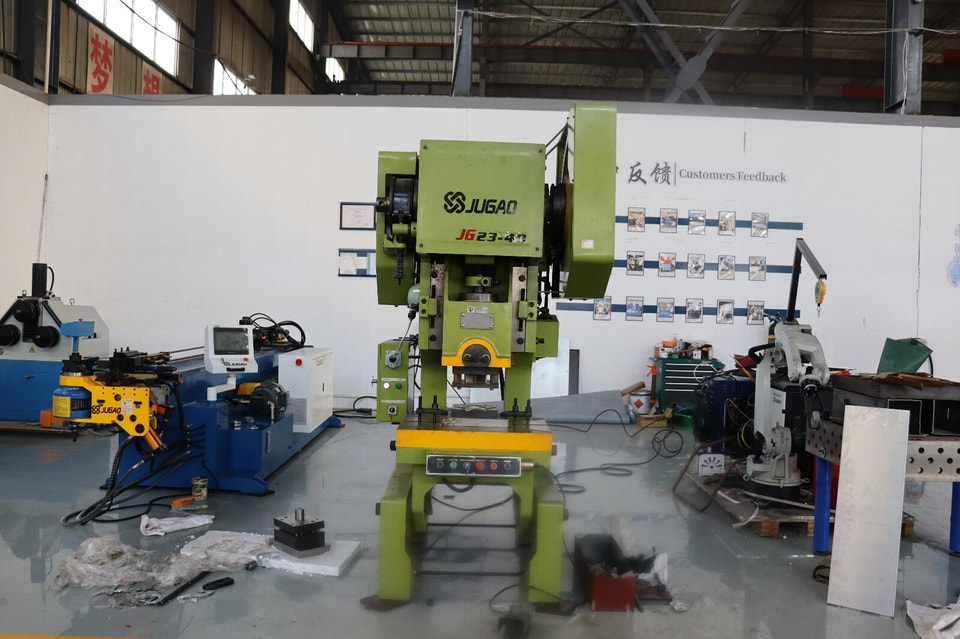 Selecting the Top Punching Machines for Small Workshops & Heavy Industry
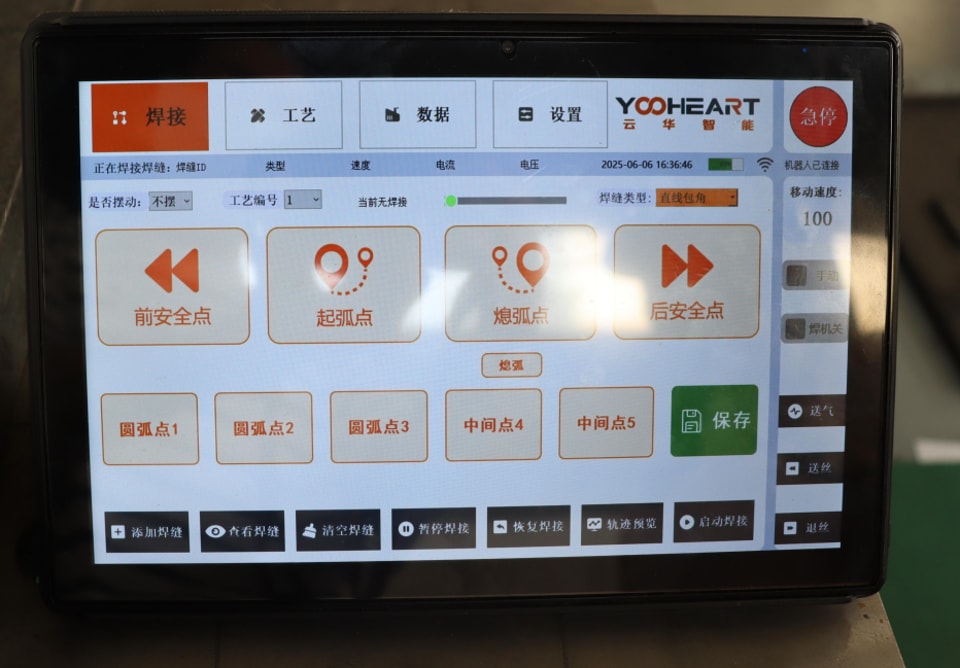 How do you set the welding path for a robotic laser welding machine? Can it perform precise welding on complex workpieces?
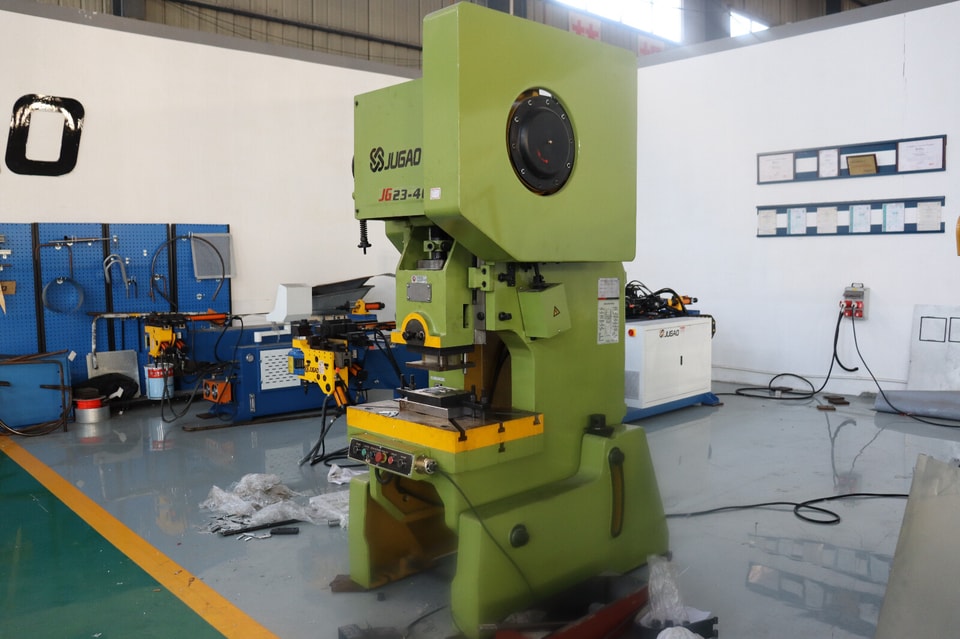 Essential Considerations Before Purchasing a Punching Machine
Engineering review
Send a drawing.
Get an engineer.
Standard selections answered within 4 hours. Parts outside the rules get a written process review within 24 hours.
- Part drawing: DXF, DWG, STEP or PDF
- Material and thickness
- Longest bend or cut length
- Yearly volume
Write to info@ntjugao.com or message the factory on WhatsApp +86 132 2211 1178.
Drawings (DXF, DWG, STEP, PDF): attach them to an email to info@ntjugao.com, quoting your name.