 Get a quote
Resources
For which types of products is an automatic wire-feeding laser welding machine suitable?
In metal processing, factors such as weld bead formation, joint strength, and production efficiency are critical considerations when selecting welding equipment. For workpieces that feature assembly gaps, require weld-seam filling, or have specific aesthetic requirements for the weld, standard laser welding methods may not always meet the necessary process specifications. In such cases, an automatic wire-feeding laser welding machine is an ideal solution. So, what kinds of products are suitable for this type of welding? Can it be used for materials like stainless steel, carbon steel, aluminum alloys, and galvanized sheets? And what should one look for when purchasing such equipment?
As a manufacturer of laser welding machines based in Guangdong, Guangdong Pudian Automation Technology Co., Ltd. (referred to as "Pudian" or "PDKJ") offers a wide range of laser welding equipment. This article explores the operational characteristics, suitable applications, and key selection criteria for automatic wire-feeding laser welding machines, based on product structure, material properties, and specific welding requirements.
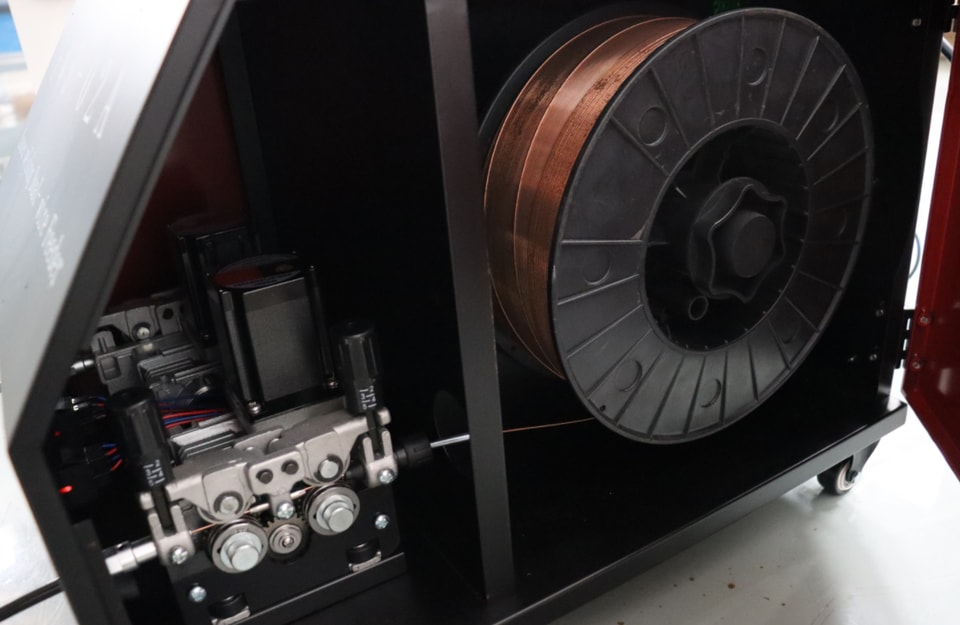
I. What is an automatic wire-feeding laser welding machine?
An automatic wire-feeding laser welding machine is a system that continuously delivers filler wire into the welding zone during the laser welding process. The laser melts both the base material and the filler wire to form a weld bead.
Compared to laser welding methods that do not use filler wire, this approach introduces an additional supply of filler material. Under the right process conditions, it can help fill gaps between parts, improve the formation of the weld bead, and accommodate joint configurations that require extra filler metal.
Such equipment typically consists of a laser source, a welding head, a wire-feeding mechanism, a control system, and other supporting components. The exact configuration varies depending on the specific model and application requirements.
It is important to note that the presence of an automatic wire-feeding system does not mean that filler wire must be used for every workpiece, nor does it guarantee that the welding results will always be superior to those achieved without wire feeding. The decision to use filler wire should be based on factors such as the joint type, assembly gaps, weld requirements, and the specific properties of the materials being welded.
II. What are the characteristics of an automatic wire-feeding laser welding machine?
1. Provides filler material for the weld seam
When there is a gap in the workpiece joint, or when the weld requires additional filler material, an automatic wire-feeding system can deliver welding wire according to preset process parameters, assisting in the formation of the weld bead.
However, this filling capacity is not unlimited. Factors such as gap size, wire diameter, wire-feed speed, laser power, and welding speed must be carefully balanced. If the gap is too large or the assembly is unstable, issues such as an underfilled weld bead or poor weld formation may still occur.
2. Facilitates greater continuity in the wire-feeding process
An automatic wire-feeding mechanism ensures a continuous supply of welding wire, reducing the variability inherent in manual wire feeding. Provided that process parameters, wire specifications, and workpiece positioning remain stable, this helps maintain consistency throughout the welding process.
Nevertheless, the condition of the wire-feeding system, the surface quality of the welding wire, and the process settings configured by the operator will all influence the final result.
3. Suitable for evaluation across various metal structural components
Laser welding systems with automatic wire feeding can be evaluated for use with stainless steel, carbon steel, certain aluminum alloys, and other compatible metal workpieces, depending on specific material and process requirements.
Because different materials vary in terms of laser absorption, thermal conductivity, and metallurgical properties, one cannot simply assume that changing the welding wire is sufficient to weld a different material. Process validation is particularly essential when working with aluminum alloys, galvanized sheets, or dissimilar metal joints.
4. Consideration of weld appearance and post-processing remains necessary
Laser welding is characterized by concentrated heat input; proper process settings help control the heat-affected zone. However, the final flatness of the weld, the potential need for grinding, and the risk of workpiece deformation all depend on the material, structural design, assembly precision, and process parameters.
Therefore, the advantages of an automatic wire-feeding laser welding system should be assessed through testing on actual workpieces, rather than being assumed based solely on the equipment's name.
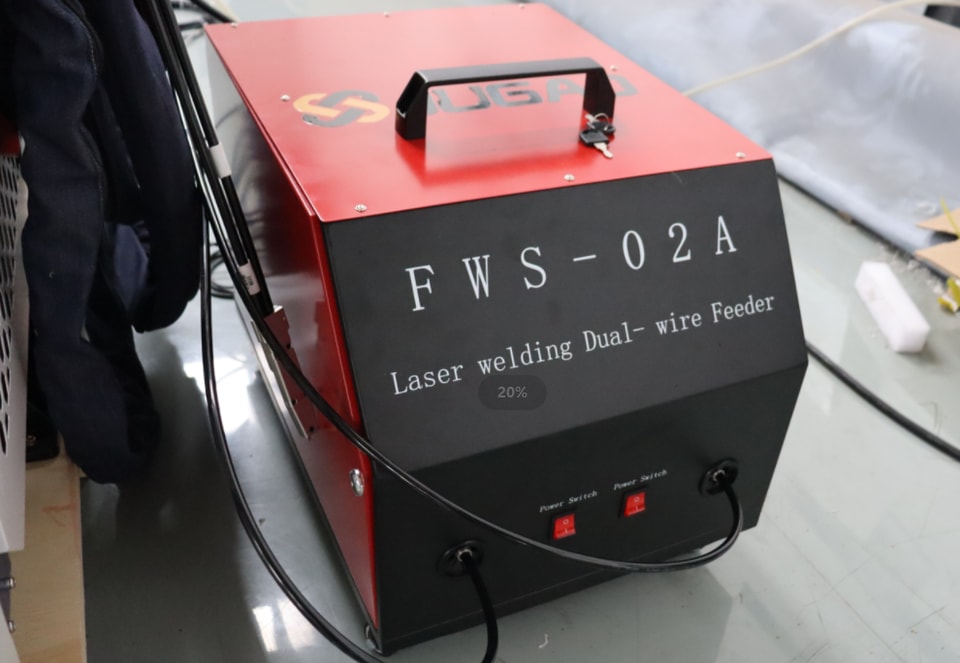
III. Which products are suitable for laser welding with automatic wire feeding?
The applicability of laser welding with automatic wire feeding depends primarily on the workpiece material, joint configuration, weld requirements, and production methods. The following types of products are worth evaluating for this process. 1. Stainless Steel Enclosures, Cabinets, and Sheet Metal Structural Components
Stainless steel enclosures, equipment housings, control cabinets, metal racks, and other sheet metal products often feature long, straight welds, corner welds, or specific assembly gaps.
For products that require weld-seam filling or improved joint bead formation, an automated wire-feed laser welding solution may be appropriate.
Key factors to consider during selection include:
Material thickness
Joint configuration
Whether the weld seam will be exposed
Requirements for post-welding grinding or surface finishing
If assembly gaps are significant, it is essential to first improve positioning and assembly precision; one should not rely solely on wire feeding to compensate for structural issues.
2. Carbon Steel Brackets, Frames, and Industrial Equipment Components
For certain carbon steel brackets, metal frames, structural equipment components, and connecting parts, it is often necessary to balance welding efficiency with weld bead quality.
When the joint configuration is suitable for laser welding and there is a requirement for filler material, an automated wire-feed laser welding system may be considered.
In practical applications, the welding process should be selected based on material thickness, weld length, joint strength requirements, and the mechanical loads the workpiece will endure. For load-bearing structural components, the reliability of a connection cannot be judged solely by the appearance of the weld bead; when necessary, quality inspections must be conducted in accordance with product specifications.
3. Kitchenware, Hardware Products, and Stainless Steel Goods
Metal kitchenware, hardware housings, decorative metal components, and various stainless steel products often have specific requirements regarding the appearance of the weld seam.
Automated wire-feed laser welding can be a viable process for certain joints, particularly where filler material is needed. However, if the product requires tiny weld spots, seamless/trace-free joints, or minimal heat-affected zones, other laser welding techniques should also be evaluated rather than defaulting to automated wire-feed welding.
4. Certain Aluminum Alloy Products and Metal Assemblies
When laser welding aluminum alloys, the process is highly sensitive to the material's condition, surface cleanliness, joint gaps, and specific welding parameters. For certain aluminum alloy enclosures, brackets, and metal components, the feasibility of an automatic wire-feeding solution can be evaluated based on the specific material grade, thickness, and joint configuration.
It is important to note that simply adding filler wire to an aluminum alloy does not guarantee a stable welding result. Factors such as the compatibility between the filler wire and the base metal, shielding conditions, and the specific welding parameters must all be verified through testing.
5. Galvanized Sheets and Composite Structural Components
When welding galvanized sheets, the impact of the zinc coating on the welding process must be considered; issues such as porosity, spatter, or unstable weld bead formation may occur.
For galvanized sheet enclosures, brackets, and sheet metal components, laser welding—potentially with wire feeding—can be evaluated based on the joint design. However, careful attention must be paid to the surface condition of the material, the process window, and welding safety. Automatic wire feeding does not inherently eliminate welding issues caused by the zinc coating; therefore, feasibility must be confirmed through sample testing.
In general, laser welding systems with automatic wire feeding are best suited for metal products that have specific requirements regarding joint configuration, weld gap filling, or bead formation, and for which the materials and processes have already been validated.

IV. When Is Automatic Wire Feeding Not Necessarily Required?
Not all laser-welded products require an automatic wire-feeding system. If the workpieces have high assembly precision, minimal joint gaps, and do not require additional filler material, a laser welding process without wire feeding may be appropriate.
For precision small parts, localized spot welds, or components that are highly sensitive to heat, it is necessary to carefully evaluate the welding method, equipment configuration, and specific process requirements.
Before making a purchase, consider the following three questions:
Does the workpiece joint require filler material? (This is the basis for determining whether wire feeding is needed.)
Do existing welding processes face challenges regarding gap tolerance or weld bead formation? (Confirm whether wire feeding can actually resolve these issues.)
Can the addition of filler wire meet quality requirements while maintaining the necessary production cycle time? (Evaluate the overall feasibility of the wire-feeding solution.)
If these questions remain unanswered, it is advisable to conduct a welding process evaluation before deciding whether an automatic wire-feeding system is necessary.
V. What Should You Look for When Choosing a Laser Welding Machine with Automatic Wire Feeding?
When seeking a laser welding machine manufacturer—for instance, in Guangdong—beyond examining the equipment configuration, you should focus on verifying the following aspects. First, ensure compatibility between the base material and the filler wire. Provide details regarding the base material type, thickness, and surface condition to verify that the chosen filler wire type and specifications are appropriate.
Second, confirm the requirements for the weld seam and joint. Clearly define the weld length, joint configuration, fit-up gap, visual appearance requirements, and structural strength standards.
Third, evaluate wire-feeding and laser parameters. Factors such as wire-feed speed, welding speed, laser power, and torch orientation must be carefully coordinated; adjusting a single parameter is rarely sufficient to resolve all issues.
Fourth, consider production throughput and operational requirements. For high-mix, low-volume production, prioritize equipment flexibility and the ease of switching between processes. For mass production, focus on continuous operational capacity, fixture positioning, and streamlined workflows.
Fifth, conduct sample testing on actual workpieces. It is highly recommended to use the client’s actual parts—or representative samples—to evaluate weld bead formation, penetration depth, spatter, thermal distortion, and joint quality before finalizing the equipment solution.
Summary
Automated wire-feed laser welding systems are primarily suited for metal products that require weld-seam filling, improved bead appearance, or specific joint performance characteristics. Potential applications include:
Stainless steel enclosures
Carbon steel brackets
Hardware components
Certain aluminum alloy and galvanized steel structural parts
Ultimately, the suitability of the equipment depends on the specific materials, joint geometry, weld requirements, and production environment. For companies seeking a laser welding machine manufacturer in Guangdong, it is advisable to first clearly define product requirements and then validate the process through sample testing on actual workpieces.
Related
Keep
reading.
 Comparison of Laser Welding Results and Application Scenarios Across Different Materials
 How to Choose Between Air-Cooled and Water-Cooled Laser Welding Systems
 Understanding Punching Machines: Principles, Types, and Selection
 How can one effectively follow the installation guidelines for a pipe-bending machine?
 What Are the Latest Punching Machine Trends and Technological Breakthroughs?
 What Triggers Punching Machine Noise and How Can You Quieten It?
 What factors influence the replacement cycle of wear parts in a pipe-bending machine?
 Beyond price, what key parameters should you consider when purchasing welding equipment?
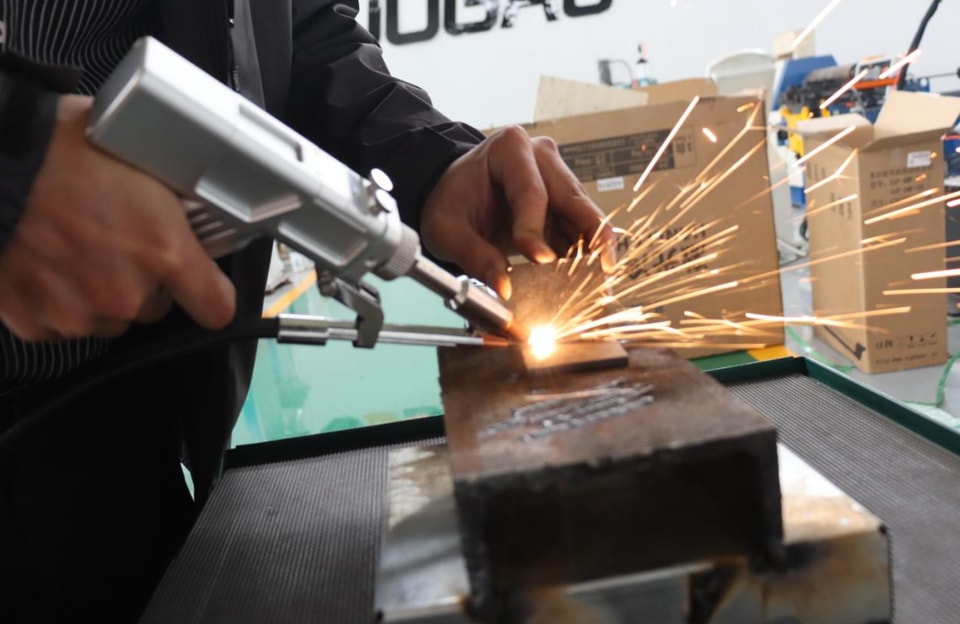 4 Common Methods for Inspecting Weld Quality
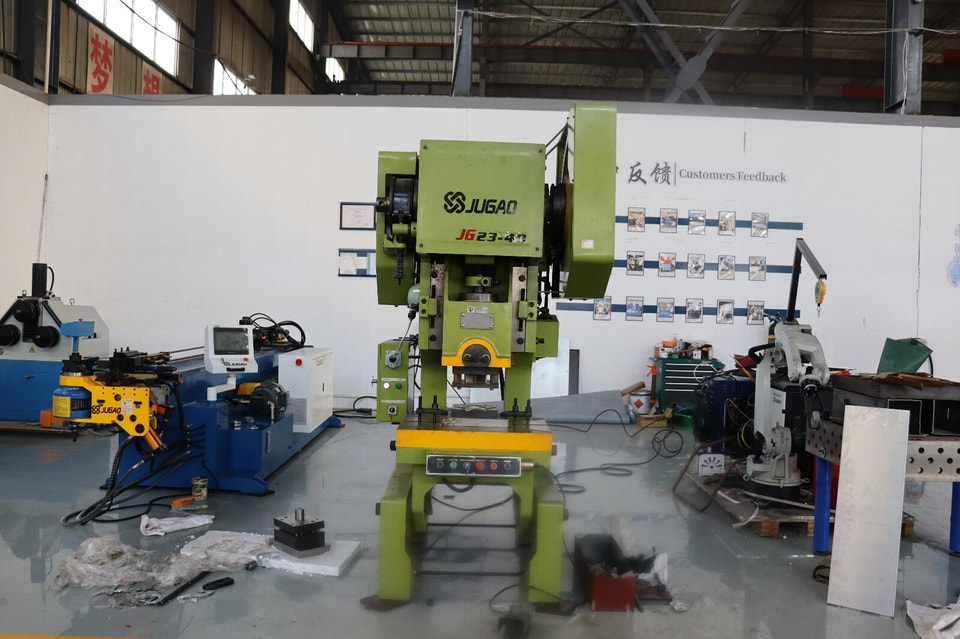 Selecting the Top Punching Machines for Small Workshops & Heavy Industry
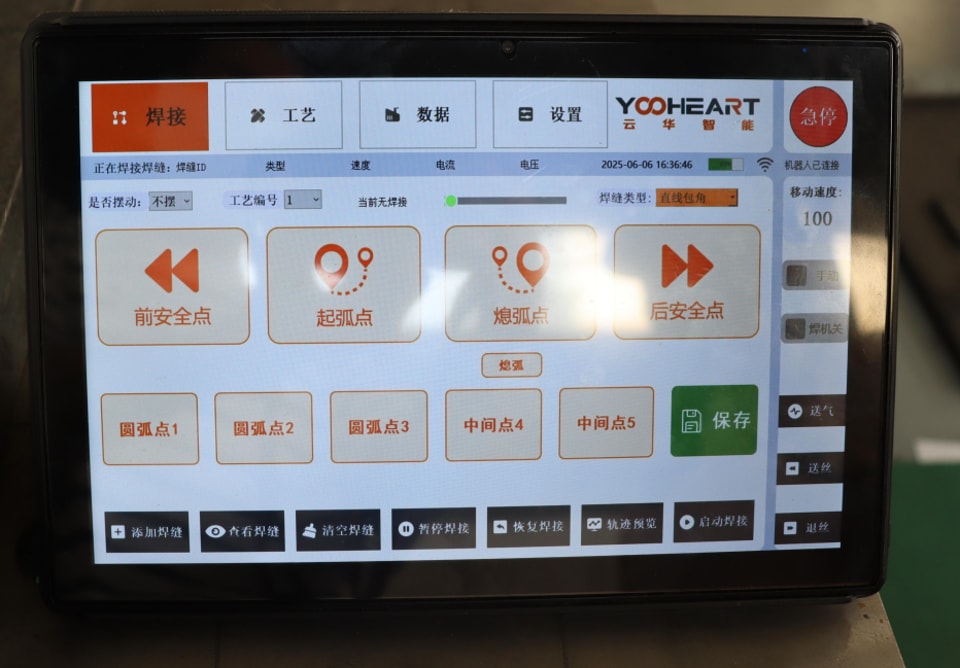 How do you set the welding path for a robotic laser welding machine? Can it perform precise welding on complex workpieces?
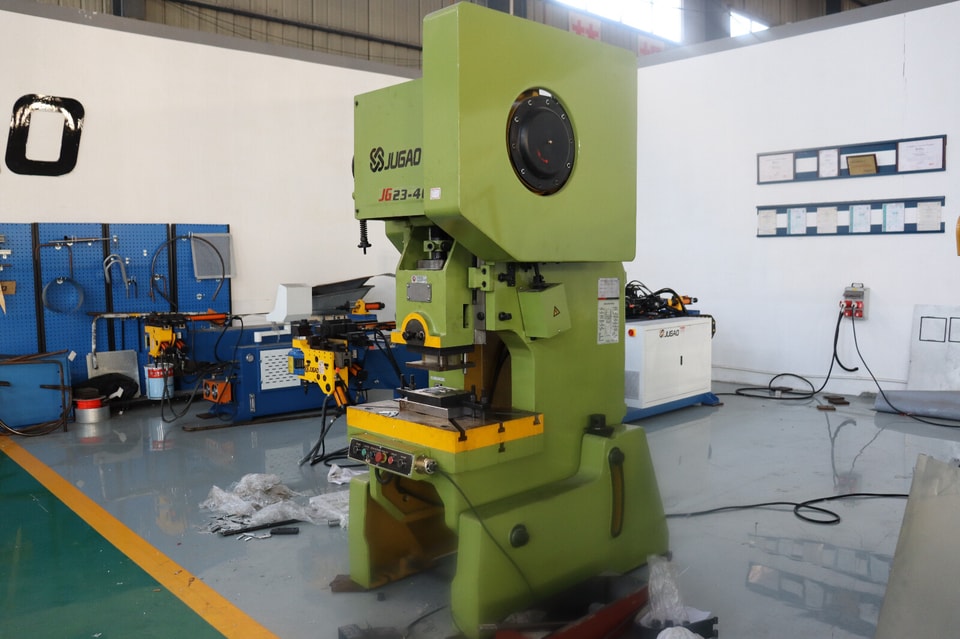 Essential Considerations Before Purchasing a Punching Machine
Engineering review
Send a drawing.
Get an engineer.
Standard selections answered within 4 hours. Parts outside the rules get a written process review within 24 hours.
- Part drawing: DXF, DWG, STEP or PDF
- Material and thickness
- Longest bend or cut length
- Yearly volume
Write to info@ntjugao.com or message the factory on WhatsApp +86 132 2211 1178.
Drawings (DXF, DWG, STEP, PDF): attach them to an email to info@ntjugao.com, quoting your name.