 Get a quote
Resources
Selecting the Top Punching Machines for Small Workshops & Heavy Industry
TABLE OF CONTENTS 1. Essential Factors to Evaluate Before Buying a Punching Press • Assessing Daily Output and Batch Volume • Analyzing Tonnage Capacity and Mechanical Stability • Accounting for Floor Footprint and Facility Power Supply • Matching Press Force to Sheet Alloy and Gauge 2. Top Punching Machine Recommendations for Small Businesses • JUGAO J23 Mechanical Power Press • JUGAO Y41 C-Frame Hydraulic Punching Press 3. High-Performance Punching Systems for Industrial Manufacturing • CNC Turret Punch Presses • Heavy-Duty Hydraulic Punching Presses 4. Essential Maintenance Practices to Maximize Press Longevity • Routine Visual Checks and Debris Removal • Consistent Lubrication of Wear Components • Structured Preventive Maintenance Scheduling 5. Frequently Asked Questions (FAQs) • Ideal press architecture for compact job shops • Feasibility of hydraulic presses in small-business settings • Core industrial advantages of CNC turret technology • Maintaining tight tolerances on small-scale runs 6. Conclusion & Customized Solutions from JUGAO |
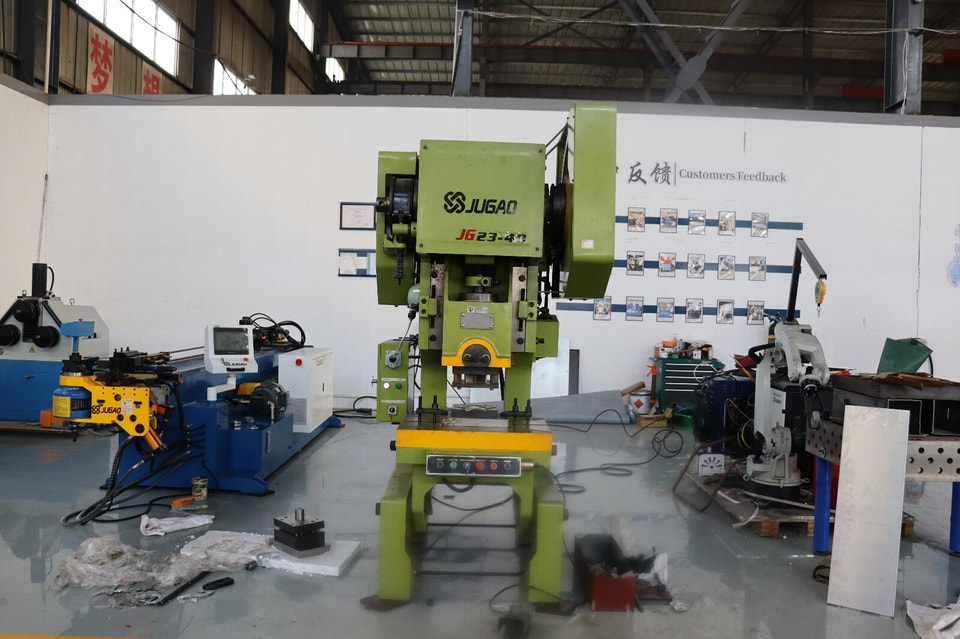
When shopping for punching equipment across either a growing fabrication shop or a high-output industrial facility, the core challenge lies in striking the right equilibrium between forming tonnage, repeatable accuracy, and capital expenditure. Installing a press tailored to your exact operational scale directly boosts shift throughput and finished component consistency. In this buyer's guide, we break down the most effective machine architectures for both high-volume manufacturing plants and compact metalworking studios, equipping you with the clarity needed to make a sound capital decision.
1. Essential Factors to Evaluate Before Buying a Punching Press
Assessing Daily Output and Batch Volume
Begin by mapping out your required punching frequency and typical order quantities. High-throughput factories running continuous multi-shift schedules benefit most from automated CNC turret or high-speed hydraulic systems. Conversely, job shops handling short custom batches or intermittent fabrication jobs will achieve faster payback with an economical mechanical or manual press.
Analyzing Tonnage Capacity and Mechanical Stability
Confirming that a press's mechanical specifications align with your workload prevents premature frame fatigue and tooling failure. Key technical benchmarks to verify include rated forming tonnage, strokes per minute (SPM), maximum sheet dimensions, and structural rigidity under off-center loads.
Accounting for Floor Footprint and Facility Power Supply
Heavy-duty industrial presses demand expansive installation bays, reinforced concrete foundations, and high-amperage three-phase electrical feeds. Compact businesses operating out of leased units or tight workshop layouts gain a clear advantage from smaller-footprint presses with modest electrical draw.
Matching Press Force to Sheet Alloy and Gauge
Heavier plate thicknesses and high-tensile alloys demand substantially greater shearing force and rigid frame construction. When processing thick stainless steel, structural carbon plate, or heavy-gauge aluminum, select a hydraulic press engineered for sustained high tonnage. For thinner sheet gauges and light-duty forming, mechanical or servo presses deliver ample power at lower operating cost.
2. Top Punching Machine Recommendations for Small Businesses
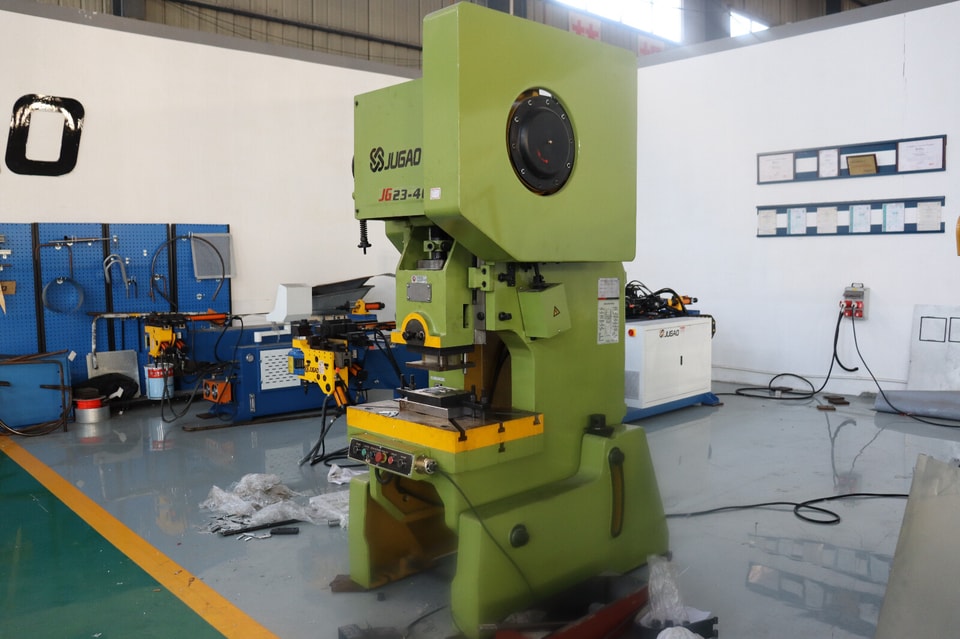
JUGAO J23 Mechanical Power Press
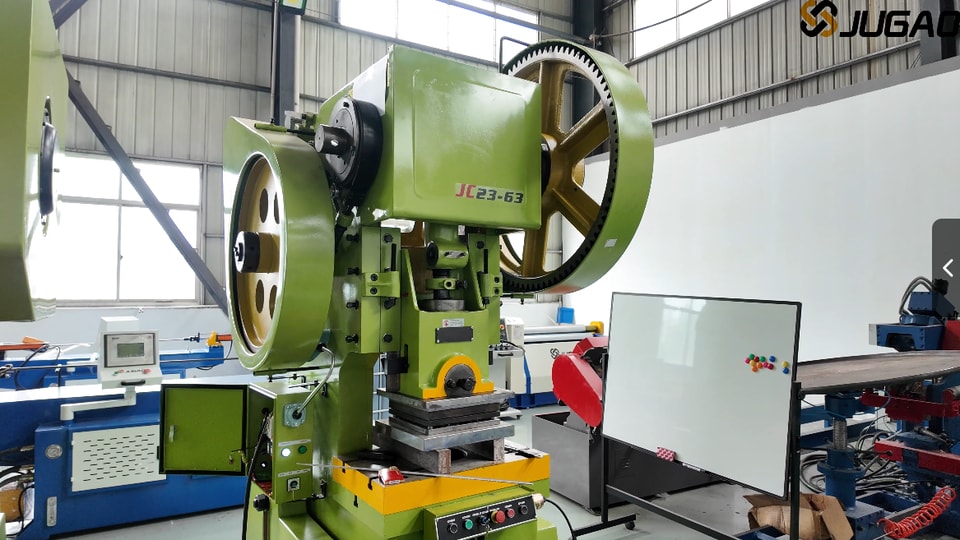
Engineered as a dependable workhorse for emerging fabrication shops, the JUGAO J23 Mechanical Power Press delivers straightforward, high-efficiency punching across everyday sheet metal tasks. Its proven flywheel-and-crankshaft architecture simplifies operator training, keeps routine servicing uncomplicated, and offers an attractive entry price for budget-minded workshops.
JUGAO Y41 C-Frame Hydraulic Punching Press
When application versatility and controlled forming pressure matter most, the JUGAO Y41 C-Frame Hydraulic Punching Press stands out as an ideal compact solution. Featuring steplessly adjustable stroke travel and working pressure, it adapts effortlessly to varying stock thicknesses while delivering smooth, low-noise strokes and crisp edge finishes.
3. High-Performance Punching Systems for Industrial Manufacturing
CNC Turret Punch Presses
Designed for rapid, automated sheet processing, CNC turret punching machines combine multi-station auto-indexing tool carousels with high-speed servo sheet positioning to maximize factory output and dimensional repeatability.
Core Advantages:
· Accommodates dozens of standard and forming tool profiles simultaneously
· Delivers rapid hit rates with minimal manual setup changeover
· Excels at intricate perforation patterns and high-volume batch runs
Heavy-Duty Hydraulic Punching Presses
Constructed for maximum structural endurance and deep forming power, industrial hydraulic presses effortlessly shear thick steel plates across demanding sectors such as marine fabrication, automotive chassis production, and heavy structural steelwork.
Key Strengths:
· Delivers formidable punching tonnage (200 tons and above)
· Built for extended multi-decade service life under severe duty cycles
· Maintains rock-solid stability during continuous heavy-gauge stamping
4. Essential Maintenance Practices to Maximize Press Longevity
Routine Visual Checks and Debris Removal
Performing daily walk-around inspections allows technicians to spot loose fasteners, hydraulic leaks, or punch wear before part quality suffers. Clearing sheared slugs, metal fines, and dust from die beds and guideways preserves positioning accuracy and prevents premature component abrasion.
Consistent Lubrication of Wear Components
Reliable lubrication prevents metal-on-metal galling, overheating, and unexpected mechanical seizure. Follow the OEM lubrication chart strictly regarding oil viscosity, grease grades, and replenishment intervals to keep bearings, slides, and clutches operating smoothly.
Structured Preventive Maintenance Scheduling
Establish a documented preventive maintenance calendar covering periodic calibration, hydraulic filter replacement, and electrical cabinet inspections. Resolving minor mechanical drift early eliminates costly emergency breakdowns and keeps production schedules on track.
5. Frequently Asked Questions (FAQs)
Q1: Which punching machine style is best suited for a small workshop?
Open-back mechanical presses or compact manual punching units are typically the smartest starting point for small shops, offering low upfront cost, intuitive operation, and a minimal floor footprint.
Q2: Is a hydraulic punching machine practical for a small business?
Yes—provided your facility meets the electrical and floor-space specifications. Compact C-frame hydraulic presses offer quiet operation and ample tonnage for small shops working with thicker or varied metal gauges.
Q3: Why do industrial factories favor CNC turret punching machines?
CNC turret systems automate multi-tool changes and high-speed sheet positioning, enabling factories to produce complex, multi-hole components rapidly with tight tolerances and minimal operator intervention.
Q4: How can small-scale operators maintain high punching accuracy?
Consistent dimensional accuracy relies on three habits: verifying ram-to-die alignment regularly, keeping punch and die edges freshly ground, and clamping workpieces securely against positive stops.
6. Conclusion & Partnering with JUGAO Selecting the ideal punching machine for either a compact business or a large industrial plant hinges on aligning machine capabilities with your daily batch volume, material thickness, and investment budget. High-volume manufacturers achieve maximum efficiency with CNC turret and heavy hydraulic presses, whereas smaller workshops thrive with agile mechanical or compact C-frame machines. At JUGAO, we engineer a comprehensive lineup of punching equipment built for every production scale. Not sure which model matches your workflow? Connect with the JUGAO technical team today for personalized consultation and tailored equipment recommendations. |
Related
Keep
reading.
 Comparison of Laser Welding Results and Application Scenarios Across Different Materials
 How to Choose Between Air-Cooled and Water-Cooled Laser Welding Systems
 Understanding Punching Machines: Principles, Types, and Selection
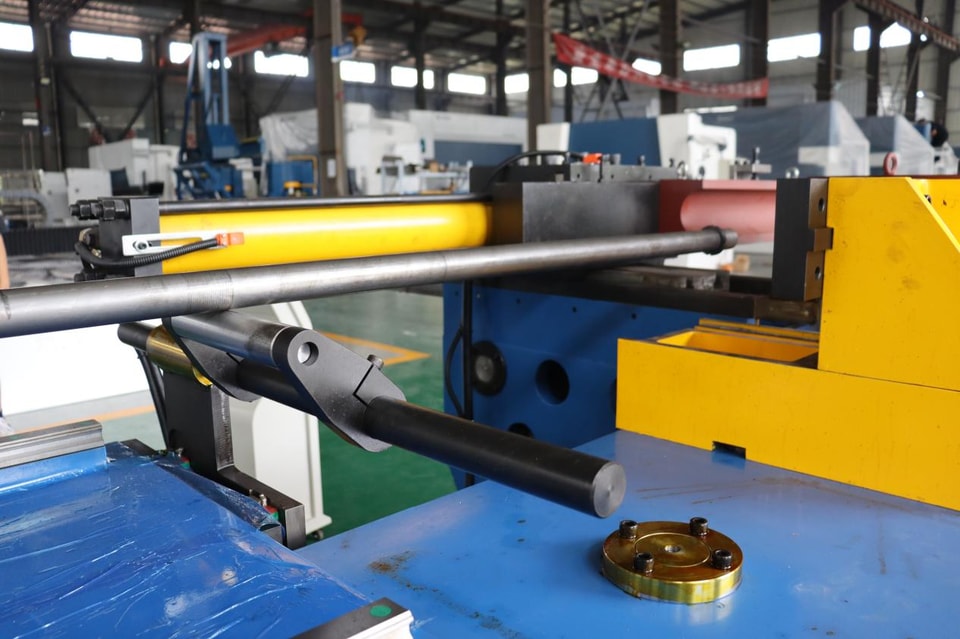 How can one effectively follow the installation guidelines for a pipe-bending machine?
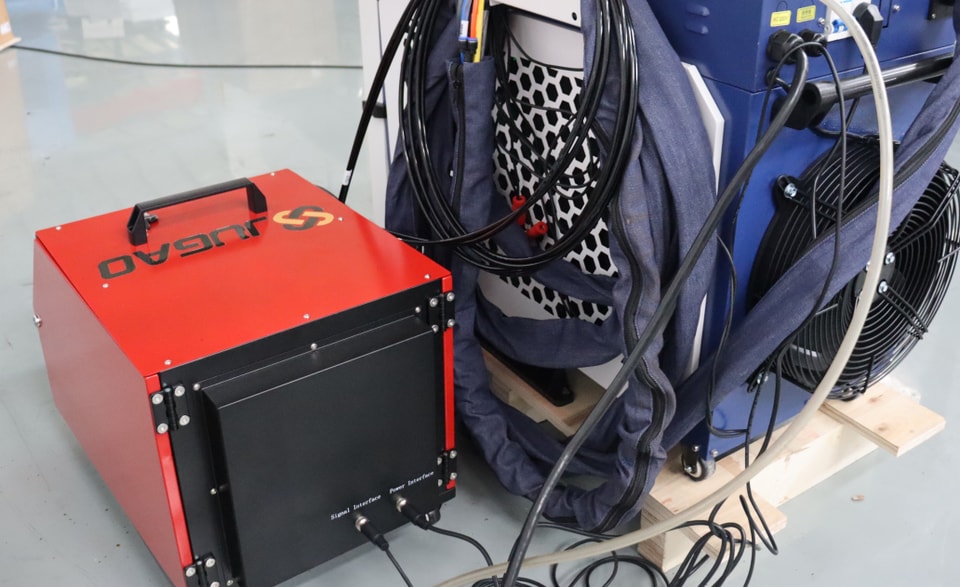 For which types of products is an automatic wire-feeding laser welding machine suitable?
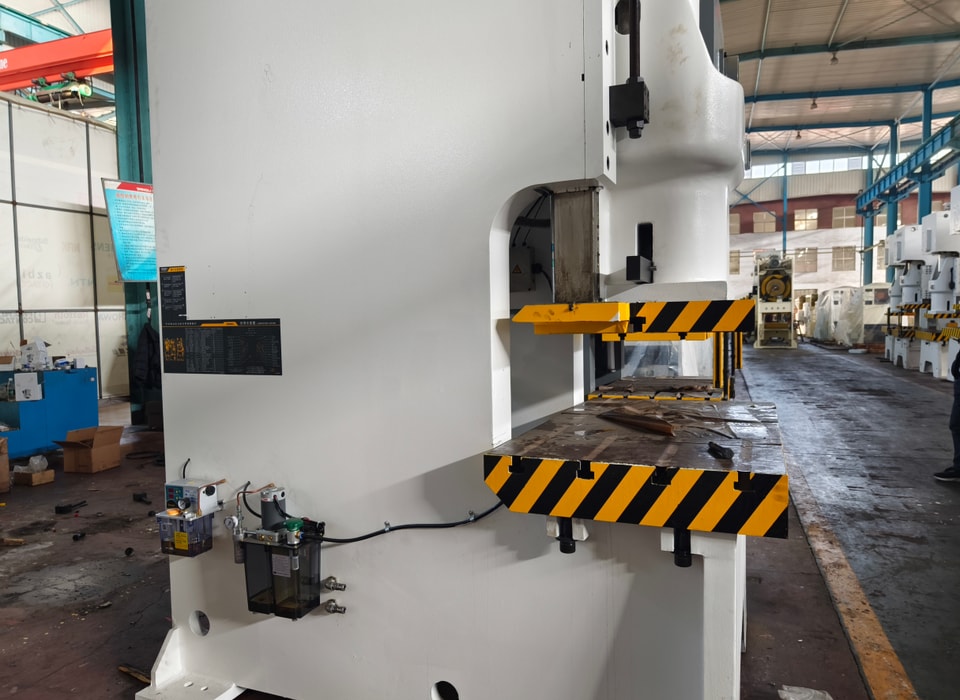 What Are the Latest Punching Machine Trends and Technological Breakthroughs?
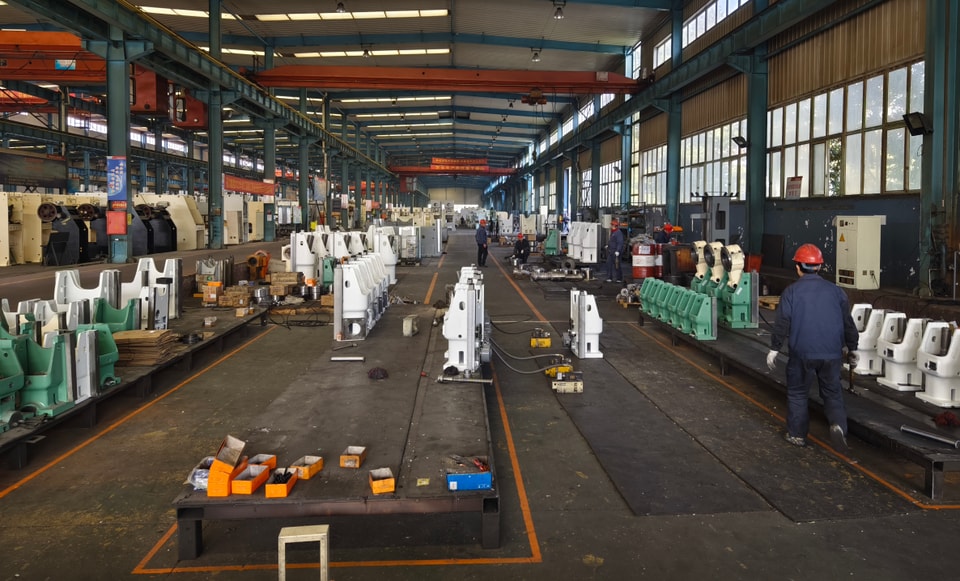 What Triggers Punching Machine Noise and How Can You Quieten It?
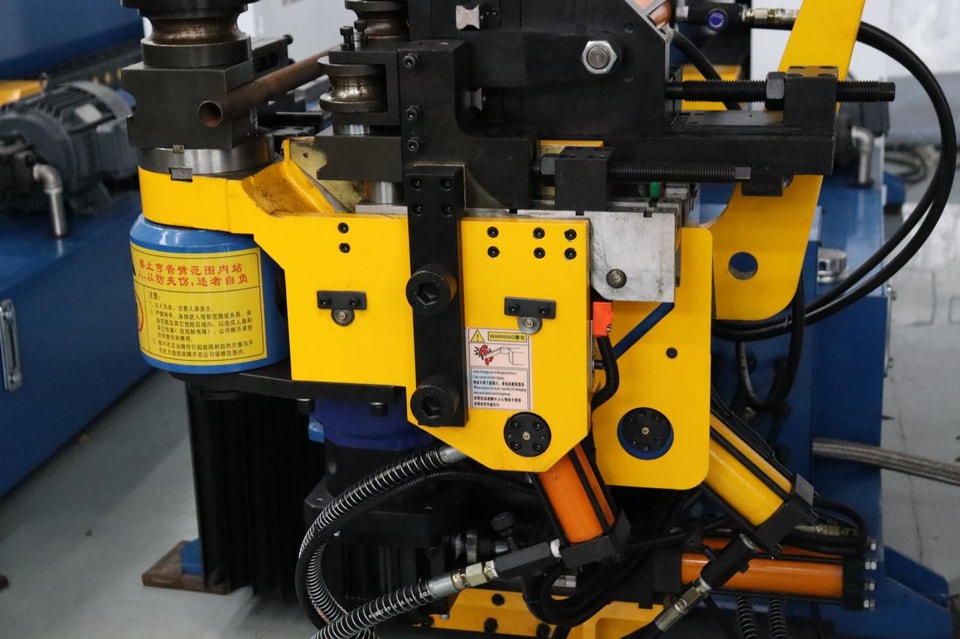 What factors influence the replacement cycle of wear parts in a pipe-bending machine?
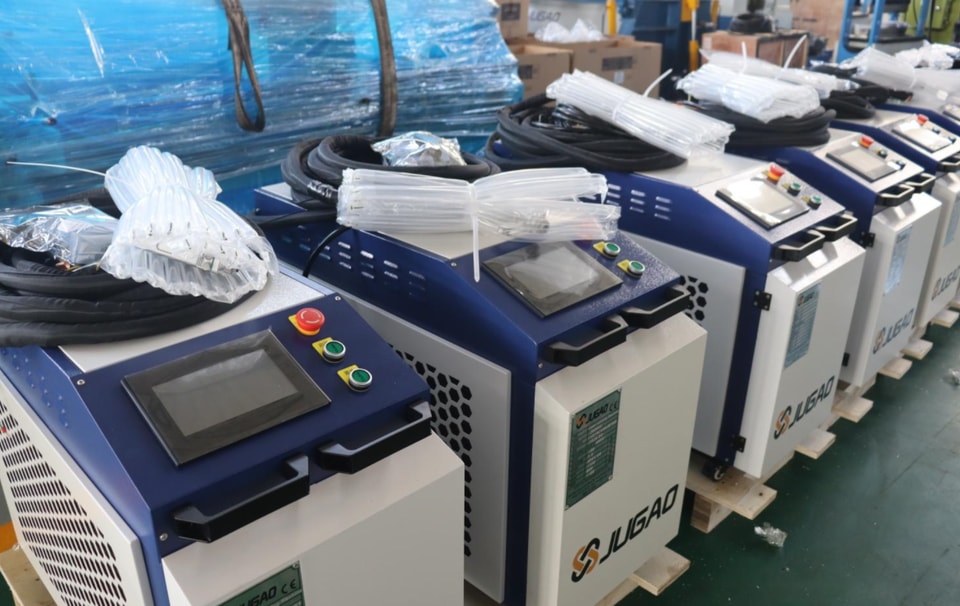 Beyond price, what key parameters should you consider when purchasing welding equipment?
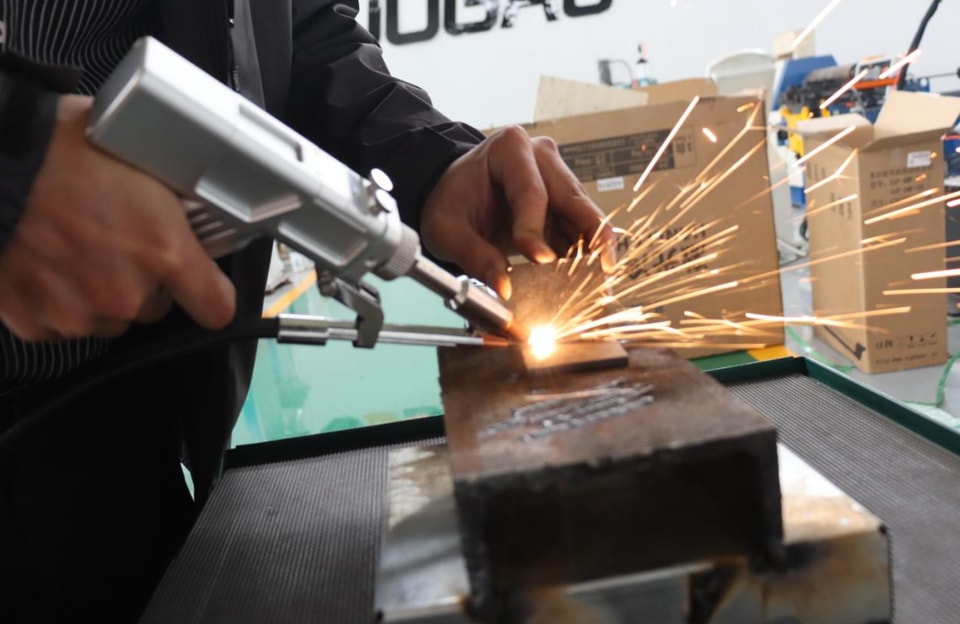 4 Common Methods for Inspecting Weld Quality
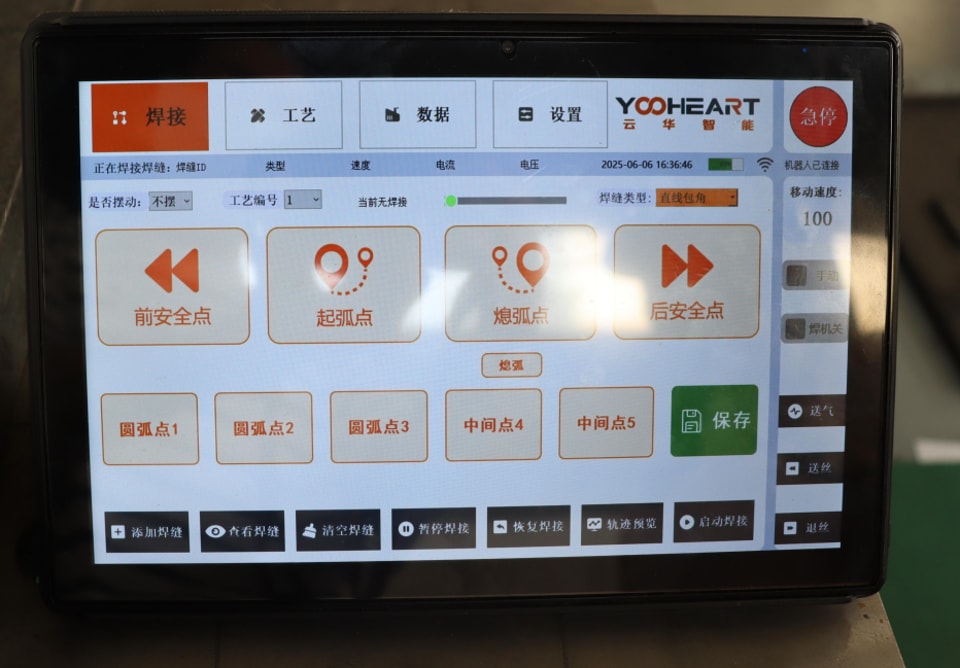 How do you set the welding path for a robotic laser welding machine? Can it perform precise welding on complex workpieces?
 Essential Considerations Before Purchasing a Punching Machine
Engineering review
Send a drawing.
Get an engineer.
Standard selections answered within 4 hours. Parts outside the rules get a written process review within 24 hours.
- Part drawing: DXF, DWG, STEP or PDF
- Material and thickness
- Longest bend or cut length
- Yearly volume
Write to info@ntjugao.com or message the factory on WhatsApp +86 132 2211 1178.
Drawings (DXF, DWG, STEP, PDF): attach them to an email to info@ntjugao.com, quoting your name.