 Get a quote
Resources
Key Factors Governing Optimal Punch Press Tonnage
Table of Contents 1. Grasping the Fundamentals of Punch Press Tonnage • Defining Press Tonnage • Why Proper Force Capacity Matters • Estimating Force for Individual Jobs 2. Primary Variables in Choosing Punch Press Force • Workpiece Thickness and Alloy Composition • Tooling Diameter and Geometry • Output Volume and Cycle Duty • Equipment Protection and Reserve Capacity 3. Frequently Asked Questions (FAQs) • How can I precisely compute required punching force? • Is operating a punch press continuously at peak rating advisable? • In what way does workpiece hardness alter tonnage needs? 4. Summary & Next Steps |
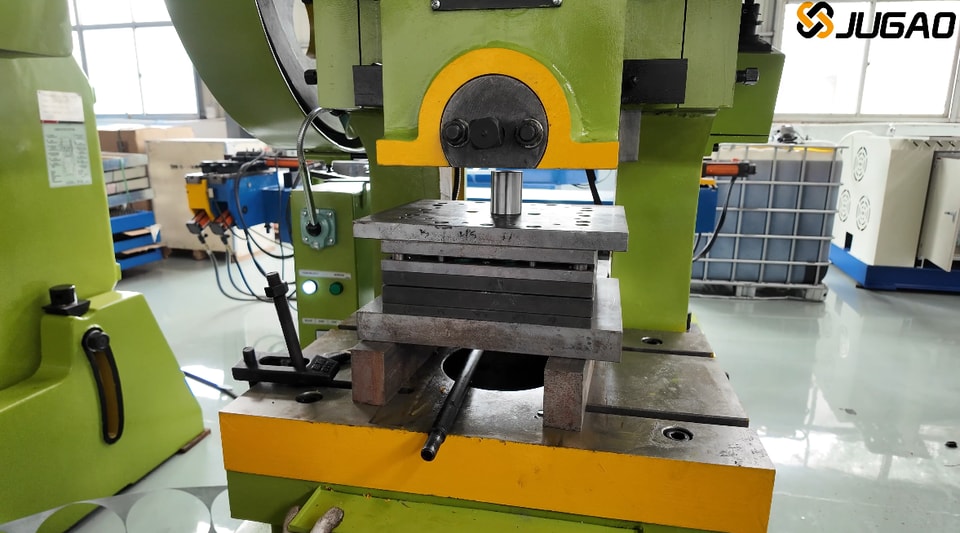
When investing in machinery for sheet metal processing, identifying the proper punching force is a critical first step. Customers frequently ask our specialists at JUGAO why matching press capacity to the application matters so much. The reason is straightforward: mismatched force leads to sluggish workflows, ruined stock, or severe mechanical damage. Throughout this JUGAO engineering guide, we break down every variable that dictates ideal punching tonnage so you can specify your equipment with certainty and maximize shop-floor productivity.
Grasping the Fundamentals of Punch Press Tonnage
Defining Press Tonnage
Press tonnage denotes the peak downward force a punching unit can generate during a single stroke. Expressed in metric or short tons, this rating governs the gauge, alloy grade, and hole dimensions your press can cleanly shear. Put simply, machines engineered with greater tonnage ratings penetrate heavier plates and tougher metals with ease.
Why Proper Force Capacity Matters
Choosing an appropriately rated press is indispensable for smooth manufacturing. If a unit lacks sufficient force, the tooling will struggle to sever the sheet cleanly, accelerating die wear, producing burred edges, and risking catastrophic frame or drive failure. On the other hand, specifying far more tonnage than your jobs demand inflates upfront capital outlay, wastes electrical power, and reduces overall operational economy.
Estimating Force for Individual Jobs
Finding the necessary press rating for a given application requires evaluating both workpiece properties and cut geometry. In standard shop practice, you obtain a reliable baseline figure by multiplying the sheet gauge by the total cut perimeter and then by the alloy's specific shear strength. For facilities handling a wide mix of metals and thicknesses, JUGAO recommends selecting a model with moderately higher capacity to preserve long-term production versatility.
JUGAO Quick Estimation Formula |
Primary Variables in Choosing Punch Press Force
Workpiece Thickness and Alloy Composition
Evaluating Sheet Gauge
Stock thickness serves as the foremost determinant of required punching capacity. As a rule, heavier gauges demand substantially more shearing force to pierce cleanly without deforming the surrounding sheet. Be sure to verify the thickest stock in your production schedule and match that maximum figure against the press rating chart.
Evaluating Alloy Characteristics
Every metal grade exhibits a unique tensile and shear resistance that directly alters tonnage calculations. Ductile, low-strength metals like aluminum require relatively modest force, whereas high-strength alloys such as stainless steel impose far greater resistance on the punch. Accurately cataloging every alloy you process prevents under-sizing your JUGAO machinery.
Tooling Diameter and Geometry
Deriving Force from Tool Diameter
Hole size plays an equally decisive role in press selection. Wider punch diameters engage a longer shear perimeter, necessitating proportionally higher downward force. A practical shop rule we share with JUGAO operators is to multiply sheet thickness by the punch diameter and the material's shear factor to establish an accurate force requirement.
Impact of Non-Circular Tool Shapes
Intricate profiles—such as slots, rectangles, or custom contours—consume more energy than standard circular holes of comparable area. Sharp corners and asymmetrical edges concentrate mechanical stress unevenly, demanding extra reserve power to achieve burr-free, repeatable cuts.
Output Volume and Cycle Duty
Assessing Throughput Demands
Continuous, high-output manufacturing lines benefit significantly from higher-tonnage presses capable of sustaining rapid stroke rates. Heavier-duty frames deliver superior rigidity and repeatable accuracy across millions of cycles, helping shops minimize unscheduled downtime and routine servicing.
Accounting for Operating Intensity
When your production schedule involves relentless, multi-shift punching, building extra force capacity into your specification pays off through enhanced dependability. Avoiding constant near-limit operation protects internal drive components, extends service life, and lowers lifetime maintenance costs.
Equipment Protection and Reserve Capacity
Incorporating a Safety Buffer
JUGAO engineers always advise adding a protective buffer—generally 10% to 20% above your raw calculated tonnage. This reserve allowance absorbs batch-to-batch variations in alloy hardness, dulling tool edges, and minor alignment tolerances, safeguarding both operator and machine.
Boosting Long-Term Dependability
Operating a press comfortably below its ceiling dramatically improves mechanical stability. Machinery that works within an effortless load envelope experiences less structural fatigue, delivers many more years of service, and rarely suffers unexpected breakdowns.
Frequently Asked Questions (FAQs)
How can I precisely compute required punching force?
To determine exact tonnage, multiply your sheet thickness by the cut perimeter (or punch diameter factor) and the alloy's shear strength rating. Once you have that baseline number, add a 10% to 20% reserve buffer to guarantee reliable day-to-day performance.
Is operating a punch press continuously at peak rating advisable?
JUGAO strongly recommends against running any punching machine nonstop at 100% of its rated capacity. Sustained maximum-load cycling accelerates wear on hydraulic or mechanical systems and shortens equipment life. Choosing a press with extra headroom ensures smoother output and greater durability.
In what way does workpiece hardness alter tonnage needs?
Alloy hardness has a direct, proportional effect on force requirements: dense, high-tensile metals such as stainless steel require considerably higher tonnage to shear than softer, more malleable metals like copper or aluminum.
Conclusion
Pinpointing the ideal punching machine tonnage is foundational to achieving fast, accurate, and hazard-free sheet metal fabrication. By carefully weighing stock thickness, alloy grade, tooling geometry, duty cycle, and safety margins, you can invest in equipment with complete confidence. Should you need personalized guidance on sizing a punching machine for your shop floor or want expert engineering assistance, reach out to the JUGAO technical team today—we are ready to help streamline your metalworking operations.
Related
Keep
reading.
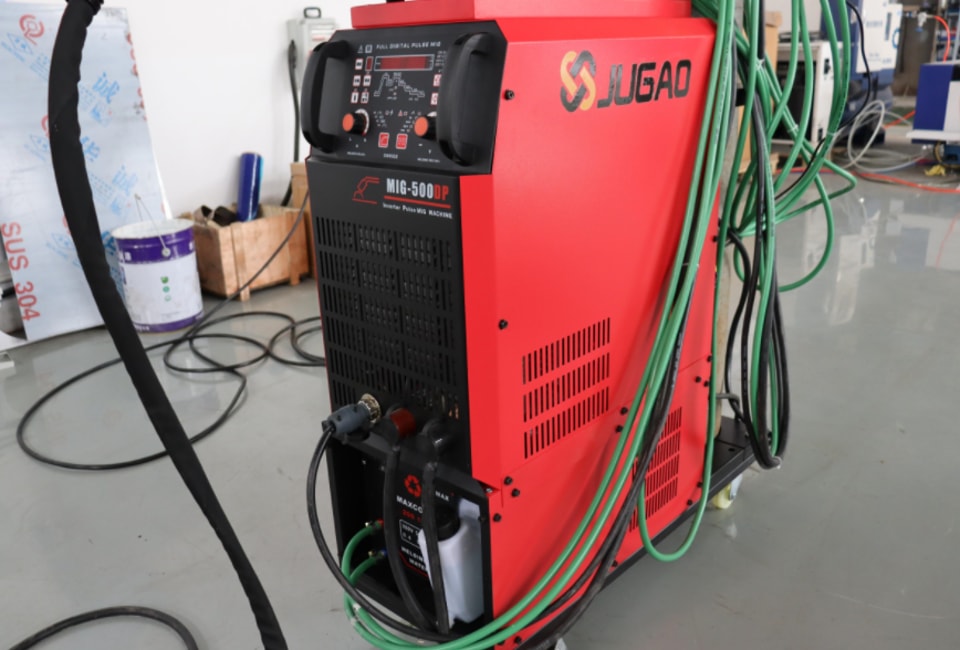 What equipment is best for welding stainless steel? Are there risks of weak welds or deformation?
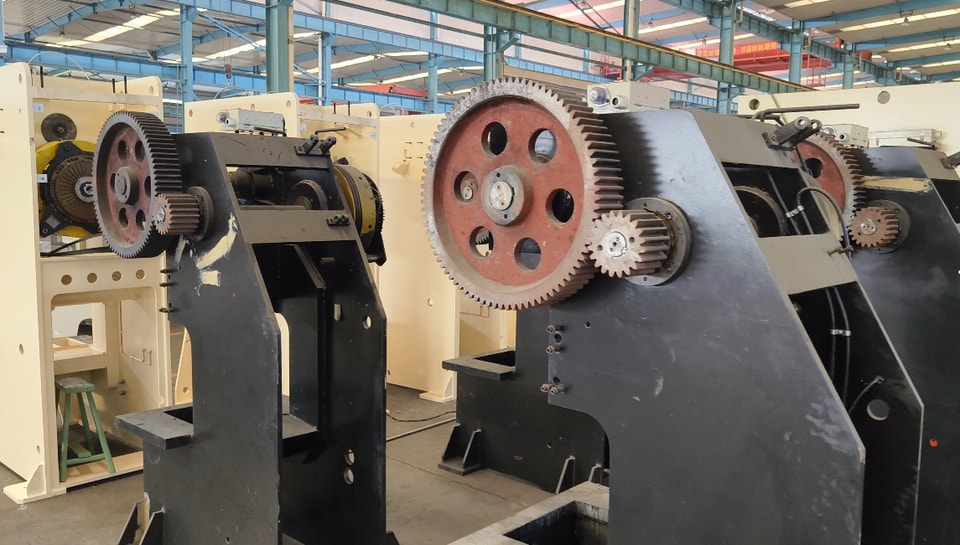 CNC Turret Punch Presses Explained: Architecture and Operation
 Comparison of Laser Welding Results and Application Scenarios Across Different Materials
 How to Choose Between Air-Cooled and Water-Cooled Laser Welding Systems
 Understanding Punching Machines: Principles, Types, and Selection
 How can one effectively follow the installation guidelines for a pipe-bending machine?
 For which types of products is an automatic wire-feeding laser welding machine suitable?
 What Are the Latest Punching Machine Trends and Technological Breakthroughs?
 What Triggers Punching Machine Noise and How Can You Quieten It?
 What factors influence the replacement cycle of wear parts in a pipe-bending machine?
 Beyond price, what key parameters should you consider when purchasing welding equipment?
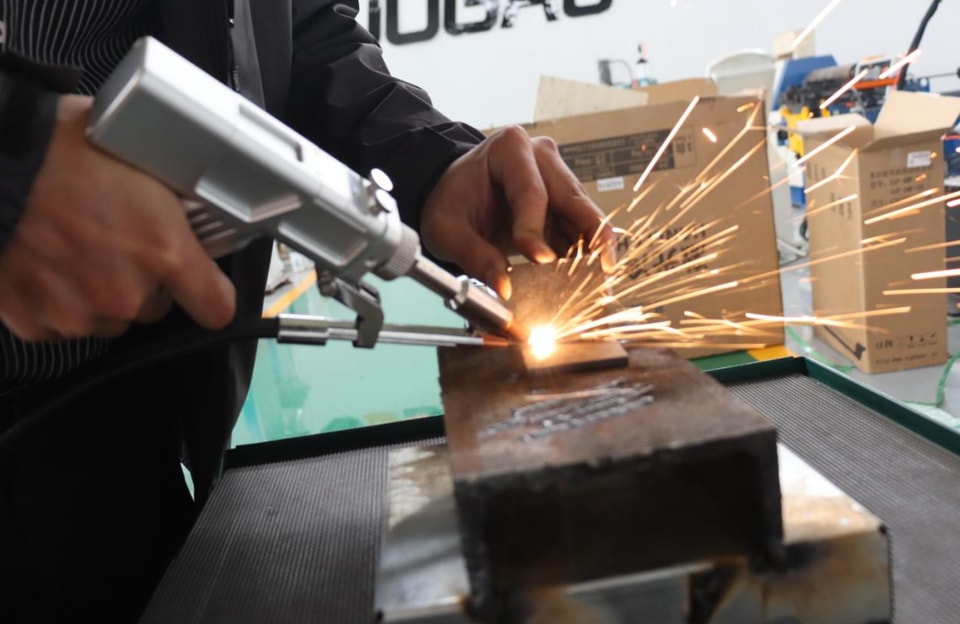 4 Common Methods for Inspecting Weld Quality
Engineering review
Send a drawing.
Get an engineer.
Standard selections answered within 4 hours. Parts outside the rules get a written process review within 24 hours.
- Part drawing: DXF, DWG, STEP or PDF
- Material and thickness
- Longest bend or cut length
- Yearly volume
Write to info@ntjugao.com or message the factory on WhatsApp +86 132 2211 1178.
Drawings (DXF, DWG, STEP, PDF): attach them to an email to info@ntjugao.com, quoting your name.