
Fiber Lasers vs CO₂ Lasers: Core Differences & Selection Guidance
2026-06-10

Table of Contents
• Working Principles of Fiber and CO₂ Laser Equipment
• Core Operating Principle of Fiber Laser Equipment
• Working Mechanism of CO₂ Laser Devices
• Performance Contrast Between Fiber and CO₂ Laser Cutting Equipment
• Cutting Rate & Production Efficiency
• Machinable Plate Thickness & Raw Material Adaptability
• Running Expense and Daily Servicing Demands
• Power Utilization Rate and Energy Consumption
• Regular Upkeep Standards for Two Laser Types
• Applicable Scenarios and Market Development Tendencies
• Optimal Application Fields for Fiber Laser Equipment
• Suitable Processing Industries for CO₂ Laser Devices
• Common Query Collection
• Service Life Comparison of Two Laser Sources
• Superiority of Fiber Lasers on Reflective Metal Cutting
• Feasibility of Non-metal Cutting via Fiber Laser Devices
• Cost Comparison of Daily Maintenance Work
• Final Summary
For enterprise owners preparing to procure laser cutting machinery for metal processing production lines, distinguishing fiber laser from CO₂ laser equipment is an essential decision-making step. Many industrial operators struggle to pick the proper laser model since both technologies carry unique functional merits tied to different processing demands. This paper sorts out all core distinctions between the two laser variants, elaborating on their respective advantages, matching processing fields and daily maintenance standards to facilitate businesses in picking targeted laser cutting equipment from JUGAO that fits actual production needs.
Working Principles of Fiber and CO₂ Laser Equipment
Core Operating Principle of Fiber Laser Equipment
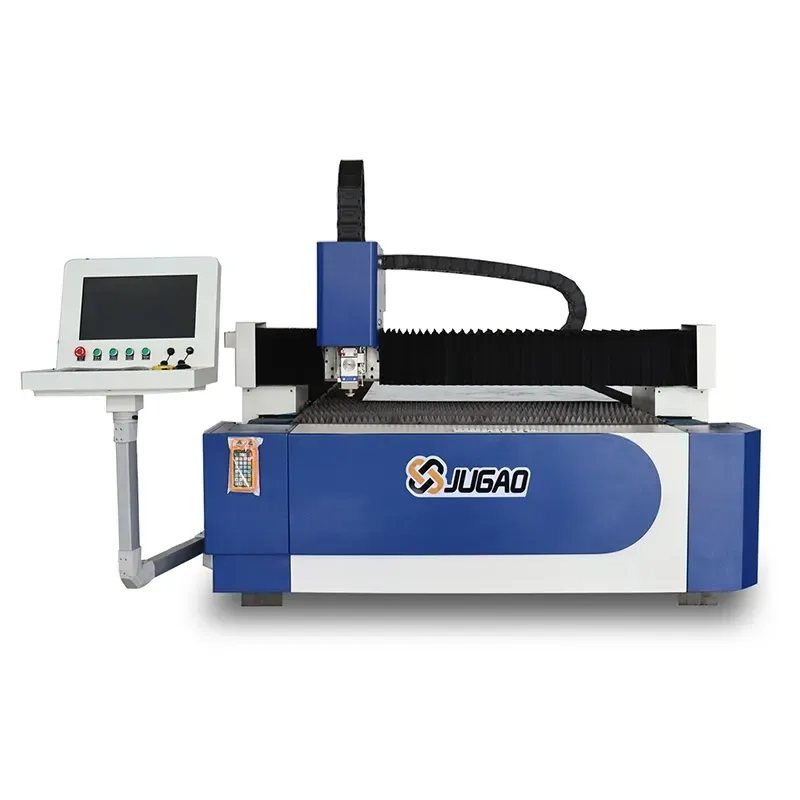
Fiber laser devices rely on optical fiber transmission technology to realize laser beam generation; rare earth additives like ytterbium are doped inside fiber cores to complete light source amplification. The concentrated laser output enables precise cutting and carving work on multiple raw materials, with outstanding processing performance for reflective metal raw materials including aluminium, red copper and brass. Benefiting from outstanding light beam quality and superior electro-optic conversion efficiency, fiber laser products have gradually become mainstream processing tools for high-precision metal cutting projects across the industry.
Working Mechanism of CO₂ Laser Devices
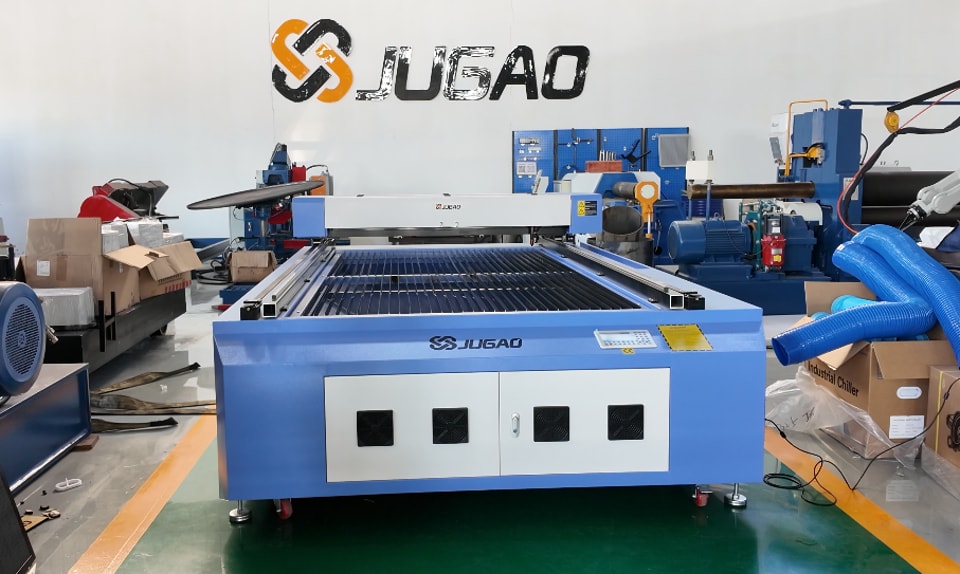
CO₂ laser equipment produces infrared laser rays by energizing mixed working gas composed of carbon dioxide, helium and nitrogen. Such laser equipment boasts comprehensive processing performance and performs excellently when machining various non-metal raw materials such as lumber, acrylic sheets, plastic, textile and glass. After decades of market application, CO₂ laser technology has formed mature and stable processing systems, gaining wide recognition thanks to stable operational reliability and diverse material processing capacity.
Performance Contrast Between Fiber and CO₂ Laser Cutting Equipment
Performance Item | CO₂ Laser | Fiber Laser |
Light-emitting Medium | Mixed carbon-based working gas | Rare-earth doped optical fiber |
Output Wavelength | Approx 10.6μm mid-infrared band | Approx 1.06μm near-infrared band |
Laser Beam Quality | Ordinary beam shaping effect | Excellent concentrated beam quality |
Cutting Processing Speed | Relatively slow, obvious shortcomings on thin plate processing | High-speed cutting, prominent advantages for metallic sheets |
Electro-optic Conversion Rate | 10%~20% | 25%~30% or above |
Applicable Raw Materials | Primary choice for non-metals, feasible for partial metal cutting | Focused on all kinds of metal processing, limited non-metal machining capability |
Daily Maintenance Input | High maintenance workload, regular optical path calibration and component cleaning required | Few daily maintenance items, basic routine inspection only |
Initial Procurement Investment | Lower upfront purchase cost | Higher initial equipment investment |
Long-term Running Cost | Continuous high daily operating expenditure | Economical for long-term continuous production |
Equipment Outer Dimension | Large overall volume with bulky structural layout | Compact mechanical design, smaller floor space |
Main Commercial Usage | Non-metal cutting & engraving, medical raw material machining | Metal blanking, product marking and metal welding work |
Cutting Rate & Production Efficiency
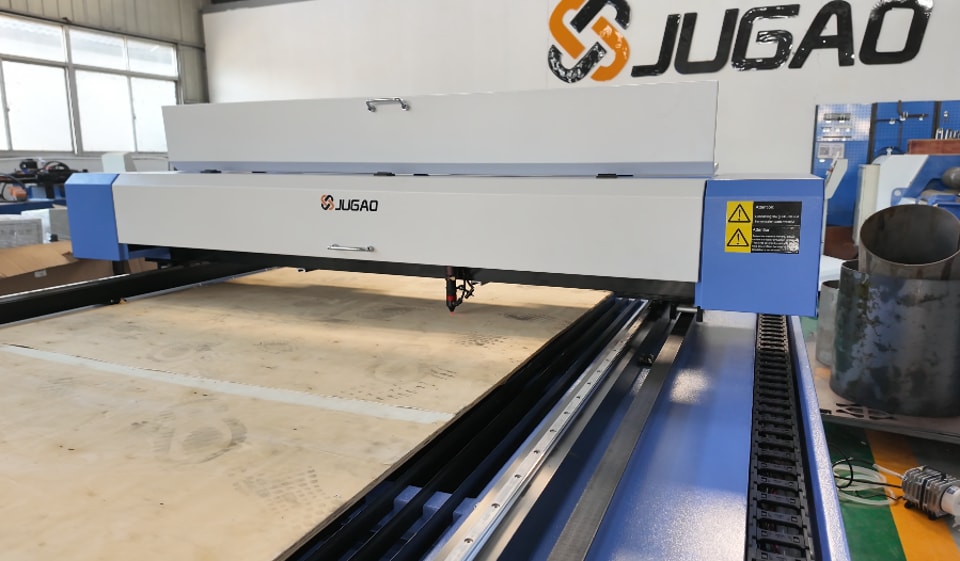
Under identical rated power parameters, fiber laser machines complete thin metal cutting far faster than CO₂ counterparts. When machining stainless steel plates below 5mm in thickness, fiber laser equipment achieves remarkable efficiency improvement by shortening single-piece processing duration and lowering comprehensive production costs. For manufacturers prioritizing high output and rapid thin-metal blanking, fiber laser serves as the preferred production configuration.
Machinable Plate Thickness & Raw Material Adaptability
While fiber lasers take the leading position in thin metal fabrication, CO₂ laser equipment retains unique strengths for thick-plate processing. When cutting metal plates exceeding 8mm thickness, CO₂ laser delivers smoother cutting surfaces and more neat trimming edges. Besides, enterprises processing diversified non-metal raw materials such as acrylic and solid wood generally select CO₂ laser devices to satisfy all-around production requirements.
Running Expense and Daily Servicing Demands
Power Utilization Rate and Energy Consumption
Fiber laser’s electro-optic conversion efficiency reaches 30% to 50%, vastly surpassing the 8%~15% energy utilization rate of traditional CO₂ laser devices. The obvious gap in energy efficiency cuts down long-term electricity expenditure for factories, helping production firms lower operating expenses while fulfilling energy-saving and eco-friendly development targets.
Regular Upkeep Standards for Two Laser Types
Adopting solid-state light source design, fiber laser equipment excludes frequently replaceable optical lenses, reflector mirrors and working gas components, which drastically reduces periodic maintenance work. On the contrary, CO₂ laser needs periodic lens cleaning, reflector replacement and working gas replenishment; these repetitive maintenance contents consume extra labor hours and increase subsequent servicing spending persistently.
Applicable Scenarios and Market Development Tendencies
Optimal Application Fields for Fiber Laser Equipment
Fiber laser suits metal processing factories focusing on high-precision cutting of thin and reflective metals including stainless steel, brass, copper, aluminium and titanium alloy. It matches large-batch, high-efficiency production requirements of automotive spare parts, electronic accessories, aerospace fittings and medical component manufacturing industries.
Suitable Processing Industries for CO₂ Laser Devices
CO₂ laser is the ideal option for factories requiring multi-material flexible processing and thick-sheet machining capacity, widely deployed in sample prototype development, advertising sign production, acrylic cutting, wood processing, packaging material manufacture and special plastic shaping sectors.
Common Query Collection
Service Life Comparison of Two Laser Sources
Fiber laser generator owns longer usable life; its core laser source can run up to 100,000 working hours. In contrast, conventional CO₂ laser tube normally needs replacement after 20,000~30,000 working hours of continuous operation.
Superiority of Fiber Lasers on Reflective Metal Cutting
Thanks to short output wavelength features, fiber laser energy can be fully absorbed by reflective metal surfaces, making it the optimal equipment for cutting aluminium, brass and copper materials compared with CO₂ laser options.
Feasibility of Non-metal Cutting via Fiber Laser Devices
Fiber laser is not the recommended equipment for non-metal blanking tasks. The longer infrared wavelength of CO₂ laser can be better absorbed by lumber, glass, acrylic and plastic, securing superior forming effect on non-metal raw material processing.
Cost Comparison of Daily Maintenance Work
Fiber laser equipment achieves remarkable maintenance cost savings. Solid-state structural design removes regular optical component adjustment and gas replacement procedures, effectively cutting down long-term after-sales maintenance expenditure against CO₂ laser machines.
Final Summary
Enterprises need to combine own processing types, available capital budget and long-run operating expense planning to complete laser model selection. Fiber laser stands out in rapid large-batch metal processing, especially thin-plate and reflective metal cutting with high efficiency and low post-purchase maintenance cost. Meanwhile, CO₂ laser gains irreplaceable competitive edge in thick metal cutting and full-category non-metal diversified machining.
If you have further questions or demand customized configuration suggestions matching your factory’s metal processing business, feel free to get in touch with the JUGAO professional team; we will customize targeted laser cutting solutions to match your actual production conditions.
Contact Us