 Get a quote
Resources
Press brake bending angle calculation method

The calculation of the bending angle of a CNC bending machine usually involves multiple factors, including material type, plate thickness, bending radius and bending coefficient. Different bending angles and material types require different calculation methods and coefficients. The following are methods for calculating bending angles for different types of materials:
1.Iron plate bending:When bending at 90 degrees, the commonly used upper mold R is 0.5, the lower mold V is 5T, and the bending coefficient is 0.4T. The formula for calculating the expanded size is L1+L2-2T+coefficient.


2.60 degree bending of iron plate (using deep insertion die)
Expanded size=L1+L2+coefficient

3.30-degree bending of iron plate (use deep insertion die)
Expanded size=L1+L2+coefficient

4.90-degree bending of aluminum plate: Normal bending upper die R0.5, lower die V=5T, bending coefficient 0.4T, V groove selection V=5T+R (R>0.5)
Expanded size=L1+L2-2T+coefficient


5.60 degree bending of aluminum plate (using deep insertion die)
Expanded size=L1+L2+coefficient

6.30-degree bending of aluminum plate (using deep insertion die)
Expanded size=L1+L2+coefficient

7.Dead edge coefficient (first use the deep-insertion die to fold a small angle, then use the flattening die to press the dead edge)

Above: Expanded size = L1+L2-0.55T

Above: Expanded size=L1+L2-0.55T+0.7W (W≤T)

Above: Expanded size = L1+L2+3.14* (R+m) (2R>T)
T≤2.0,m=0.4T;
2.0<T≤3.2,m=0.3T;
8.Pressure step difference coefficient

A. When W ≥ 2T: the expansion is calculated as two single folds;
B. When W<2T and H≥2T: the expansion is calculated as two single folds;
C. When W<2T, H<2T: expansion size = L+(H-T)*0.7;
D.When W<2T, H=T: expanded size = L+0.15T;
In addition, the calculation of the bending angle also involves the relationship between the position of the neutral layer of the material and the degree of deformation. In actual operation, it is very important to choose the appropriate calculation formula and coefficient according to the specific material, plate thickness and required bending angle.
Related
Keep
reading.
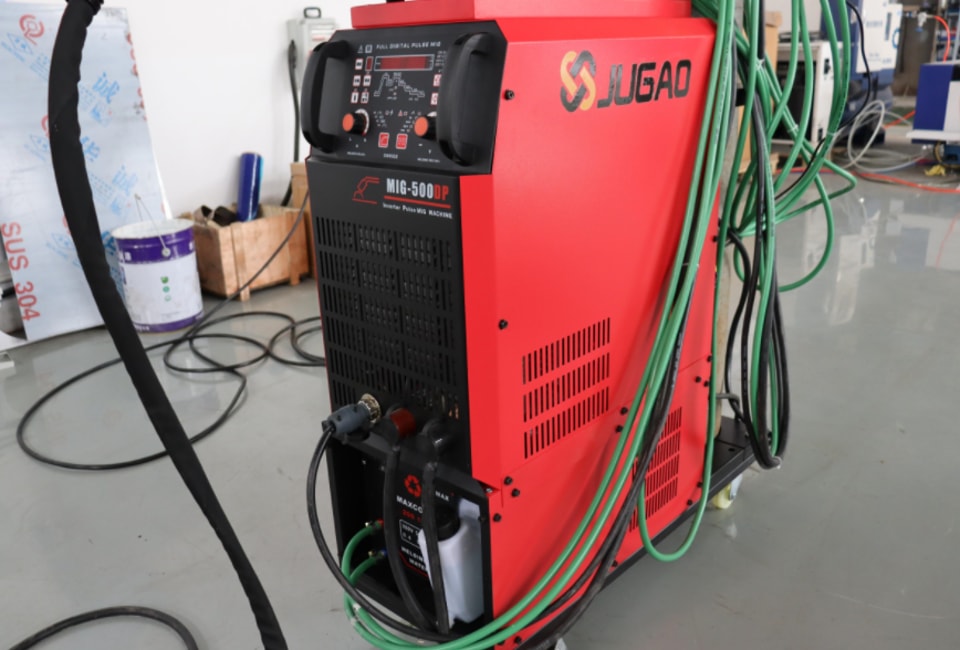 What equipment is best for welding stainless steel? Are there risks of weak welds or deformation?
 CNC Turret Punch Presses Explained: Architecture and Operation
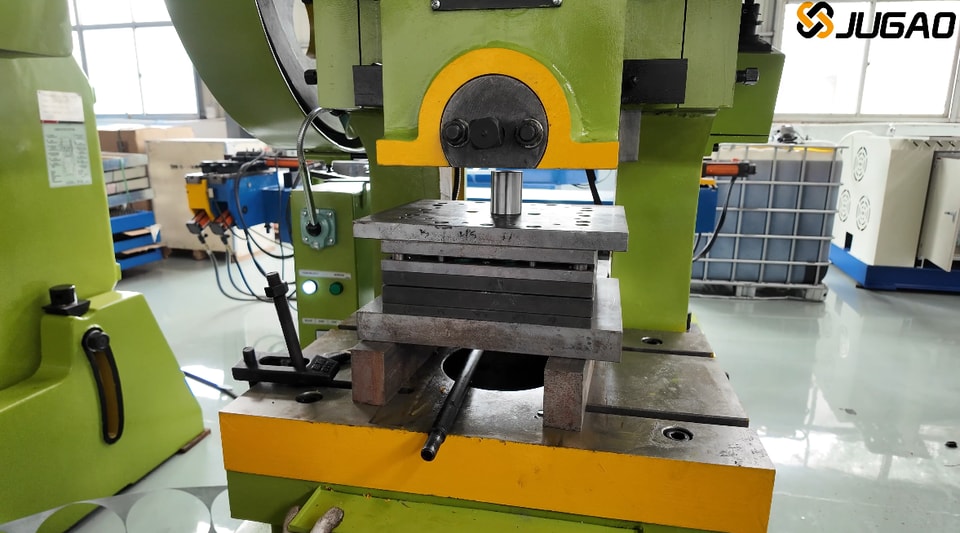 Key Factors Governing Optimal Punch Press Tonnage
 Comparison of Laser Welding Results and Application Scenarios Across Different Materials
 How to Choose Between Air-Cooled and Water-Cooled Laser Welding Systems
 Understanding Punching Machines: Principles, Types, and Selection
 How can one effectively follow the installation guidelines for a pipe-bending machine?
 For which types of products is an automatic wire-feeding laser welding machine suitable?
 What Are the Latest Punching Machine Trends and Technological Breakthroughs?
 What Triggers Punching Machine Noise and How Can You Quieten It?
 What factors influence the replacement cycle of wear parts in a pipe-bending machine?
 Beyond price, what key parameters should you consider when purchasing welding equipment?
Engineering review
Send a drawing.
Get an engineer.
Standard selections answered within 4 hours. Parts outside the rules get a written process review within 24 hours.
- Part drawing: DXF, DWG, STEP or PDF
- Material and thickness
- Longest bend or cut length
- Yearly volume
Write to info@ntjugao.com or message the factory on WhatsApp +86 132 2211 1178.
Drawings (DXF, DWG, STEP, PDF): attach them to an email to info@ntjugao.com, quoting your name.