
Key Components and Maintenance of a Shearing Machine
2026-05-25

Contents
• Basic Introduction to Shearing Machine Components
•
a. Frame
•
b. Tool Holder
•
c. Back Gauge Mechanism
•
d. Blade Clearance Adjuster
•
e. Front Support Device
•
f. Material Clamp & Safety Guard
•
g. Electrical Control System
•
h. Hydraulic Drive System
• Component Maintenance Guidelines
○ Daily Maintenance
○ Common Fault Troubleshooting
• Frequently Asked Questions
• Conclusion
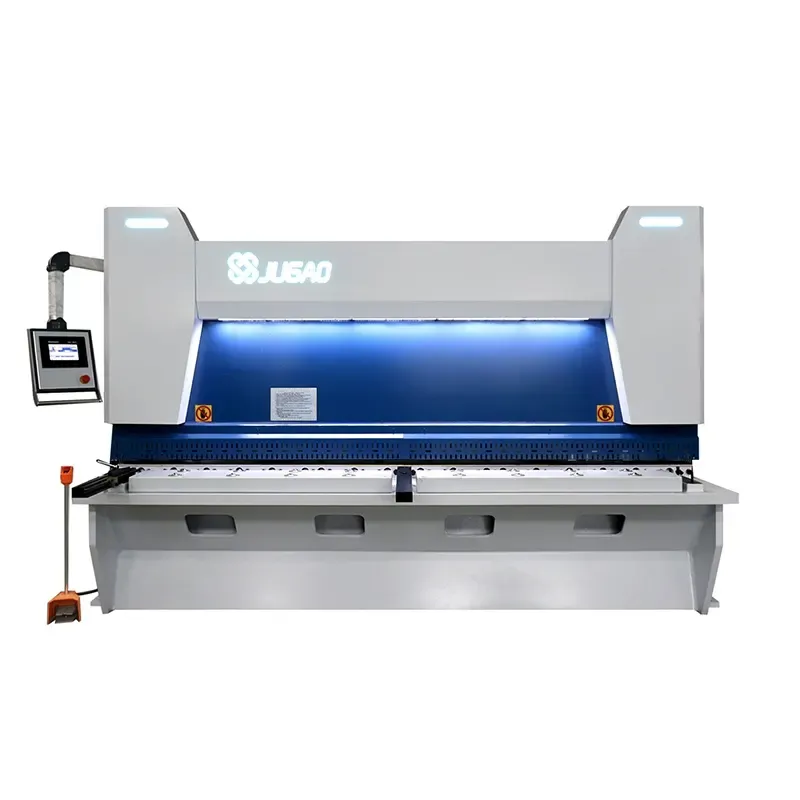
In metal fabrication and processing, mastering the core components of a shearing machine is essential for production and mechanical maintenance personnel. This article systematically explains the structure, function and importance of each key part of the shearing machine, helping users fully grasp the operating principle of the equipment and optimize its working efficiency and service life.
Core Components of a Shearing Machine
1. Frame
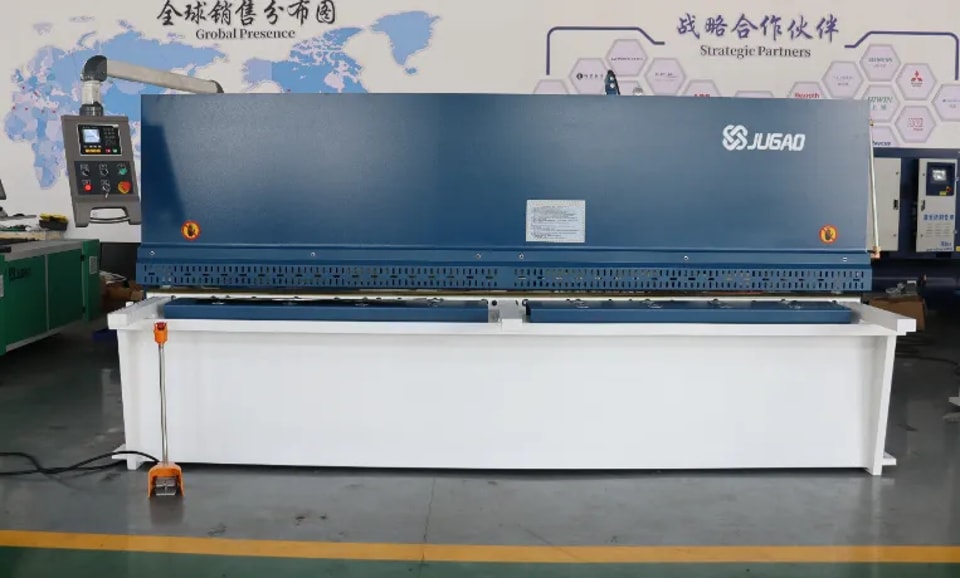
The frame serves as the main bearing structure of the shearing machine, with all transmission and execution mechanisms installed on it. It adopts an integrated welded steel structure, featuring high structural rigidity and excellent resistance to deformation, ensuring stable operation under high shear force.
2. Tool Holder
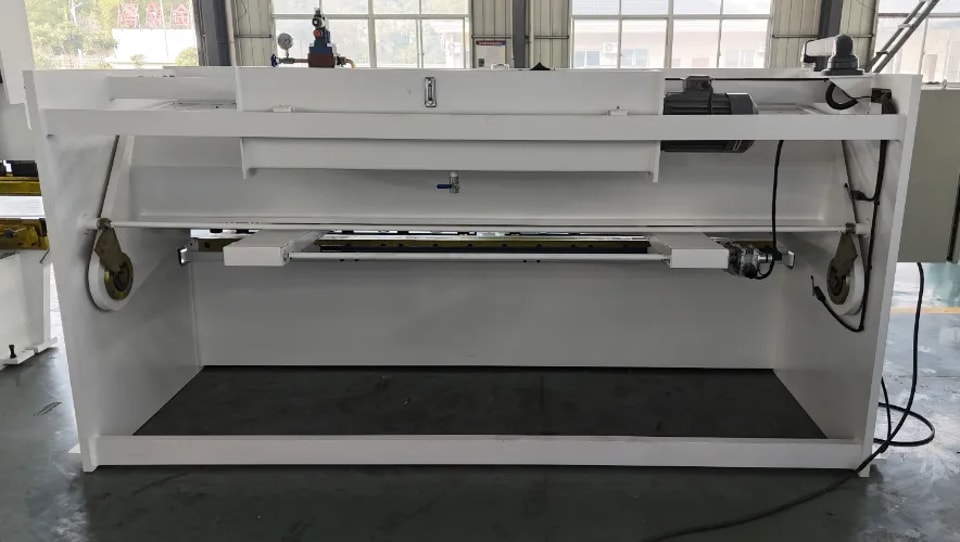
The tool holder is used to fix the upper blade and connect with the hydraulic cylinder, completing the up-and-down linear movement to transmit shear force and finish the shearing action. Meanwhile, the back gauge mechanism is mounted on the tool holder to realize the size positioning of the sheet to be cut.
3. Back Gauge Mechanism
This mechanism is fixed on the tool holder, mainly composed of a adjusting motor, fine-tuning device, baffle lifting assembly, digital display meter, drive screw and guide rod.
Driven by the electric control button, the motor drives the screw to rotate, pushing the back baffle to move forward and backward, so as to accurately locate the sheet length and complete fixed-size cutting.
4. Blade Clearance Adjuster
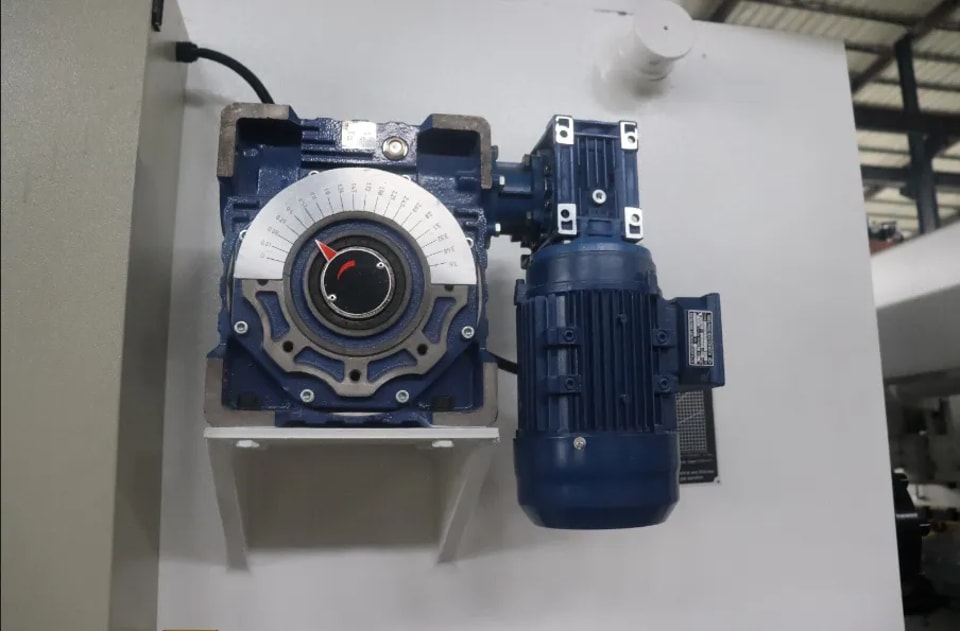
This device is used to adjust the gap between the upper and lower blades according to the material type and thickness of the workpiece, so as to obtain the optimal shearing effect.
Reasonable clearance can extend blade life and ensure cutting quality. The standard adjustment principle is to set the clearance to about 10% of the sheet thickness.
5. Front Support Device
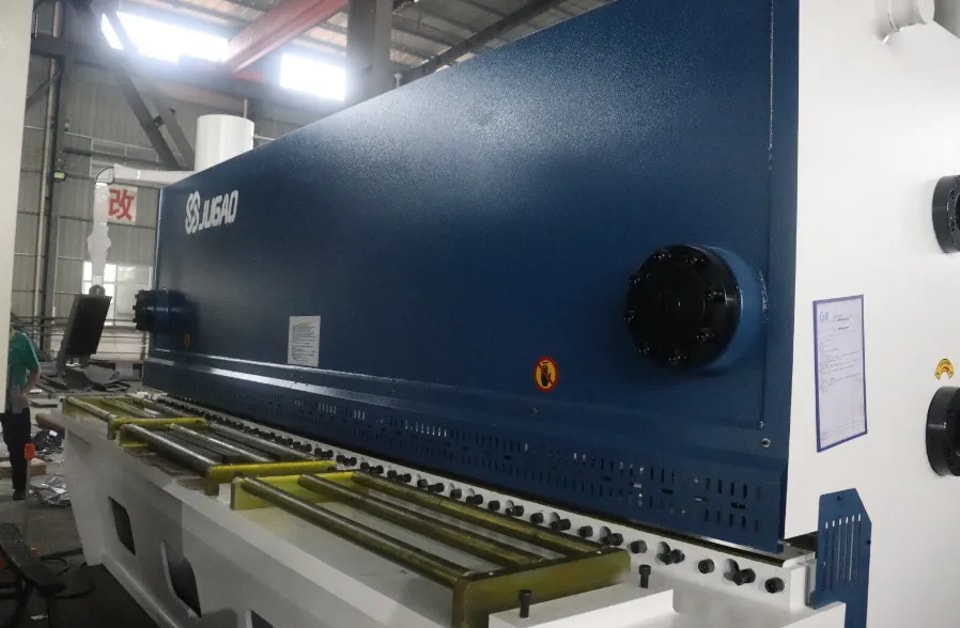
The front support device is installed on the workbench to carry the metal sheet, which effectively reduces the labor intensity of operators and facilitates convenient feeding. The workbench is also equipped with a side positioning device to keep both sides of the cut sheet perpendicular.
6. Material Clamp & Safety Guard
The material clamp (presser foot) is used to compress the sheet during shearing to prevent movement or bouncing, ensuring cutting accuracy.
The fixed safety guard is installed at the lower front of the equipment, which can prevent operators from accidentally touching the blade or presser foot and avoid personal injury.
7. Electrical Control System
The electrical system provides control power for the whole machine, mainly starting the oil pump motor to drive the hydraulic system. It controls the solenoid valve according to operating instructions, drives the tool holder to lift, and realizes the back gauge movement, blade clearance adjustment and shear angle control.
8. Hydraulic Drive System
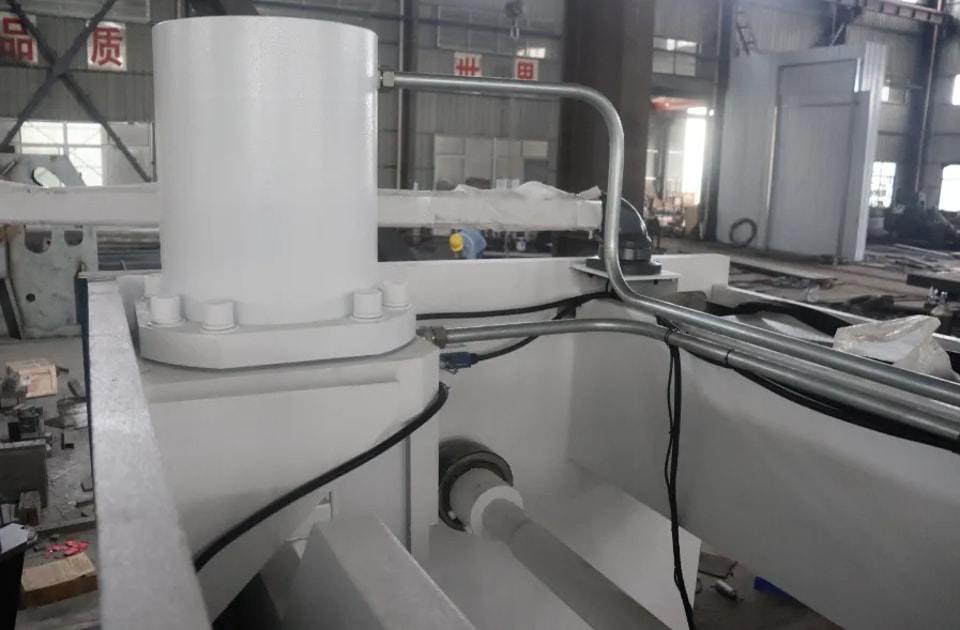
The hydraulic system consists of main oil pump, hydraulic valve group, hydraulic cylinder, presser cylinder and oil pipeline.
The oil pump provides stable shear pressure; the valve group controls the oil pressure and flow direction; the hydraulic cylinder drives the tool holder to shear; the presser cylinder compresses the workpiece to ensure processing accuracy.
Maintenance Guidelines for Shearing Machine Components
Daily Maintenance
Regular cleaning is required to remove metal chips, dust and oil to keep all parts in good working condition. Conduct periodic inspections on blades, hydraulic circuits and electrical components, detect potential faults in advance and reduce equipment downtime.
Common Fault Troubleshooting
Uneven cutting is the most common problem, which is usually caused by blade misalignment or improper back gauge positioning. Adjust the blade parallelism and back gauge parameters in time to restore normal cutting quality.
FAQ
What are the core components of a shearing machine?
The core components include frame, tool holder, back gauge, blade clearance adjuster, clamping device, electrical system and hydraulic system.
How to maintain shearing machine blades?
Regularly check the blade wear, sharpen or replace blades in time; keep the blade clean and remove metal debris; ensure accurate installation and alignment.
How to solve the problem of uneven cutting?
First check the blade installation and alignment, then verify the back gauge positioning and blade clearance, and readjust the relevant parameters to eliminate the fault.
Conclusion
Understanding the composition and function of shearing machine components is the basis for efficient use and scientific maintenance. Focusing on the maintenance of key structures such as blades, frame, hydraulic and electrical systems can significantly improve equipment stability and production efficiency. For more operational and maintenance support, you can consult professional technical personnel.
Contact Us