
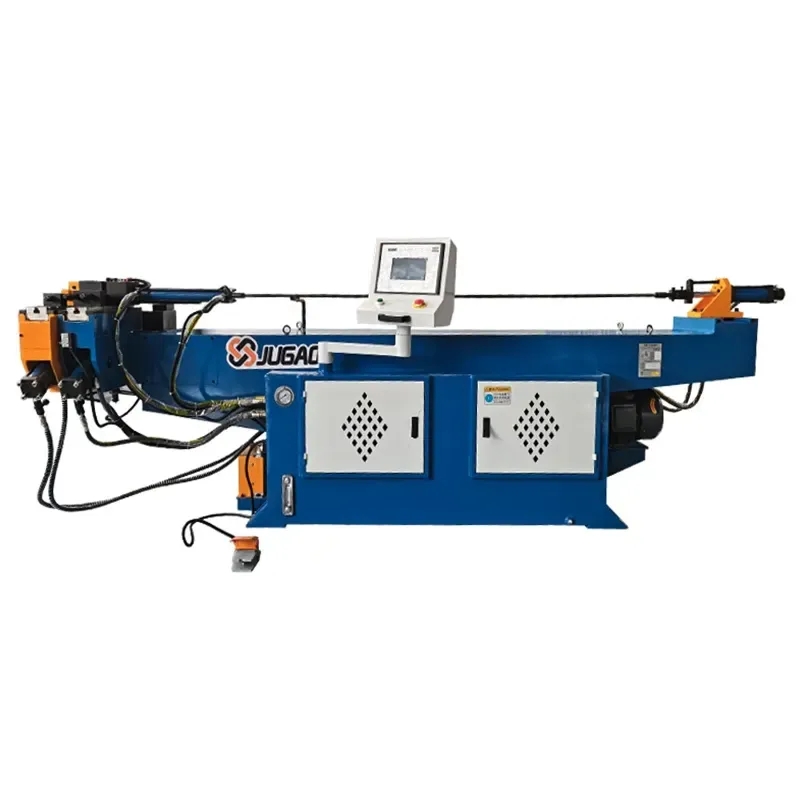
Why is the trial run of a pipe bending machine crucial after installation?
2026-09-29

The machine is installed, the wiring is complete, and the leveling is done. Everything looks ready to go, but the true test of installation quality isn't the moment the power is turned on—it’s when the machine bends its first pipe.
Many installation errors are invisible when the machine is running without a load; problems only surface once the machine is under load and actively bending pipe. That is precisely the purpose of the trial run: it serves as the final opportunity for comprehensive verification before full-scale production begins. Detecting and resolving issues at this stage minimizes costs and makes adjustments far easier.
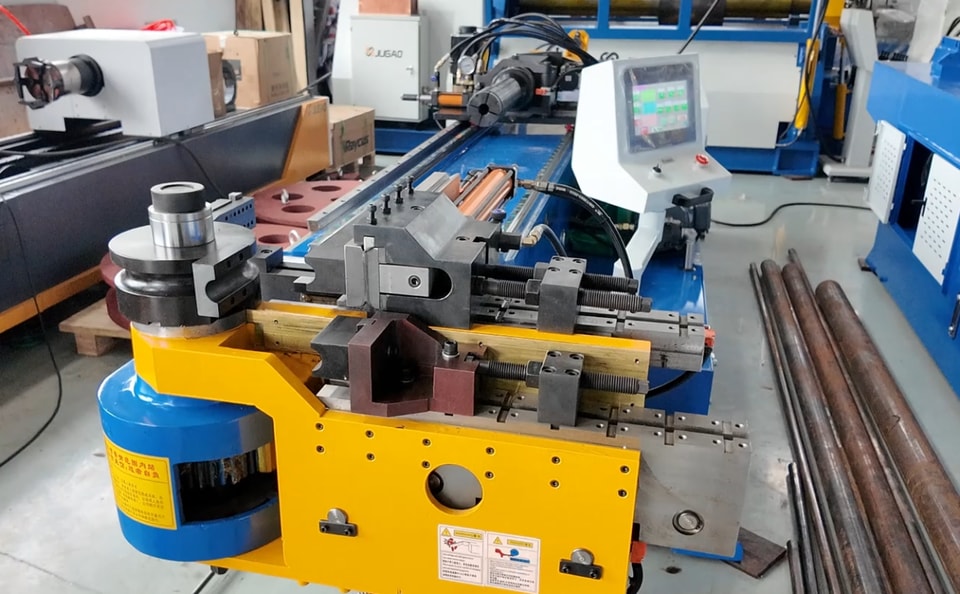
What does the trial run verify?
Simply put, it covers four key areas: the overall stability of the machine, whether bending accuracy and repeatability meet standards, the alignment between the tooling and the pipe, and the integrity of the mechanical and electrical systems related to the installation.
While these objectives may sound straightforward, each one directly impacts future production efficiency and product quality. Repeatability is particularly critical—producing a single compliant pipe isn't difficult; the real challenge lies in ensuring that *every* pipe meets the standard.
Verify two things before getting started
First, check the machine's leveling and anchoring status. Re-examine the machine bed and main frame using a precision level to ensure the levelness is within the permissible range. Anchor bolts must be tightened evenly according to specifications; avoid uneven tension. Uneven securing can easily lead to vibration and displacement during the trial run.
Second, check electrical and hydraulic connections. Verify the power supply voltage and phase balance, ensure reliable grounding, and inspect hydraulic hose routing and fittings for leaks. Unstable power or minor hydraulic leaks can affect servo control and bending consistency during the trial production process.
Trial production proceeds in several steps
Step one: No-load operation. Cycle through all axes, clamping devices, mandrels, and rotary movements without a tube loaded. Listen carefully for abnormal noise, vibration, or jerky movement. Such signs usually indicate alignment issues or improper fastening—problems that are easily rectified at this stage.
Step two: Simple bending test. Start with a single bend using a standard radius and a short tube length. If there are installation issues, even a simple bend like this will reveal them through angular deviations, surface scratches, or unexpected spring-back.
Step three: Check accuracy and repeatability. Bend the same part repeatedly and compare the results. If the angles vary from piece to piece, potential causes include incomplete machine leveling, misaligned tooling, or residual stress in the machine frame from the installation process. It is far easier to resolve these issues now than after full-scale production begins.
Common Installation Issues During Trial Production
Misalignment between the tooling and the machine centerline. This is one of the most common issues during trial production, often caused by improper installation of the bending head or incorrect tooling setup. Symptoms include tube ovality, uneven wall thinning, and surface tool marks.
Insufficient clamping force or incorrect mandrel positioning. Tube slippage or wrinkling during test bends may appear to be process-related issues, but they are frequently linked to installation and alignment. On a properly installed machine, the response to parameter fine-tuning is predictable.
Vibration or noise under load. Vibration during bending is a clear warning sign, usually indicating anchoring issues, uneven floor contact, or loose mechanical connections left over from installation. Conducting trial production under load is the fastest way to identify these problems.
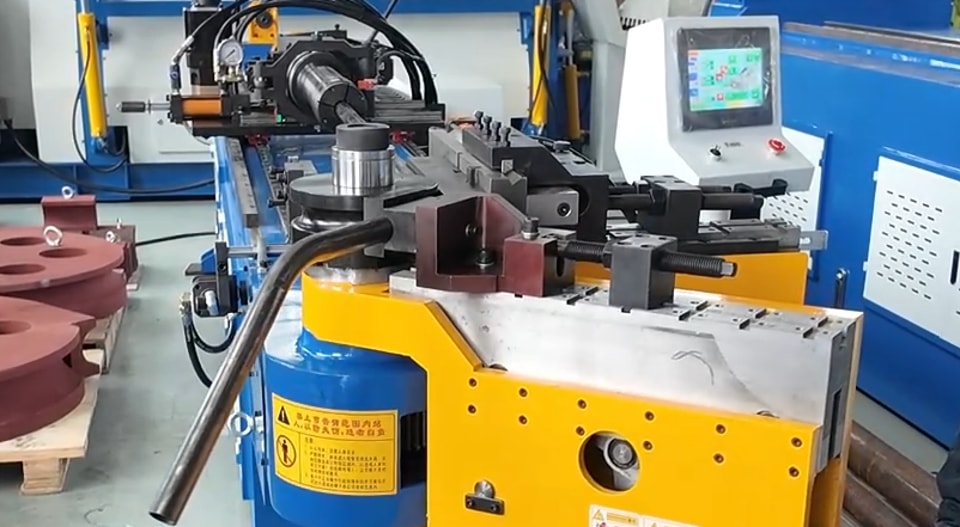
Principles for Parameter Fine-Tuning
Avoid using maximum speed during trial production. Slow, controlled movement allows for better observation of the machine's operating status and helps distinguish between installation issues and process setup problems. Gradually increase pressure and speed only after confirming that everything is functioning correctly.
Rotation and feed accuracy are key indicators of proper installation. Deviations observed during trial production usually indicate a need to adjust encoder alignment or mechanical installation.
A Few Frequently Asked Questions
How long does a trial run take? It continues until bending accuracy and repeatability remain stable across multiple cycles. Depending on the complexity of the part, this can take anywhere from a few hours to several days.
Can a trial run detect all installation errors? Not every issue will surface immediately, but it is the most effective way to identify major mechanical, electrical, and alignment problems before full-scale production begins.
What materials are used for the trial run? You must use the same batch of material intended for actual production. Different materials have different bending characteristics; using different materials would render the trial results meaningless.
A trial run is not merely a formality. It is your best opportunity to detect installation errors early and ensure long-term bending accuracy. Bringing issues to light and resolving them beforehand ensures a smooth production process.
Contact Us