


What are some methods to solve the problem of asymmetrical bending in pipes?
2026-08-22

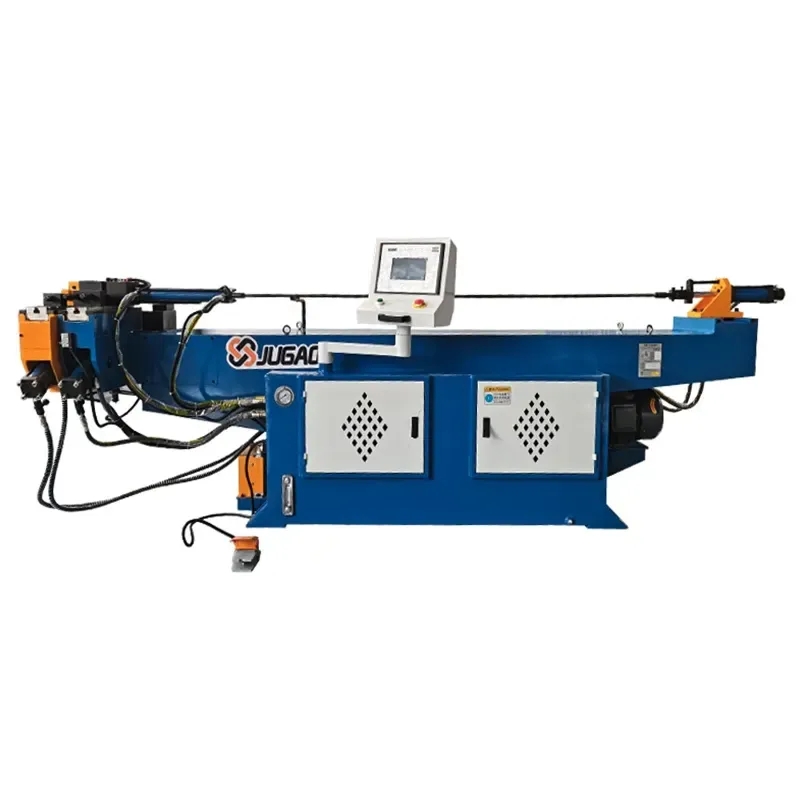
Asymmetrical pipe bending is a frustrating problem. The pipe bends unevenly, with one side at the correct angle and the other off-center, or the left and right sides are different, or the front and back are inconsistent. This issue is rarely caused by a single factor. I've handled many such cases, and below I've listed some common causes and corresponding troubleshooting methods.
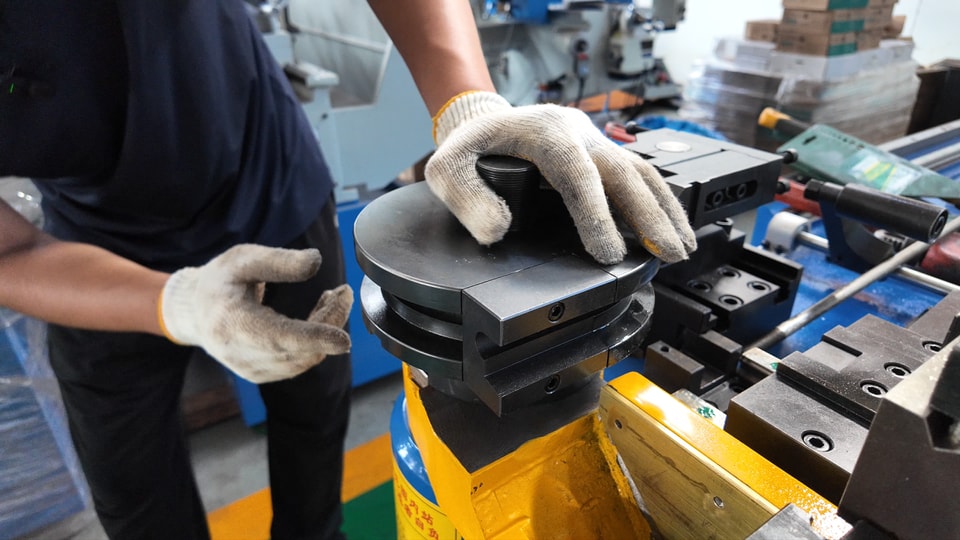
I. Asymmetry Caused by Clamping Issues
If the pipe isn't securely clamped, one side will experience greater force during bending while the other side slips, which is the most direct cause of asymmetry.
Uneven clamping force on both sides of the clamping die will pull the pipe to one side; worn clamping surfaces will result in uneven clamping force distribution; insufficient clamping stroke will prevent the pipe from being fully secured.
Check if the wear on both sides of the clamping die's working surface is consistent; whether the clamping pressure is balanced on both sides; whether the pipe can be manually rotated after clamping—if it can rotate, the clamping force is insufficient.
II. Asymmetry Caused by Positioning Issues
If the pipe wasn't pushed into place during loading, or if there are foreign objects on the positioning surface, the left and right positioning of the pipe will be inconsistent. If the starting point of the bend is off, the resulting bend angle will naturally be off.
Check if the pipe end is completely flush with the positioning surface; check for metal debris or oil on the positioning surface; verify the feed length setting is correct. After changing specifications, reconfirm the positioning reference; do not default to the previous batch's position.
III. Asymmetry Caused by Die Installation Issues
The bending die, clamping die, and anti-wrinkle die are not aligned, or their installation positions on the left and right sides are inconsistent. When bending, the direction of force on the pipe is off, resulting in an asymmetrical angle.
Check if the center lines of the bending die and clamping die are aligned; check if the installation positions on the left and right sides of the die are consistent; check for asymmetrical wear on the die.
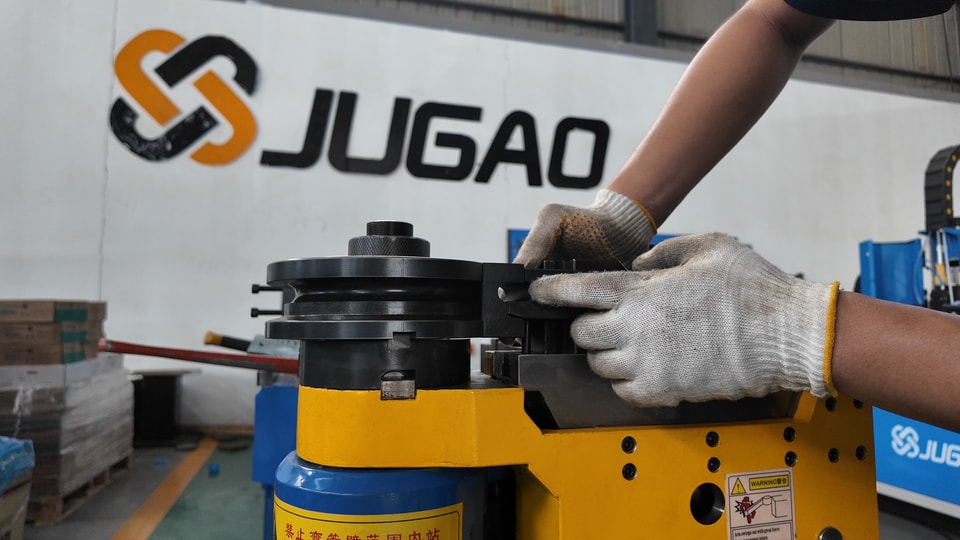
IV. Uneven Wear of the Bending Die
If one side of the bending die groove is more worn than the other, the force on the pipe during bending will be biased towards the less worn side, causing a difference in angle.
Observe the condition of the left and right sides of the bending die groove. If one side has obvious shiny marks or wear grooves, it indicates uneven wear. Repair or replace the bending die promptly.
V. Uneven Wall Thickness in the Pipe
The pipe wall thickness is unevenly distributed circumferentially, with one side thicker than the other. When bending, the thicker side experiences greater deformation resistance, while the thinner side deforms more easily, resulting in the pipe bending towards the thinner side.
Try replacing the pipe with a different batch. If the asymmetry disappears after replacing the pipe, it's likely a problem with the material itself. Communicate with the supplier to confirm the pipe wall thickness tolerance range.
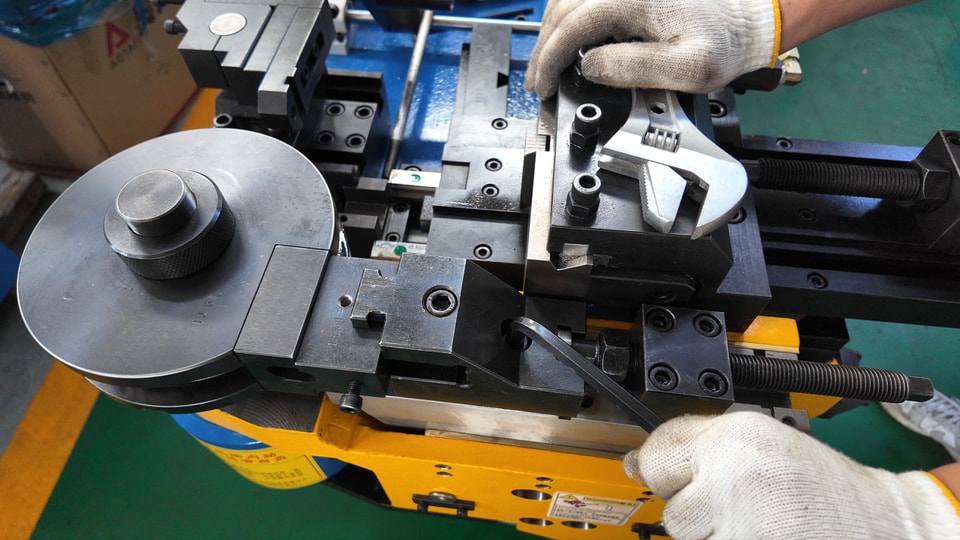
VI. Feeding or Rotation Shaft Deviation
For multi-bend pipe fittings, deviations in the feeding length and rotation angle between each bend will cause subsequent bends to deviate. These deviations accumulate in later bends, ultimately leading to overall pipe asymmetry.
Check the repeatability of the feeding and rotation shafts. Use a dial indicator to measure the actual movement distance against the set value. If the encoder feedback doesn't match the actual position, recalibrate.
VII. Suggested Troubleshooting Order
First, confirm that the pipe is pushed into place and that the clamping force is sufficient—this is the simplest and most easily overlooked step.
Next, check if the wear on the working surface of the clamping die is uniform on both sides, and if there are any signs of unilateral wear in the groove of the bending die.
Try a pipe of the same specification but from a different batch to rule out the possibility of uneven material thickness.
If all of the above are normal, then check if there are any deviations in the positioning accuracy of the feed shaft and the rotary shaft.
An Easily Overlooked Detail
If asymmetry only occurs at a specific angle of bend, while other angles are normal, the problem often lies in the mold installation or positioning corresponding to that bend. If all bends are asymmetrical, it may indicate a problem with the overall left-right balance of the machine, such as inconsistent tightening force of the anchor bolts on both sides, or an improperly level machine base.
When you encounter asymmetry issues, have you noticed whether it only occurs at a specific angle or is it asymmetrical across all bends? This characteristic can help narrow down the troubleshooting scope. Welcome to discuss.
Contact Us