
How can pipe bending machines improve efficiency in handrail manufacturing? A professional analysis
2026-06-16

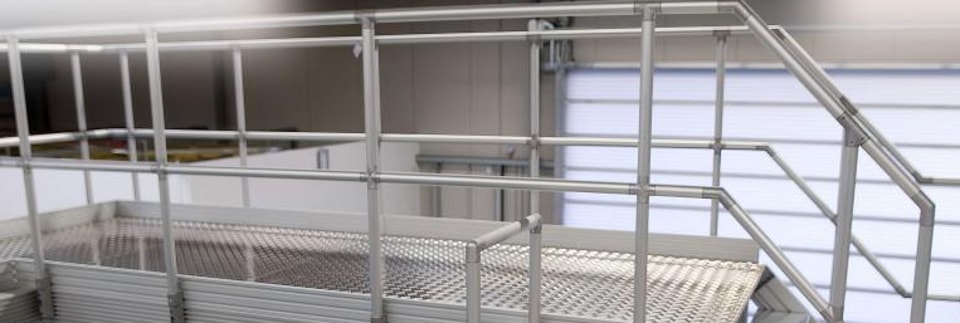
In handrail production, whether it's stair railings, balcony railings, or lobby handrails, pipe bending machines play a crucial role. They directly affect the product's precision, appearance, and production speed. Below, we explain how pipe bending machines can improve the overall efficiency of handrail manufacturing from three aspects: efficiency, quality, and cost.
I. Significantly Improved Production Efficiency and Shorter Delivery Cycles
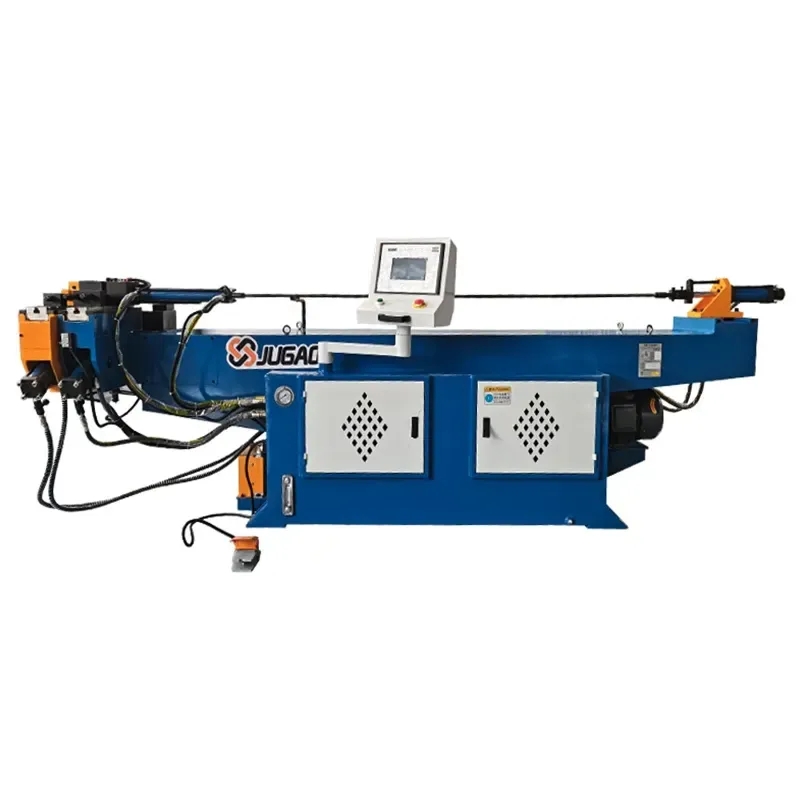
Traditional manual pipe bending relies on human experience and simple molds. Bending a single pipe requires repeated measurements and adjustments, resulting in slow speed and a high risk of errors. CNC pipe bending machines are completely different: the operator only needs to input the bending angle, radius, and quantity on the touchscreen, and the machine automatically completes all actions including clamping, bending, and retraction. A program can be permanently saved and directly recalled for subsequent orders of the same type, eliminating the need for re-adjustment.
For mass production (e.g., a residential project requiring hundreds of handrail posts of the same specifications), automatic pipe bending machines can operate continuously, allowing one person to oversee multiple machines simultaneously. Compared to manual operation, efficiency is increased by 3-5 times, and delivery time is shortened from weeks to days.
II. Guaranteed Consistent Angles for Every Handrail, Zero Rework on-site
Staircase handrails are often composed of multiple sections spliced together. Even slight angular errors can accumulate and cause the entire handrail to become crooked. Manual pipe bending makes it difficult to ensure that the bending angle of each pipe is exactly the same. Often, misalignment is only discovered on-site, requiring on-site cutting, grinding, and adjustments, which is time-consuming and labor-intensive.
CNC pipe bending machines precisely control the bending angle using servo motors or hydraulic systems, achieving a repeatability of ±0.5°. This means the first and 100th handrails will have the exact same curvature. Installers can directly connect them on-site without further adjustments, significantly saving installation time.
III. Reduced Material Waste and Lower Production Costs
Manual pipe bending often results in over-bending or under-bending due to inaccurate positioning or insufficient springback estimation, rendering the entire pipe unusable. Stainless steel and aluminum alloy handrails are expensive materials; every 1% reduction in scrap rate translates to substantial annual savings.
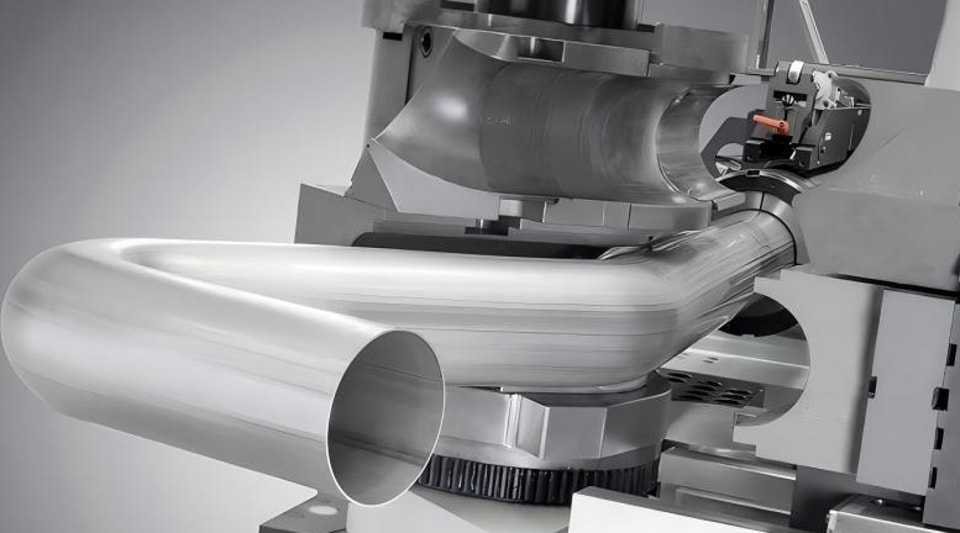
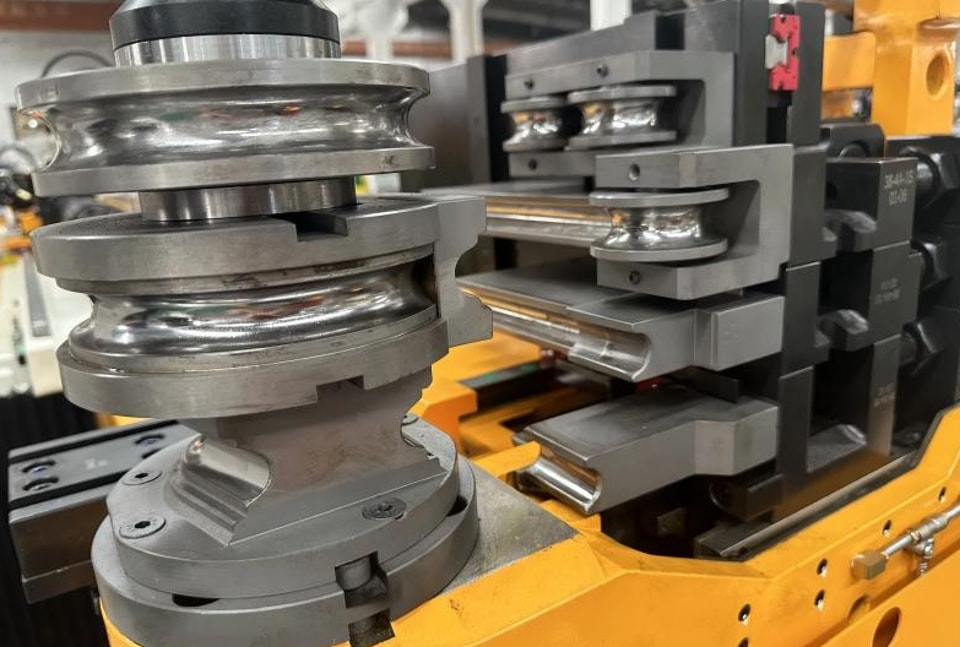
Pipe bending machines, through a built-in springback compensation algorithm, automatically adjust the bending amount based on material characteristics, ensuring accurate final angles. Simultaneously, the mandrel and anti-wrinkle die internally support the pipe wall, preventing flattening or wrinkling at the bend and avoiding scrap due to appearance defects. The high-quality bent surface also reduces the workload of subsequent grinding and polishing.
IV. Easily cope with complex shapes and increase product added value
Modern buildings have increasingly higher requirements for the aesthetics of handrails. Complex designs such as curved handrails, spiral staircases, and double-radius gradient curves are simply impossible to complete by hand. The multi-axis CNC pipe bending machine can complete three-dimensional bending in space, achieve multiple bends at different angles with one clamping, and easily produce decorative handrails such as wavy and S-shaped handrails.
Companies with this ability can undertake high-end customized projects, with higher product premiums and larger profit margins.
V. Daily maintenance tips to maintain high efficiency
Check the hydraulic oil level and mold wear every shift, and replace scratched molds in a timely manner.
Clean metal debris on the guide rails and mandrel and reapply elbow oil every week.
Calibrate the angle sensor quarterly to ensure long-term accuracy.
Provide simple training to operators to avoid equipment damage caused by misoperation.
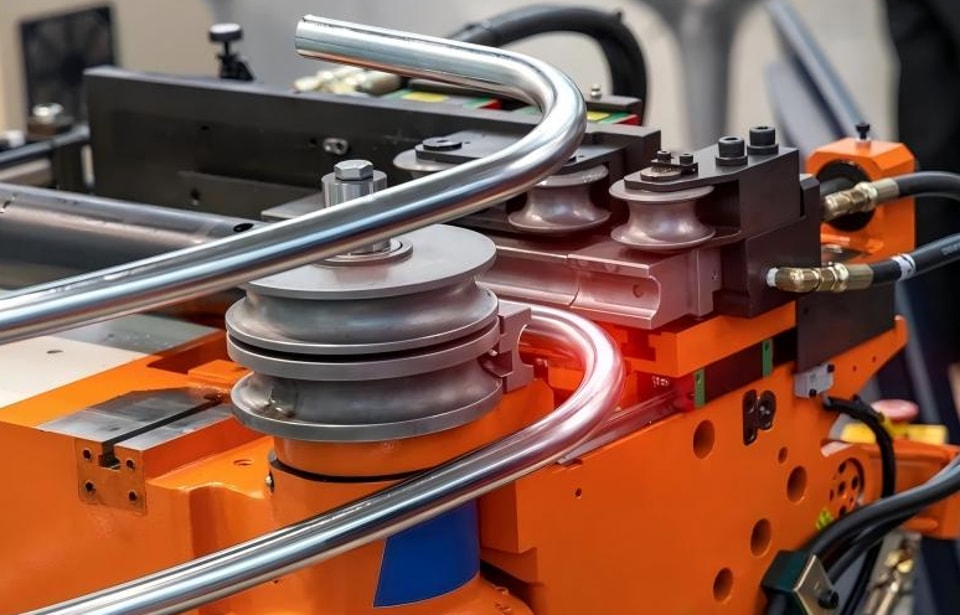
In the handrail manufacturing industry, pipe bending machines are no longer just tools to replace manual labor, but core equipment for improving efficiency, ensuring quality, and expanding design capabilities. Whether it's standardized mass production or personalized customization projects, a reliable pipe bending machine can help manufacturers complete orders faster, better, and more cost-effectively, thereby gaining an advantage in the fierce market competition.
Contact Us