 Get a quote
Resources
Features of the operation of the universal plate rolling machine
In recent years, countless universal plate rolling machines have been produced in my country, and their rolling processes have become increasingly sophisticated. With the continuous advancement of hydraulic plate rolling machine production technology, the precision and performance of domestically produced components have reached a high level.
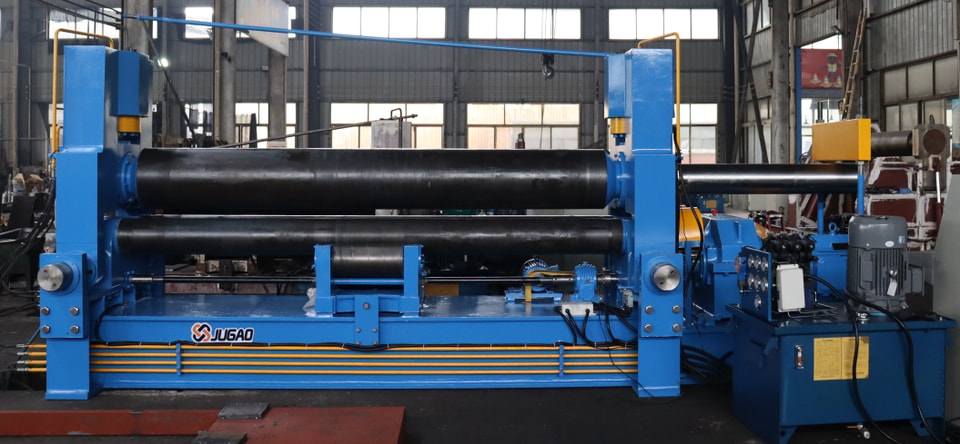
Below is an overview of the universal plate rolling machine's rolling process, which can be roughly divided into four parts:
1. Pre-bending: During plate rolling, a section of length at each end of the plate does not bend due to lack of contact with the upper roller; this is called the remaining straight edge. In the process, the small lever arm at which the plate begins to bend is called the theoretical remaining straight edge, and its size depends on the equipment mechanism and its bending form.
2. Centering: The purpose of centering is to ensure that the workpiece generatrix is parallel to the roller axis, preventing production skewing.
3. Rolling: Rolling is the main process of product forming, and it can be either single-feed or multi-feed. Multi-feed is commonly used for rolling thick plates. The number of feeds depends on the process constraints and equipment limitations. When the springback from cold rolling is significant, a certain over-rolling amount must be added.
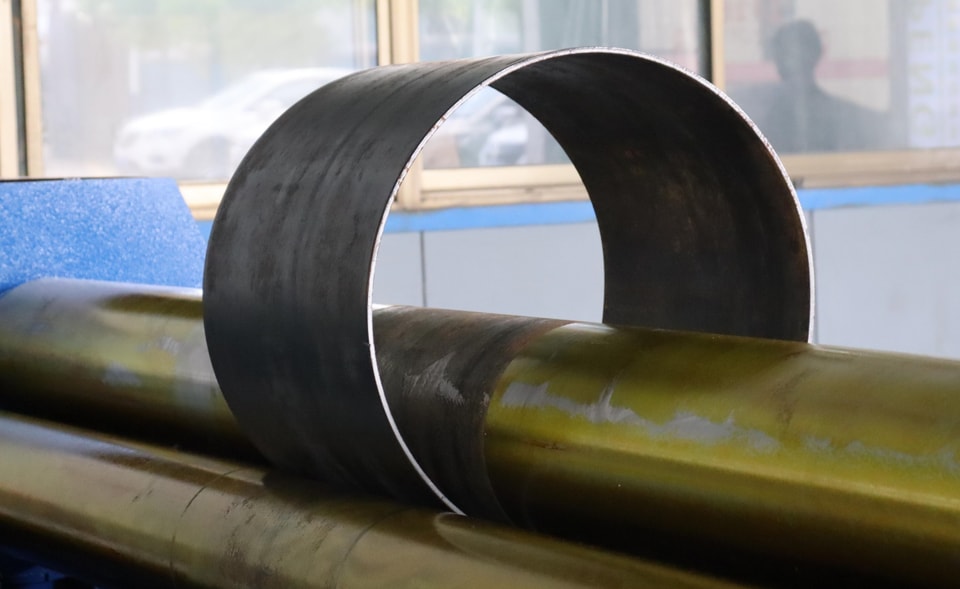
4. Straightening: The purpose of straightening is to make the curvature of the entire circle as uniform as possible to ensure product quality.
The general rounding process consists of three steps:
(1) Loading: Adjust the working roller to the position of the required large correction curvature according to experience or calculation.
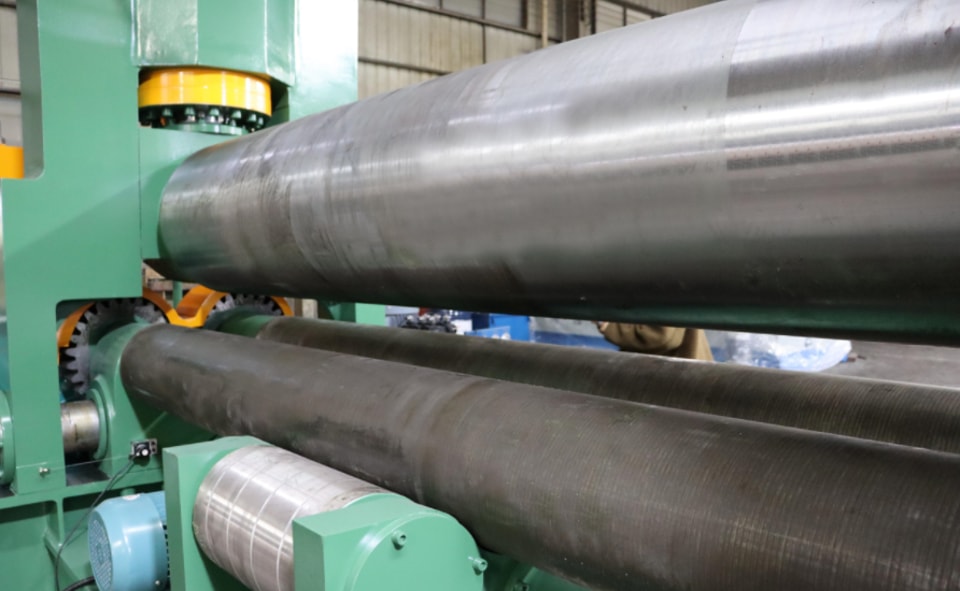
(2) Rolling: Roll the roller 1-2 times under the correction curvature to make the whole roll consistent.
(3) Unloading: Gradually unload the load and roll the workpiece multiple times under the gradually decreasing correction load
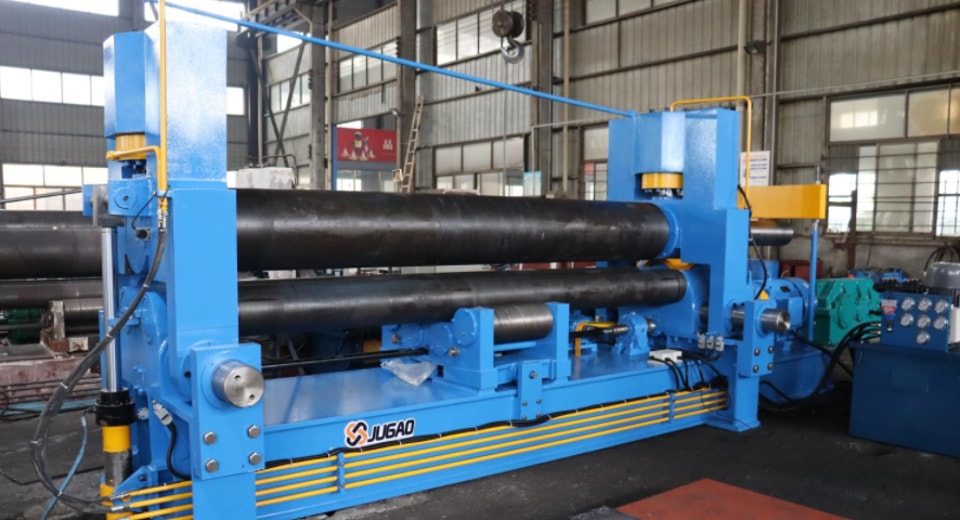
In summary, the universal plate rolling machine adopts hydraulic transmission for upper roller lifting and horizontal movement, driven by the lower roller, and has an electrical centralized control operating system. It can complete the pre-bending of both ends of the plate and the rolling of cylindrical and arc-shaped workpieces in one loading. It can also perform certain shaping and leveling of metal plates. It has the effects of direct pre-bending, saving time and materials. It is equipped with NC system control to improve the degree of automation.
Related
Keep
reading.
 Comparison of Laser Welding Results and Application Scenarios Across Different Materials
 How to Choose Between Air-Cooled and Water-Cooled Laser Welding Systems
 Understanding Punching Machines: Principles, Types, and Selection
 How can one effectively follow the installation guidelines for a pipe-bending machine?
 For which types of products is an automatic wire-feeding laser welding machine suitable?
 What Are the Latest Punching Machine Trends and Technological Breakthroughs?
 What Triggers Punching Machine Noise and How Can You Quieten It?
 What factors influence the replacement cycle of wear parts in a pipe-bending machine?
 Beyond price, what key parameters should you consider when purchasing welding equipment?
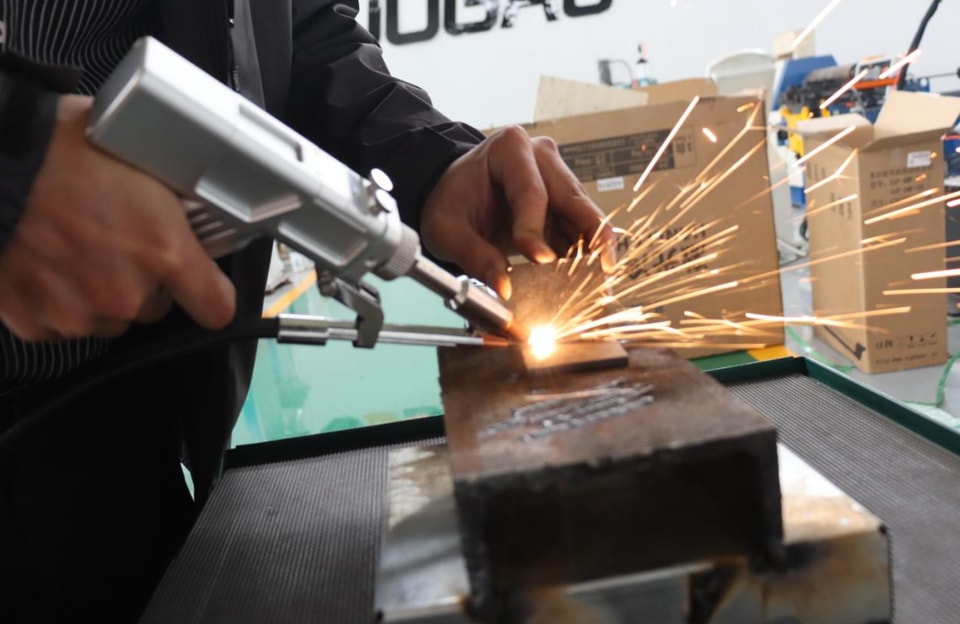 4 Common Methods for Inspecting Weld Quality
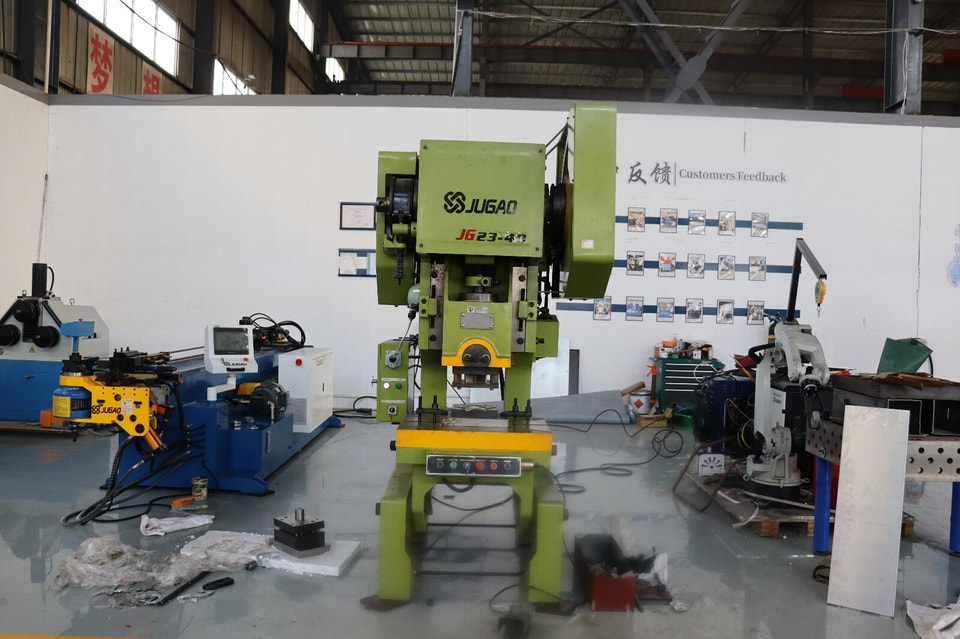 Selecting the Top Punching Machines for Small Workshops & Heavy Industry
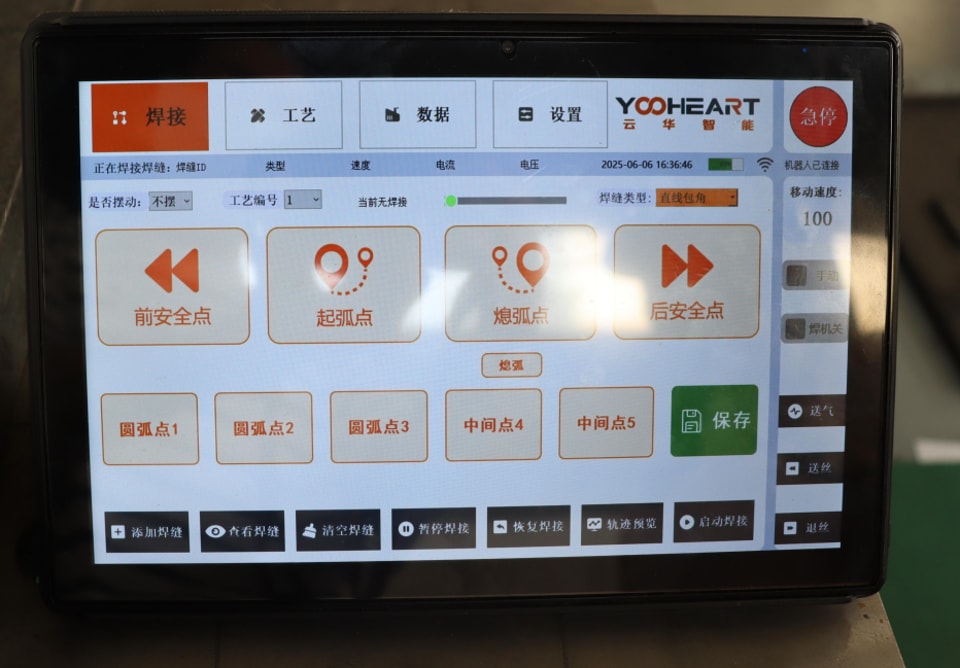 How do you set the welding path for a robotic laser welding machine? Can it perform precise welding on complex workpieces?
Engineering review
Send a drawing.
Get an engineer.
Standard selections answered within 4 hours. Parts outside the rules get a written process review within 24 hours.
- Part drawing: DXF, DWG, STEP or PDF
- Material and thickness
- Longest bend or cut length
- Yearly volume
Write to info@ntjugao.com or message the factory on WhatsApp +86 132 2211 1178.
Drawings (DXF, DWG, STEP, PDF): attach them to an email to info@ntjugao.com, quoting your name.