
What are the characteristics of laser welding robots?
2026-05-14

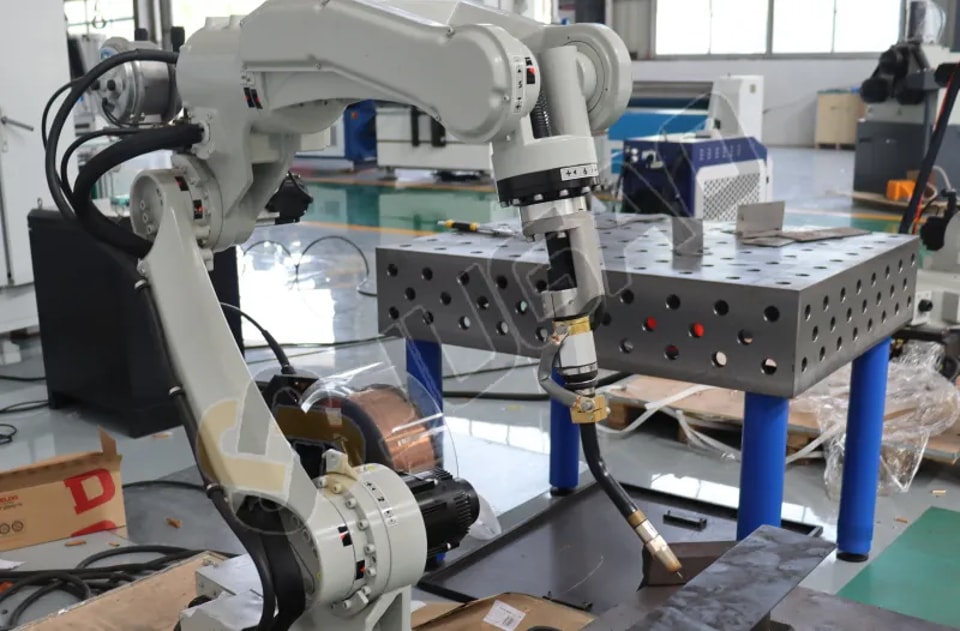
Laser welding robots use semiconductor lasers as the welding heat source. As the welding heat source, semiconductor lasers (also known as laser diodes (LDs)) enable the application of miniaturized and high-performance laser welding robot systems. Laser welding robot systems, employing a localized, non-contact, small-diameter heating method, solve a major challenge in precision welding.
Characteristics of Laser Welding Robots
1. Laser welding robots involve non-contact processing, and the welded parts are not subjected to external force.
2. The laser energy of laser welding robots is highly concentrated, resulting in minimal thermal effect and deformation.
3. Laser welding industrial robot technology can achieve the welding of certain different materials in enterprises by welding high-melting-point, refractory, and difficult-to-melt metals, such as titanium alloys and aluminum alloys.
4. The welding process of laser welding robots is environmentally friendly and can be performed directly in air. The process is simple and practical.
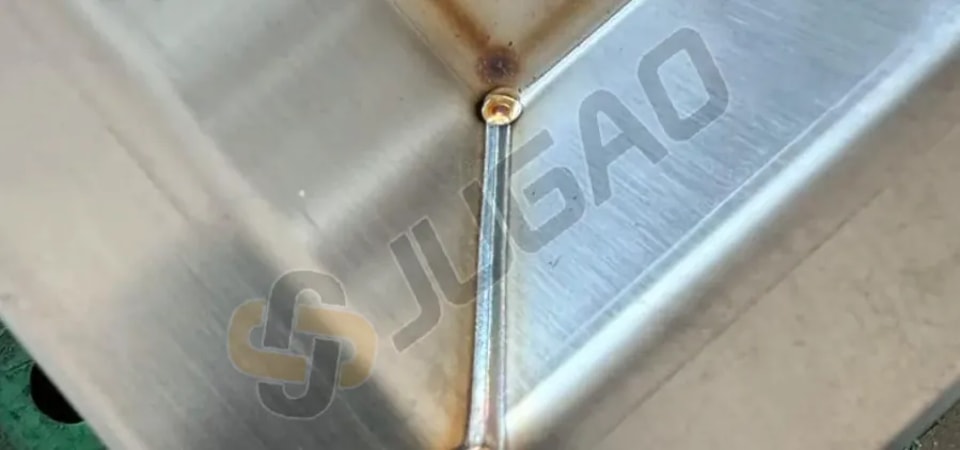
5. Laser welding robots produce small weld points, narrow weld seams, and a clean and aesthetically pleasing appearance. Post-weld processing requires no or only minimal handling procedures. The weld structure is uniform, with fewer pores and defects, reducing and optimizing impurities in the base material. The mechanical strength of the weld is typically higher than that of the base material. Laser welding robots offer superior mechanical properties, corrosion resistance, and electromagnetic properties compared to traditional welding methods.
6. Laser control offers high precision and a small focal point, resulting in high positioning accuracy for laser welding robots, enabling precision machining.
7. Laser welding robots easily integrate with computer numerical control systems, robotic arms, or other robots to achieve automated welding and improve production efficiency.
Applications of Laser Welding Robots
Laser welding industrial robot control systems are increasingly widely used in welding camera components, LCD components, micro-motors, micro-transformers, and other parts for electronic devices such as smartphones and laptops. It can also be used in the design and manufacturing of key components for LCD TVs, high-end digital cameras, aerospace and military enterprises, and high-end automotive brands.
Contact Us