
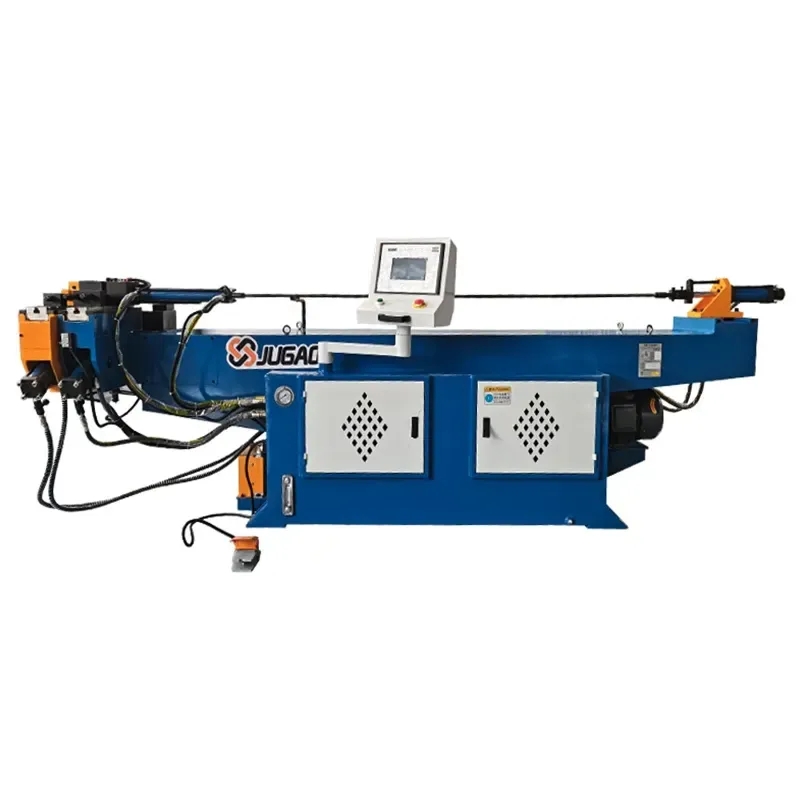
How to assess whether a pipe bending machine is suitable for your workshop?
2026-05-21

When purchasing a pipe bending machine, don't just look at the price and brand. To determine if it's suitable, consider the following points.
1. Product Requirements: Calculate costs first, then select the model.
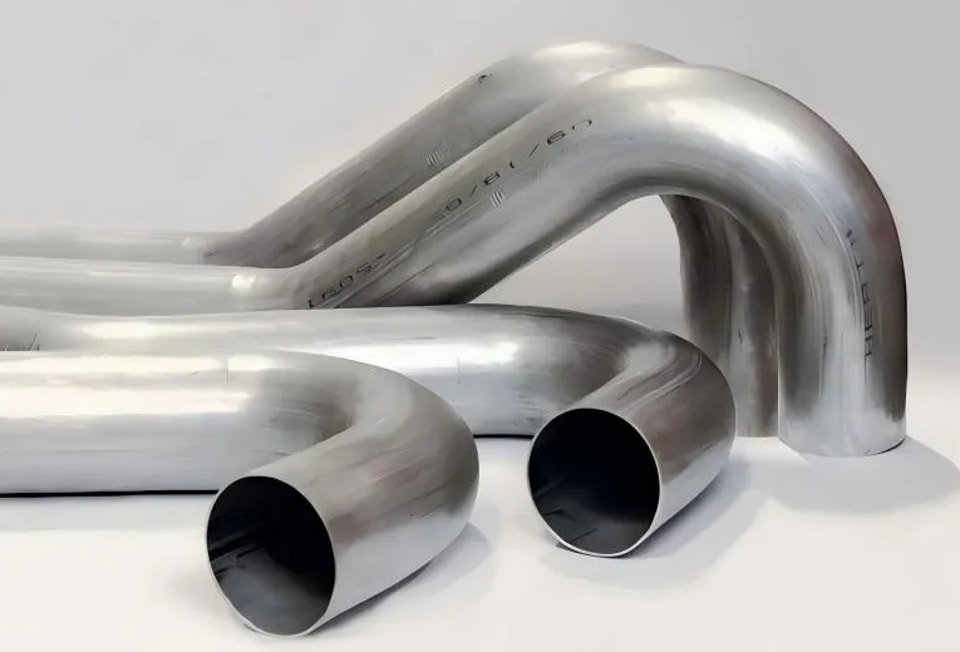
Pipe Specifications: What are the maximum pipe diameter, wall thickness, and material (stainless steel/carbon steel/aluminum/copper)? Leave a 20% margin in the rated capacity of the pipe bending machine; don't buy it just to meet the maximum limit.
Bending Radius: What is the minimum R/D? For thin-walled, small-radius pipe bends with R/D < 3, a mandrel and anti-wrinkle die are required; confirm machine support when selecting a model.
Bending Complexity: Single bend or multi-bend 3D pipe? For applications requiring spatial rotation (B-axis) and automatic feeding (Y-axis), select a CNC pipe bending machine with 3 or more axes.
Accuracy Requirements: Angle tolerance within ±1°? Select a model with angle feedback closed-loop; within ±0.5°, a fully CNC + servo control system is required.
2. Production Batch and Cycle Time
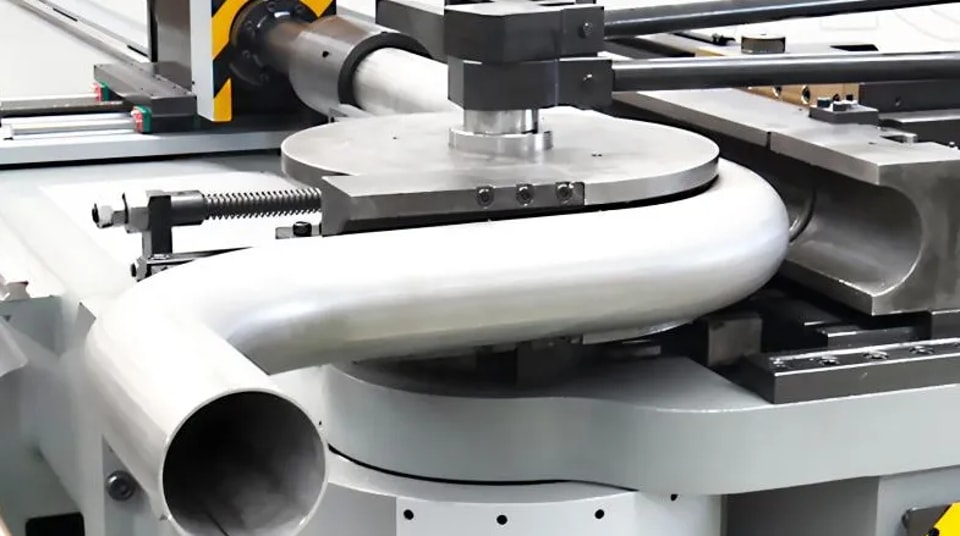
Small batches, multiple varieties (more than 3 mold changes per day) → Prioritize quick mold change functionality; select a quick mold change system or an electric pipe bending machine.
For high-volume production of a single product (tens of thousands of pieces per month) → focus on cycle time and automation, equipping with automatic feeding/unloading racks or integrating robots.
For trial production/repair workshops → manual or semi-automatic pipe bending machines are sufficient; fully CNC is unnecessary.
3. Workshop Space and Power
Equipment Dimensions: The total length of the pipe bending machine, including the feeding rack, unloading rack, and operating position, may exceed 6-8 meters. Measure the workshop door width, aisle, and column spacing to ensure sufficient installation and operating space.
Foundation Requirements: Hydraulic pipe bending machines ≥40 tons require an independent concrete foundation (200-300mm thick). If digging a foundation is not feasible, choose a small machine with vibration damping pads or an electric pipe bending machine.
Power Configuration: Is a three-phase 380V power supply available? Is the air pressure (pneumatic clamping) ≥0.6MPa?
4. Operation and Maintenance Capabilities
Operator Skills: If employees only have a junior high school education, choose a model with a touchscreen graphical programming interface, not one that requires manual input of G-code.
Maintenance Capabilities: Are there electricians and mechanics available? If not, choose a brand with fast after-sales service response and local service points. Complex hydraulic presses require high maintenance standards; simple electric pipe bending machines are more worry-free.
5. Cost and Return on Investment
Equipment Purchase Costs: Manual: 20,000-80,000 RMB; Hydraulic: 50,000-250,000 RMB; CNC: 150,000-1,000,000+ RMB. Don't just look at the bare machine; add molds, shipping, installation, commissioning, and training costs to get the total investment.
Operating Costs: Hydraulic presses consume a lot of electricity and require regular oil changes; servo motor models are energy-efficient and require no oil changes, saving money in the long run.
Return on Investment: Estimate annual processing volume × profit per piece to see how long it takes to break even. Buying expensive equipment is not cost-effective for annual processing volumes below 5,000 pieces.
6. On-site Verification
Request the supplier to provide customer site photos of the same model of equipment. Visit the site to observe the processing effect, listen to the noise level, and ask users about their actual experience.
Test the bending with your own pipes, measuring angle accuracy, ovality, and surface quality. Don't rely on brochures; trust the results of your test bending.
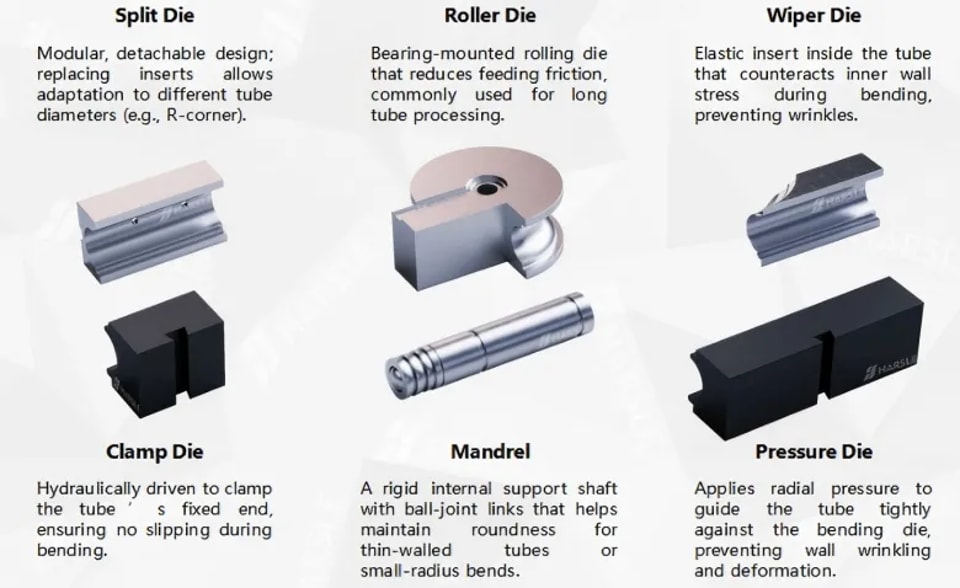
A suitable pipe bending machine = meets pipe specifications × matches production volume × allows sufficient space and power × is easy to operate and maintain × can break even within budget. First, fill out the requirements form, then filter models, and finally test bends to verify. Following this process will generally prevent you from making a wrong purchase.
Contact Us