
How Does Tube Bending Improve Display Rack Design?
2026-04-20

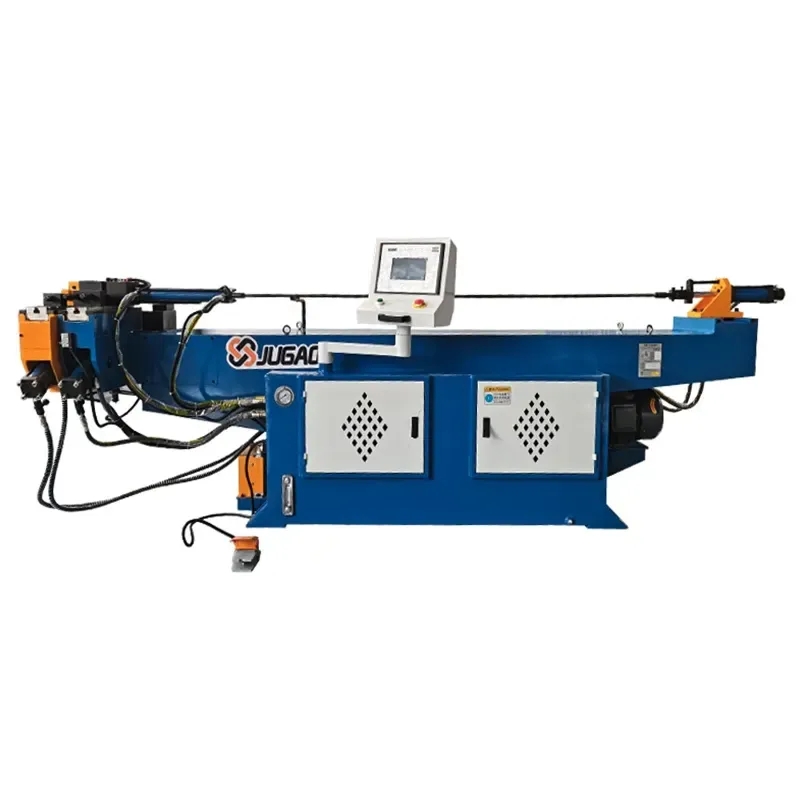
In the display rack manufacturing industry, tube bending technology is revolutionizing traditional design thinking. Using a tube bending machine to precisely bend metal tubes not only creates smooth, seamless shapes but also achieves comprehensive breakthroughs in structural strength, production efficiency, and visual appeal.
1. Seamless Design, Enhanced Visual Quality
Traditional display racks often use straight welded tubes, resulting in visible weld seams and abrupt corners. Tube bending machines create curved tubes with continuous, smooth contours, eliminating the need for splicing or grinding, resulting in a more modern and high-end overall appearance. Whether for retail shelves, clothing racks, or exhibition stands, curved designs effectively attract attention and enhance brand image.
2. Integral Forming, Increased Structural Strength
Welded connections create stress concentration at the weld seams, leading to deformation or breakage over time. Tubes bent by a tube bending machine maintain material continuity, distribute stress evenly, and have significantly superior overall strength compared to welded structures. This makes display racks more robust and durable, particularly suitable for displaying goods with high load-bearing requirements.
3. Reduced Components, Simplified Production Process
Tube bending significantly reduces the number of connectors and weld points. A single bent tube can replace multiple straight tubes with joints. This not only reduces material costs and assembly time but also facilitates modular design and rapid disassembly, making it ideal for scenarios requiring frequent setup, such as traveling exhibitions and pop-up stores.
4. Lightweight and Portable
Utilizing aluminum alloy or thin-walled steel tubing with precise bending, the display rack's weight is significantly reduced while maintaining strength. Combined with tension fabrics or lightweight panels, a single person can handle and assemble the rack, significantly reducing its transport volume and lowering logistics costs.
5. Highly Customizable to Meet Diverse Needs
CNC tube bending machines support complex spatial curves (such as S-shapes, multi-radius combinations, and three-dimensional bends), allowing designers to freely create unique shapes based on brand elements, ergonomics, or space constraints. No molds are required, making small-batch customization equally economical and efficient.
Key Process Considerations
Material Selection: Display racks commonly use Q195/Q235 low-carbon steel, 201/304 stainless steel, and 6063 aluminum alloy, determined based on strength and surface treatment requirements.
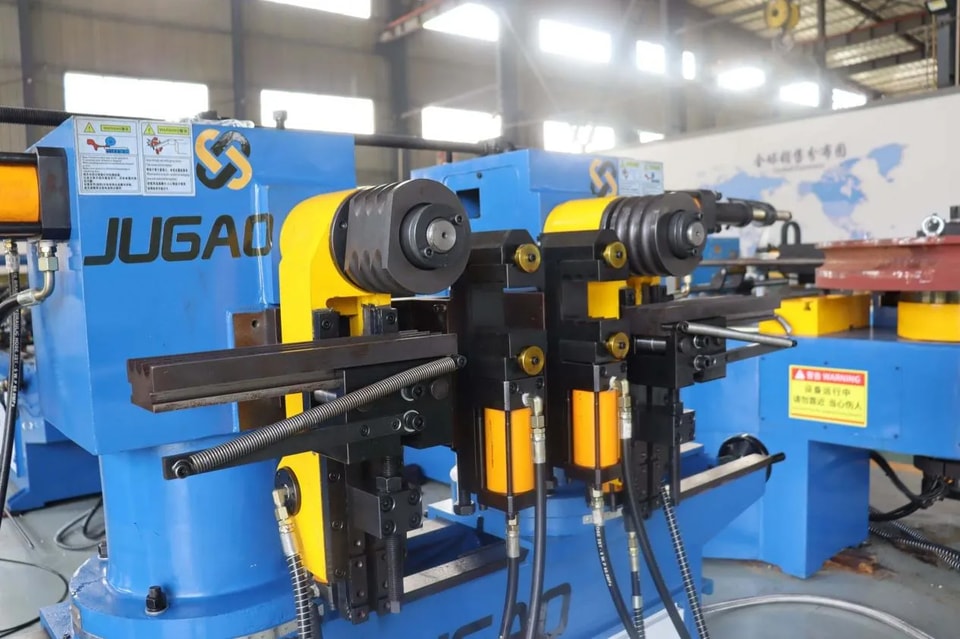
Anti-wrinkle and Anti-flattening: A mandrel + anti-wrinkle die process ensures full roundness at bends, free from wrinkles and flattening.
Surface Protection: Clean the tubing before bending; ensure smooth and adequately lubricated grooves in the bending die to prevent scratches. After bending, the entire assembly is spray-coated or electroplated.
Springback Compensation: The bending angle is programmed to counteract metal springback, ensuring accurate angles on the finished product.
Using a pipe bending machine to bend pipes not only gives display racks elegant, seamless curves and stronger structural integrity, but also streamlines the production process, reduces transportation costs, and enables personalized customization. For the display rack industry, which pursues differentiation and efficient manufacturing, this is undoubtedly an ideal path to upgrade product design.
Contact Us