


Choose the right bending machine maintenance tool, and the stability of the equipment depends on it
2026-04-24

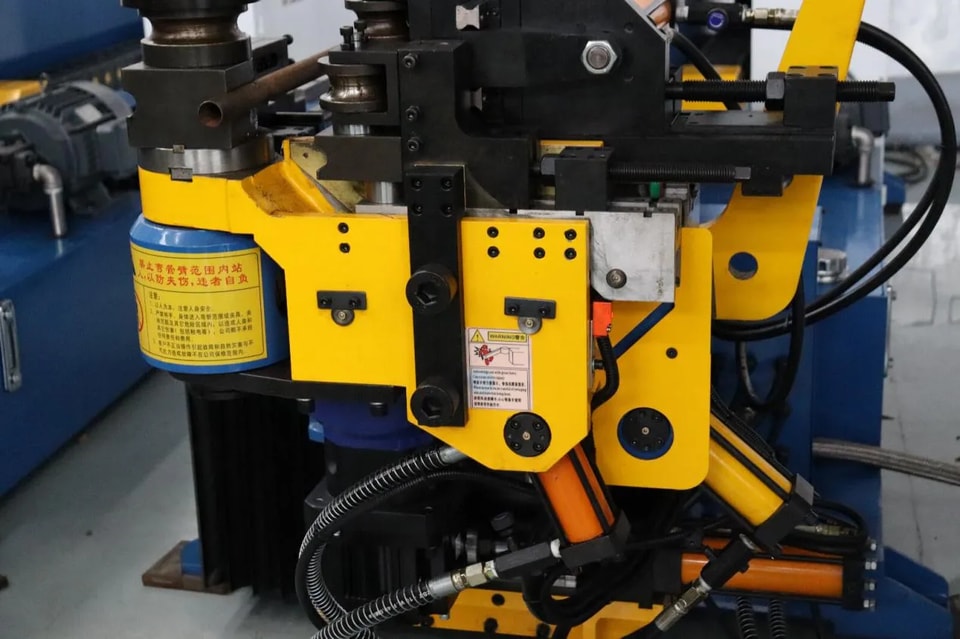
Over the years of maintaining the pipe bending machine, I've seen too many people using the wrong tools and stubbornly forcing their way through. They can't adjust the angle accurately, tighten the bolts properly, or measure the guide rail clearance, leading to increasingly poor equipment precision. The real issue isn't the machine itself, but whether you've chosen the right set of tools.
Prepare the maintenance tools according to the following categories to ensure smooth operation and minimize equipment malfunctions.
1. Manual Tools: The Most Fundamental for Disassembly and Assembly
Hex wrench and open-end wrench set: Changing molds and adjusting mandrels are daily tasks, and these wrenches are used every day. The key is whether the hardness is sufficient. Cheap ones wear out quickly and slip off bolts, making them useless. The space around pipe bends in a pipe bender is very tight, so the thin-profile hex wrench is specifically designed for such narrow areas, making operation much smoother.
Torque wrench: Most pipe bending machines have inaccurate angles, primarily due to either over-tightening or under-tightening of the mold fixing bolts. The screws on the mold must be tightened according to the manufacturer's specified torque value—insufficient tightening will cause loosening, while excessive force may damage the threads. A properly calibrated torque wrench is the most cost-effective investment to ensure repeatable accuracy.
2. Measurement tool: accuracy relies on its card
Dial gauge and magnetic gauge holder: adjust the extension of the core shaft, check the parallelism of the guide rail. If there is no dial gauge, it depends on the hand feel, and it runs off nine out of ten times.
Vernier caliper and feeler gauge: The clearance of the anti wrinkle mold and the wear of the mold can be handled with a set of feeler gauges and calipers. If you can't measure it, don't talk about accuracy.
Digital angle ruler: Do not use the naked eye to estimate whether the angle of the bent pipe is correct. The high-precision angle ruler can read up to 0.1 °, which is relied upon for limit calibration and finished product inspection.
R gauge (radius gauge): Check if the radius of the bent pipe matches the drawing. This thing is piece by piece, just stick it up and compare it.
Level gauge: When installing molds or inspecting the spatial orientation of large bent pipes, a level gauge is essential.
3. Hydraulic oil tools: Don't force yourself to handle oil leaks
Hydraulic testing device (with quick connector and pressure gauge): Do not guess whether the oil pump has force or the system pressure is stable on the screen. Connect the pressure measuring connector and the pressure gauge will display as much as possible. Adjusting pressure based on intuition is equivalent to driving with your eyes closed.
Infrared thermometer: Abnormal oil temperature and burnt motor bearings are both very hot. Infrared thermometers can detect it from just a few tens of meters away, avoiding many detours.
4. Electrical testing tool: One step identification of circuit faults
Digital multimeter: Check whether there is a sensor signal, whether the voltage is stable, and whether the circuit is connected or not with a multimeter.
Phase sequence meter and clamp current meter: When connecting to a three-phase power supply, it is important to check the phase sequence meter to avoid the motor not rotating in reverse; Whether there is any abnormality in the motor current can be determined by clamping the clamp meter.
5. Lubrication and cleaning tools: Don't slack off on maintenance
Oil gun: Lubrication of guide rails and gears relies on it. Directly use the electric butter gun, and if it takes half a day to manually hit, it won't go in. It can be done in a few seconds with the electric one.
Cleaning tool: Various types of pipe bending oil stick to the mold, and if left uncleaned for a long time, the resulting pipes will be scratched. Prepare soft bristled brushes, air guns, and specialized cleaning agents. Do not use iron brushes to scrape hard, otherwise the mold will be scrapped directly.
Deburring tool (file or chamfering tool): Remove burrs from the pipe end before applying to the mold to avoid scratching the inner wall of the mold.
6. Safety and auxiliary equipment: both are life-saving
Labor protection equipment - protective goggles, safety helmets, anti smashing shoes, don't be bothered. Lifting tools - do not forcefully move large molds, use chain hoists or balance cranes to protect your waist and ensure safety.
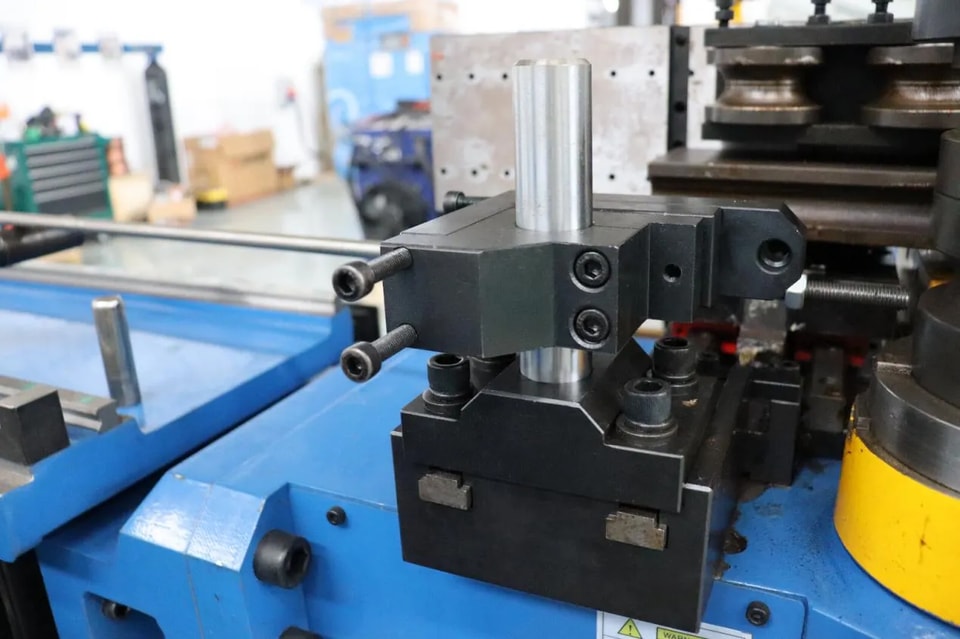
Choosing the right maintenance tool ensures smooth operation and guarantees the precision of the equipment. Don't wait until there is a malfunction to realize that the tools are not working properly. Equipping the tools properly is essential for the long-term stability of the pipe bending machine.
Contact Us