
Analysis of Ram Travel Control System in Hydraulic Press Brakes Table of Contents
2025-07-11

1. Core Technical Principles
2. System Workflow
3. Mechanical Stop Block Setup Guide
4. Technical Advantages Analysis
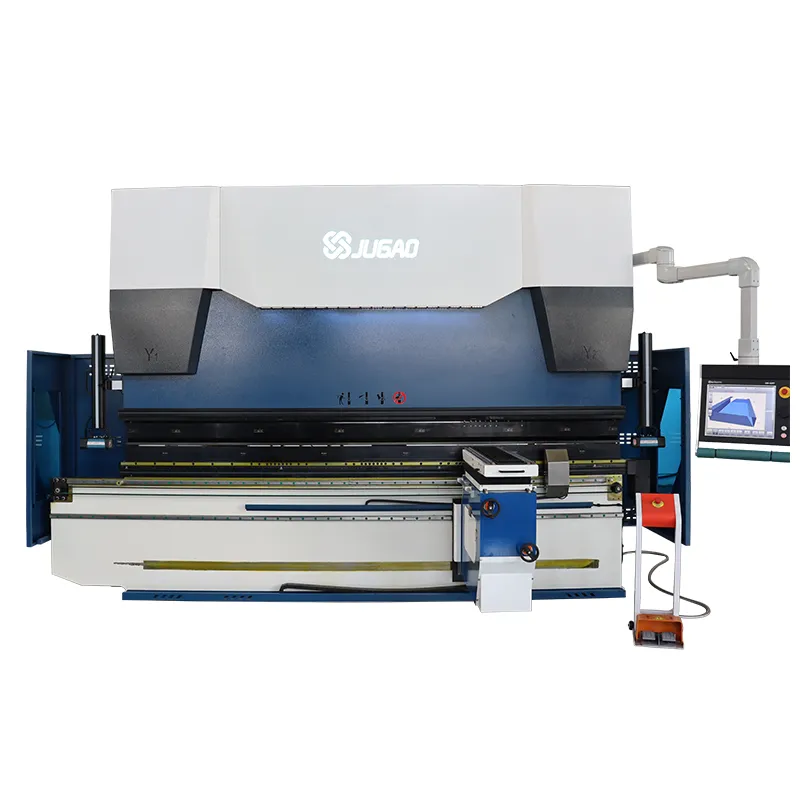
In the field of metal sheet processing, ram travel control in hydraulic press brakes is a critical factor in ensuring machining accuracy. This technology directly affects bend angle consistency and processing efficiency by precisely regulating the ram's movement trajectory.
I. Core Technical Principles
Modern hydraulic press brakes adopt an "electro-hydraulic-mechanical integrated" control solution, which includes:
l Hydraulic system for stable power output
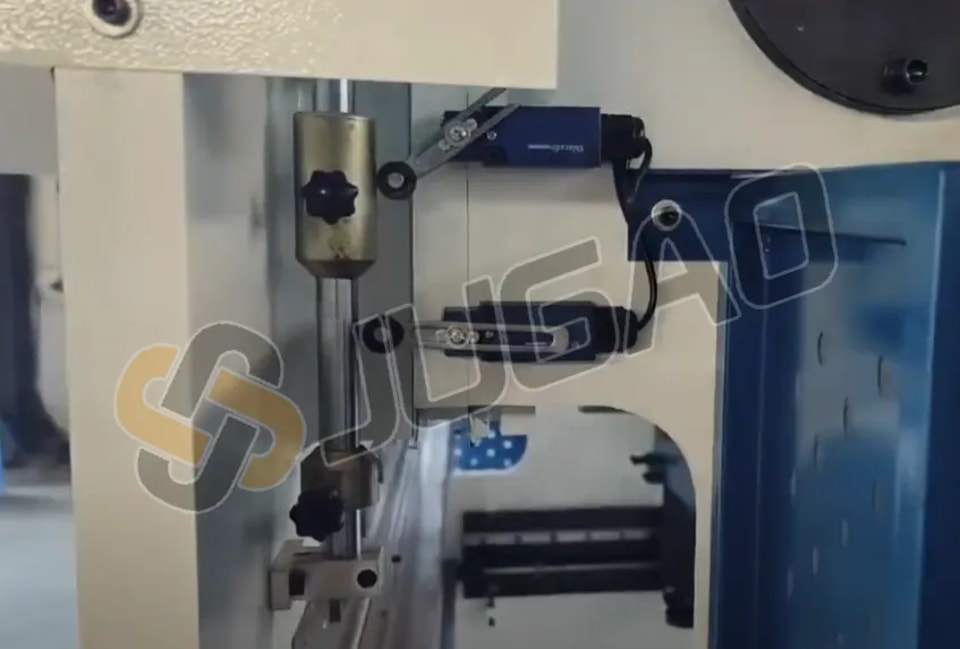
l Electronic sensors for real-time position monitoring
l Mechanical stop blocks as physical limit safeguards
l CNC system for intelligent closed-loop control
II. System Workflow
1. Initialization Phase
The CNC system automatically calculates optimal parameters based on preset programs, including:
○ Ram speed (adjustable from 20-200mm/s)
○ Positioning accuracy (±0.01mm)
○ Pressure curve (adaptive to material properties)
2. Operation Phase
High-precision linear encoders sample at 500Hz, providing real-time feedback on ram position. If deviations are detected, the system compensates within 0.05 seconds.
3. Termination Phase
A three-stage braking system ensures precise stopping:
1. Electronic pre-deceleration
2. Hydraulic cushioning
3. Final positioning via mechanical stop blocks
III. Mechanical Stop Block Setup Guidelines
1. Measurement Preparation
○ Calibrate reference surfaces using laser rangefinders
○ Input material parameters (type/thickness/hardness)
2. Stop Block Adjustment
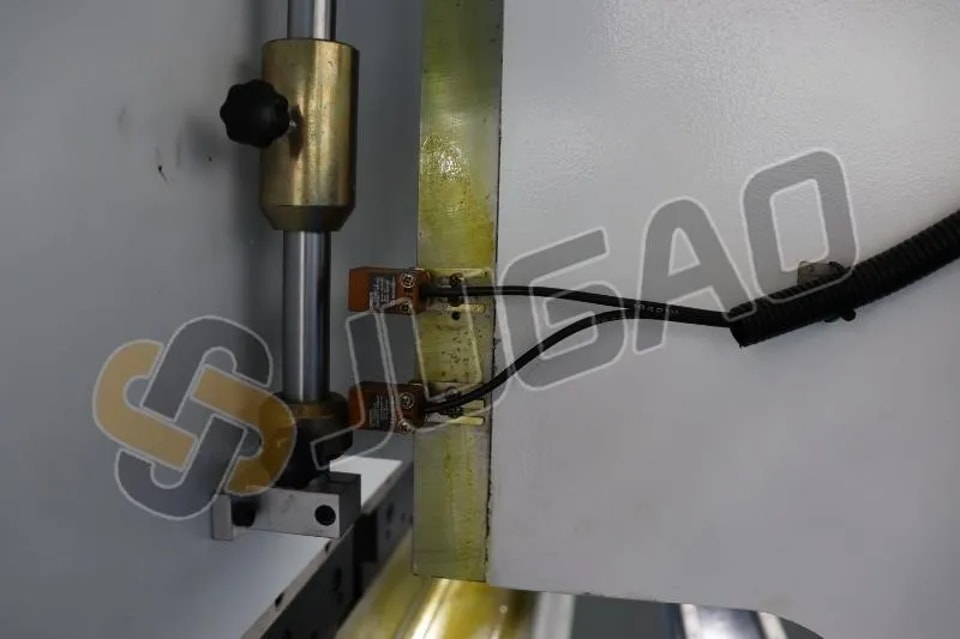
○ Upper stop block: Sets safe starting position
○ Lower stop block: Determines bending depth
(Equipped with quick-locking mechanisms, adjustment time <30 seconds)
IV. Technical Advantages Comparison
Control Method | Repeatability | Adjustment Efficiency | Maintenance Cost |
Pure Mechanical | ±0.1mm | 5-10 minutes | Low |
CNC Hydraulic | ±0.02mm | Instant adjustment | Medium |
Hybrid Control | ±0.05mm | <2 minutes | Relatively Low |
Innovative Application Case
An automotive parts manufacturer achieved the following after adopting this system:
○ Product qualification rate increased to 99.8%
○ Die change time reduced by 65%
○ Energy consumption lowered by 22%
Contact Us