
The Importance of Shearing Machine Blades and How to Choose Them
2025-11-05

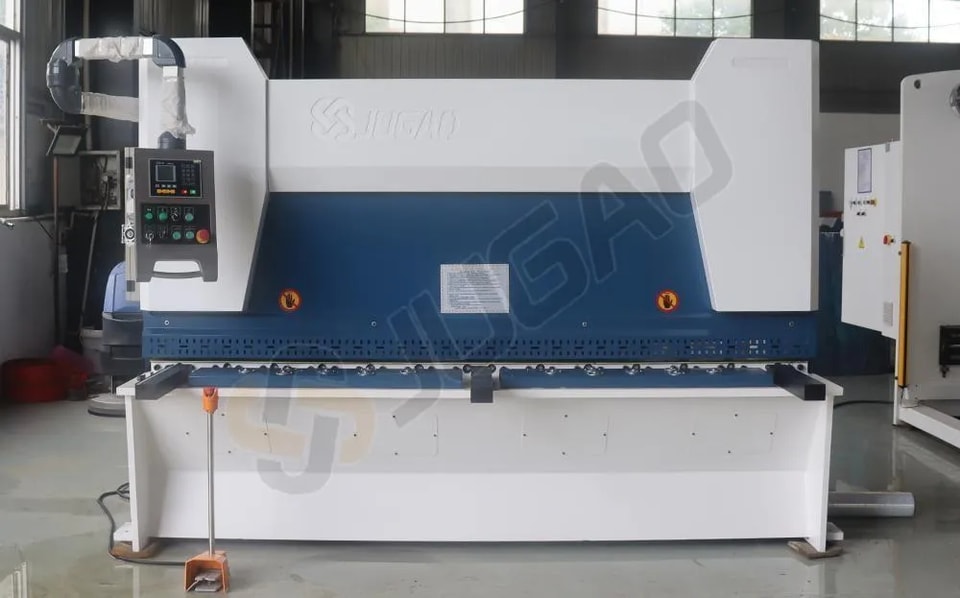
Shearing machine blades are one of the core components of a shearing machine, directly determining its shearing performance, processing quality, production efficiency, and equipment life. Blade quality plays a crucial role in production outcomes in industries such as sheet metal processing, machinery manufacturing, automotive, home appliance manufacturing, and construction. Let's take a closer look at the importance of shearing machine blades.
1. The Importance of Shear Blades
1) Key Factors Determining Shear Quality
A sharp blade with appropriate hardness ensures a smooth, burr-free, and crack-free shear surface.
Poor blade material or severe wear will result in:
l Excessive shear burrs
l Deformed plate edges
l High workpiece scrap rates
Directly impacting the quality of subsequent processing steps such as welding, bending, and painting.
2) Impact on Equipment Stability
Low-wear blades lack strength:
l Easily break during shearing.
l This causes significant vibration and abnormal impact.
l In severe cases, it can damage critical components such as the blade holder and roller.
High-quality blades effectively protect the shear structure and extend its service life.
3) Determining Production Efficiency and Operating Costs
Durable blades extend replacement cycles and reduce downtime. Sharp blades reduce shear resistance and increase cutting speed, thereby improving production capacity.
Frequent blade replacements increase:
l Production downtime
l Labor and commissioning costs
l Repair costs
4) Directly linked to company performance
Although high-quality shear blades may cost more to purchase, they:
l Excellent cutting performance, reducing scrap. Long service life, saving replacement costs.
l Reducing equipment failures and maintenance costs.
l It is a key component with a one-time investment and long-term benefits.
5) Meeting the needs of different processes and materials
Different materials (carbon steel, stainless steel, aluminum, high-strength steel, etc.), thicknesses, and processes (cold shearing, hot shearing) require the appropriate blade material.
Rational selection ensures cutting accuracy and reliability, meeting customers' personalized processing needs.
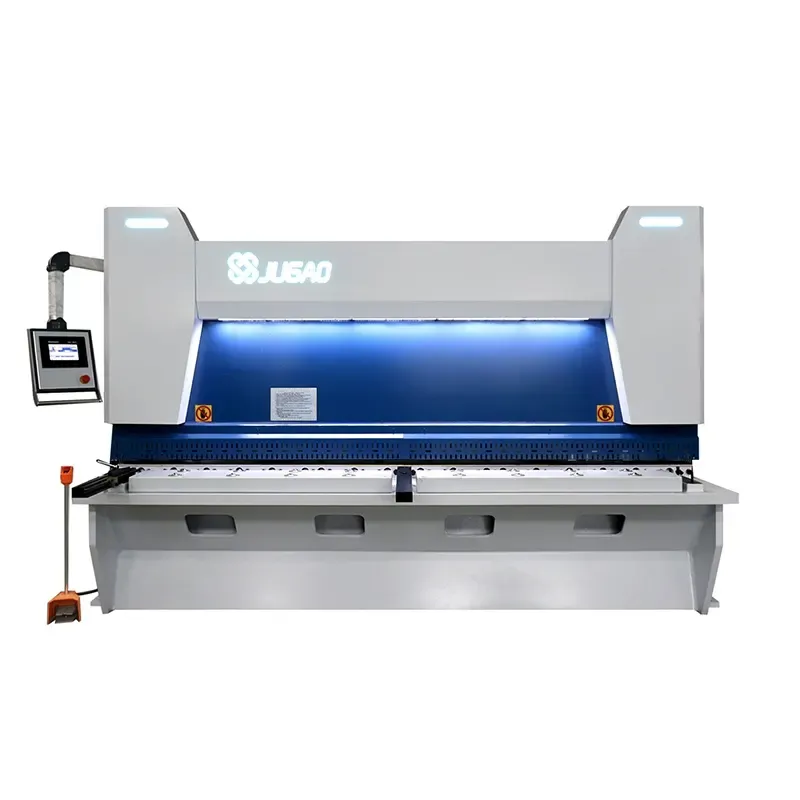
Comparison of the role of the blade in the entire shearing system:
Components | Main Functions | Is it important? |
Shearing machine main frame | Provides support and transmission | Important |
Hydraulic system/drive system | Provides cutting force | Important |
Blades (upper and lower blades) | Directly completes the cutting action | Core component |
Control system | Controls cutting rhythm and length | Important |
Positioning device | Precisely feeds materials | Minor importance |
The shearing machine blade is the direct execution component of the "cutting" action. Without a good blade, no matter how advanced other systems are, the final processing effect cannot be guaranteed.
2. Consequences of Ignoring Blade Quality
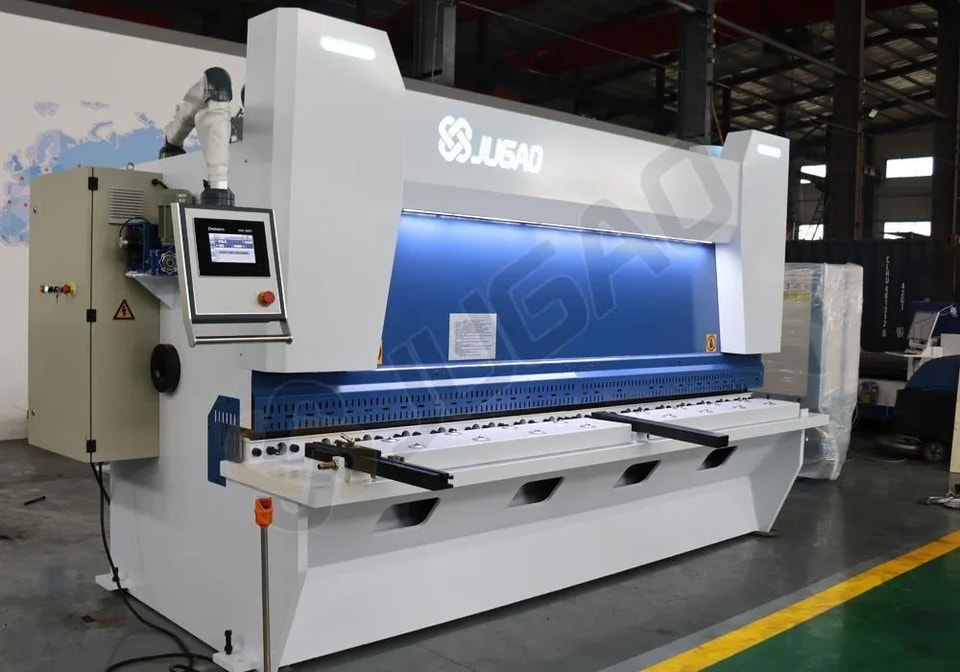
Ignoring shear blade quality often leads to a series of serious consequences, not only affecting shearing performance but also causing equipment damage, reduced production efficiency, and even safety hazards. The main consequences of ignoring blade quality are as follows:
1) Key Factors Determining Shear Quality
l Low sharpness and insufficient hardness: Cuts are intermittent and uneven, requiring repeated cutting.
l Excessive blade wear: Large burrs and a rough cut surface.
l Breakage or chipping of the blade: Sheet edges tear, bend, and become scrapped.
l Incompatibility between the blade material and the material being cut: Sheet material sticks, cracks, and shear deformation.
Result: Seriously impacts product quality, leading to rework, returns, and customer complaints.
2) Increased Risk of Equipment Failure and Damage
l Poor-quality blades lack toughness and easily become brittle and break, transferring the shear shock to the machine body.
l Prolonged use of worn blades can subject the equipment to abnormal loads.
Uneven or deformed blade edges can cause:
l Uneven force on the blade holder
l Irregular wear on the piston rod or blade shaft
l Abnormal heating in the hydraulic system
Result: Shortened equipment life, increased repair costs, and, in severe cases, equipment downtime.
3) Significantly Reduced Productivity
l Frequent Blade Replacements: Increased downtime and maintenance costs
l High Shear Resistance: Slower cutting speeds and reduced production capacity
l Frequent Quality Issues: Require secondary processing or scrap, slowing production
Result: Limited production capacity, delayed delivery, and impacted customer satisfaction and company reputation.
4) Increased Manufacturing Costs
l Low-quality blades, while inexpensive, have short lifespans and require frequent replacement.
l This leads to increased maintenance, material waste, and increased energy consumption.
l Indirect costs can even exceed the investment in high-quality blades.
Result: "Saving money on the blades, losing money on the production line"—a costly mistake.
5) Increased Safety Risks
l A broken blade can fly and cause injury.
l Uncontrolled shearing can cause the sheet to slip or rebound, endangering operator safety.
l Unstable or deformed blades increase the risk of accidents.
Result: Safety violations can lead to legal liability and even production suspension.
Recommendation:
l It is best to choose a reputable brand or blade supplier with quality certifications.
l Select blades of appropriate material and specifications based on the material being cut and the equipment being used. Check blade wear regularly and replace them promptly.
l Avoid using worn blades to minimize losses.
3. How to Choose the Right Shear Blade?
Choosing the right shear blade is key to ensuring shear quality, improving production efficiency, and extending equipment life. Shear blade selection requires comprehensive consideration of factors such as the shearing material, shear thickness, frequency of use, and equipment type. The following is a systematic and practical guide to selecting shear blades:
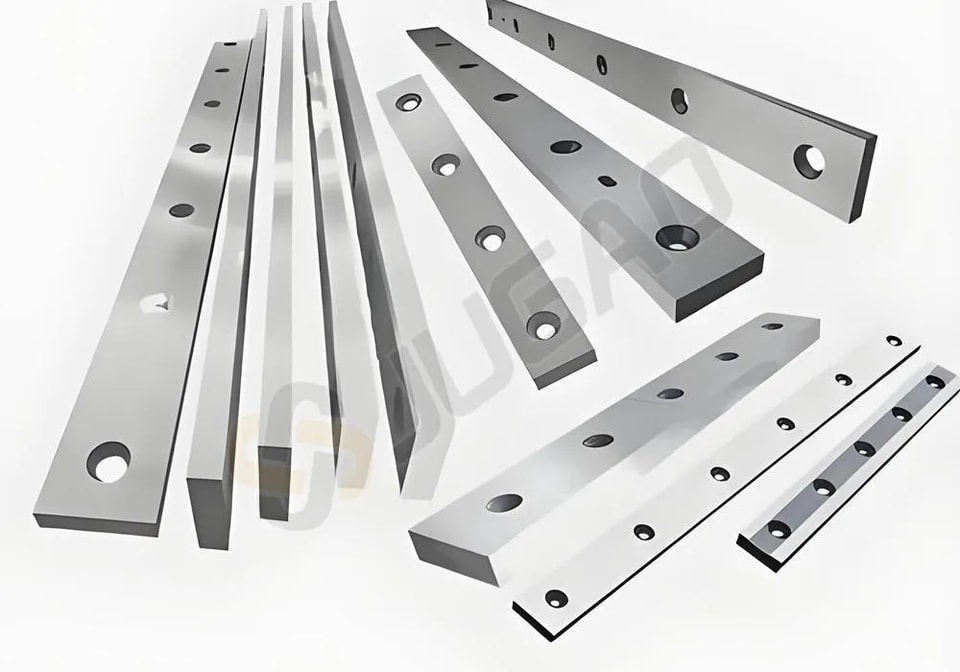
1) Identify the material being cut.
Different materials require different blade performance, which is the first step in selecting a blade.
Selection Analysis Table:
Materials Shearing | Recommended Blade Materials | Features |
Ordinary carbon steel (Q235, Q195) | T10, 9CrSi | Low cost, moderate hardness |
Low- and medium-alloy steel (Q345, 16Mn) | 6CrW2Si, Cr12MoV | High strength, excellent wear resistance |
Stainless steel (304, 201, etc.) | Cr12MoV, SKD11 | High hardness, corrosion resistance |
High-strength steel, silicon steel sheet | SKD11, Powder Metallurgy Steel (ASP23) | Resists chipping and wear |
Copper, aluminum, aluminum alloys | T8, T10 | No material damage, low cost |
Hot shearing (hot-rolled plate) | H13 | Resists thermal fatigue and high-temperature shear |
2) Determine the shearing thickness and frequency
Selection Analysis Table:
l For thin plates (<3mm), conventional blades such as T10 and 9CrSi can be used.
l For medium and thick plates (3-8mm), Cr12MoV is recommended.
l For thick or high-strength plates (>8mm), high-strength materials such as SKD11 and ASP23 are recommended.
Frequency of Use:
l Low-frequency shearing → High cost-effectiveness: T10 or 9CrSi can be used.
l Medium-frequency shearing → High cost-effectiveness: 6CrW2Si or Cr12MoV can be used.
l For high-frequency, high-strength shearing → Wear-resistant SKD11 or powder metallurgy steel is more suitable.
3) Matching the shearing machine model
Shearing machine types | Recommended Blade Materials | Description |
Mechanical shearing machine | T10, 9CrSi | Affordable materials sufficient for the job |
Hydraulic shearing machine | Cr12MoV, 6CrW2Si | Shear stability and long life required |
CNC shearing machine | SKD11, ASP23 | High precision and good stability required |
Hot shearing machine | H13 | High temperature resistance and thermal crack resistance required |
4) Considering both cost and lifespan
Materials | cost | life | Applications |
T10 | ★ | ★★ | General shearing, low-frequency applications |
9CrSi | ★★ | ★★★ | Medium-frequency applications for ordinary steel plates |
Cr12MoV | ★★★ | ★★★★ | Stainless steel, heavy-duty shearing |
SKD11 | ★★★★ | ★★★★★ | High-strength steel, precision shearing |
ASP23 | ★★★★★ | ★★★★★★ | High-end manufacturing, high-volume production |
Recommendation:
If your short-term budget is limited, choose cost-effective materials. For long-term, stable production, choose durable materials.
4. Summary
1) The Importance of Shear Blades
l Determines Shear Quality: Affects the Smoothness and Accuracy of the Cutting Edge
l Protecting the Equipment Structure: Extends Machine Life and Reduces Failures
l Improves Productivity: Reduces Blade Changes and Increases Shear Speed
l Reduced Overall Cost: Reduces Hidden Costs Such as Downtime, Scrap, and Repairs
l Adapts to Diverse Needs: Adapts to Shearing Tasks of Different Materials and Processes
2) Practical Selection Steps
l Confirms the Type and Hardness of the Shearing Material
l Confirms the Shearing Thickness Range
l Confirms the Shearing Frequency and Continuous Operating Time
l Confirms the Shearing Machine Model and Operating Method
l Compares Blade Life to Budgeted Cost
l Selects Products from Reputable, Heat-Treated, and Quality-Assured Manufacturers
Contact Us