
How to troubleshoot oil leaks in a pipe bending machine?
2026-04-01

The hydraulic system is the core power source of the pipe bending machine, and oil leakage is one of the most common failures in hydraulic systems. Oil leaks not only waste oil and pollute the environment, but can also lead to insufficient system pressure, sluggish operation, and even equipment damage. Quickly locating and correctly eliminating oil leaks is an essential skill for equipment maintenance personnel.
Types and Common Locations of Oil Leaks
Oil leaks in pipe bending machines are generally classified into three categories:
External Leakage: Hydraulic oil leaks to the outside of the equipment, visible to the naked eye.
Internal Leakage: Oil cross-contamination occurs within the system, manifesting as slow operation and unstable pressure.
Oil Seepage: Slight oil stains accumulate over time, forming sludge.
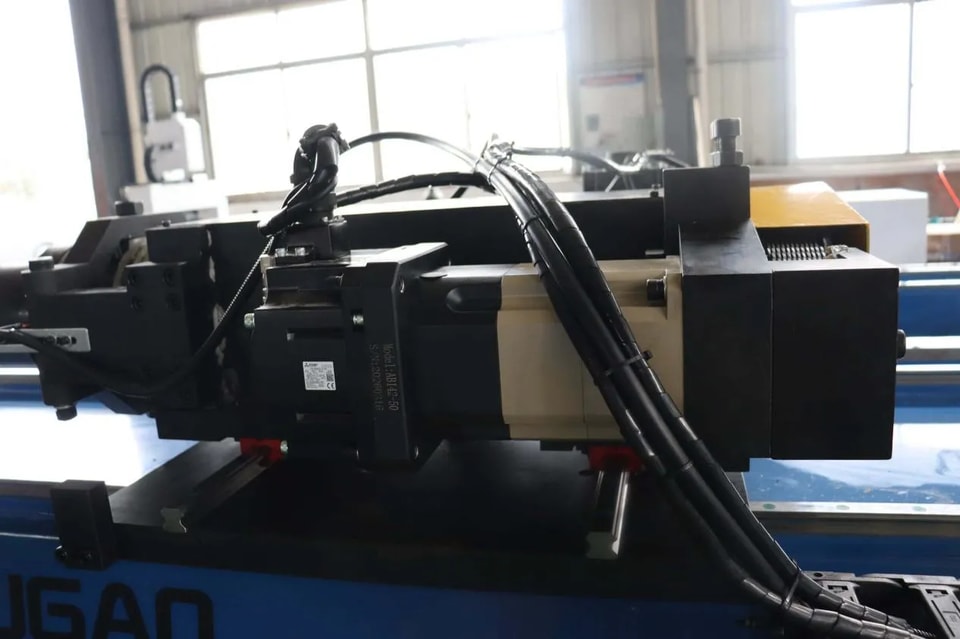
Common locations of oil leaks include: pipe joints, cylinder seals, the mating surfaces of the hydraulic pump and valve body, oil tank welds, and cooler piping.
1. Oil Leakage at Pipe Joints
Symptoms: Obvious oil droplets seeping from the joint, or an oil film on the surface of the oil pipe.
Possible Causes:
Loose joint (caused by equipment vibration)
Wear or improper installation of the ferrule-type joint
Scratches or foreign objects on the conical sealing surface
Aging, flattened, or improperly selected O-ring
Solutions:
Retighten the joint to the specified torque using a wrench.
If leakage persists after tightening, disassemble and inspect the ferrule or sealing surface, and replace any damaged parts.
For O-ring seals, replace with an oil-resistant rubber ring of the same specification. Apply a small amount of hydraulic oil during installation to avoid cutting.
2. Oil Leakage from Cylinder Seals
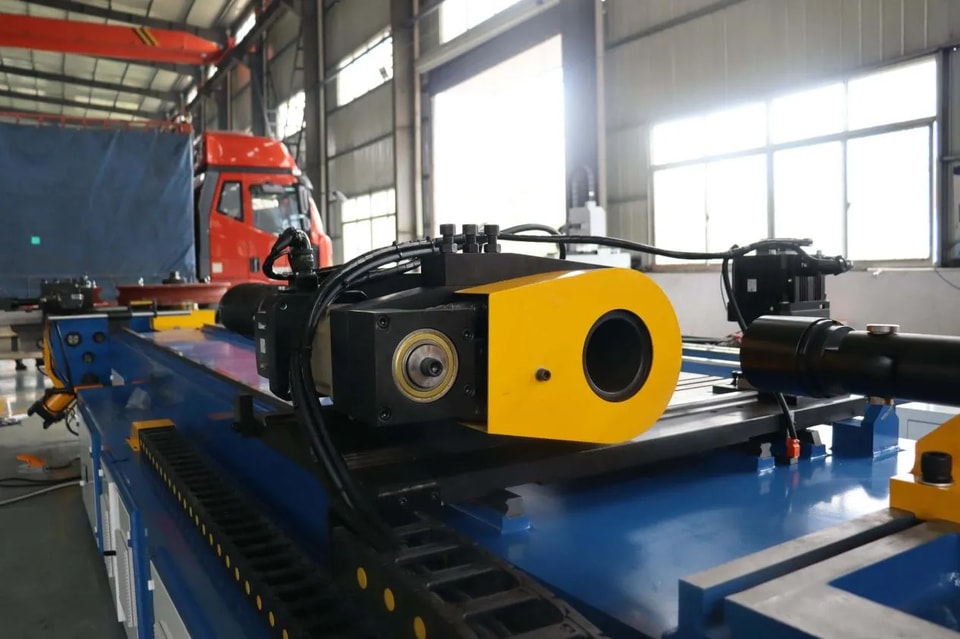
Symptoms: Oil on the surface of the cylinder piston rod; oil droplets appear at the extended end of the piston rod after shutdown; or oil seepage at the cylinder end cap.
Possible causes:
* Piston rod scratches, rust, or chrome plating peeling
* Aging and wear of dust seals and piston rod seals
* Scoring of the cylinder inner wall leading to piston seal failure (internal leakage)
* Hydraulic oil contamination accelerating seal wear
* Troubleshooting methods:
* Clean the piston rod surface and check for scratches. Minor scratches can be polished with fine sandpaper; severe damage requires replacement of the piston rod or cylinder assembly.
* When replacing sealing components, pay attention to the seal installation direction (lip facing the pressure side).
* Check the cleanliness of the hydraulic oil and replace contaminated oil and filter elements.
* For internal leakage (cylinder sliding down on its own), the piston seal needs to be disassembled and inspected; replace it if necessary.
3. Hydraulic pump and valve body oil leakage
* Symptoms: Oil seepage at the piston pump shaft end oil seal, or oil seepage at the valve body mating surface.
Possible causes: Aging and wear of the pump shaft oil seal; excessive pressure in the pump housing (blockage in the return oil line); loose valve body mounting bolts; damaged valve plate gasket or aging O-ring.
Remedies:
Check if the pump housing return oil line is unobstructed and ensure the housing pressure does not exceed the specified value.
When replacing the shaft end oil seal, be careful not to scratch the shaft journal.
Check the tightening torque of the valve body bolts and tighten them evenly in a crisscross pattern.
When replacing the gasket, remove old sealant and impurities from the mating surface and apply new sealant evenly.
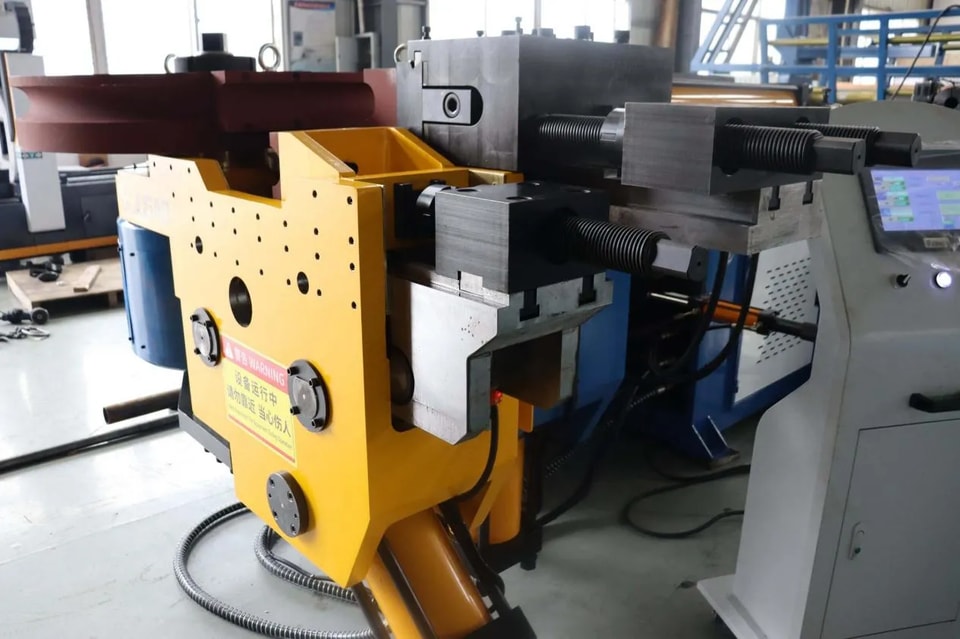
4. Oil leakage from the oil tank and pipelines
Symptoms: Oil seepage at the weld seams of the oil tank, or oil leakage from the oil level gauge or air filter.
Possible Causes: Welding defects or long-term vibration causing weld cracks; aging of the oil level gauge gasket; abnormally high pressure in the oil tank (clogged air filter); loose or cracked suction pipe joint.
Solutions: For weld leaks, drain the oil, grind the weld, re-weld, and perform a pressure test. Replace the oil level gauge gasket and check the tightening screws. Clean or replace the air filter to ensure the oil tank is open to the atmosphere. Check the suction pipe for cracks and replace any damaged pipes.
5. Cooler Oil Leakage
Symptoms: Oil stains below the cooler, or water emulsification (oil-water mixing) in the oil.
Possible Causes: Ruptured oil pipe inside the cooler; aging of the end cap seal; communication between the water and oil sides.
Solutions: For air-cooled coolers, check the fins and pipes for damage. For water-cooled coolers, disassemble and check for ruptured oil pipes, or perform an airtightness test. If oil-water mixing is found, immediately replace the cooler, thoroughly clean the oil tank, and replace all hydraulic oil.
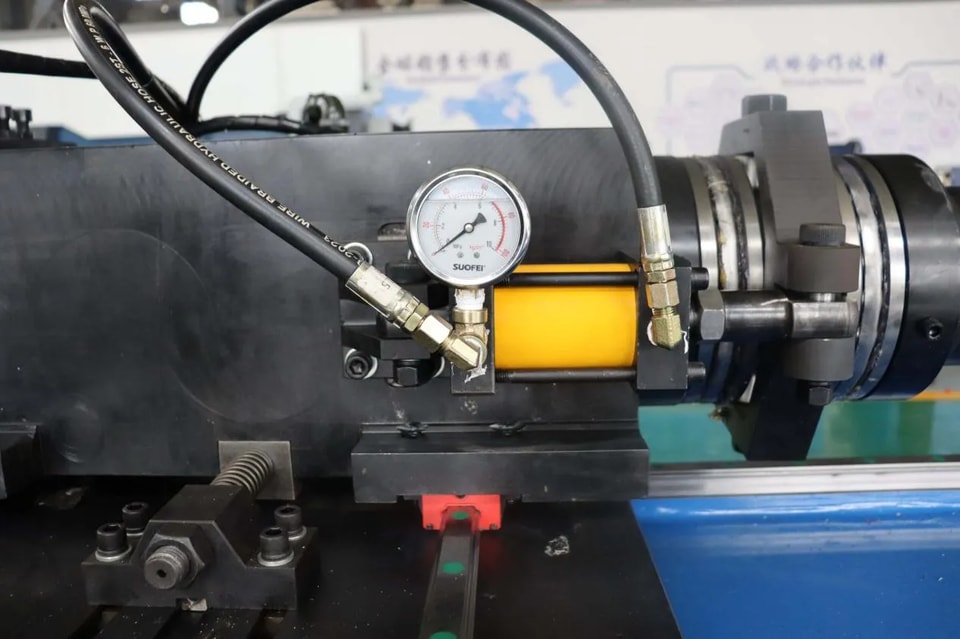
Key Points for Oil Leak Troubleshooting and Prevention
Visual Inspection: First, clean the equipment surface. After running for a period of time, observe the source of the leak, following the principle of "from high to low, from inside to outside."
Distinguishing Genuine from Fake: Confirm whether the leak is due to oil residue from assembly to avoid misjudgment.
Tightening Sequence: Tighten bolts in a diagonal sequence to avoid uneven tightening leading to seal failure.
Seal Selection: When replacing seals, always use original or equivalent oil-resistant seals. Do not substitute arbitrarily.
Oil Cleanliness: Hydraulic oil contamination is a major cause of seal damage. Regularly replace filter elements and maintain oil cleanliness.
Preventative Maintenance: Establish a regular inspection system. Address oil leaks promptly to prevent small problems from escalating into major malfunctions.
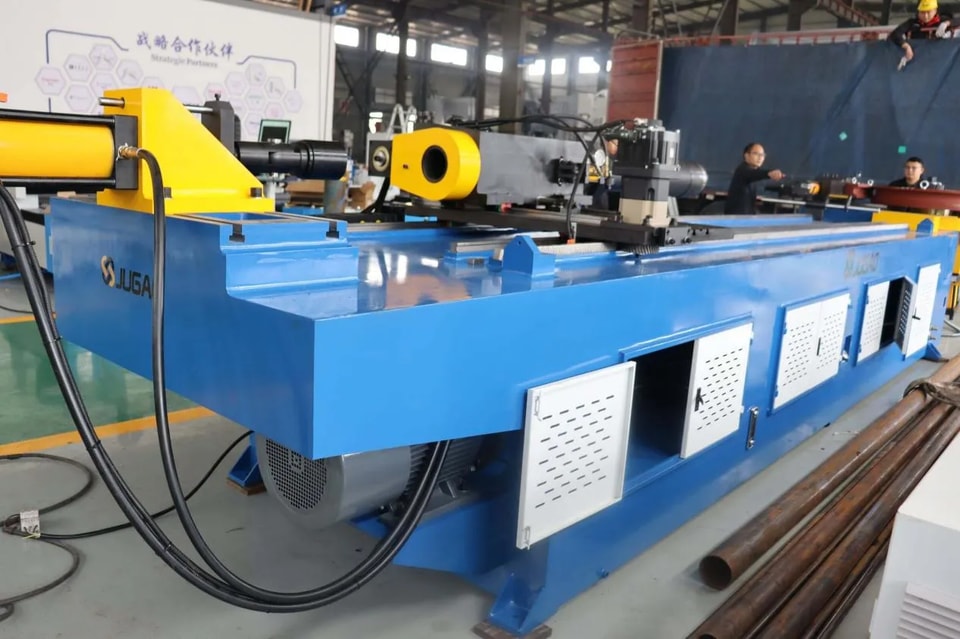
Troubleshooting oil leaks in pipe bending machines hinges on accurate location, proper disassembly and assembly, and clean operation. From joints, cylinders, pumps, and valves to the oil tank and cooler, check each component step by step to pinpoint the leak before attempting repair. Using the correct seals, appropriate tightening torque, and clean hydraulic oil are fundamental to preventing recurring leaks.
Contact Us