
What Are the Core Functional Parts of Laser Cutting Equipment
2026-06-26

Table of Contents
• Laser Emitter (Laser Source)
• Contrast Between CO₂ Laser and Fiber Laser Devices
• Laser Beam Transmission Assembly
• Reflective Mirrors & Optical Transmission Fibers
• Cutting Head Assembly and Focus Lens
• Daily Maintenance and Calibration of Focus Lens
• CNC Control Cabinet & Matching Programming Software
• Guarantee Stable and Precise Equipment Running
• Material Bearing Platform and Auxiliary Support Structure
• How to Select a Suitable Workbench Model
• Constant Temperature Cooling Circulation Unit
• Keep Stable Operating Temperature for Entire Machine
• Smoke Extraction and Dust Purification System
• Eliminate Toxic Smoke and Metal Dust Generated During Cutting
• Frequently Asked Questions
○ Q1: What’s the recommended inspection cycle for core laser cutting equipment parts?
○ Q2: Which factors lead to dimensional deviation during laser cutting processing?
○ Q3: What maintenance habits help prolong the service life of laser machine accessories?
• Summary
Mastering each core functional part of laser cutting equipment is a prerequisite for stable operation and standardized daily maintenance. This article will elaborate on every vital component one by one, explaining how each part collaborates to deliver neat, high-precision cutting workpieces. Whether you are a novice operator getting started with laser processing or an experienced technician looking to optimize workshop production efficiency, this guide delivers practical, easy-to-follow professional reference information.
Laser Emitter (Laser Source)
Contrast Between CO₂ Laser and Fiber Laser Devices
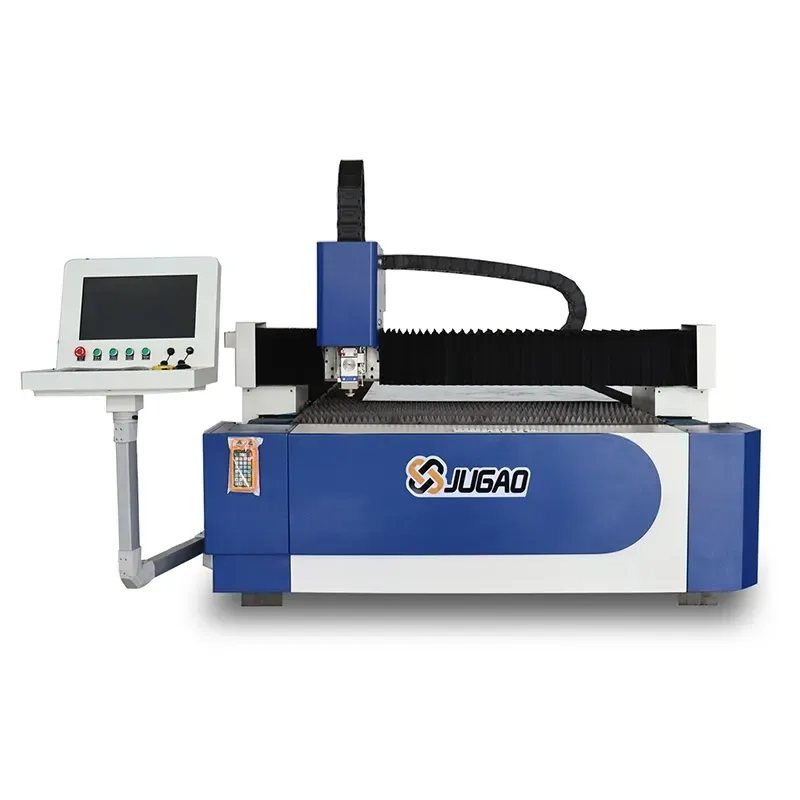
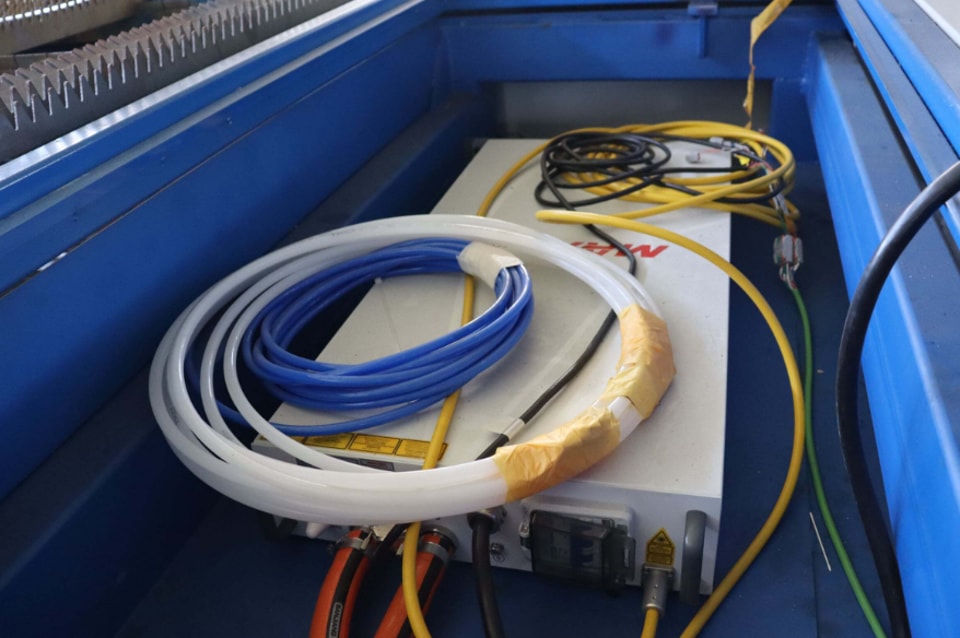
The laser emitter, also named laser source, serves as the power core of the whole laser cutting device. Two mainstream laser types are widely applied in the industry: CO₂ laser generators and fiber laser generators. CO₂ laser units excel at processing non-metal raw materials as well as thick metal plates. Fiber laser equipment boasts faster cutting speed and higher energy conversion efficiency, and performs outstandingly when machining highly reflective metals like aluminum alloy and copper sheets. Users need to pick the matching laser model according to processing materials and daily production capacity demands.
Laser Beam Transmission Assembly
Reflective Mirrors & Optical Transmission Fibers
The beam transmission assembly undertakes the task of conveying laser energy from the emitter to the cutting head. For CO₂ laser equipment, multiple sets of reflective mirrors are arranged in fixed positions to reflect and guide laser beams toward the machining plate. Fiber laser machines adopt optical fibers to complete stable laser transmission. Operators must wipe and check these transmission parts regularly; surface dust or slight position offset will greatly reduce cutting precision and section finish.
Cutting Head Assembly and Focus Lens
Daily Maintenance and Calibration of Focus Lens
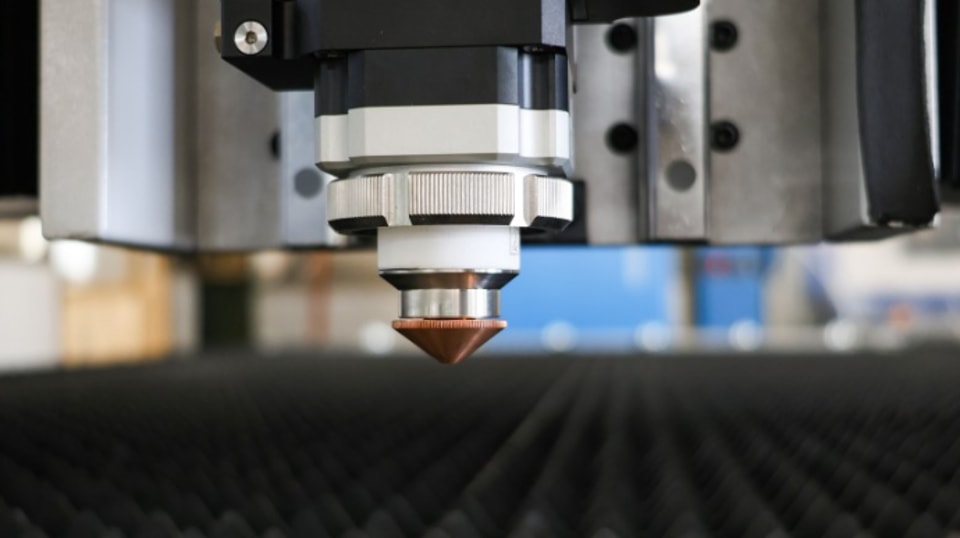
The cutting head fitted with a focus lens ranks among the most vulnerable yet critical components of laser cutting machines. The focus lens converges scattered laser beams into tiny high-energy spots on the material surface, providing enough energy density to realize complete penetration cutting. Operators need to inspect and fine-tune the lens frequently to maintain standard focal length and stable cutting quality. Neglected lens cleaning and calibration will result in fuzzy cutting lines and obvious dimensional errors.
CNC Control Cabinet & Matching Programming Software
Guarantee Stable and Precise Equipment Running
The CNC digital control cabinet receives and executes cutting graphic commands imported from programming software. It drives the machine to move accurately along X, Y, Z three linear axes and optional rotary auxiliary axes to guarantee ultra-high machining precision. Upgraded supporting programming software can intelligently optimize cutting travel paths, lower raw material waste, and lift overall production throughput. Timely software version updates and systematic operator training can further boost workshop operation efficiency.
Material Bearing Platform and Auxiliary Support Structure
How to Select a Suitable Workbench Model
The workbench bears all processing plates during cutting, and selecting a proper structure directly affects the flatness and dimensional accuracy of finished parts. Slat workbenches fit sheet metal cutting scenarios, allowing quick clearing of tiny leftover scraps. Honeycomb workbenches are more suitable for thin and fragile small workpieces, offering uniform and stable supporting force. Keeping the workbench surface clean and free of welding slag and deformation ensures stable clamping and consistent cutting accuracy in mass production.
Constant Temperature Cooling Circulation Unit
Keep Stable Operating Temperature for Entire Machine
Laser cutting equipment generates massive heat output under continuous working conditions, so a reliable cooling circulation unit is indispensable. Water cooling systems are the mainstream configuration, which stabilize the working temperature of laser sources and optical components. Standard maintenance tasks include periodic coolant level inspection, circulating water quality replacement, and water pump running status check, effectively preventing overheating faults and extending the service cycle of all core accessories.
Smoke Extraction and Dust Purification System
Eliminate Toxic Smoke and Metal Dust Generated During Cutting
A complete smoke purification system is the guarantee of safe workshop operation. It rapidly extracts toxic smoke, metal dust and particulate waste produced in cutting procedures. Good ventilation not only protects operators from harmful gas inhalation but also avoids dust adhesion on lenses and mirrors to maintain stable cutting effects. Regular disassembly, cleaning and replacement of filter cotton inside the dust removal device can sustain long-term stable purification performance.
Frequently Asked Questions
Q1: What’s the recommended inspection cycle for core laser cutting equipment parts?
A: We suggest conducting a full inspection of core accessories every week, covering reflective mirrors, focus lenses, cooling circulation systems and dust removal filters. Regular routine checks can keep equipment running steadily and avoid unplanned production shutdowns caused by sudden component failures.
Q2: Which factors lead to dimensional deviation during laser cutting processing?
A: The main triggers include offset optical transmission parts, contaminated focus lenses and incorrect focal length parameters. Regular optical cleaning, position calibration and parameter debugging can eliminate such defects and restore machining precision.
Q3: What maintenance habits help prolong the service life of laser machine accessories?
A: Standard preventive maintenance operations play a decisive role: regular cleaning of optical components, real-time monitoring of cooling system status, and reasonable matching of cutting process parameters. Persistent standardized maintenance can significantly extend the service life of all core parts of JUGAO laser cutting equipment.
Summary
Familiarizing yourself with all core functional components of laser cutting equipment helps users maintain stable machining performance, retain long-term cutting accuracy and prolong the whole machine’s service cycle. Weekly component inspection, standardized daily maintenance and reasonable parameter configuration can greatly upgrade your laser cutting finished product quality. If you require professional technical guidance about laser equipment maintenance or customized cutting scheme consultation, you can contact the professional after-sales technical team of JUGAO at any time.
Contact Us