

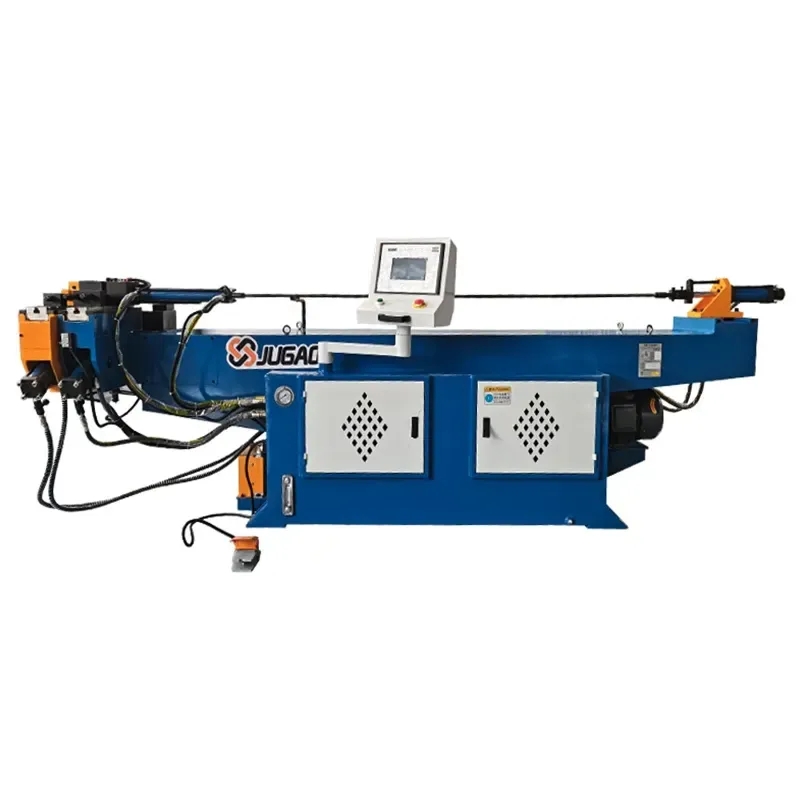
What are the applications of pipe bending technology in the oil and gas industry?
2026-07-04

When discussing pipe bending in the oil and gas industry, you might first think of those winding oil pipelines stretching for thousands of miles, but its applications extend far beyond that. Frankly, from underground drilling platforms to surface refineries and floating production facilities at sea, pipe bending technology permeates almost the entire industry chain. So, in which stages does it play a role, and what practical problems does it solve? Let me discuss this from a few key scenarios.
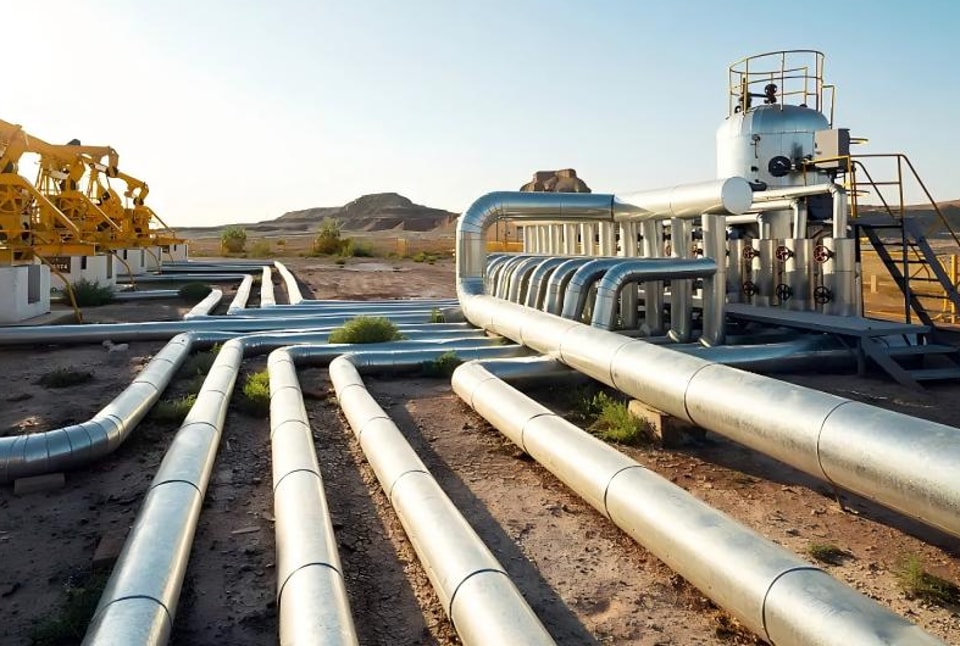
Long-distance pipelines and gathering and transmission networks
This is the most intuitive application. Oil and gas exiting the wellhead must be gathered through gathering and transmission pipelines to the processing station, and then transported to refineries or ports via long-distance pipelines. Due to terrain undulations, river crossings, and bends, pipelines cannot always run in a straight line.
Using a pipe bending machine to bend the pipe to the required angle, replacing welded elbows, offers several advantages. First, it reduces the number of welds—welds are weak points in high-pressure oil and gas transportation, and the fewer the better. Second, the inner wall of the bend is continuous, eliminating the local resistance caused by elbows, resulting in smoother oil and gas flow and less pressure drop. Third, bends can be made with larger radii of curvature, making it less likely for pigs to get stuck.
For high-pressure long-distance pipelines, the radius of curvature of the bend is typically required to be no less than five times the pipe diameter. On-site construction teams use large pipe bending machines for cold bending on-site, and then apply an anti-corrosion coating to the joints after bending.
Process Piping in Oil Refineries and Chemical Plants
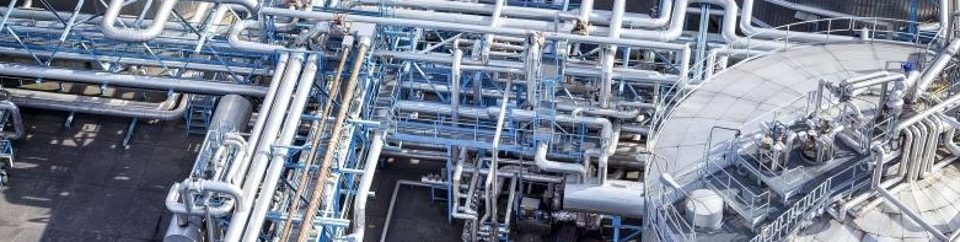
In oil refineries or chemical plants, the piping system becomes even denser and more complex. Various towers, tanks, heat exchangers, and reactors are densely packed with pipes. Space is limited, and thermal expansion, ease of operation, and maintenance must be considered. Using straight pipes with bends results in too many joints and a large footprint.
Pipe bending machines can create compact routes in confined spaces, using a single pipe to bypass equipment and obstacles, saving space and reducing weld joints. Especially in high-temperature, high-pressure hydrogen processing units and catalytic cracking units, where pipe materials are often expensive stainless steel or chromium-molybdenum steel, reducing the number of welds also means lower material costs and less inspection work.
Marine Engineering and Subsea Pipelines
Marine engineering presents a challenging application scenario for pipe bending technology. Whether it's the jacket structure on fixed platforms, risers on floating production storage and offloading (FPSO) units, or subsea pipelines, all place higher demands on pipe bending.
Space on platforms is extremely limited, and pipelines are densely packed, requiring very compact bends. Subsea pipelines are laid across seabed undulations, necessitating bends to adapt to the terrain. Steel catenary risers, in particular, need to be pre-bent into specific arcs to withstand the impact of waves and ocean currents.
Corrosion is a major issue in marine environments. Duplex stainless steel or corrosion-resistant alloys are commonly used materials. These materials have high hardness and rapid work hardening, requiring greater torque and stricter process control during bending; otherwise, cracking or excessive wall thickness reduction is likely.
Heat Exchanger and Heating Furnace Coils
Heating, cooling, and condensation are essential processes in oil and gas processing. The U-tubes in heat exchangers and the coils in heating furnaces are both produced using a tube bending machine.
These coils often have a small bending radius and thin walls, making them prone to wrinkling or flattening during bending. Therefore, a CNC tube bending machine with a mandrel is needed to provide internal support, ensuring the bent tube sections have good roundness and uniform wall thickness. The U-tubes in the heat exchanger tube bundle are individually bent, eliminating intermediate welds and resulting in higher reliability.
Drilling and Completion Equipment
The hydraulic systems, mud circulation systems, and well control systems on drilling platforms also involve numerous pipe bending applications. These systems operate under high pressure, significant vibration, and limited space, requiring pipe routing to avoid various rotating equipment.
The pipes used on drilling platforms often have thick walls and high material strength, necessitating heavy-duty hydraulic pipe bending machines. Fortunately, modern CNC pipe bending machines offer sufficient precision and power, resulting in significantly better dimensional consistency than manual bending.
Key Points of Material Selection and Process Control
Common pipe materials used in the oil and gas industry include carbon steel (API 5L X series), stainless steel (304/316L), duplex stainless steel (2205), and nickel-based alloys (Inconel 625). The bending process parameters vary significantly depending on the material.
Regarding pipe diameter, applications range from small-diameter instrument pipes to large-diameter main pipelines. The bending radius is typically required to be no less than three times the pipe diameter, and five times or more under high-pressure conditions. The wall thickness reduction rate must be controlled within 12.5% (API standard), and there are specific requirements for the ellipticity after bending.
In terms of quality control, wall thickness testing and ellipticity measurement are performed after bending. Critical areas also require penetrant testing or magnetic particle testing to ensure the absence of surface cracks.

In the oil and gas industry, pipe bending technology is more than just bending pipes; it directly impacts pipeline safety, flow efficiency, ease of installation, and long-term reliability. From complex onshore pipelines to space-constrained offshore platforms, from high-temperature, high-pressure refinery units to violently vibrating drilling rigs, precision pipe bending supports the safe transport and processing of oil and gas. If you also work with oil and gas pipelines, pay close attention to the repeatability, mandrel configuration, and material compatibility of the pipe bending machine when selecting one.
Contact Us