
Key Process Parameters of Laser Deep Penetration Welding
2026-06-16

(1) Laser Welding
There is a laser energy density threshold in laser welding. Below this value, the penetration depth is very shallow. Once this value is reached or exceeded, the penetration depth increases significantly. Plasma is generated only when the laser power density on the workpiece exceeds the threshold (which depends on the material), marking the commencement of stable deep penetration welding. If the laser power is below this threshold, only surface melting occurs on the workpiece, meaning the welding proceeds in a stable heat conduction mode. When the laser power density is near the critical condition for keyhole formation, deep penetration welding and conduction welding alternate, becoming an unstable welding process, resulting in large fluctuations in penetration depth. In laser deep penetration welding, the laser power simultaneously controls the penetration depth and welding speed. The penetration depth is directly related to the beam power density and is a function of the incident beam power and the beam focal spot. Generally, for a laser beam of a certain diameter, the penetration depth increases with increasing beam power.
(2) Beam Focal Spot
The beam spot size is one of the most important variables in laser welding because it determines the power density. However, measuring high-power lasers remains a challenge, despite the existence of numerous indirect measurement techniques.
The diffraction-limited spot size at the laser beam focal point can be calculated using optical diffraction theory, but due to aberrations in the focusing lens, the actual spot size is larger than the calculated value. The simplest practical method is the isothermal profilometry method, which involves burning thick paper and penetrating a polypropylene plate before measuring the focal spot and the diameter of the perforation. This method requires practical measurement experience to master the laser power and the duration of the beam's action.
(3) Material Absorption Value.
The absorption of laser light by a material depends on several important properties, such as absorptivity, reflectivity, thermal conductivity, melting temperature, and evaporation temperature, with absorptivity being the most important.
Factors affecting the absorptivity of a material to a laser beam include two aspects: First, the resistivity of the material. Measurements of the absorptivity of polished surfaces show that the absorptivity is proportional to the square root of the resistivity, which in turn varies with temperature. Second, the surface condition (or smoothness) of the material significantly affects the beam absorptivity, thus having a noticeable impact on the welding effect. The output wavelength of a CO2 laser is typically 10.6 μm. Non-metallic materials such as ceramics, glass, rubber, and plastics have high absorption rates at room temperature, while metallic materials absorb it poorly at room temperature, with absorption only increasing dramatically once the material melts or even vaporizes. Surface coatings or oxide films are effective methods to improve the absorption of the laser beam.
(4) Welding Speed.
Welding speed significantly affects the weld penetration. Increasing the speed results in a shallower weld penetration, while excessively low speeds lead to over-melting and burn-through. Therefore, there is a suitable welding speed range for a specific material with a given laser power and thickness, and the maximum weld penetration can be achieved at the corresponding speed value within this range.
(5) Shielding Gas.
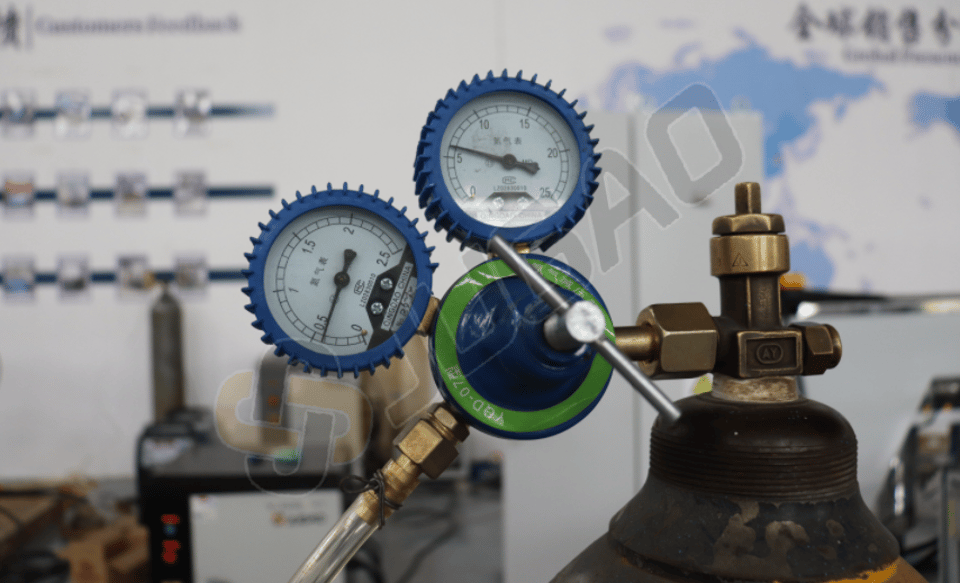
Inert gases are commonly used to protect the molten pool during laser welding. While surface oxidation may not be a concern when welding certain materials, helium, argon, and nitrogen are commonly used for shielding the workpiece from oxidation during the welding process.
Helium is poorly ionized (but has high ionization energy), allowing the laser beam to pass through smoothly and reach the workpiece surface unimpeded. This is the most effective shielding gas used in laser welding, but it is relatively expensive.
Argon is cheaper and has a higher density, resulting in good protection. However, it is easily ionized by high-temperature metal plasma, which shields part of the beam from reaching the workpiece, reducing the effective laser power and impairing welding speed and penetration. Welds protected with argon have smoother surfaces than those protected with helium.
Nitrogen is the cheapest shielding gas, but it is not suitable for welding certain types of stainless steel, mainly due to metallurgical issues such as absorption, which can sometimes create porosity in the joint area.
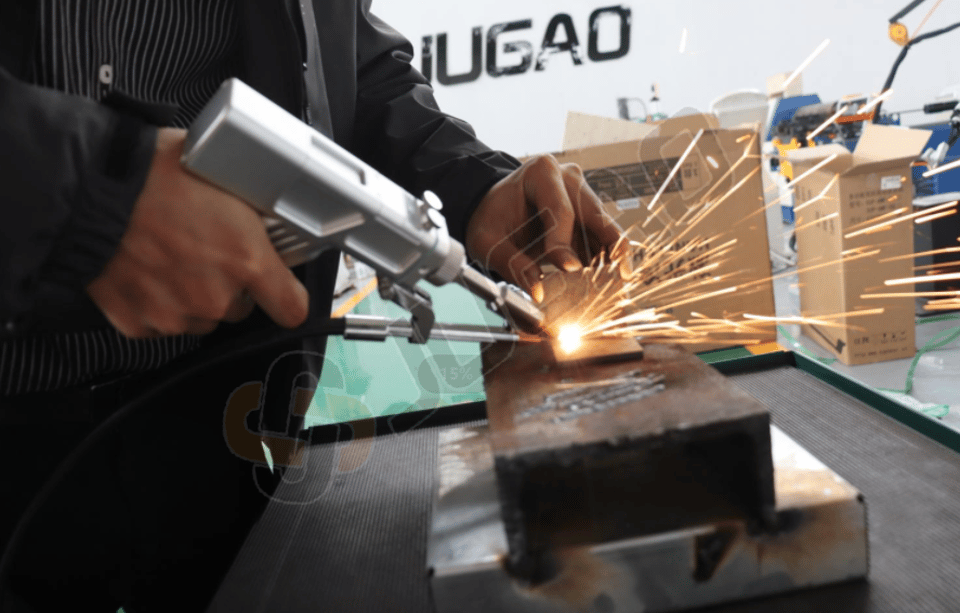
A second function of shielding gases is to protect the focusing lens from metal vapor contamination and molten droplet sputtering. This is especially important in high-power laser welding, where the ejected material becomes very powerful.
A third function of shielding gases is their effectiveness in dispersing the plasma generated by high-power laser welding. Metal vapor absorbs the laser beam and ionizes into a plasma cloud. The protective gas surrounding the metal vapor also ionizes due to heating. If there is too much plasma, the laser beam is consumed to some extent by the plasma. Plasma exists as a second form of energy on the working surface, resulting in shallower weld penetration and a wider weld pool surface. The electron recombination rate is increased by increasing collisions between electrons, ions, and neutral atoms, thus reducing the electron density in the plasma. The lighter the neutral atoms, the higher the collision frequency and recombination rate; on the other hand, only protective gases with high ionization energies can prevent an increase in electron density due to their own ionization.
As shown in the table, the plasma cloud size varies depending on the protective gas used, with helium being the smallest, followed by nitrogen, and the largest when argon is used. A larger plasma size results in a shallower weld penetration. This difference is primarily due to the different degrees of ionization of gas molecules, and also due to the different densities of the protective gases causing differences in metal vapor diffusion.
Helium has the lowest ionization and density, and it can quickly displace the rising metal vapor generated from the molten metal pool. Therefore, using helium as a shielding gas can maximally suppress plasma, thereby increasing penetration depth and welding speed; its light weight allows it to escape, reducing the likelihood of porosity. However, based on our actual welding results, argon shielding is quite effective.
The impact of the plasma cloud on penetration depth is most pronounced in the low welding speed range. Its effect weakens as the welding speed increases.
The shielding gas is ejected at a certain pressure through a nozzle to reach the workpiece surface. The nozzle's hydrodynamic shape and outlet diameter are crucial. It must be large enough to ensure the ejected gas covers the welding surface, but the nozzle size must be limited to effectively protect the lens and prevent metal vapor contamination or metal spatter damage. The flow rate must also be controlled; otherwise, laminar flow of the shielding gas will become turbulent, atmospheric entrainment will enter the molten pool, and porosity will ultimately form.
To improve the shielding effect, an additional lateral blowing method can be used, where the shielding gas is injected directly into the small hole of the deep penetration weld through a smaller diameter nozzle at a certain angle. The shielding gas not only suppresses the plasma cloud on the workpiece surface but also influences the plasma within the hole and the formation of the keyhole, further increasing the weld penetration and achieving a weld with an ideal depth-to-width ratio. However, this method requires precise control of the gas flow rate and direction; otherwise, turbulence can easily occur, damaging the molten pool and making the welding process unstable.
(6) Lens Focusing.
During welding, a focusing method is usually used to converge the laser, typically using a lens with a focal length of 63~254mm (2.5”~10”). The size of the focused spot is directly proportional to the focal length; the shorter the focal length, the smaller the spot. However, the focal length also affects the depth of focus, meaning the depth of focus increases synchronously with the focal length. Therefore, a shorter focal length can increase the power density, but because the depth of focus is small, the distance between the lens and the workpiece must be precisely maintained, and the weld penetration is also not large. Due to the influence of spatter and laser mode during welding, the shortest focal length used in actual welding is usually 126mm (5”). When the joint is large or the weld needs to be increased by increasing the spot size, a lens with a focal length of 254mm (10”) can be selected. In this case, a higher laser output power (power density) is required to achieve the deep-penetration keyhole effect.
When the laser power exceeds 2kW, especially for a 10.6μm CO2 laser beam, due to the use of special optical materials in the optical system, a reflection focusing method is often used to avoid the risk of optical damage to the focusing lens. A polished copper mirror is generally used as the reflecting mirror. Because it can effectively cool, it is often recommended for focusing high-power laser beams.
(7) Focal Point Position.
During welding, the focal point position is crucial to maintaining sufficient power density. The change in the relative position of the focal point to the workpiece surface directly affects the weld width and depth.
In most laser welding applications, the focal point is usually set approximately 1/4 of the required penetration depth below the workpiece surface.
(8) Laser Beam Position.
When laser welding different materials, the laser beam position controls the final weld quality, especially in butt joints where this is more sensitive than in lap joints. For example, when welding a hardened steel gear to a low-carbon steel drum, proper laser beam position control will result in a weld primarily composed of low-carbon components, exhibiting better crack resistance. In some applications, the geometry of the workpiece requires the laser beam to deflect at an angle. When the deflection angle between the beam axis and the joint plane is within 100 degrees, the workpiece's absorption of laser energy will not be affected.
(9) Gradual increase and decrease control of laser power at the start and end points of welding.
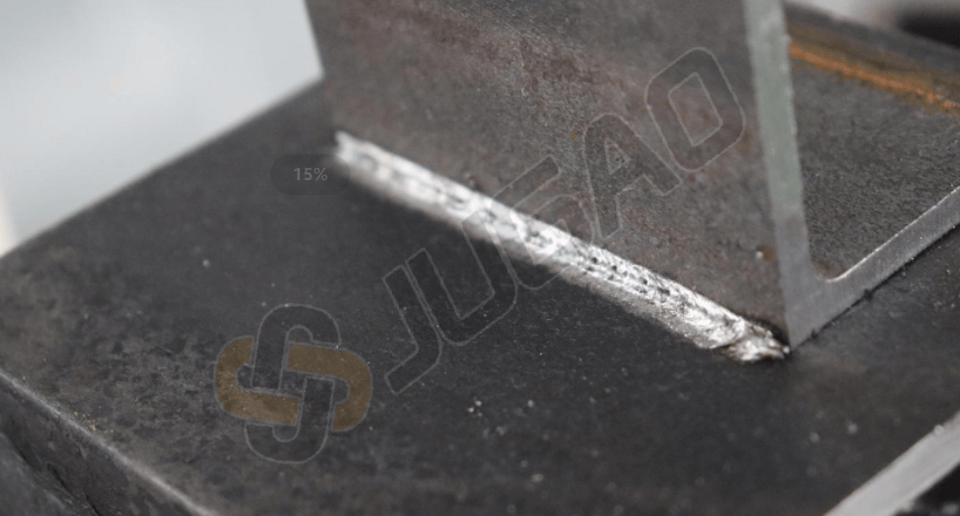
During laser deep penetration welding, regardless of weld depth, the pinhole phenomenon always exists. When the welding process is terminated and the power switch is turned off, a pit will appear at the weld tail. Furthermore, when the laser weld layer covers the original weld, excessive absorption of the laser beam can occur, leading to overheating or porosity in the weldment.
To prevent the above phenomenon from occurring, the power start and end points can be programmed to make the power start and end times adjustable. That is, the starting power is increased from zero to the set power value in a short time using electronic methods, and the welding time is adjusted. Finally, when welding ends, the power is gradually reduced from the set power value to zero.
Contact Us