


How to Change Pipe Bending Machine Dies Efficiently and Accurately? A Master Technician Teaches You Step-by-Step
2026-06-17

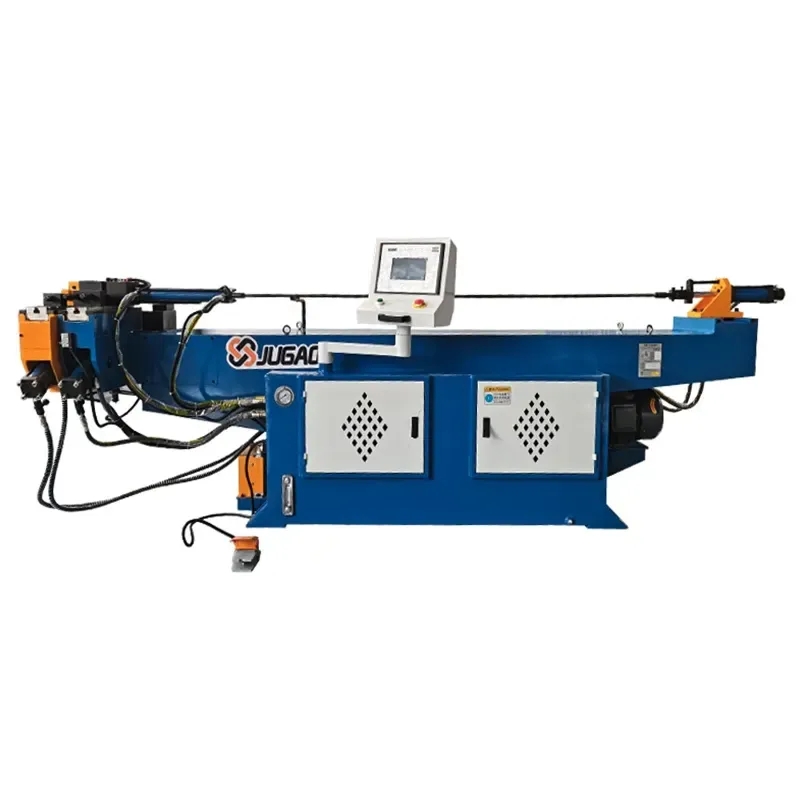
Changing die-cutting is a frequent task for pipe benders. While it may seem like a routine operation, the quality of the change directly impacts the quality of the entire batch of work. Improper installation, lack of tightening, or incorrect clearance will result in wrinkled pipes or misaligned angles. Below, we'll walk through the entire process from start to finish; following this will ensure both speed and accuracy.
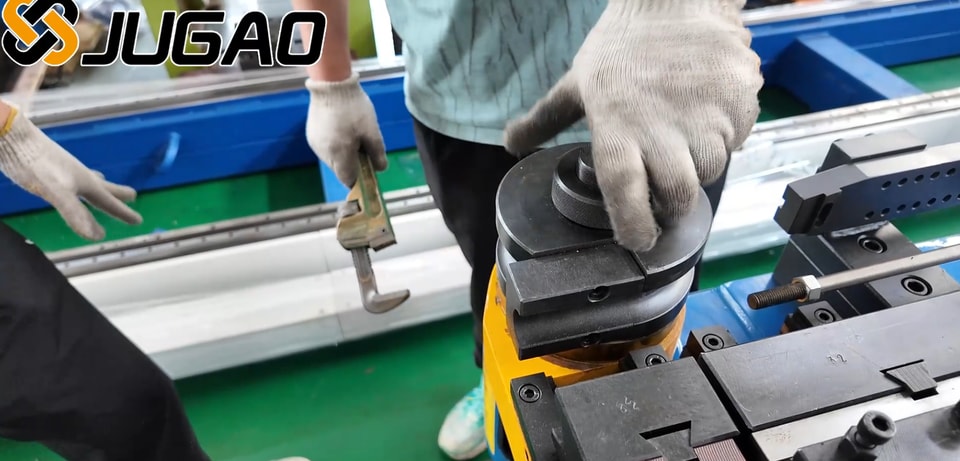
I. Three Things to Consider Before Changing a Bending Mold
Don't rush into action. First, confirm:
Do the pipe diameter, wall thickness, and bending radius match the new mold? Using the wrong one will be a waste of time.
Is the new mold free of dents or scratches? Defective molds will result in scrap.
Is the machine depressurized? Removing the mold without depressurizing is dangerous.
After confirming these three things, then begin operation.
II. What are the key types of molds on a pipe bending machine?
Bending mold: Determines the bending radius; mounted on the bending arm and rotates with it.
Clamping mold: Presses the pipe against the bending mold to prevent slippage.
Pressure mold: Supports the straight section of the pipe, controlling material flow.
Anti-wrinkle mold: Presses down on the inside of the pipe to prevent wrinkling.
Mandrel: Inserted into the inside of the pipe to prevent thin-walled pipes from collapsing.
You don't need to use every single one, but you should know what each one does.
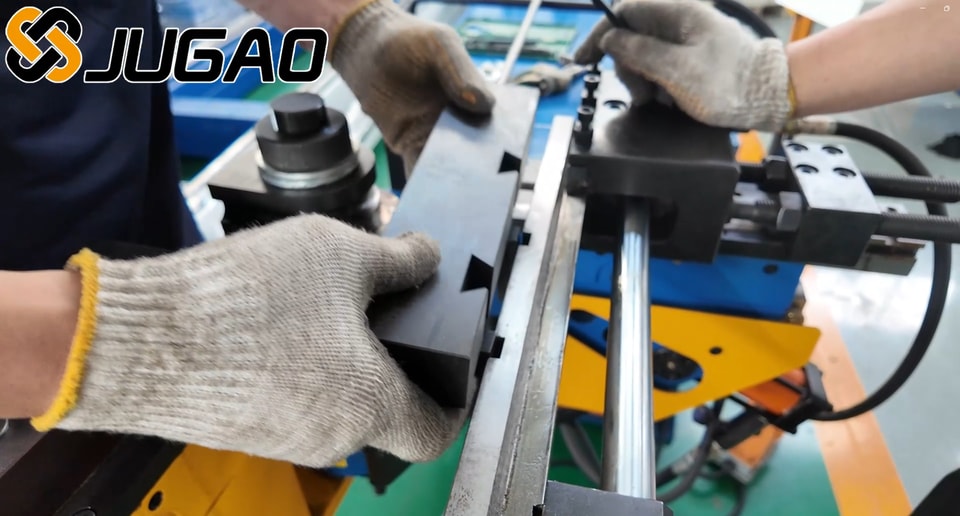
III. Seven-Step Method for Mold Replacement
Step 1: Remove the Old Mold
Loosen the locking mechanism and carefully remove the old mold. Avoid hitting the machine surface during removal; damage will prevent proper fit upon reinstallation.
Step 2: Clean the Mounting Surface
This is a step many people skip. After removing the old mold, the mounting surface is often covered in metal shavings and grease. If not cleaned properly, the new mold will be misaligned. Wipe it clean with a cloth, and gently sand off any rust.
Step 3: Install the New Bending Mold
Align it with the positioning surface and place it on the mold. Tighten the bolts in two stages, diagonally, not all at once.
Step 4: Install the Clamping and Pressing Dies
The clamping die must be aligned with the center of the groove in the bending die; misalignment will prevent proper clamping of the pipe. The height of the pressing die must also be adjusted to be flush with the straight section of the pipe.
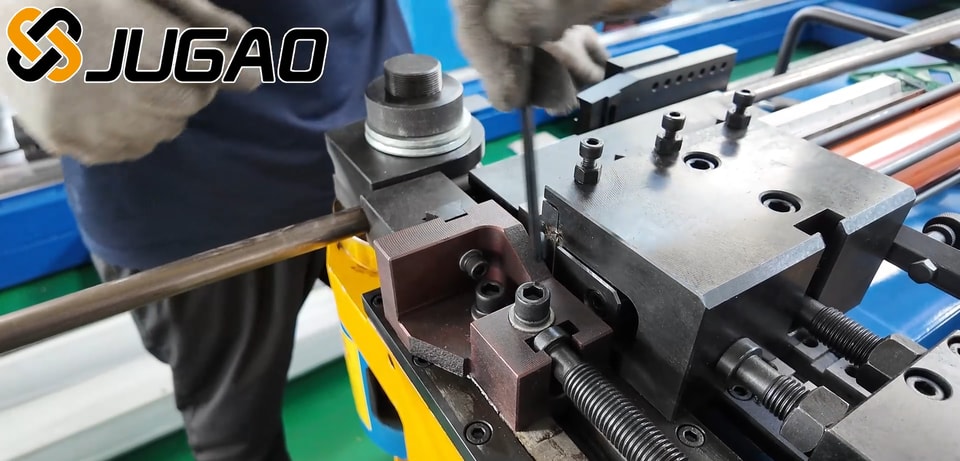
Step 5: Install the Mandrel and Anti-Wrinkle Die (if needed)
The mandrel extension must be adjusted accurately—too far forward will scratch the inner wall, too far back will not provide support. The gap between the anti-wrinkle die and the bending die should be controlled at 0.1-0.2mm (the thickness of an A4 sheet of paper).
Step 6: Tighten and Check All Bolts Tighten all bolts to the standard torque using a torque wrench. Turn the bending arm by hand to check for any sticking.
Step 7: Test Bending One Pipe Take a scrap pipe and bend it completely. Check the angle, surface for scratches or wrinkles, and pipe ends for flattening. If there are any problems, adjust the die position first; don't rush to change the program.
IV. Four Common Mistakes When Changing Molds
**Failure to clean the mounting surface:** Metal filings accumulate under the mold, resulting in inaccurate angles.
**Uneven bolt tightening:** The mold is tilted under stress, causing unevenly bent pipes.
**Making batches without trial bending:** Problems are only discovered after bending dozens of pipes, rendering them all unusable.
**Estimating the anti-wrinkle mold gap by feel:** Too large, causing wrinkles; too small, causing scratches. Measure with a feeler gauge—it only takes half a minute.
V. Daily Maintenance Tips
**Clean the molds thoroughly at the end of each shift and spray with anti-rust oil.**
**Store molds of different pipe diameters separately and clearly label them to avoid mixing them up.**
**Inspect the mold working surfaces monthly; repair or replace if there is roughening or wear exceeding 0.1mm.**
**Regularly lubricate the mandrel ball joint; jamming it will prevent bending thin-walled pipes.**
When it comes to mold changing, speed isn't the goal; accuracy is. Cleaning the mounting surface, aligning the position, tightening evenly, and testing with a bend—once this process is mastered, mass production will run smoothly.
Contact Us