
The Critical Role of Safety Light Curtains in CNC Hydraulic Press Brakes
2025-08-27

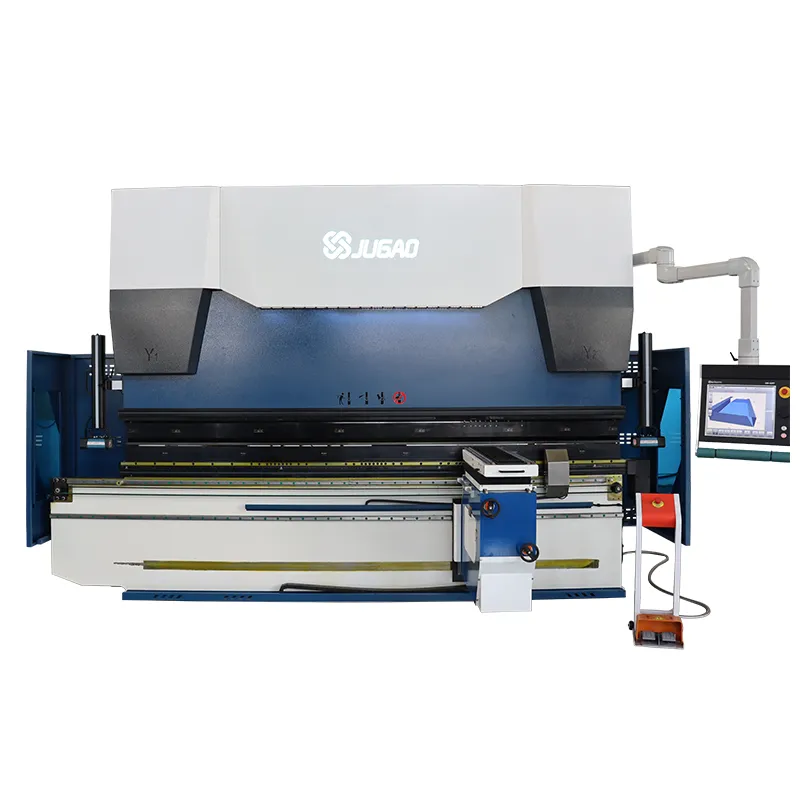
In modern metal fabrication, CNC hydraulic press brakes represent both a powerful production tool and a significant safety challenge. Among the various protective measures available, safety light curtains have emerged as an indispensable component for operator protection. These advanced electro-sensitive protective devices (ESPE) create an invisible safety barrier that instantly halts machine operation when breached, preventing potentially catastrophic injuries.
How Safety Light Curtains Function
A safety light curtain system consists of two primary components:
1. Emitter Unit: Projects an array of synchronized infrared beams
2. Receiver Unit: Detects the integrity of the light beam pattern
When installed on a CNC hydraulic press brake, these components establish a protective detection field around the hazardous area. The system continuously monitors this field at high frequency (typically 500-2,000 Hz). If any object interrupts the light beams - whether an operator's hand, tool, or other foreign material - the system triggers an immediate safety response:
1. Sends a stop signal to the machine's safety-rated control system
2. Activates the press brake's dynamic braking mechanism
3. Maintains the stopped condition until manually reset
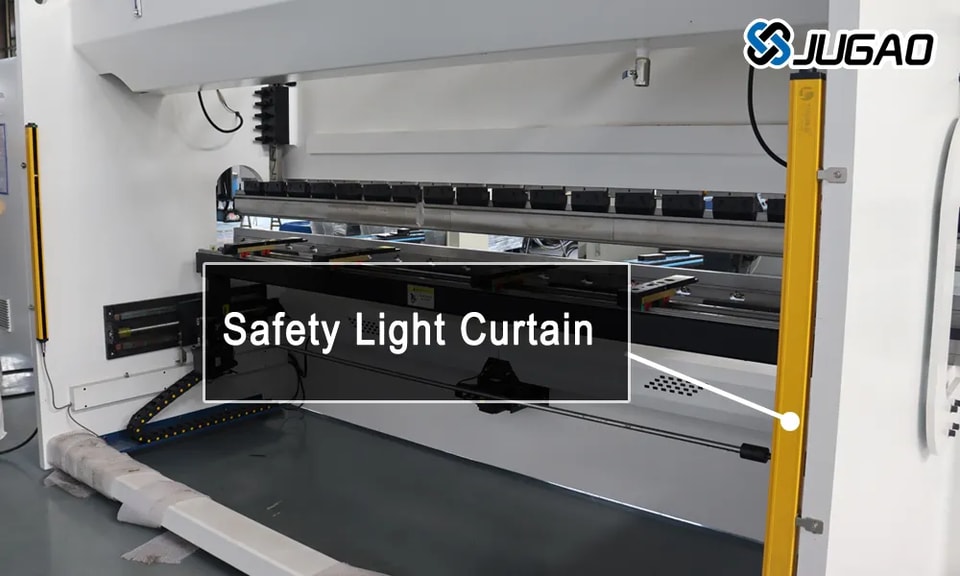
A safety light curtain is a kind of photoelectric protection device to avoidsafety accidents caused by operating workers or other people close to therunning machines.
Key Operational Advantages
Modern safety light curtains offer several critical benefits for press brake applications:
1. Enhanced Personnel Protection
l Prevents crushing injuries during the bending cycle
l Eliminates the need for physical guarding that can obstruct workflow
l Complies with ISO 13855 safety standards for positioning
2. Improved Production Efficiency
l Allows closer operator access than mechanical barriers
l Enables faster setup and material handling
l Reduces downtime compared to traditional safety systems
3. Advanced Safety Features
l Self-checking circuitry for continuous reliability monitoring
l Muting capability for automated material handling
l Cascaded shutdown zones for different risk levels
Technical Specifications
Parameter | Typical Value | Importance |
Resolution | 14-30mm | Determines minimum object detection size |
Response Time | <10ms | Ensures timely machine stoppage |
Protection Height | 300-1800mm | Covers the entire hazardous area |
Safety Category | PLd/Cat.3 (ISO 13849) | Meets stringent safety requirements |
Implementation Considerations
Proper installation requires attention to several critical factors:
1. Positioning: Must maintain minimum safe distance per ISO 13855 calculations
2. Alignment: Precoptical alignment ensures uninterrupted beam detection
3. Integration: Must interface with the machine's safety relay or PLC
4. Testing: Regular function checks including daily test cycles
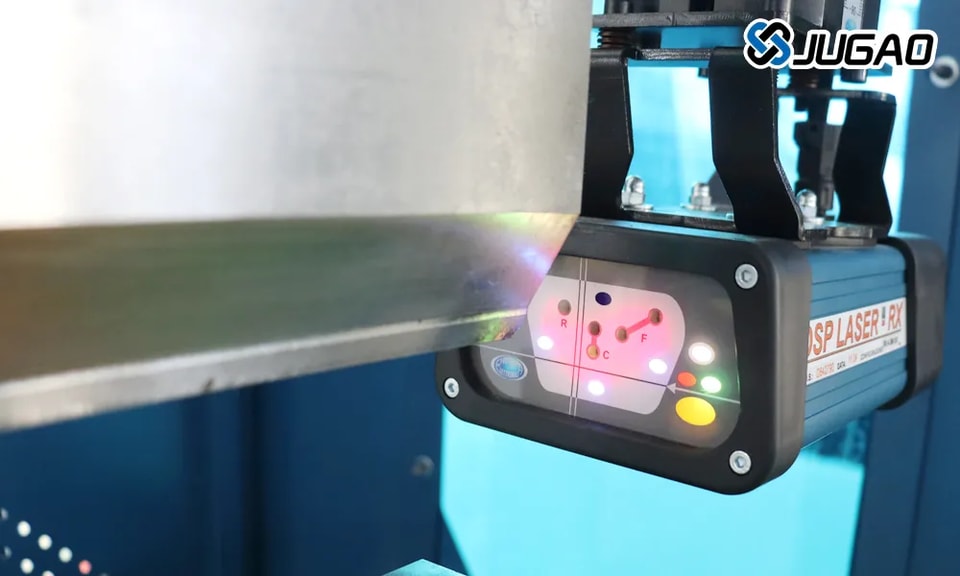
Safety Light Curtains for CNC Hydraulic Press Brakes serve as a protective barrier, ensuring operator safety by detecting obstacles. They immediately stop the machine if a person or object is detected, minimizing accidents and enhancing operational efficiency. The emitter sends light emissions to the receiver on the other end and then the protective zone is formed. Once an obstruction (such as operator’s finger or other unexpected items) enters the protection zone, the light curtain will immediately send a signal to the controller and stop the movement of the slider simultaneously.
Conclusion
Safety light curtains represent a sophisticated engineering solution that bridges the gap between productivity and operator protection in CNC hydraulic press brake operations. By implementing these systems, manufacturers can achieve:
l Compliance with international safety standards (ISO 12100, ISO 13849)
l Reduction in workplace accidents and associated costs
l Improved operational efficiency through intelligent safety design
For optimal performance, always consult with safety specialists to ensure proper system selection, installation, and maintenance based on your specific press brake configuration and operational requirements.
Contact Us