
Solutions to Guide Rail Wear Problems in Press Brakes
2026-04-24

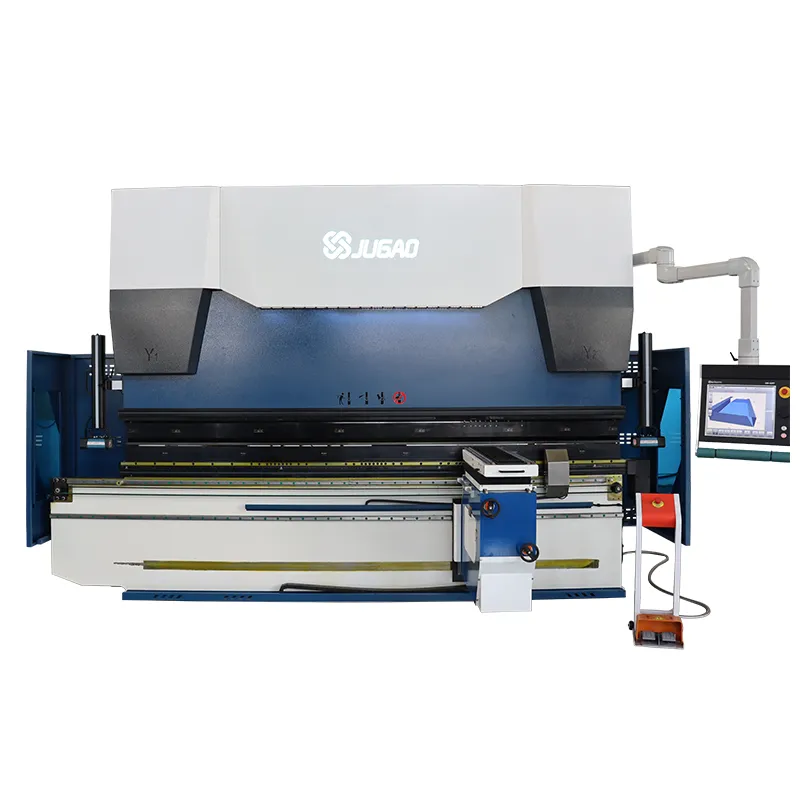
In actual production, inconsistent bending angles, abnormal mechanical noises and unstable ram movement are frequently caused by wear of press brake guide rails. According to practical operation experience in workshop environments, guide rail wear is a gradual fault that is easily overlooked in the early stage, and will eventually reduce the bending accuracy of equipment. Fortunately, most guide rail faults can be identified in advance and solved effectively through standardized inspection, adjustment and maintenance operations. This article will elaborate on the identification methods, inducing factors, targeted repair steps and preventive strategies of press brake guide rail wear, helping to restore the equipment to high-precision operation state.
Causes of Guide Rail Wear in Press Brakes
Identifying the root cause is the prerequisite for solving guide rail wear faults. Press brake guide rails bear continuous mechanical stress during operation, and multiple external and human factors will accelerate the wear process.
Insufficient Lubrication of Guide Rails
Insufficient lubrication is the primary cause of guide rail wear in press brakes. Guide rails and sliding contact surfaces require stable lubrication to reduce friction coefficient. Once lubrication is lacking:
• Direct metal-to-metal contact occurs frequently
• Scratches appear on the guide rail surface
• The operation of the ram becomes unstable
Many manufacturing enterprises ignore the formulation and implementation of lubrication plans, leading to premature wear of guide rail surfaces.
Pollution of Dust, Metal Scraps and Workshop Impurities
Press brakes are mostly applied in production environments with metal dust and debris. If guide rails are not cleaned regularly, tiny abrasive particles will accumulate on the contact surface, which will aggravate wear and damage the sliding surface over time.
Long-term Unbalanced Loading
Non-standard bending operation habits such as unbalanced loading and uneven tonnage distribution will also aggravate guide rail damage. Uneven force application will cause the ram to move asymmetrically, resulting in excessive unilateral stress on the guide rail.
Early Detection Methods of Guide Rail Wear in Press Brakes
Before carrying out repair operations, it is essential to confirm that guide rail wear is the core cause of equipment failure.
Check the Consistency of Bending Angles
If the bending angles of workpieces processed by the same program are inconsistent along the bending length, it indicates that the parallelism of the ram may be affected by guide rail wear. This is usually the first early warning signal for mechanical component inspection.
Listen to Abnormal Mechanical Sounds
During the operation of the ram, guide rail wear often produces abnormal sounds. Grinding, jittering and irregular sliding sounds are typical manifestations of friction faults between the ram and the guide rail.
Inspect the Guide Rail Surface
Visual inspection can directly find early wear characteristics, including:
• Scratches on the sliding contact surface
• Uneven polishing traces
• Accumulated metal dust
• Lubricant residue mixed with impurities
Once the above signs are found, maintenance operations should be carried out immediately.
Step-by-step Repair Process for Guide Rail Wear in Press Brakes
After confirming the wear fault, a standardized repair process can efficiently restore the normal operation performance of the equipment.
Step 1: Clean Guide Rails and Sliding Surfaces
The first step of repair is comprehensive cleaning. Use clean rags and special cleaning agents to remove accumulated dust, metal scraps and deteriorated lubricant, which can prevent further abrasive wear and facilitate accurate judgment of the wear degree of the guide rail.
Step 2: Adopt Matching Lubrication Products
After cleaning, apply lubricants recommended by the equipment manufacturer. Scientific lubrication can reduce friction, protect sliding surfaces and ensure smooth operation of the ram. It is recommended to select high-grade industrial lubricants for heavy mechanical equipment.
Step 3: Adjust the Guide Rail Clearance
Most press brakes can adjust the guide rail clearance through adjustment strips or cushion blocks. Excessive clearance between the ram and the guide rail caused by wear will lead to irregular movement of the ram. Reasonable clearance adjustment can restore the alignment state and stabilize the ram operation during bending.
Step 4: Restore the Parallelism of the Ram
Guide rail wear may affect the parallel movement of the ram. Technicians can use precision measuring tools such as dial indicators and laser alignment systems to recalibrate the ram alignment, ensuring consistent bending angles of the entire workpiece.
Step 5: Replace Severely Worn Components
When the wear degree is too serious to be repaired by adjustment, it is necessary to replace the guide rail or sliding blocks. Although this step takes more time, it can restore the original precision of the equipment and avoid further damage to mechanical components.
Preventive Measures for Guide Rail Wear in Press Brakes
Preventive maintenance is the most effective way to avoid repeated occurrence of guide rail wear faults.
Formulate a Regular Lubrication Plan
Daily or weekly lubrication inspection can keep the guide rail in a good protection state, and a stable lubrication plan can significantly prolong the service life of components.
Keep the Equipment Clean
Cleaning the guide rail after each production shift can prevent the accumulation of metal dust. Even tiny particles will cause persistent damage if left untreated for a long time.
Avoid Unbalanced Bending Operations
Operators should evenly distribute the bending load along the length of the equipment as much as possible. Balanced loading can reduce the stress on the guide rail and improve the operation stability of the equipment.
Frequently Asked Questions
What are the typical symptoms of guide rail wear in press brakes?
Common symptoms include inconsistent bending angles, abnormal noise during ram operation, enhanced vibration and visible scratches on the guide rail surface.
Does guide rail wear affect bending precision?
Yes. The guide rail controls the linear movement of the ram, and wear will cause the ram alignment to deviate, directly affecting the bending accuracy and repeatability of the equipment.
How often should the guide rail of the press brake be lubricated?
In most workshops, the guide rail should be inspected daily and lubricated regularly according to the equipment usage and operating hours.
Is it necessary to replace the guide rail once wear occurs?
Not necessarily. Slight wear can be solved by cleaning, lubrication and adjustment; component replacement is only required when the wear is serious.
Conclusion
Guide rail wear is a common mechanical fault in press brakes, but it is also a fault that can be effectively avoided through standardized management. By mastering the causes of wear, carrying out regular inspections and implementing scientific maintenance steps, the equipment precision can be restored and long-term damage can be prevented.
Practical operations such as cleaning, lubrication and alignment inspection can greatly prolong the service life of the guide rail and maintain stable bending performance. For press brakes with early wear signs, timely treatment can save maintenance costs and reduce production downtime.
If you need professional guidance on press brake maintenance and fault troubleshooting, you can consult the technical team or refer to more technical documents to ensure the efficient and stable operation of the equipment.
Contact Us