
Key Technical Specifications of Welding Robots
2026-05-21

The technical specifications of welding robots are the core basis for evaluating their performance and selecting suitable applications. These specifications cover multiple dimensions, including the robot's motion capabilities, accuracy, load capacity, and environmental adaptability. The main technical specifications of welding robots can be divided into two parts: general robot specifications and specific welding robot specifications.
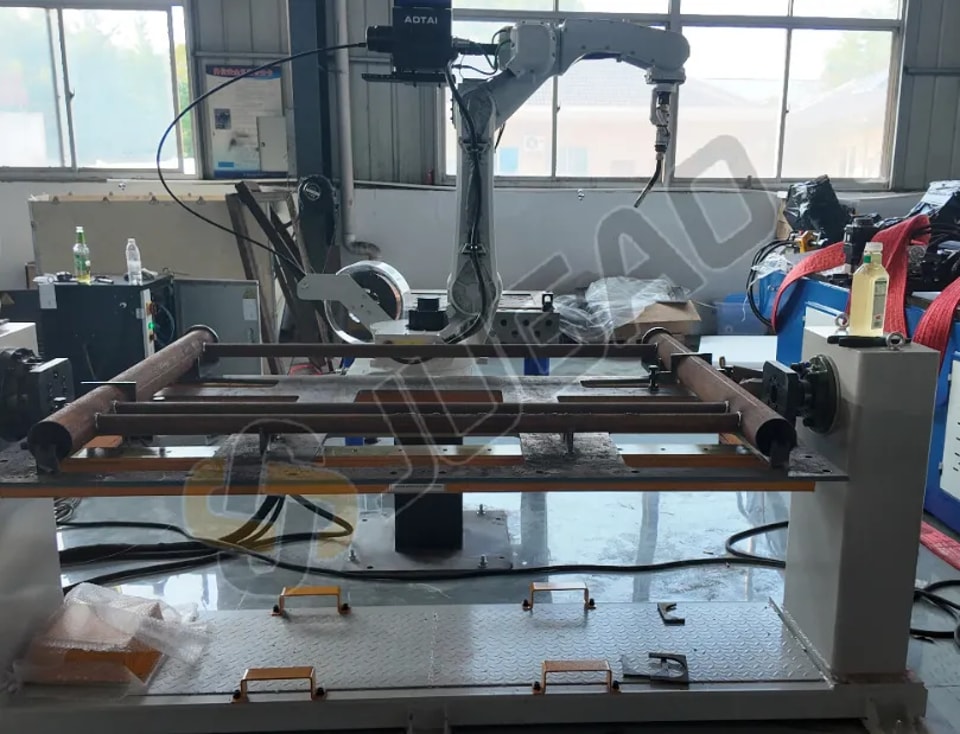
1. Applicable Welding or Cutting Methods: This is particularly important for arc welding robots. It essentially reflects the anti-interference capability of the robot's control and drive system. Currently, most arc welding robots only use MIG welding methods because these methods do not require high-frequency arc ignition, and the robot's control and drive system lacks special anti-interference measures. TIG welding can also be used. However, this type of robot is a relatively new product and has a set of special anti-interference measures. This should be considered when selecting a robot.
2. Oscillation Function: This is very important for arc welding robots and is related to their process performance. Currently, the oscillation functions of arc welding robots vary considerably. Some robots only have a few fixed oscillation modes, while others can only arbitrarily set oscillation modes and parameters in the xy plane. The optimal choice is to be able to move in space (xy, z), arbitrarily setting oscillation modes and parameters within this range. 3. Welding User Point Teaching Function: This is a very useful function in welding teaching. During welding teaching, the position of a specific point on the weld seam is first taught, and then the posture of the welding torch or welding clamp is adjusted. The original position of the teaching point remains completely unchanged during posture adjustment. In fact, the robot can automatically compensate for changes in the user point's position due to posture adjustments and ensure the user's coordinates are accurate for the convenience of the teaching operator.
4. Self-Detection and Self-Handling Function for Welding Process Faults: This refers to common faults during welding, such as wire sticking or breakage in arc welding, and electrode sticking in spot welding. If these faults are not addressed promptly, they can cause serious accidents such as robot damage or the production of scrapped parts. Therefore, the robot must have the function of detecting such faults and automatically stopping and issuing alarms in real time.
5. Arc Ignition and Arc Closure Function: To ensure welding quality, parameters need to be changed. In robotic welding, it should be possible to set and modify these parameters during the teaching process; this is an indispensable function for arc welding robots.
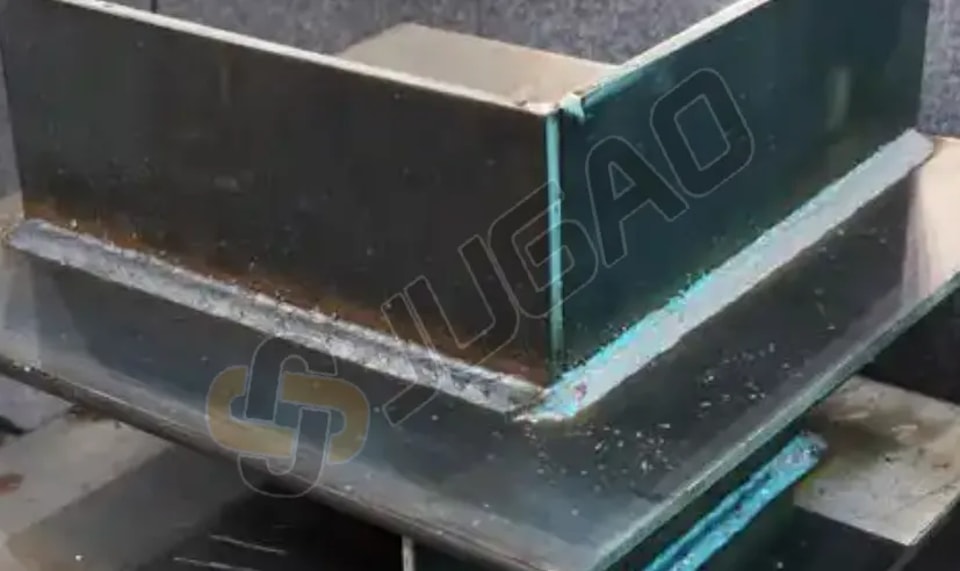
The main technical indicators of welding robots constitute a complete performance evaluation system. Among them, repeatability, degrees of freedom, load capacity, and working radius are the four core indicators that are given the highest priority when selecting a model; while motion speed and protection level determine the equipment's production efficiency and adaptability to different working conditions. Different welding processes (arc welding, spot welding, laser welding, friction stir welding) have different emphases on technical indicators, and a comprehensive evaluation based on the specific application scenario is required.
Contact Us