

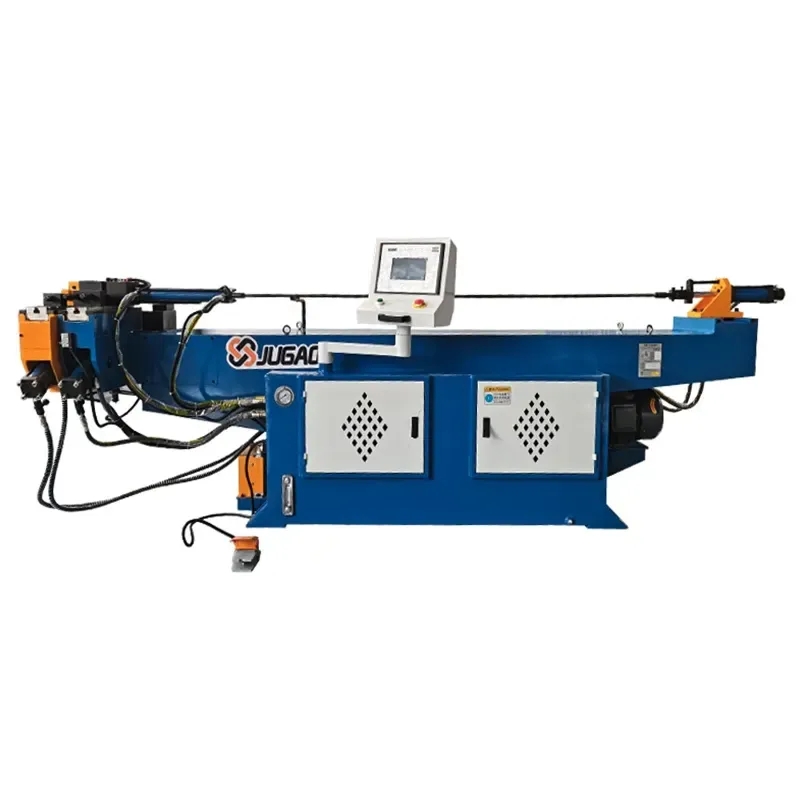
If the foundation and anchoring of a pipe bending machine are not done properly, the machine will "walk" on its own.
2026-05-06

I once saw a 63-ton pipe bending machine that became crooked in less than six months. A level showed the machine was tilted by 2 millimeters. The reason was simple: the foundation was too thin, and the anchor bolts weren't properly secured. Pipe bending machines generate a lot of impact during operation; if the foundation is unstable, it really can move on its own.
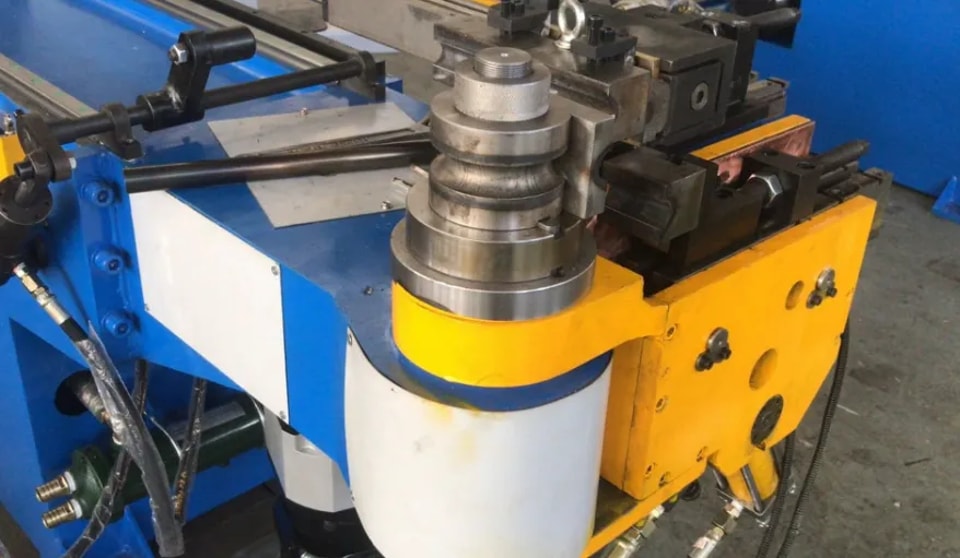
Next, let's talk about how to ensure a stable foundation and anchorage.
I. How to Prepare the Foundation? Don't Skimp on the Details
For small and medium-sized pipe bending machines (under 40 tons), the concrete foundation thickness should be no less than 200mm, with a grade of C25 or higher. For large machines (100 tons and above), the foundation thickness should be 300mm, and double-layer steel mesh is required.
The key is that the load-bearing area must be larger than the machine's base, with at least 200mm more on each side. Do not place the machine directly on a concrete floor; that leveling layer is only 5-10cm thick and will crack under pressure.
II. Anchoring Steps: Follow the Order Carefully
1. Pre-embed Anchor Bolts: Before pouring concrete, position the bolts according to the hole spacing on the machine base. Many people use expansion bolts for convenience. This might work for small machines, but it's absolutely unacceptable for large machines—expansion bolts can't withstand impact and will loosen sooner or later.
2. Leveling: After the concrete dries, hoist the equipment. Place the shims (wedge shims or flat shims are fine), and use a level to level the machine body. Levelness requirement: no more than 0.1mm per meter in both longitudinal and transverse directions.
3. Secondary Grouting: After leveling, grout around the anchor bolts a second time. Use high-strength, non-shrink grout, not ordinary cement. Fill completely, vibrate to compact, and wait for it to fully solidify (at least 3-7 days) before tightening the nuts.
4. Torque Tightening: Use a torque wrench to tighten the nuts in 2-3 stages diagonally according to the torque value given in the instruction manual. Tightening all at once will cause stress concentration and machine deformation.
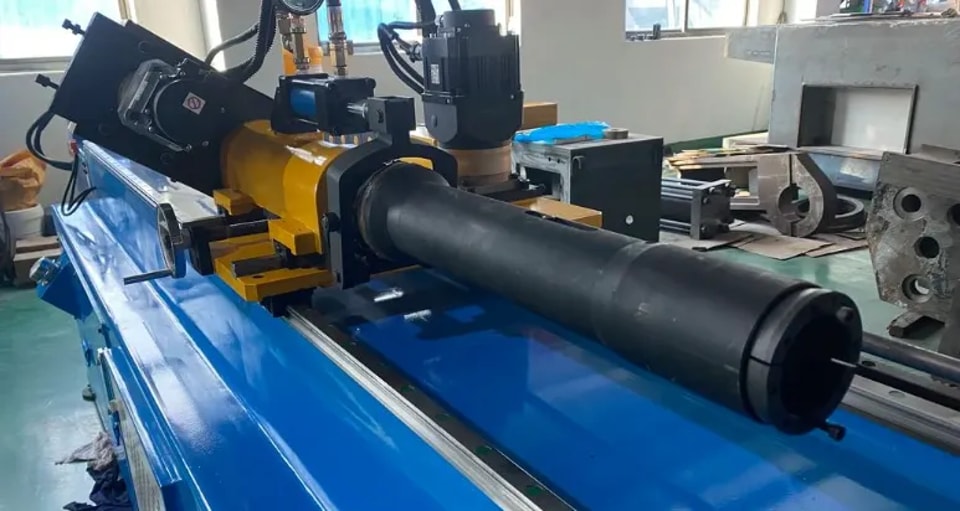
III. Three Common Mistakes
1. Treating the level as a mere decoration: Adjusting it only once and then ignoring it. The level should be recalibrated after three months of machine operation, as the foundation will naturally settle.
2. Over-tightening anchor bolts: Excessive torque stretches the bolts, resulting in a loss of preload. Tightening by feel with a wrench is the most unreliable method.
3. Omitting secondary grouting: Leaving the area around the bolts empty. After a few machine vibrations, the nuts will loosen on their own.
IV. A Cost-Effective and Convenient Solution
If the workshop floor is already hardened and you don't want to dig a new pit, you can make a steel base. Weld a base frame using 20-30mm thick steel plates to increase the contact area, and then fix it to the ground with chemical anchors. This way, you don't need to damage the original floor, and it will be convenient to move the machine later.
The foundation is the root of the pipe bending machine. If the foundation is not solid, the machine's precision, mold life, and processing safety will all be ruined. Dig the holes where necessary, grout where necessary; don't skimp on these areas.
Contact Us