
How to solve the problem of uneven closing gap on a four-roll plate rolling mill by aligning the rollers?
2026-05-06

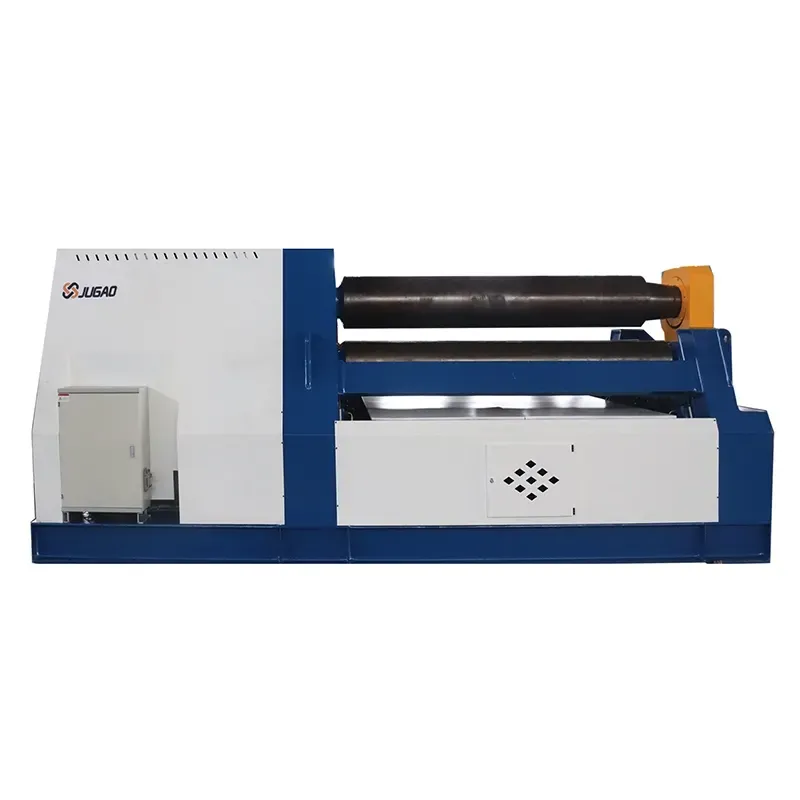
If the closing gap at both ends of the workpiece after rolling on a four-roll plate rolling mill is uneven, it's usually not a material issue, but rather a misalignment of the lower or side rollers. The following explains how to align them.
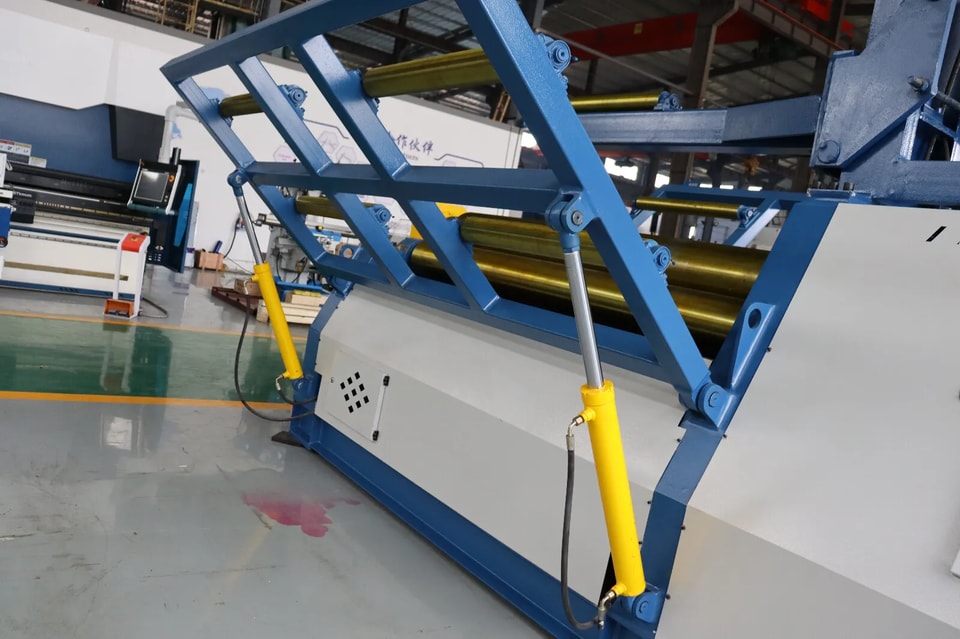
I. When should roller alignment be performed?
Alignment should be considered if any of the following situations occur:
Significant difference in the closing gap between the two ends of the workpiece
One-sided deviation of the sheet metal during rolling
Prolonged operation of the equipment (bearing wear, hydraulic drift, thermal expansion)
II. Lower Roller Calibration (Core Steps)
1. Power Off and Reset: Lower the lower roller to its minimum mechanical stroke position, leaving a safety clearance.
2. Zeroing: Reset the lower roller position reference on the control system to a state where the upper roller is the fixed reference.
3. Slow Lift and Measurement: Slowly raise the lower roller and observe the gap between the two ends of the lower roller and the upper roller. The side with a larger gap (or a smaller sensor reading) indicates insufficient alignment on that side.
4. Compensation Adjustment: Start the lower roller parallelism calibration program, increasing the displacement compensation value for the side with a smaller gap (i.e., the side that is not lifted sufficiently) until the readings at both ends are consistent.
5. Verification: Slowly raise the roller again to confirm that the gaps at both ends are the same. If they are different, repeat step 4.
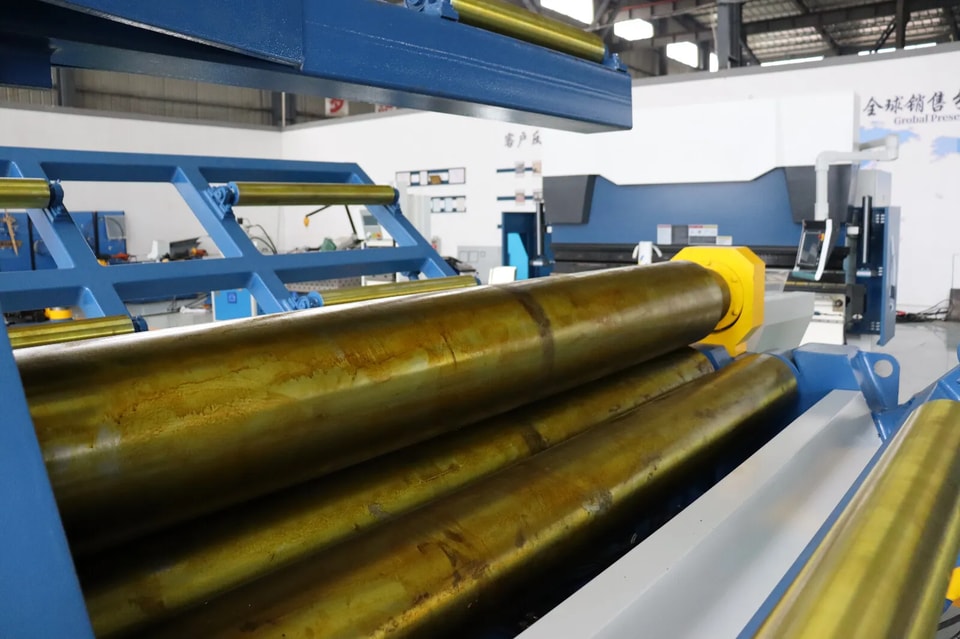
III. Side Roller Calibration
1. Move the side rollers to their maximum travel limits on both sides and perform a mechanical zero-position reset.
2. Slowly raise the side rollers and measure the gaps between the side rollers and the upper roller to determine the synchronization accuracy of the hydraulic cylinder displacement (within ±0.2mm).
3. If synchronization errors are found, adjust the side roller displacement compensation in the control system parameter menu.
4. After calibration, manually rotate the rollers at low speed and listen for any abnormal mechanical interference noises.
IV. Hardware-Auxiliary Inspections
In addition to parameter compensation, mechanical checks are also necessary:
Use a dial indicator to measure the axial radius deviation between two points on the roller surface (to determine uneven wear).
Use a feeler gauge to check the uniformity of the gap between rollers segment by segment.
Check for any jamming in the bearing housing and guide groove.
Check whether the displacement sensor feedback value matches the actual mechanical position.
Recheck the overall machine level and the tightness of the anchor bolts.
V. Trial Roll Verification
Before automatic operation, a complete trial roll must be performed manually:
While gradually rolling the workpiece, manually adjust the position of the side rollers.
Observe whether the gap between the workpiece seams is uniform.
After confirming that everything is correct, save the successful parameters to the database for automated production.
Uneven closing gaps are 90% caused by imbalances in the roller conveyor geometry. Following the sequence of "zeroing → measuring gaps → compensating → verifying → test rolling" will restore accuracy.
Contact Us