

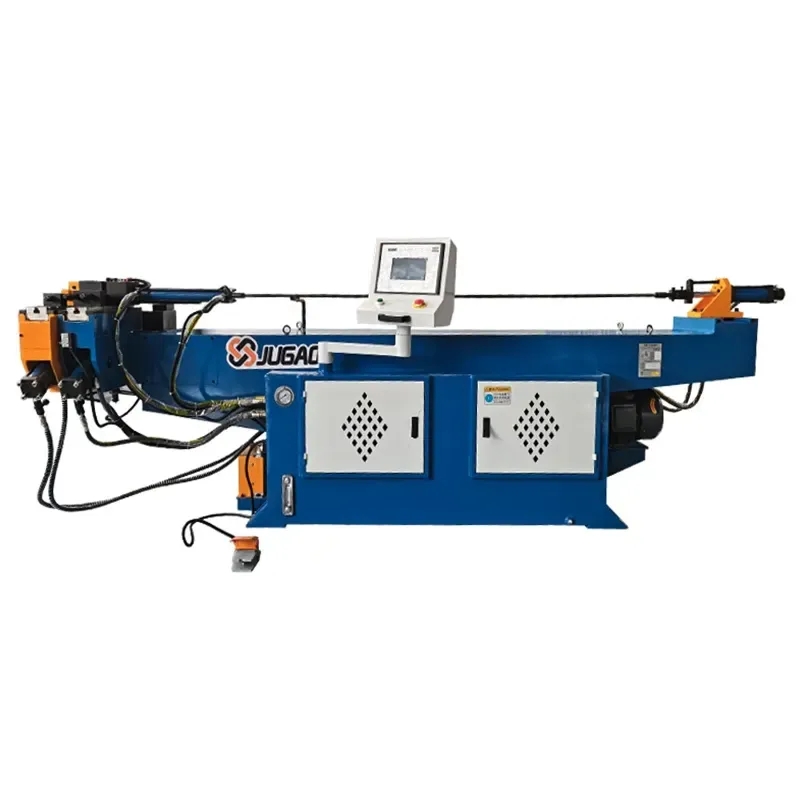
How to determine the root cause of guide rail wear on a pipe bending machine?
2026-04-16

Wearing guide rails directly leads to feeding vibration and unstable angles. The root cause must be found before replacement; otherwise, the new guide rails will quickly fail again.
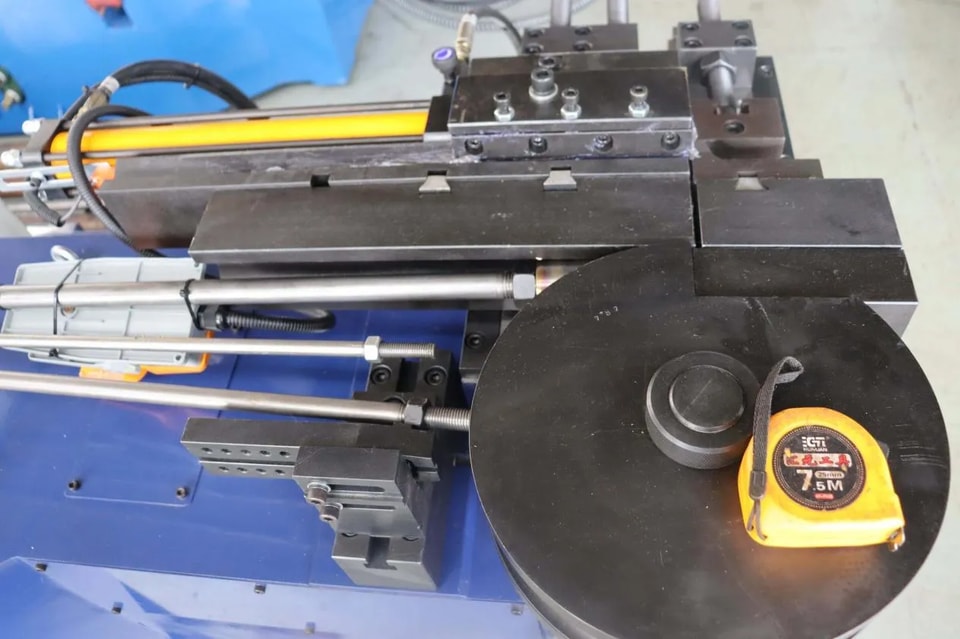
Step 1: Observe the wear pattern and deduce abnormalities.
Severe wear on one side → Guide rails are not installed parallel, or the slider is subjected to unbalanced load for a long time (e.g., the feeding mechanism is not aligned).
Wear at both ends, intact in the middle → Insufficient lubrication. Lack of oil during reciprocating motion at the stroke endpoints leads to dry friction.
Surface pitting or peeling → Long-term overload operation of the equipment, or excessive bending impact, causing material fatigue.
Wave-like wear → Insufficient rigidity of the machine bed foundation; equipment vibration causes guide rail deformation.
Obvious scratches on the surface → Damaged guide rail protective cover; chips and abrasive particles enter the slider, forming abrasive wear.
Uniform bright wear → Expired normal service life, or long-term use of the wrong grade of grease.
Step 2: Check the lubrication system.
Is the automatic lubrication pump supplying oil according to the set cycle? Is the oil distributor clogged?
Is the guide rail surface dry, or is there black, muddy debris? → Insufficient Lubrication or Oil Contamination
Confirm that the grease used contains extreme pressure additives (such as extreme pressure lithium-based grease NLGI 2).
Step 3: Measure Mechanical Accuracy and Load
Use a dial indicator to measure the straightness and parallelism of the guide rails. Correction is required if the deviation exceeds 0.02mm per meter.
Check if the lead screw and guide rails are parallel. A bent lead screw will generate additional radial force, causing uneven wear on the guide rails.
Recheck the specifications of the bent pipes (diameter, wall thickness, material strength) to ensure they do not exceed the equipment's rated capacity.
Step 4: Investigate the Environment and Maintenance History
Is the guide rail protective cover damaged? Is the dust level high on site?
Review maintenance records: Has the grease not been changed for a long time? Has substandard oil been used?
Corrective Measures
Installation Issues → Recalibrate guide rail parallelism and levelness
Lubrication Issues → Repair the lubrication system, replace with extreme pressure lithium-based grease, and set a reasonable lubrication frequency (e.g., every 4 hours)
Overload → Adjust the process to ensure the pipe bending specifications are within the equipment's rated range
Protection Failure → Replace damaged protective covers and add scraper blades
Normal Wear → Replace guide rails and sliders in pairs and simultaneously optimize the maintenance schedule.
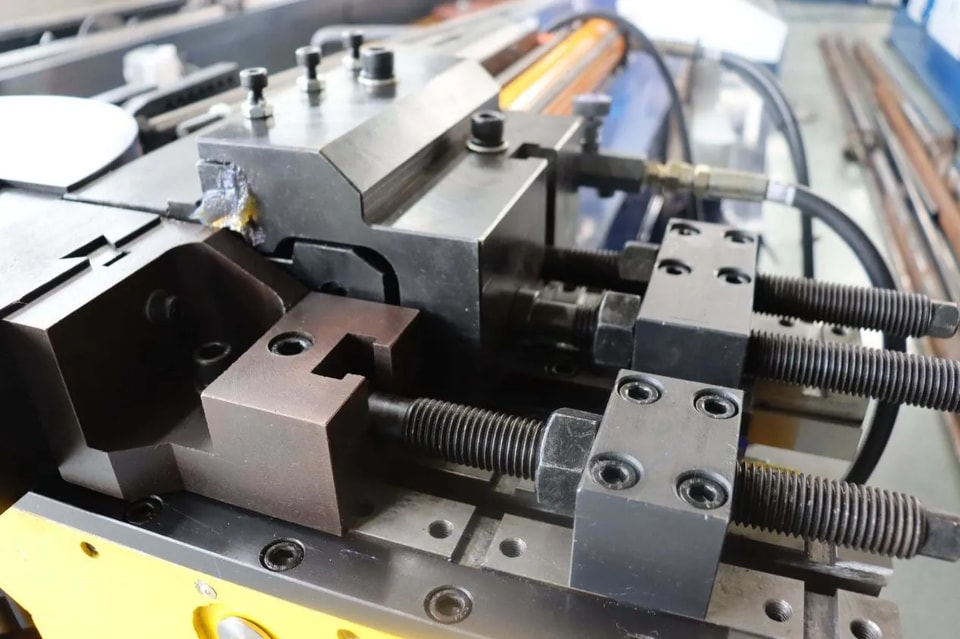
Only by finding the source before taking action can the problem of guide rail wear be completely solved.
Contact Us