
How to Adjust Laser Welding Machine Parameters?
2026-05-14

Laser welding is an indispensable welding process in modern industrial production, representing a leap forward from traditional welding technology. It is widely applicable in high-end industrial production fields such as automotive, shipbuilding, and aerospace. Below are three parameter settings for laser welding machines.
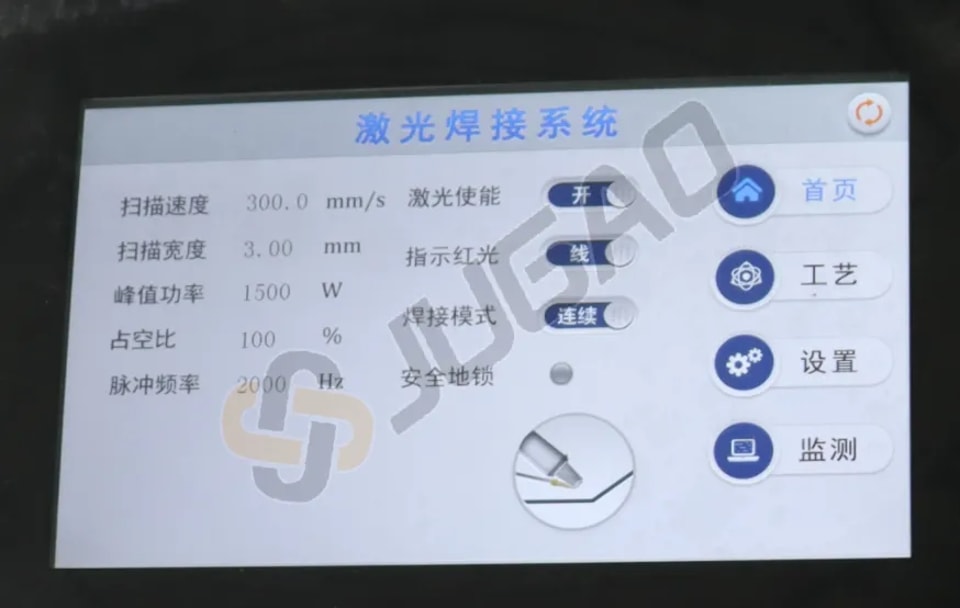
1. Laser Pulse Width:
Pulse width is a crucial parameter in pulsed laser welding. It is not only an important parameter distinct from material removal and melting, but also a key factor determining the cost and size of the processing equipment.
2. Laser Power Density:
Power density is one of the most critical parameters in laser processing. At higher power densities, the surface can be heated to its boiling point within microseconds, resulting in significant evaporation. Therefore, high power density is useful for material removal and processing, such as punching, cutting, and engraving. At lower power densities, the surface temperature takes several milliseconds to reach its boiling point. The bottom reaches its melting point before the surface evaporates, which helps form a good weld. Therefore, the power density for conductive laser welding varies between 10⁴ and 10⁶ W/cm².
3. Laser Pulse Waveform:
The laser pulse waveform is a crucial issue in laser welding, especially in metal plate welding. When a high-intensity laser beam radiates onto a material surface, the metal surface loses 60-98% of the laser energy through reflection, and the reflectivity varies with surface temperature. The effect of the laser pulse on the metal's reflectivity is highly variable.
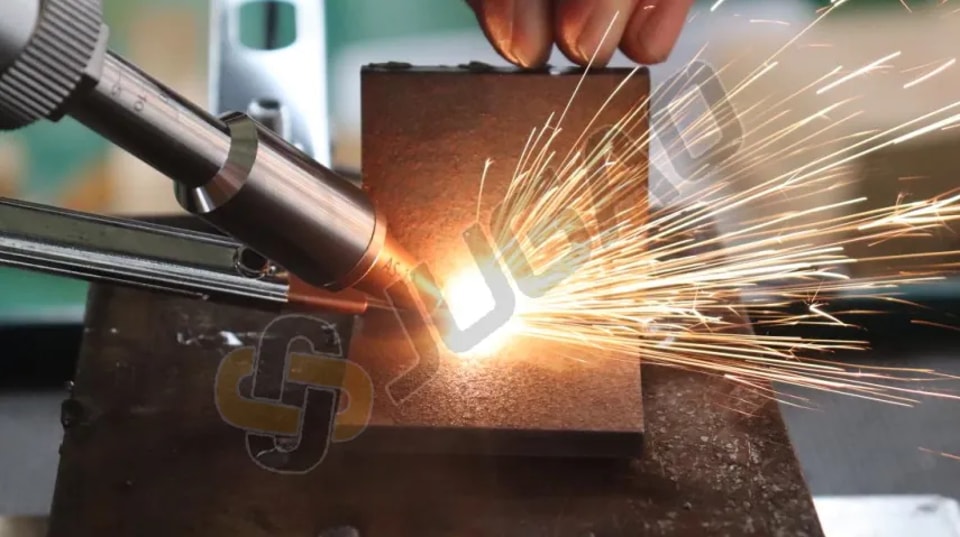
Compared to traditional welding, laser welding offers the following advantages:
1. High speed, large depth, and minimal deformation.
2. Titanium, quartz, and other refractory materials can be welded to or onto various other materials with excellent results.
3. After laser focusing, the power density is high. When welding high-performance equipment, the aspect ratio can increase to 5:1, and can reach up to 10:1.
4. The laser beam is easily differentiated according to time and space, and multiple beams and multiple stations can be processed simultaneously, providing a prerequisite for more precise welding.
5. It can be used for micro-welding. After focusing, the laser beam can precisely position a small spot, which can be used for welding small and medium-sized workpieces in automated mass production.
6. Contact-type long-distance welding offers the flexibility of non-contact welding. Especially in recent years, the adoption of fiber optic transmission technology in YAG laser processing has further broadened the marketing and application of laser welding technology.
7. The welding machine is simple and can perform welding at room temperature or under special conditions. For example, if the laser beam passes through an electromagnetic field, it will not move; the laser can weld in vacuum, air, and certain gaseous environments, and can also weld through glass or transparent materials.
Contact Us