
Quick‑response Diagnosis for Alarm Signals on JUGAO Laser Cutting Equipment
2026-09-16

Table of Contents
1. Basic Knowledge Regarding JUGAO Laser‑cutter Alarm Signals
○ Definition of Equipment Alarm Codes
○ Reasons Why Alarms Cannot Be Dismissed Directly
2. Common Fault Sources Triggering Alarm Notifications
○ Laser Generator Related Alarms
○ Water Chiller Unit Warning Messages
○ Servo Drive & Motor System Alarms
○ Auxiliary Gas Circuit Fault Notifications
○ Cutting‑head Protection Triggered Alarms
3. Sequential Diagnostic Procedures for Laser‑cutter Alarm Codes
○ Step 1: Fully Document Alarm‑related Information
○ Step 2: Refer to Official Technical Manuals
○ Step 3: Carry out On‑site Inspection of Corresponding Components
○ Step 4: Verify Stability of Electrical Wiring Interfaces
○ Step 5: Cross‑check Current System Parameter Settings
○ Step 6: Execute Alarm Resetting and Functional Verification Test
4. Preventive Maintenance Measures to Lower Alarm Occurrence
○ Implement Pre‑shift Daily Inspection Work
○ Sustain Stable Operating Status for Cooling Circuits
○ Upgrade Control Software and Firmware Versions Timely
5. Frequently Asked Technical Queries
6. Final Summary
Alarm codes for JUGAO laser cutters serve as built‑in warning notifications. The control system will pop‑up these prompts once abnormal operating states threaten processing quality, operational safety or equipment stability. When your JUGAO laser cutter stops running and displays alarm content, rapid root‑cause identification helps you cut production loss and restore normal manufacturing. This article sorts out typical alarm triggers and delivers a complete step‑by‑step troubleshooting workflow. Whether the warning originates from the laser source, cooling module, servo motion unit or gas supply pipeline, this guidance enables maintenance staff to locate defects faster and keep laser‑cutting production running smoothly.
Basic Knowledge Regarding JUGAO Laser‑cutter Alarm Signals
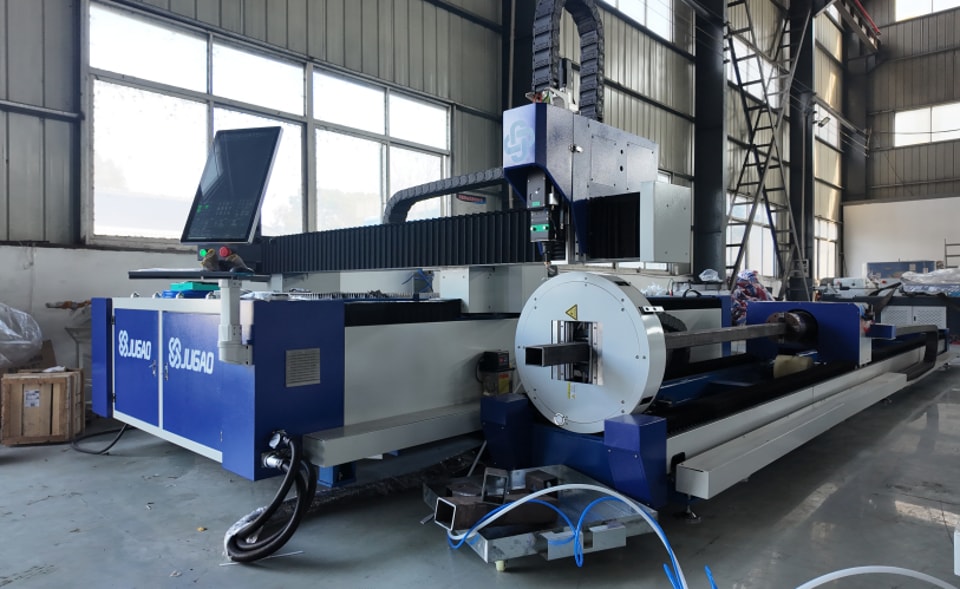
Definition of Equipment Alarm Codes
Alarm codes are diagnostic feedback output by JUGAO numerical control system when hardware deviations are detected. These warning signals safeguard high‑value core components against damage and assist technicians in quickly locking fault locations.
Sub‑systems that commonly generate alarm outputs include:
• Laser source assembly
• CNC main controller
• Servo drive modules
• Industrial chiller equipment
• Auxiliary gas supply assemblies
• Multi‑functional sensors fitted on laser cutting head
Distinguishing which subsystem sends out the alarm constitutes the starting‑point of efficient fault elimination.
Reasons Why Alarms Cannot Be Dismissed Directly
Quite a few operators tend to reset alarms directly without digging into underlying reasons. Although this operation may resume machine work temporarily, hidden malfunctions remain unresolved inside equipment.
Simply clearing alarms without troubleshooting may bring about these negative outcomes:
• Unexpected sudden halt during production batches
• Deteriorated surface quality of cut workpieces
• Permanent damage to precision spare‑parts
• Mounted expenditure for component replacement
• Potential on‑site safety risks
Adopting standardized diagnosis workflows can effectively avoid the evolution of minor glitches into severe breakdowns.
Common Fault Sources Triggering Alarm Notifications
Laser Generator Related Alarms
The laser source counts as one of the most critical assemblies for JUGAO cutting machines.
Frequent alarm categories for laser source units cover:
• Over‑temperature warning reminders
• Power supply module malfunctions
• Internal optical unit failures
• Inter‑module communication breakdown
When these alarms pop‑up, technicians need to prioritize examining cooling loops and power‑supply wiring connections.
Water Chiller Unit Warning Messages
JUGAO laser cutters rely on reliable cooling performance to guarantee stable output.
Typical chiller‑relevant alarm conditions:
• Exceeded upper limit for circulating‑water temperature
• Insufficient liquid level inside water tank
• Abnormal coolant flow velocity
• Communication disconnection between chiller and host machine
Cooling‑related abnormalities must be handled promptly to prevent irreversible impairment to the laser source.
Servo Drive & Motor System Alarms
Servo assemblies govern machine movement trajectories and positioning accuracy.
Major inducing factors:
• Encoder signal anomalies
• Motor overload state
• Excessive working temperature of drive modules
• Signal communication interruption
Servo alarms will usually interfere with positioning precision and normal machine motion.
Auxiliary Gas Circuit Fault Notifications
Auxiliary process gas plays an indispensable role throughout metal cutting procedures.
Potential alarm triggers:
• Gas pressure falls below threshold value
• Complete gas supply cutoff
• Pressure‑detecting sensor defects
• Pressure regulator performance drift
Such faults exert direct influences over cutting seam finish and workshop production efficiency.
Cutting‑head Protection Triggered Alarms
Modern JUGAO laser cutting heads integrate multiple safety‑monitoring sensors.
Common alarm items:
• Mechanical collision protection activation
• Capacitance height‑sensor failure
• Nozzle contact trigger warning
• Height‑loop control deviation errors
These alarms are designed to shield the expensive cutting‑head assembly and processing workpieces from impact damage.
Sequential Diagnostic Procedures for Laser‑cutter Alarm Codes
Step 1: Fully Document Alarm‑related Information
Before executing alarm reset operations, record the below‑listed content carefully:
• Specific alarm code number
• Complete text description for the warning
• Exact moment the fault emerges
• Real‑time operating conditions when alarm occurs
The above‑mentioned records offer vital clues for subsequent troubleshooting work.
Step 2: Refer to Official Technical Manuals
Different equipment brands adopt independent alarm‑code rule systems.
Consult reference documents including:
• JUGAO machine operation handbook
• Controller technical specification
• Laser source instruction manual
• Chiller equipment user guide
Explanations for alarm codes can point you straight toward the malfunctioning sub‑system.
Step 3: Carry out On‑site Inspection of Corresponding Components
After confirming which subsystem raises the alarm, perform targeted physical inspection.
Practical reference scenarios:
• Check cooling hardware when temperature‑related alarms pop‑up
• Examine servo motor assemblies for motion‑error prompts
• Inspect gas pipelines for pressure warning notifications
• Check cutting‑head parts for collision‑triggered alarms
Visual inspection can uncover many obvious mechanical and connection defects rapidly.
Step 4: Verify Stability of Electrical Wiring Interfaces
Poor electrical contact represents a high‑frequency root cause for various alarm events.
Focus inspection scope:
• Signal transmission cables
• Power supply plug‑in terminals
• Network and communication interfaces
• Internal terminal row connectors
Make certain every connection stays fastened and free from oxidation or corrosion.
Step 5: Cross‑check Current System Parameter Settings
Improper configuration values may trigger alarms even when all hardware maintains normal status.
Need‑verified parameters contain:
• Servo motion‑control parameters
• Auxiliary gas pressure preset values
• Chiller temperature threshold settings
• Laser output‑power relevant configurations
Compare existing parameter values against official reference data released by JUGAO.
Step 6: Execute Alarm Resetting and Functional Verification Test
After finishing fault elimination steps:
1. Clear the existing alarm records
2. Reboot the whole laser‑cutting equipment
3. Run actual trial cutting with test material
4. Keep observing whether the same alarm recurs
If the warning appears again immediately after reset, further in‑depth investigation will be required.
Preventive Maintenance Measures to Lower Alarm Occurrence
Implement Pre‑shift Daily Inspection Work
It is advised to complete the following check‑items before each production shift:
• Working status of cooling system
• Real‑time gas pressure reading
• Surface condition of cutting nozzle
• Cleanliness status for optical lenses
• Fastening condition of cable terminals
Early detection of hidden risks helps you avoid sudden alarm interruptions amid production.
Sustain Stable Operating Status for Cooling Circuits
A large proportion of equipment alarms originate from cooling‑system anomalies.
Carry out periodic monitoring for:
• Circulating coolant quality
• Liquid level of cooling medium
• Operating water temperature
• Comprehensive performance of chiller units
Well‑maintained cooling circuits greatly raise overall equipment reliability.
Upgrade Control Software and Firmware Versions Timely
JUGAO will roll‑out version updates on a regular basis, optimizing alarm judgment logic and system stability.
Make sure these modules keep updated:
• CNC host control software
• Servo drive firmware
• Laser source internal firmware
Version iteration can resolve many recurring software‑level alarm problems.
Frequently Asked Technical Queries
Q1: What shall operators do the very moment alarm codes pop‑up?
Prior to resetting alarms, note down alarm number plus descriptive content. This information lays the foundation for accurate fault location.
Q2: Is production allowed to keep running after clearing alarm prompts?
Only permitted after you have located and completely resolved the root cause. Simply erasing alarm records without troubleshooting may result in component damage and safety hazards.
Q3: Why will the identical alarm keep showing up repeatedly?
Recurring alarms generally indicate unresolved hardware defects, shaky electrical connections, cooling‑circuit malfunctions or improperly adjusted system parameters.
Q4: Do all alarm notifications stand for serious equipment breakdown?
Not every alarm signals major hardware failure. Part of them are warning reminders, enabling you to take preventive actions before severe faults break out. Even so, every alarm event deserves careful investigation.
Final Summary
Alarm codes of JUGAO laser cutting machines deliver critical feedback reflecting equipment running conditions. By identifying alarm sources and following standardized diagnostic workflows, technicians can locate faults rapidly, reduce production downtime and prevent high‑cost component repair work.
Daily visual inspection, standardized routine maintenance and methodical fault‑shooting constitute the most effective way to guarantee stable operation for JUGAO laser cutters. If you face complex alarm events and require technical backing, please get in touch with JUGAO professional support team to obtain targeted diagnosis and resolution schemes.
Contact Us