
How Punch Presses Are Used in Electronics Manufacturing
2026-10-31

Electronic products may be compact, but the metal parts inside them often require accurate forming and positioning. A punch press helps manufacturers produce small stamped pieces, board openings, protective covers, and battery-related components with repeatable dimensions. Its role extends from individual precision parts to large production batches. This article reviews its main applications, explains a practical setup sequence, outlines production advantages, and discusses common operating issues.
Key Applications of Punch Presses in Electronics Manufacturing
Stamping Compact Electronic Parts
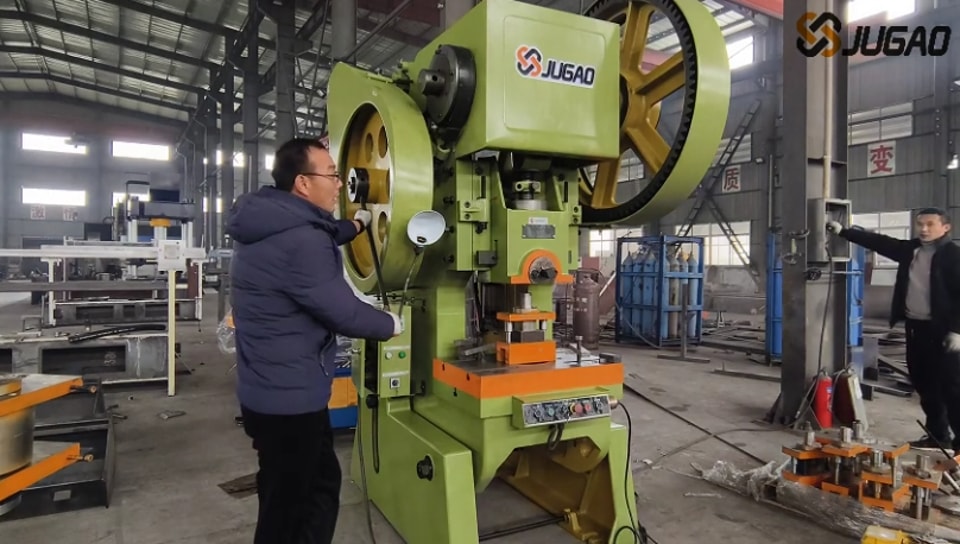
Many electronic assemblies contain small metal elements such as connector contacts, terminals, and protective shells. These parts often have detailed profiles and must match their mating components accurately. With dies designed for the job, a punch press can reproduce the required shapes consistently, making it suitable for repeated component production.
Producing Openings in Printed Circuit Boards (PCBs)
Printed circuit boards need accurately located mounting holes and slots so that boards and associated components can be positioned correctly. Punching operations can create these features at specified locations. Consistent spacing helps the board fit its assembly and supports dependable operation of the finished electronic product.
Shaping Metal Enclosures and Shielding Covers
Metal housings and shielding pieces are used in products ranging from mobile devices to power equipment. They protect internal circuits and help limit exposure to external interference. A punch press can form these parts in a repeatable way, supporting the required geometry, mechanical strength, and finished appearance.
Manufacturing Battery-Related Parts
Batteries used in laptops, wearable devices, and other electronics rely on accurately made metal casing and terminal components. Punch presses can process thin metal stock into these shapes with consistent dimensions, helping parts fit together correctly during battery assembly.
How to Prepare a Punch Press for Electronics Production
Step 1: Get the Work Area Ready
Before setup begins, clear the space around the machine and remove items that could obstruct operation. Keep the work surface orderly and make sure materials and sample pieces can be handled without contamination or unnecessary damage. A clean workspace is especially important when processing small components.
Step 2: Fit and Align the Dies
Choose the die set that matches the part geometry and material. Install the upper and lower tooling in their designated positions, check that they are correctly seated and aligned, and fasten them securely. Poor alignment can lead to out-of-spec parts and may damage the tooling.
Step 3: Set the Punching Conditions
Electronic components are frequently made from relatively thin materials, including copper, aluminum, and stainless steel. Set the punching force, stroke, and operating speed to suit the material type and thickness. Check the selected settings against the machine and tooling requirements before production.
Step 4: Carry Out a Trial Run
Produce a sample part before starting the full batch. Inspect its dimensions, hole positions, edge condition, and relevant tolerances. If the sample does not meet the drawing requirements, correct the setup and repeat the trial until the result is acceptable.
Advantages of Punch Presses in Electronics Manufacturing
Precision That Can Be Repeated
Electronic assemblies often depend on small features and close dimensional tolerances. A properly configured punch press can maintain consistent results across repeated cycles, which is important when producing large quantities of identical parts.
Economical Output for Large Batches
After the tooling and machine settings have been established, punching can process parts at a steady pace with less variation between pieces. This can reduce manual work and improve overall production efficiency.
Adaptability to Different Part Designs
Interchangeable dies allow the machine to produce different shapes and feature layouts. Manufacturers can change tooling to accommodate a new component design, giving production flexibility as electronic products and specifications evolve.
Long-Term Serviceability
Punch presses are designed for repeated industrial operation. When operators follow recommended inspection, lubrication, and servicing procedures, the equipment can provide dependable service over an extended period and support a sound investment in production capacity.
Typical Problems and How to Address Them
Burrs Around Punched Edges
If rough edges or burrs develop around a punched feature, inspect the punch and die for wear or damage. Check whether die clearance is appropriate for the material. Tooling that has become blunt may require sharpening or replacement.
Incorrect Hole Positions on PCB-Related Parts
When punched holes do not fall in the specified locations, verify the machine reference and recalibrate the positioning system as required. Also check that the dies are properly aligned and firmly secured before producing another sample.
Unusual Noise or Vibration
Unexpected noise or vibration may indicate loose fasteners, inadequate lubrication, or worn machine components. Stop and inspect the equipment according to the operating procedure, tighten or service components where appropriate, and confirm that the machine runs smoothly before returning to production.
Frequently Asked Questions
Why is a punch press useful in electronics manufacturing?
It can produce small, accurately formed parts such as terminals, connector elements, and metal housings. Repeatable punching helps manufacturers maintain dimensional consistency while meeting production requirements.
How should a punch press be set up for thin electronic materials?
Select tooling suitable for the material, align the dies carefully, and set the force and stroke to match the material thickness and properties. Complete and inspect a trial operation before beginning the production run.
What maintenance practices help keep a punch press in good condition?
Keep the machine clean, lubricate moving parts in accordance with the manufacturer's instructions, and inspect punches and dies for wear. Regular preventive maintenance can help identify developing problems before they cause production interruptions.
Can a punch press process both metal and non-metal materials?
The source article notes that, depending on die design, punch presses can process metals such as copper and aluminum as well as certain plastics used in electronic components. Confirm material compatibility for the specific machine, tooling, and application.
Conclusion
Punch presses contribute to electronics manufacturing by producing accurately shaped components, from PCB-related openings and connector parts to metal housings and battery elements. Their repeatability, production speed, design flexibility, and durability make them useful across a wide range of electronic applications. Careful workspace preparation, correct die installation, suitable operating parameters, and a verified trial run help maintain part quality. Routine inspection and maintenance further support stable operation. For guidance on punch press solutions for your production requirements, contact JUGAO for professional support and equipment information.
Contact Us