
Differences between Four-Roll and Three-Roll Plate Rolling Machines
2026-06-01

In the metal processing field, plate rolling machines are widely used for bending and shaping metal materials. Four-roll and three-roll plate rolling machines are two common types, and this article will discuss their differences in detail.
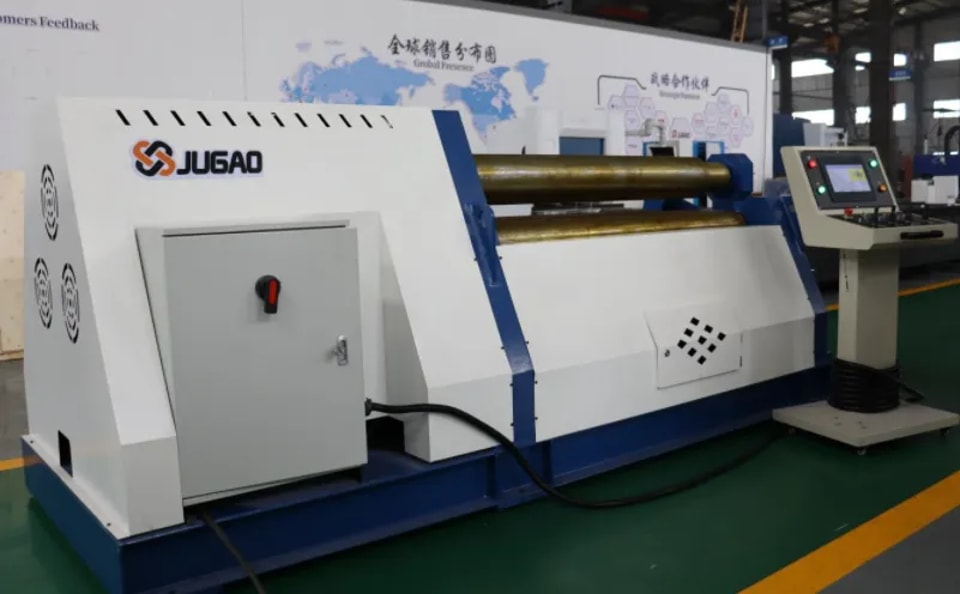
Working Principle
A three-roll plate rolling machine typically consists of three rolls: an upper roll and two lower rolls. The upper roll is usually movable, while the lower rolls are fixed. During operation, the material is transferred between the three rolls and extruded to form a curve. This design makes three-roll plate rolling machines suitable for rolling with smaller radii of curvature.
A four-roll plate rolling machine adds an extra roll, usually the second roll from the bottom. This extra roll can control the position of the material during the forming process, thus providing higher forming accuracy. The four-roll design allows for more complex operations during the rolling process, especially when handling large plates.
Operating Efficiency
In terms of operating efficiency, four-roll plate rolling machines generally have higher work efficiency. Due to their structural design, four-roll plate rolling machines can roll materials into the desired shape more quickly in a single operation. Three-roll plate bending machines require more steps to complete similar tasks.
Due to their design, four-roll plate bending machines can achieve faster bending, saving time and reducing material handling costs. This advantage can bring significant economic benefits to large-scale production enterprises.
Forming Accuracy:
Four-roll plate bending machines, with their four rollers, can maintain higher forming accuracy during the bending process. This is particularly suitable for industries requiring high specifications and quality standards, such as aerospace and shipbuilding. In these industries, the accuracy of the material's curvature and shape directly affects the quality of the final product.
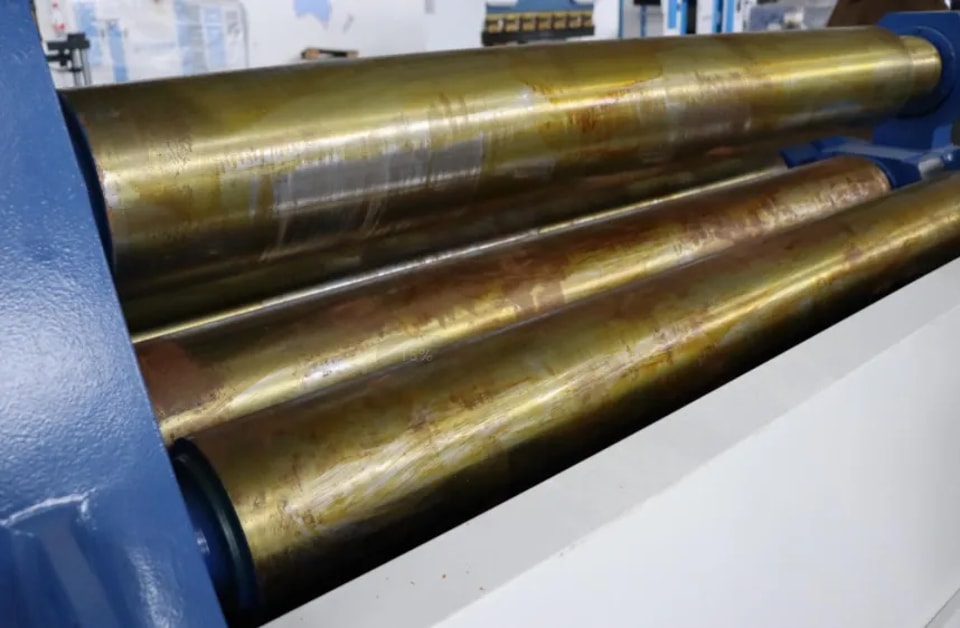
In contrast, three-roll plate bending machines are slightly less accurate, especially when handling large, heavy materials, which may introduce some deviations. This means that in some applications, three-roll plate bending machines may require additional steps to ensure the forming effect meets requirements.
Application Scope:
In terms of application scope, three-roll plate bending machines are generally suitable for bending sheets with small inner diameters or low curvature requirements, performing well particularly in small-scale processing environments. Four-roll plate bending machines, on the other hand, are suitable for bending a variety of materials and are particularly effective when handling thick plates and large sheets. For certain demanding industries, four-roll plate bending machines offer more stable performance, making them a common choice. Three-roll plate bending machines, however, remain important for smaller projects and simpler bending tasks.
Cost Considerations:
The initial investment for a three-roll plate bending machine is generally lower than that for a four-roll machine, making it potentially more economical for small businesses or startups. However, as production scales up and processing precision requirements increase, choosing a four-roll machine may yield a higher return on investment in the long run.
Due to their design and functional advantages, four-roll plate bending machines may have relatively higher maintenance and operating costs, but this also often results in superior lifespan and processing quality. When selecting equipment, it's essential to consider the company's actual needs and budget.
Maintenance and Operation:
In terms of maintenance, three-roll plate bending machines have a relatively simple structure, requiring less technical expertise for operation and maintenance. Technicians can easily perform routine maintenance and troubleshooting. For small processing businesses, maintenance costs are lower.
In contrast, four-roll plate bending machines, due to their complex structure and control system, may require more specialized technicians for maintenance and operation. This necessitates additional investment from companies in recruitment and training.
Four-roll plate bending machines differ significantly from three-roll plate bending machines in terms of working principle, operating efficiency, forming accuracy, applicable scope, cost considerations, and maintenance. Companies should conduct a comprehensive evaluation based on their production needs, material characteristics, and budget when selecting the appropriate type of plate bending machine.
Contact Us