
Plate Rolling Machine Components And Composition Analysis
2026-05-29

A plate rolling machine mainly consists of several core components that work together to achieve the bending process of metal sheets. The following is a description of the main components of a plate rolling machine and their functions.
1. Roller System
The roller system is a crucial component of a plate rolling machine, responsible for bearing and transmitting various torques and pressures. Plate rolling machines are generally used to deform sheet metal (such as steel plates, aluminum plates, etc.) into desired curved or arc-shaped structures through winding. The function and structure of its roller system are critical to the machine's performance and efficiency.
Composition of the roller system of a plate rolling machine
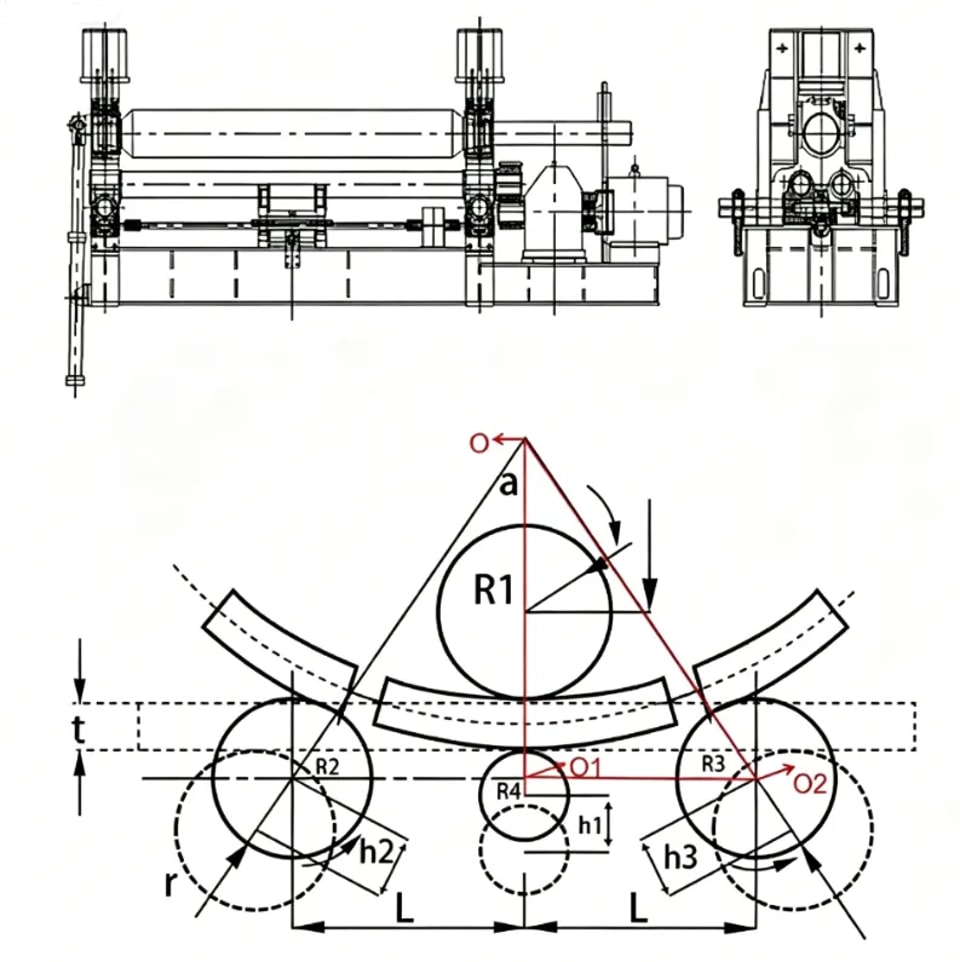
The roller conveyor system of a plate rolling machine mainly includes the following parts:
· Rollers (or rollers): Typically made of high-strength materials, they serve to directly clamp and bend sheet metal. The size and shape of the rollers need to be designed according to the thickness and width of the sheet metal.
· Support bearings: Bearings are usually located at both ends of the roller to support the rotation of the roller and ensure precise alignment between the roller and the frame.
· Drive unit: including electric motor, reducer, etc., provides power to the drum through belt or gear transmission system and controls its rotation speed and direction.
· Pressure system: Provides rolling pressure through hydraulic or mechanical means to ensure that the sheet material can smoothly enter the rollers and undergo proper calendering.
· Adjustment device: In order to accommodate sheets of different thicknesses, the roller conveyor system often needs an adjustment device to adjust the gap and angle between the rollers.
· Safety devices: To prevent abnormal situations during operation, roller systems are usually equipped with safety devices such as overload protection and temperature control systems.
Main technical parameters
· Material and hardness of the idler rollers: They must meet certain strength and wear resistance requirements to ensure long-term stable operation of the idler rollers.
· Adjustment accuracy: The adjustment accuracy of the roller conveyor system directly affects the effect of the rolled plate and the quality of the product.
· Drive method and power transmission: Select a suitable drive device and transmission system to ensure stability and adjustability during operation.
Common types of plate rolling machines
Three-roll, four-roll, and other types of roller systems have slightly different designs to meet different production needs.
2. Drive system
The transmission system of a plate rolling machine is a key component ensuring smooth and stable rolling. Its main tasks are to provide power, control the movement of the rollers, and ensure the synchronization, accuracy, and adjustability of the pressure between the rollers. The transmission system of a plate rolling machine involves multiple parts, typically including a motor, reducer, transmission device, coupling, and control system.
Composition of the transmission system of a plate rolling machine
Main components of the plate rolling machine transmission system:
1) Motor
The electric motor is the core component of the drive system, providing the main power source.
Common types of motors include:
· AC motors: offer good stability and economy, and are suitable for most conventional plate rolling machines.
· DC motors: Due to their strong speed regulation capability, they are widely used in applications requiring precise speed control.
· Variable frequency motor: When used with a frequency converter, the motor speed can be adjusted as needed, providing more precise speed control.
2) Reducer
The function of a speed reducer is to reduce the speed of the motor, increase the output torque, and enable the drum shaft to rotate at a suitable speed. It is usually connected to the motor.
Common speed reducers include:
· Gear reducers: provide large output torque and are suitable for high-load working environments.
· Worm gear reducers are suitable for applications requiring a large reduction ratio and have a relatively compact structure.
· Planetary gearboxes: provide high efficiency and precise control, suitable for systems with high speed and high torque requirements.
3) Transmission device
The transmission device is responsible for transmitting the power output from the reducer to the drum shaft.
Common methods of transmission include:
· Gear transmission: Gear transmission is widely used in many large plate rolling machines, and has high efficiency and load-bearing capacity.
· Chain drive: suitable for small and medium-sized plate rolling machines, with a certain degree of impact resistance.
· Belt drive: commonly used in low-power machinery, offering good flexibility and cushioning.
4) Coupling
Couplings are used to connect the drive unit to the drive shaft of the roller system to ensure rotational stability.
Common types of couplings include:
· Flexible couplings have good shock absorption and buffering effects, which can reduce system vibration.
· Rigid couplings are suitable for applications requiring high precision and can ensure the synchronization of the transmission system.
· Universal couplings: suitable for systems that require power transmission at large angles.
5) Control System
The control system plays a crucial role in the transmission system of the plate rolling machine, determining the control parameters such as the speed, direction, and pressure of the plate rolling machine rollers.
Common control methods include:
· PLC control system: A system based on programmable logic controller (PLC) with a high degree of automation and capable of implementing complex control logic.
· Frequency converter: In conjunction with the motor, it adjusts the motor speed by regulating the frequency, thereby controlling the speed of the drum.
· Hydraulic control system: used to adjust the pressure between the rollers to ensure the processing quality of the material.
6) Safety protection system
To ensure the safety of plate rolling machines during operation, they are usually equipped with some safety protection devices, such as:
· Overload protection device: When the load exceeds the equipment's load range, it will automatically stop working to prevent equipment damage.
· Temperature sensor: Monitors the temperature of the motor and reducer to prevent overheating.
· Emergency stop device: In the event of a malfunction or dangerous situation, it can immediately cut off the power supply to ensure the safety of the operator.
Drive system working principle
The motor is slowed down by a reducer and provided with sufficient torque.
Transmission devices (such as gears, chains, and belts) transmit power to rollers.
The coupling effectively connects the power source, ensuring smooth operation of the drum.
The control system monitors and adjusts various parameters such as roller speed and pressure to ensure the working accuracy and efficiency of the plate rolling machine.
Common types of driver systems
Single motor drive: suitable for small plate rolling machines or low-load applications.
Dual-motor drive: Used for medium and large plate rolling machines that require greater power and stability, achieving better power distribution through two motors.
Hydraulic drive: Commonly used in thick plate rolling machines, the hydraulic system can provide strong power output.
Key technical requirements
· Avoid insufficient power or overload of the plate rolling machine.
· Speed range: The speed range of the drive system should be able to cover the needs of the plate rolling machine under different working conditions.
· Synchronization: Especially in multi-roller systems, synchronization between rollers is particularly important to ensure a smooth and efficient working process.
The design and selection of the drive system for a plate rolling machine directly affect the machine's efficiency, performance, and service life. Therefore, when selecting a system, specific application requirements, processing materials, and production environment should be taken into account.
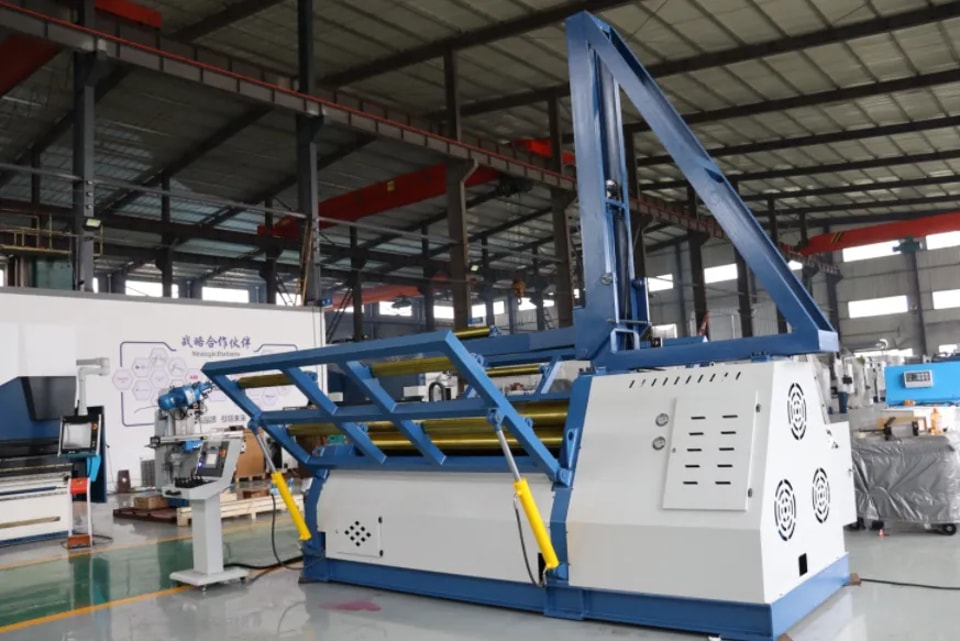
3. Hydraulic system
The hydraulic system of a plate rolling machine is a crucial component, primarily responsible for adjusting and controlling the pressure of the rollers, the gap between the rollers, and making precise adjustments during operation. The hydraulic system provides powerful force, enabling the plate rolling machine to complete high-pressure forming and bending operations on metal sheets.
The function of hydraulic system
The main functions of the hydraulic system of the plate rolling machine include:
· Adjust the pressure between the rollers: to ensure that the sheet material can smoothly enter the rollers for precise bending.
· Adjusting the roller gap: To meet processing requirements, the roller gap needs to be adjusted for plates of different thicknesses. The hydraulic system can be precisely controlled according to different thicknesses.
· Precise control of pressure and torque: The hydraulic system can provide high pressure and can be adjusted very precisely to meet the different processing requirements of various materials.
Composition of the hydraulic system of a plate rolling machine
Main components of the hydraulic system of a plate rolling machine:
1) Hydraulic pump
· Function:
The hydraulic pump is the core component of a hydraulic system, responsible for providing power for the flow of hydraulic oil and ensuring that the hydraulic oil in the system can effectively transmit pressure.
· type:
Common hydraulic pumps include gear pumps, vane pumps, and piston pumps. Different types of pumps are adapted to different working pressure and flow requirements.
2) Hydraulic cylinder
· Function:
A hydraulic cylinder is an actuator in a hydraulic system, used to convert hydraulic energy into mechanical energy to perform tasks such as adjusting roller pressure and roller gap.
· structure:
A hydraulic cylinder consists of a cylinder body, piston, piston rod, seals, etc. When hydraulic oil enters the hydraulic cylinder, it pushes the piston to move linearly, thereby driving rollers or other components to perform corresponding movements.
3) Hydraulic valves
· Function:
Hydraulic valves are used to control the flow direction, flow rate, and pressure of hydraulic oil. They are important control components in hydraulic systems, ensuring that the system can provide the correct pressure and flow rate as required.
· type:
Common hydraulic valves include check valves, relief valves, throttle valves, pressure regulating valves, and directional valves. These valves regulate the flow of hydraulic oil and ensure the stable operation of the system.
4) Hydraulic oil tank
· Function:
Hydraulic oil tanks are used to store hydraulic oil and to cool and filter the oil. The tanks are usually designed with ventilation devices, oil level detection devices, filtration systems, etc., to ensure the cleanliness and normal operation of the hydraulic system.
· Hydraulic oil:
The selection of hydraulic oil is crucial; it must possess excellent lubricity, corrosion resistance, and high-temperature resistance.
5) Hydraulic piping system
· Function:
Hydraulic pipelines connect various components such as hydraulic pumps, hydraulic cylinders, and hydraulic valves to ensure the smooth flow of hydraulic oil.
· Piping design:
When designing, factors such as the flow resistance of hydraulic oil, the pressure resistance of pipelines, and leakage risks should be considered.
6) Hydraulic control system
· Function:
The hydraulic control system is responsible for controlling the movement of hydraulic components. It is usually used in conjunction with a PLC (Programmable Logic Controller) or a dedicated hydraulic controller to precisely adjust hydraulic parameters through an automated system.
· feature:
Modern plate rolling machines are typically equipped with digital control systems, which enable precise management and adjustment of the hydraulic system, providing efficient and accurate operation.
Working principle of the hydraulic system of plate rolling machine
Hydraulic oil is drawn in and pressurized by a hydraulic pump, which then delivers the hydraulic oil to various components of the system, such as hydraulic cylinders and hydraulic valves.
Hydraulic valves adjust the flow, direction, and pressure of hydraulic oil according to the needs of the system, ensuring that the hydraulic oil can be effectively transmitted to the actuators (such as hydraulic cylinders) for precise operation.
Hydraulic cylinders generate linear motion under the action of hydraulic oil, such as adjusting the pressure between rollers or adjusting the gap between rollers. The hydraulic system can precisely adjust the pressure and position according to the thickness of the sheet metal and processing requirements.
After completing the task, the hydraulic oil returns to the tank, and the temperature and oil level in the system are monitored to ensure the stability of the hydraulic system.
Common types of hydraulic systems
Single-acting hydraulic cylinder system:
Suitable for applications where force only needs to be generated in one direction, often used for simple roller adjustment and pressure control.
Double-acting hydraulic cylinder system:
It can exert force in both directions, making it suitable for applications requiring precise adjustment and bidirectional control. It is widely used in roller conveyor adjustment and pressure adjustment of plate rolling machines.
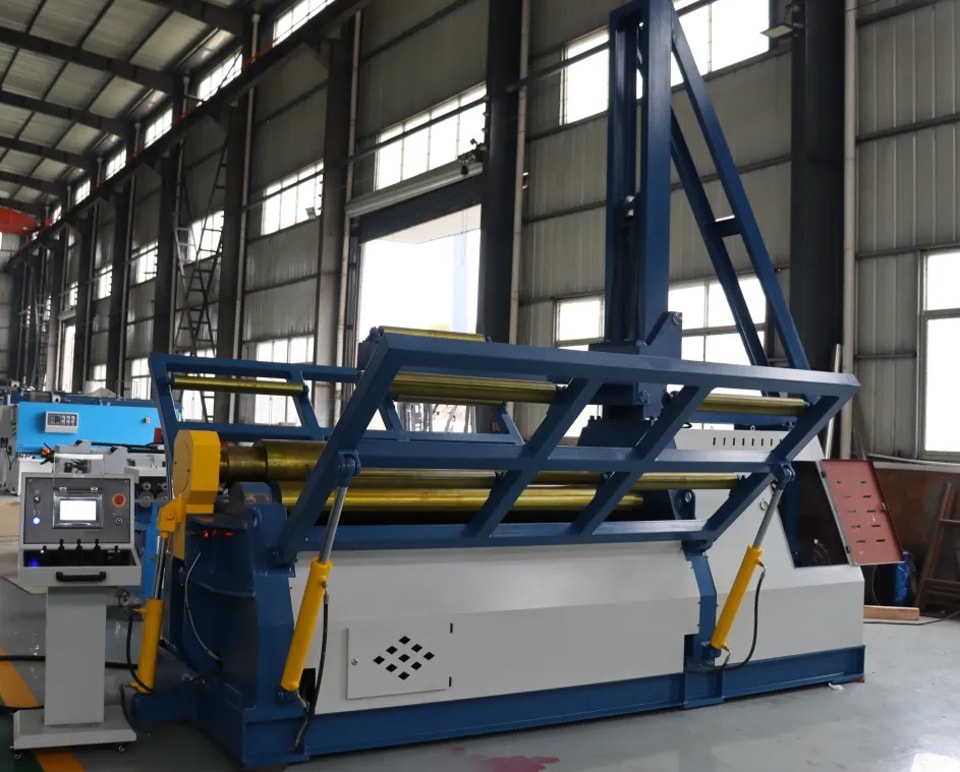
Advantages of hydraulic systems in plate rolling machines
· High efficiency: Hydraulic systems can provide high power density and provide sufficient power in a small space.
· Precise control: The hydraulic system can control pressure, speed and position very precisely and adapt to sheets of different thicknesses and materials.
· Fast response: The hydraulic system has a fast response speed and can quickly adjust the pressure and clearance of the rollers, thereby improving production efficiency.
· High reliability: Hydraulic systems have a simple structure, stable operation, and typically have a strong load capacity.
Hydraulic system maintenance and precautions
· Hydraulic oil selection: Ensure that the appropriate hydraulic oil is used and check the oil quality regularly to avoid contamination or deterioration.
· Regularly inspect the oil system: check the pipelines, valves and connections to prevent leaks and blockages, and ensure efficient system operation.
· Check the working condition of hydraulic cylinders and pumps: Regularly check the sealing of hydraulic cylinders and the working condition of hydraulic pumps, and repair or replace faulty parts in a timely manner.
The hydraulic system of a plate rolling machine plays a crucial role, affecting not only the machine's performance but also its production efficiency and product quality.
4. Control System
The control system is the core of the plate rolling machine, used to adjust the movement and working status of each component.
Based on the degree of automation, control systems are classified as follows:
· Manual control: Adjust the roller position and pressure directly via mechanical handle or button.
· Semi-automatic control: Equipped with a simple electronic control device, some parameters can be preset.
· Numerical control system (CNC): Programmable control, which enables automatic operation by input parameters (such as plate thickness, bending radius), and is suitable for processing complex shapes.
5. Frame and base
The frame and base are the main supporting structures of the plate rolling machine, ensuring the stability and precision of the equipment. Their features include:
· High-strength design: Typically made of cast steel or welded steel structure, capable of withstanding high loads.
· High rigidity: Reduces vibration and deformation during equipment operation.
· A stable base provides a foundation for the installation and fixation of the equipment.
6. Feeding and discharging devices
The loading and unloading device is used to assist in loading plates and removing finished products, reducing manual operation and improving efficiency.
· Feeding device: including conveyor belts or rollers to facilitate feeding the sheet metal into the plate rolling machine.
· Unloading device: Some plate rolling machines are equipped with automatic unloading systems to facilitate the removal of finished products.
7. Limiting and Correcting Devices
· Limiting device: Used to control the position of the board and prevent the board from shifting during processing.
· Correction device: Adjusts the initial position of the sheet metal to ensure bending accuracy.
8. Lubrication and cooling system
Lubrication and cooling systems are used to protect the moving parts of equipment and extend their service life.
· Lubrication system: Regularly provides lubricating oil to critical components such as rollers and gears to reduce friction.
· Cooling system: Heats the hydraulic system and motor by means of coolant or fan to prevent overheating.
9. Safety protection devices
To ensure the safety of operators and equipment, the plate rolling machine is equipped with a variety of protective devices, including:
· Emergency stop button: In case of emergency, quickly stop the equipment.
· Protective cover: Covers hazardous areas to prevent operators from coming into contact with them.
· Overload protection: Automatically shuts down when the equipment load exceeds the design range.
10. Additional functional devices
Depending on specific needs, plate rolling machines can also be equipped with some additional devices, such as:
· Conical rolling device: specially designed for machining conical parts.
· Measurement system: Real-time monitoring of the bending radius and shape of the sheet material.
· Automatic centering system: ensures that the sheet material remains centered throughout the processing.
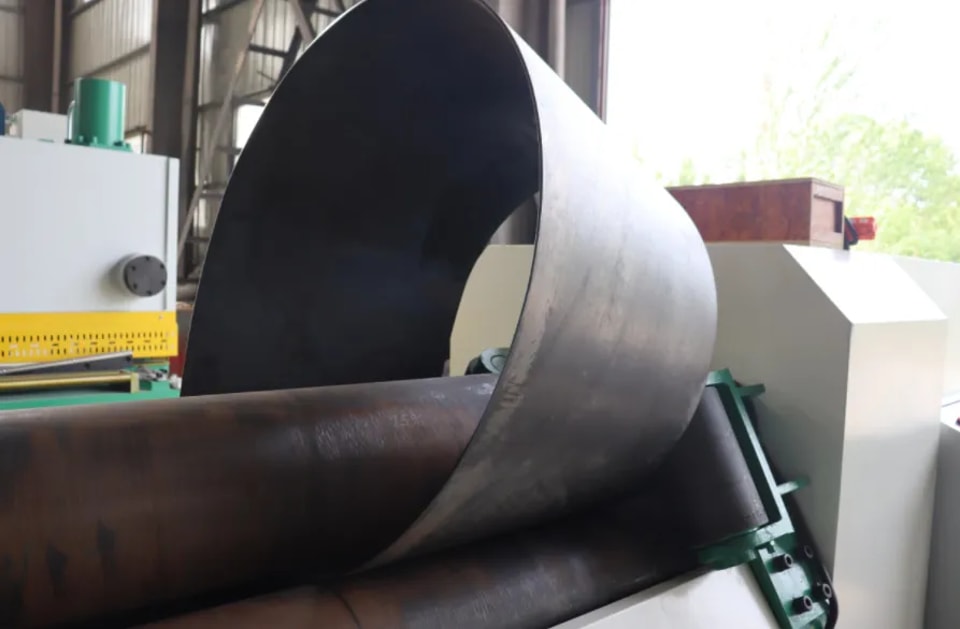
11. Summary
The main components of a plate rolling machine include a roller conveyor system, a drive system, a hydraulic system, a control system, a frame and base, feeding and discharging devices, safety protection, and a lubrication and cooling system.
All components work together to ensure that the equipment completes the bending process of metal sheets efficiently and accurately. Different types of plate rolling machines may differ in specific components, but the basic principles and functions are the same.
Contact Us