
How to Complete Daily Maintenance of JUGAO Laser Cutting Machine Sensors Efficiently
2026-07-22

Table of Contents
• Overview of Sensor Functions on JUGAO Laser Cutting Equipment
Three Main Types of Sensors Installed on Laser Cutters
Core Value of Regular Sensor Maintenance
• Standard Step-by-Step Maintenance Flow for Laser Machine Sensors
Step 1: Cut Off Power and Lock Machine Safety Mechanisms
Step 2: Remove Dirt and Contaminants on Sensor Surfaces
Step 3: Calibrate and Verify Sensor Installation Position
Step 4: Check the Integrity of Signal Lines and Plugs
Step 5: Execute Functional Test for Sensor Signal Feedback
Step 6: Formulate Cyclical Inspection & Maintenance Plans
• Long-Term Optimization Tips to Stabilize Sensor Working State
Maintain Low-Pollution Production Workshop Environment
Select Matching Special Cleaning Consumables
Regularly Analyze Equipment Operation Feedback Data
• Frequently Asked Questions
What cycle is suitable for cleaning sensors of JUGAO laser cutting machines?
Will offset sensors lead to hardware damage of laser equipment?
Does automatic calibration replace manual sensor maintenance work?
• Conclusion
Systematic maintenance of sensors is a fundamental guarantee for JUGAO laser cutting machines to deliver stable machining precision and continuous stable operation. Standardized upkeep can effectively eliminate sensor signal failure faults, reduce unplanned production halt time, and extend the overall service cycle of laser cutting equipment. This article summarizes a set of practical on-site inspection and maintenance schemes for workshop operators, equipment maintenance technicians and production supervisors. Following the complete operation procedures can keep all sensors of JUGAO laser machines clean, well-calibrated and fully functional. Stable sensor operation will further improve workpiece cutting precision, guarantee on-site operation safety, and sustain long-term high-efficiency production of laser processing equipment.
Overview of Sensor Functions on JUGAO Laser Cutting Equipment
Three Main Types of Sensors Installed on Laser Cutters
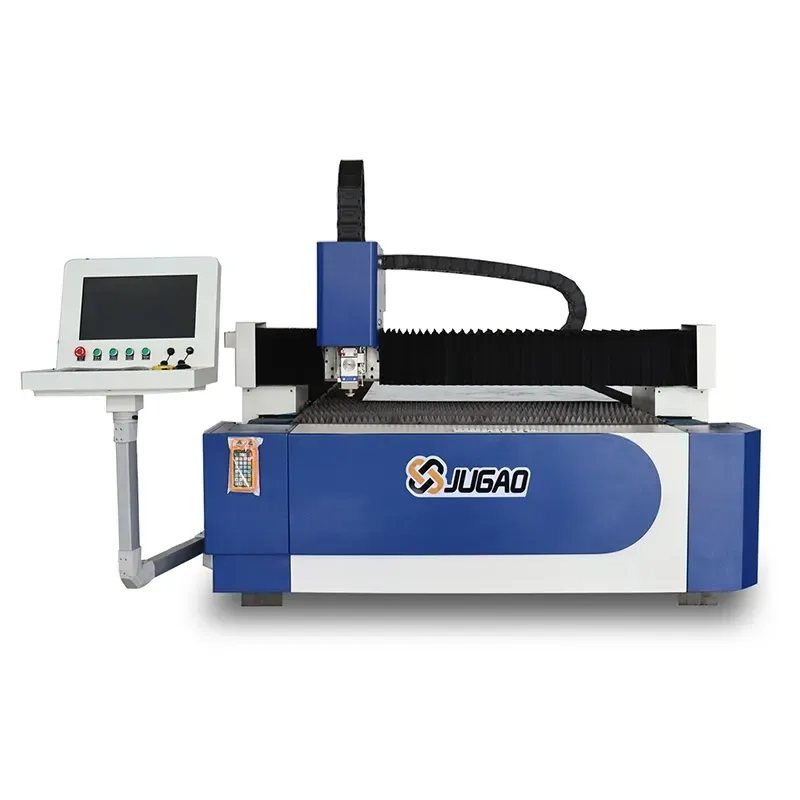
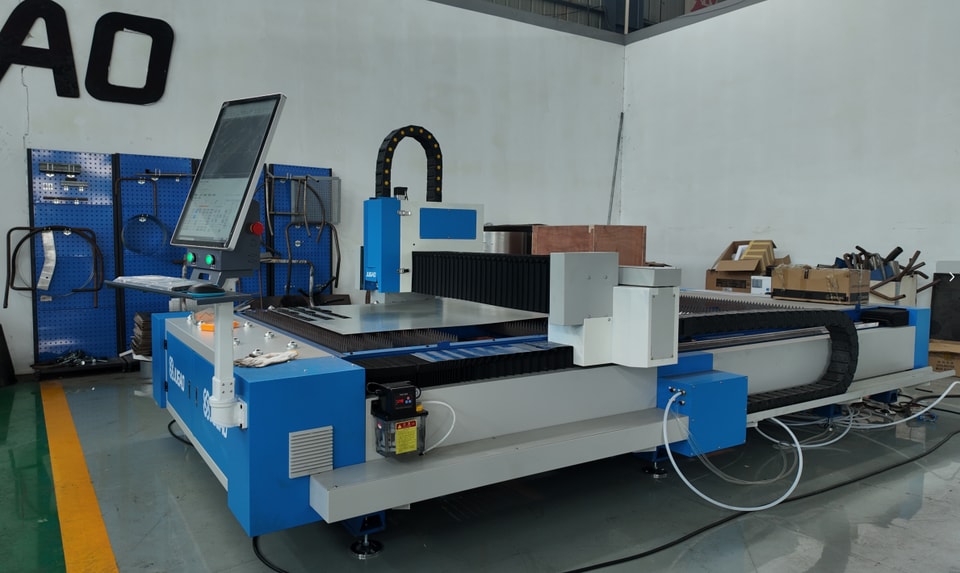
JUGAO laser cutting machines are equipped with three core sensor groups bearing different functional responsibilities:
1. Position & Origin Alignment Sensors
2. Height Tracking & Focus Detection Sensors
3. Safety Door Interlock Protection Sensors
Every category of sensors undertakes irreplaceable tasks: they support high-precision cutting forming, avoid head collision accidents, and block potential safety hazards for frontline operating staff.
Core Value of Regular Sensor Maintenance
Sensors covered with dust, deviated from standard position or with internal failure will trigger a series of adverse consequences:
• Dimensional deviation and unqualified finished workpieces after cutting
• Sudden equipment shutdown interrupting production progress
• Hidden safety risks during manual operation
Timely and standardized maintenance can make JUGAO laser cutting equipment run stably and safely all year round.
Standard Step-by-Step Maintenance Flow for Laser Machine Sensors
Step 1: Cut Off Power and Lock Machine Safety Mechanisms
Before launching any sensor inspection or cleaning work, fully disconnect the main power supply of the JUGAO laser machine and lock all safety protection switches. This measure avoids accidental movement of the cutting head or beam frame, creating a fully safe operation environment for maintenance personnel.
Step 2: Remove Dirt and Contaminants on Sensor Surfaces
Smoke residues, metal slag and floating dust generated during cutting will accumulate on sensor lenses and induction panels. Prepare soft lint-free wiping cloth and dedicated mild cleaning liquid to wipe the sensor surface gently. Never use hard abrasive tools, which will leave scratches on precision optical induction components and permanently damage sensor sensitivity.
Step 3: Calibrate and Verify Sensor Installation Position
After finishing surface cleaning, compare the sensor installation position with the official calibration parameters of JUGAO. Any slight offset of the sensor will transmit distorted induction signals to the numerical control system, directly ruining the dimensional accuracy of cut parts. Fine-tune the fixing bracket to restore the sensor to the standard installation position.
Step 4: Check the Integrity of Signal Lines and Plugs
Thoroughly inspect all sensor transmission cables and connection plugs. Focus on checking aging wire skins, loose plug terminals and wire breakage caused by long-term friction. Stable electrical connection is the premise to ensure sensors transmit accurate induction signals normally.
Step 5: Execute Functional Test for Sensor Signal Feedback
After cleaning and re-calibrating all sensors, run a special test program on the JUGAO laser machine one by one to verify the induction response of each sensor. Observe the real-time feedback data displayed on the operation screen; only when all sensors output normal signals can the equipment be put back into formal cutting production.
Step 6: Formulate Cyclical Inspection & Maintenance Plans
Set a fixed maintenance cycle according to the daily production load of the workshop. For factories with large daily processing volume, weekly full inspection is required; for light-duty production scenarios, monthly comprehensive maintenance can be arranged. Regular inspection prevents long-term dirt accumulation and maintains stable sensor performance permanently.
Long-Term Optimization Tips to Stabilize Sensor Working State
Maintain Low-Pollution Production Workshop Environment
Take targeted measures to reduce smoke, metal dust and cutting slag inside the processing area. A clean workshop environment greatly slows down the contamination speed of sensor surfaces, reduces the frequency of cleaning work, and ensures consistent induction precision of sensors.
Select Matching Special Cleaning Consumables
Only adopt soft non-abrasive wiping cloth and the dedicated cleaning solution recommended by JUGAO. Ordinary rough rags or corrosive chemical solvents will scratch optical lenses and corrode sensor shell components, causing irreversible damage.
Regularly Analyze Equipment Operation Feedback Data
Export equipment fault logs and system diagnostic data every week to check for abnormal signal records of sensors. Early discovery of signal fluctuation, delayed response and other minor faults can avoid large-scale defective batches caused by sensor failure in subsequent production.
Frequently Asked Questions
What cycle is suitable for cleaning sensors of JUGAO laser cutting machines?
The maintenance cycle is determined by daily production intensity: production lines with full-load operation every day need weekly sensor cleaning; small-batch intermittent processing workshops can implement a monthly cleaning schedule.
Will offset sensors lead to hardware damage of laser equipment?
Sensor misalignment will not only produce unqualified workpieces and waste raw materials, but also cause cutting head collision due to wrong height tracking signals, resulting in expensive damage to laser head and optical parts. Standard alignment maintenance can effectively protect the whole machine hardware and finished products.
Does automatic calibration replace manual sensor maintenance work?
High-end JUGAO laser cutting machines support built-in automatic sensor calibration programs, but automatic calibration cannot remove dust and slag attached to sensor surfaces. Manual cleaning and visual inspection are still indispensable core maintenance steps.
Conclusion
Complete and standardized sensor maintenance is a necessary condition for JUGAO laser cutting machines to realize high-precision, stable and safe processing. Operators shall follow the standardized process: power off for safety lock → surface cleaning → position calibration → line inspection → signal test → regular cycle maintenance. These operations can effectively reduce unexpected shutdown losses and guarantee consistent high-quality cutting output. Establishing fixed maintenance schedules and complying with standardized operation tips can keep all sensors in optimal working condition and maximize the overall processing performance of JUGAO laser equipment.
If you need customized sensor maintenance checklists or on-site operation training guidance, you can contact our professional technical team to obtain targeted technical support and complete maintenance solutions.
Contact Us