
How to Carry Out Standard Maintenance for JUGAO Laser Cutting Water Chillers
2026-07-24

Table of Contents
• Significance of Daily Upkeep for Laser Chillers
Core Functions of Chillers in JUGAO Laser Cutting Equipment
Common Malfunctions Arising From Neglected Maintenance
• Complete Step-by-Step Maintenance Operations for Laser Chillers
Step 1: Periodically Check the Liquid Level of Cooling Medium
Step 2: Dismantle, Clean or Replace Filter Components
Step 3: Track Real-Time Quality Changes of Cooling Liquid
Step 4: Carry Out Comprehensive Inspection of Water Pumps and Pipeline Circuits
Step 5: Calibrate Temperature & Pressure Operating Parameters
Step 6: Conduct Cyclical Safety Inspection of Electrical Components
• Scientific Management Tips to Boost Chiller Service Life
Formulate Systematic Preventative Maintenance Timetable
Guarantee Dust-Free & Well-Ventilated Placement Space
Deliver Standardized Operation Training for All Staff
• Frequently Asked Questions
What is the standard replacement cycle for JUGAO chiller cooling fluid?
Will improperly maintained chillers degrade laser cutting processing results?
Why is regular electrical inspection of cooling machines indispensable?
• Conclusion
Maintaining the optimal working state of supporting chillers is a core prerequisite for JUGAO laser cutting machines to deliver stable processing effects and extend overall equipment service life. Scientific chiller maintenance can maximize cooling efficiency, eliminate frequent thermal overload failures, cut unexpected production downtime, and offer full protection to high-value laser light source and optical accessories. This article arranges a full set of operable maintenance workflows for workshop maintenance personnel, equipment engineers and factory management staff. Implementing these standardized maintenance measures can upgrade heat exchange performance, lengthen the service cycle of chillers, and realize uninterrupted continuous laser cutting production in processing workshops.
Significance of Daily Upkeep for Laser Chillers
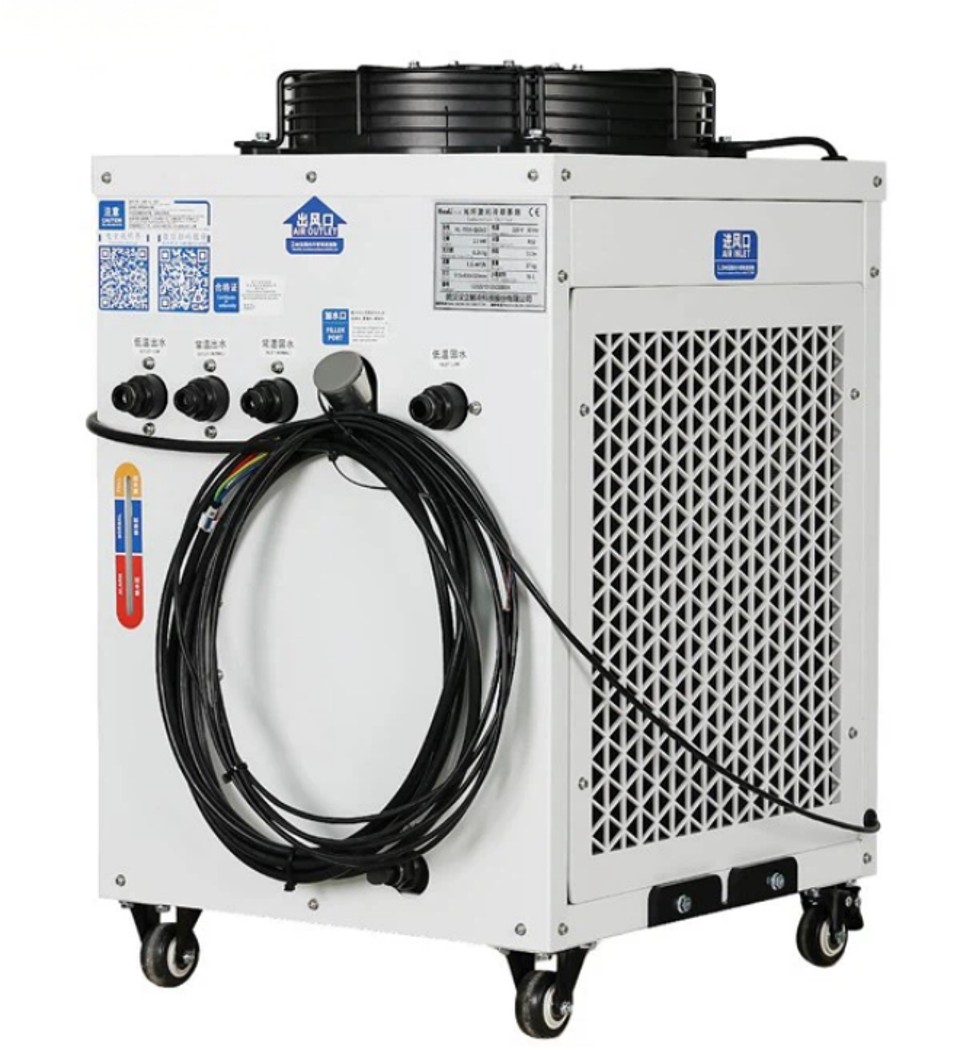
Core Functions of Chillers in JUGAO Laser Cutting Equipment
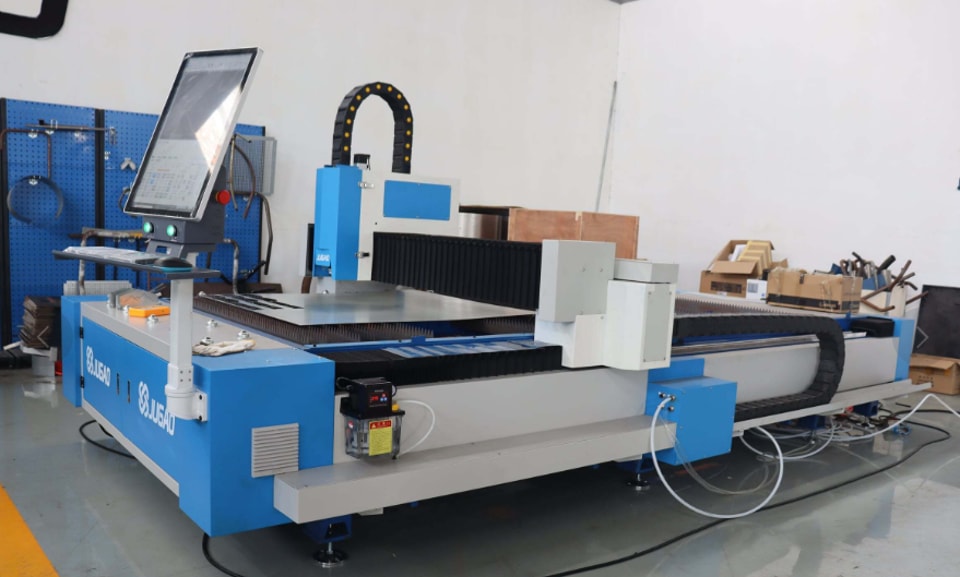
The chiller undertakes the constant temperature control of the laser generator core. It effectively avoids overheating of light source parts, stabilizes laser beam output quality, guarantees stable cutting speed and high dimensional precision of workpieces. Regular standardized maintenance can avoid performance attenuation and expensive component replacement costs caused by equipment breakdown.
Common Malfunctions Arising From Neglected Maintenance
If daily chiller inspection and maintenance work is omitted, a series of production failures will occur:
• Excessive internal temperature triggers automatic shutdown protection of the laser light source
• Pipeline blockage leads to reduced circulating water flow and weakened heat dissipation capacity
• Deteriorated cooling liquid reduces heat transfer efficiency and pollutes the whole water circuit
• Premature damage of circulating water pump and compressor caused by long-term overload operation
Complete Step-by-Step Maintenance Operations for Laser Chillers
Step 1: Periodically Check the Liquid Level of Cooling Medium
Check the liquid level inside the chiller water tank every day to ensure the cooling medium stays within the standard scale range specified by JUGAO. Insufficient liquid volume will lead to inadequate heat dissipation, aggravate pump operation load and accelerate the aging of laser core components. When supplementing liquid, only the special cooling fluid recommended by JUGAO official shall be used.
Step 2: Dismantle, Clean or Replace Filter Components
Built-in filters intercept metal debris, dust and impurities in the circulating water circuit to prevent pipeline blockage. Users need to regularly take out filter screens to rinse off accumulated dirt; replace aging filters in a timely manner to maintain smooth water circulation and avoid abnormal pressure fluctuation inside the cooling system.
Step 3: Track Real-Time Quality Changes of Cooling Liquid
Cooling fluid will gradually breed impurities and lose heat conduction performance after long-term circulation. Observe whether the liquid has discoloration, suspended particles or peculiar odor during daily inspection. Once abnormal signs appear, purify or fully replace the cooling liquid immediately to restore stable heat exchange efficiency.
Step 4: Carry Out Comprehensive Inspection of Water Pumps and Pipeline Circuits
Listen for abnormal vibration and noise during pump operation, and check the pump body for water seepage traces. Inspect all connecting water pipes, joints and water tanks to find cracks, rust and leakage risks in advance. Timely handling pipeline faults can prevent cooling liquid leakage from eroding the main laser equipment.
Step 5: Calibrate Temperature & Pressure Operating Parameters
Compare the chiller’s displayed temperature and pressure data with the standard parameter range matched for JUGAO laser cutting machines. Adjust offset values in a timely manner if the parameters deviate from the factory setting. Improper temperature and pressure values will directly cause insufficient cooling or low-efficiency operation of the whole system.
Step 6: Conduct Cyclical Safety Inspection of Electrical Components
Check the internal circuit, wiring terminals and temperature sensors of the chiller regularly. Confirm all wiring joints are fastened without aging, peeling or short-circuit hidden dangers. Standard electrical inspection can effectively avoid sudden shutdown and electric safety accidents during equipment operation.
Scientific Management Tips to Boost Chiller Service Life
Formulate Systematic Preventative Maintenance Timetable
Classify maintenance tasks into weekly, monthly and annual inspection items to build a complete preventive maintenance cycle. This proactive inspection mode can discover potential faults in advance, avoid sudden equipment stoppage, and greatly extend the whole service life of the chiller.
Guarantee Dust-Free & Well-Ventilated Placement Space
Place the chiller in a clean, low-dust workshop area with unobstructed surrounding ventilation. Mass accumulated dust will block the heat dissipation air outlet, reduce heat exchange efficiency and easily trigger high-temperature alarm faults of the cooling machine.
Deliver Standardized Operation Training for All Staff
Organize full training for every frontline operator, covering correct startup/shutdown procedures and basic daily maintenance operations. Standard operation modes can eliminate equipment damage caused by human misoperation and reduce chiller failure frequency.
Frequently Asked Questions
What is the standard replacement cycle for JUGAO chiller cooling fluid?
Carry out liquid quality inspection every month; fully drain and replace new cooling fluid every 6 to 12 months. The specific replacement interval can be shortened appropriately for production environments with heavy dust and long continuous working hours.
Will improperly maintained chillers degrade laser cutting processing results?
Absolutely yes. Insufficient cooling capacity will lead to unstable laser power output, resulting in rough workpiece cutting edges, slower cutting speed, and even beam offset that causes dimensional out-of-tolerance of finished parts.
Why is regular electrical inspection of cooling machines indispensable?
Timely inspection of circuits, sensors and wiring terminals ensures stable and safe operation of the chiller, effectively eliminating potential electric leakage, short circuit and spontaneous shutdown risks during production processing.
Conclusion
Complete standardized maintenance of JUGAO laser cutting chillers is the basic guarantee for stable laser beam performance and long service life of complete equipment. Operators can avoid high-cost production downtime and maintain continuous efficient cutting by regularly checking cooling liquid levels, cleaning filter elements, monitoring liquid quality, inspecting pumps and pipelines, calibrating operation parameters and conducting periodic electrical safety checks. Matching fixed maintenance schedules and carrying out systematic staff training can further stabilize the chiller’s long-term reliable operation and prolong its service cycle. If you need customized chiller maintenance checklists or on-site technical guidance, please contact our professional technical team to obtain targeted maintenance schemes and full technical support.
Contact Us