

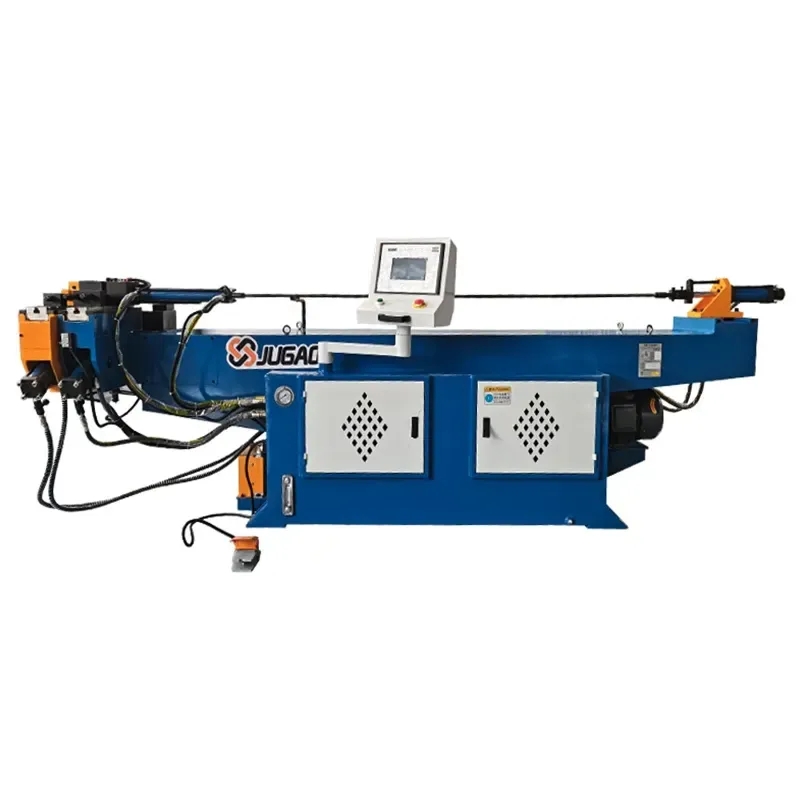
How to improve the repeatability of pipe bending machines?
2026-04-14

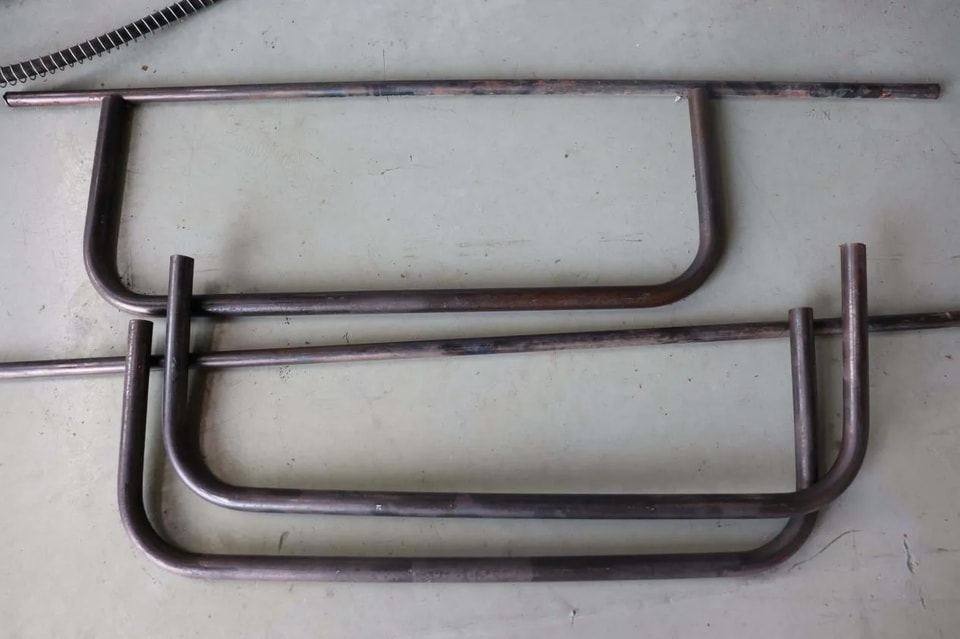
The repeatability of a pipe bending machine refers to the degree of consistency in angle, size, and shape when the same equipment continuously processes multiple pipe fittings under the same parameters. Poor repeatability leads to a decrease in the batch product qualification rate and assembly difficulties. The following provides improvement solutions from five core dimensions.
1. Mechanical Precision: Laying a Solid Foundation
Guide Rails and Lead Screws: Regularly check the clearance and lubrication of linear guide rails and ball screws. Excessive wear can cause drift in feed length and rotation angle.
Transmission Connections: Check the couplings of encoders and angle sensors for looseness. Even slight slippage can cause significant angular deviations.
Die Fixation: After each die change, tighten bolts diagonally with a torque wrench to prevent die displacement during bending.
2. Control System: Stable Parameters
Closed-Loop Control: Prioritize pipe bending machines with angle feedback closed-loop systems for real-time correction of the bending position.
Speed and Pressure: Set fixed bending speeds, clamping pressures, and mandrel advance/retreat speeds. Avoid arbitrary adjustments by operators.
Temperature Compensation: Fluctuations in hydraulic oil temperature can affect system response. Maintain oil temperature between 35-50℃, or enable the controller's temperature compensation function.
3. Dies and Materials: Minimizing Variables
Die Consistency: Use the same set of dies for pipes of the same specification. Repair or replace worn molds promptly to avoid mixing old and new materials.
Material Batch: Different batches of pipe may vary in yield strength, wall thickness tolerance, and elongation. Before mass production, perform a first-piece verification after each material change, fine-tuning the springback compensation value if necessary.
Stable Lubrication: Use the same brand and model of bending oil, ensuring a uniform oil film on the pipe and mold surfaces before each bending.
4. Process Parameters: Clarification and Standardization
Parameter Recording: Archive successful parameters (bending angle, mandrel position, anti-wrinkle die clearance, speed, etc.) for each pipe specification as a process card. This can be directly called upon in subsequent production runs, reducing human error.
First-Piece Confirmation: After each machine start-up, mold change, or material change, a first-piece trial bend must be performed and all dimensions inspected. Mass production can only begin after the first piece passes inspection.
Springback Compensation: For materials with high springback, such as high-strength steel and stainless steel, the bending angle needs to be set in the program. It is recommended to determine the compensation value through experimentation rather than estimation based on experience.
5. Maintenance and Calibration: Keep the equipment in good condition.
Regular Calibration: Every quarter or semi-annually, use a standard angle gauge and vernier calipers to calibrate the displayed and actual values of the bending angle and feed length.
Hydraulic System Maintenance: Keep the hydraulic oil clean and replace the filter element regularly. Oil contamination can cause pressure fluctuations and affect repeatability.
Sensor Cleaning: Regularly clean the oil and metal shavings from the surfaces of proximity switches and encoders to prevent false signal triggering.
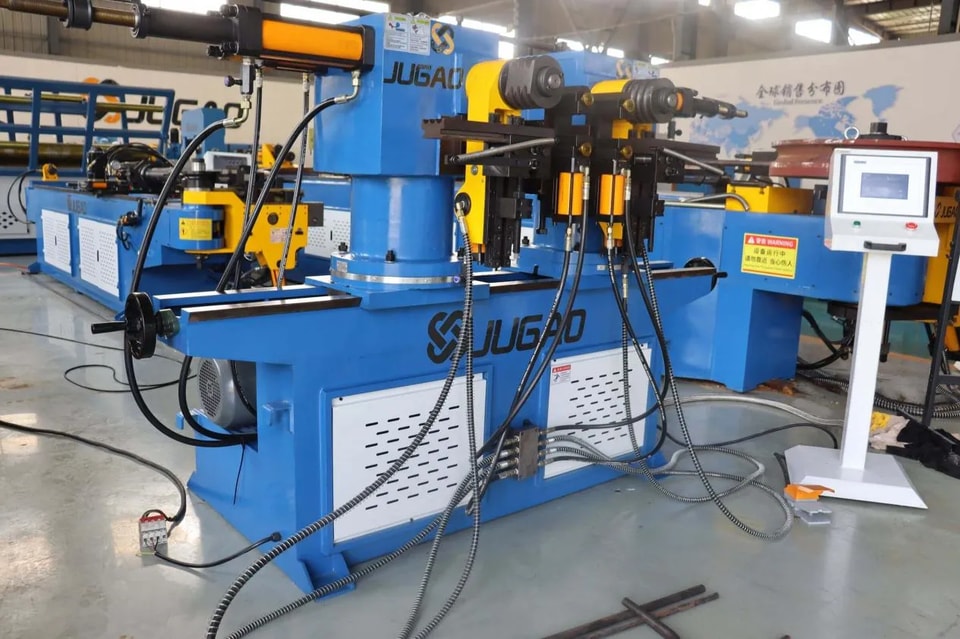
The key to improving the repeatability of pipe bending machines lies in: good mechanical rigidity, accurate closed-loop control, consistent mold materials, standardized parameters, and regular calibration. By mastering these five points, the angle deviation of batch pipe bending can be controlled within ±0.5°, and the length accuracy within ±0.5mm.
Contact Us