
Advantages of Roller Hemming in Sheet Metal Forming
2025-08-21

Roller hemming is a critical forming process in the automotive and aerospace industries, used to join sheet metal edges by folding and compressing them with a roller tool. Compared to traditional hemming methods (e.g., press hemming or robotic folding), roller hemming offers superior precision, flexibility, and cost efficiency. This document examines the key advantages of roller hemming, its process mechanics, material compatibility, and industrial applications.
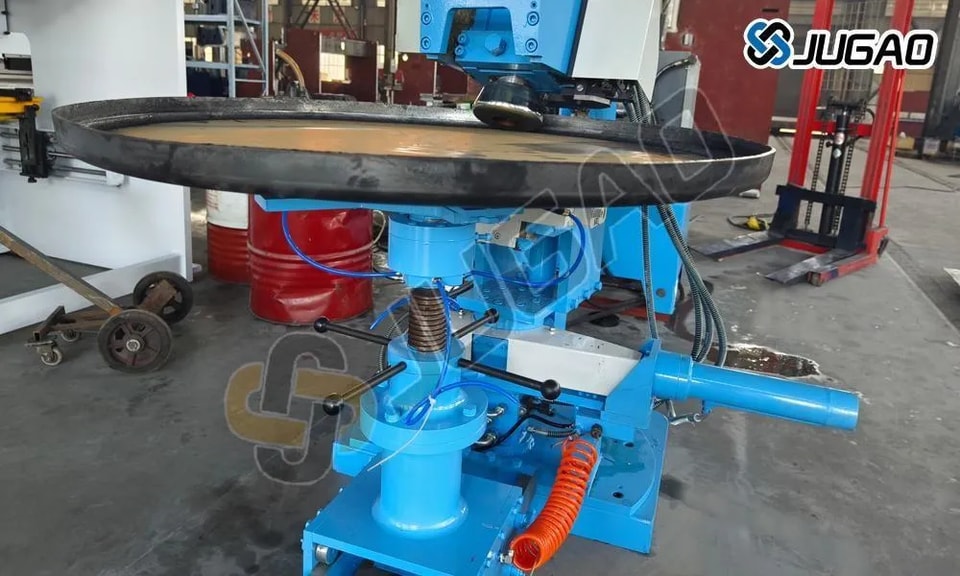
Process Overview
Roller hemming involves three primary stages:
1. Pre-hemming: A preliminary bend (typically 45°–90°) is formed.
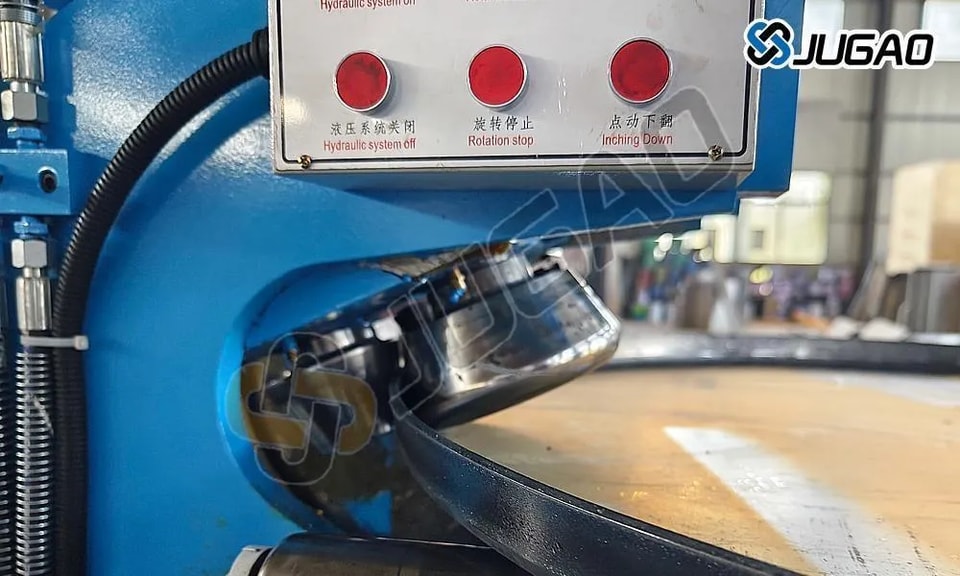
2. Final Hemming: A roller tool applies pressure to fold the flange completely (180°).
3. Compression: The roller compresses the seam for a tight, gap-free joint.
Unlike rigid press hemming, roller hemming uses a dynamic tool path, allowing adjustments in real time for optimal material flow.
Key Advantages of Roller Hemming
1. Superior Edge Quality & Consistency
l Eliminates Wrinkling & Cracking: Gradual pressure application minimizes material stress.
l Tighter Tolerances: Achieves flange flatness within ±0.2 mm (vs. ±0.5 mm for press hemming).
l Smooth Surface Finish: No tool marks or denting, critical for Class-A automotive panels.
2. Flexibility & Adaptability
l Complex Geometries: Handles curved edges (e.g., car doors, hoods) better than rigid tools.
l Multi-Material Compatibility: Works with aluminum, high-strength steel (HSS), and composites.
l In-Process Adjustments: Force and speed can be modified dynamically to accommodate material variations.
3. Cost Efficiency
l Lower Tooling Costs: Single roller tools replace multiple press dies.
l Reduced Scrap Rates: Minimizes rework due to real-time defect detection (e.g., vision systems).
l Energy Savings: Consumes ~30% less power than hydraulic press hemming.
4. Process Integration & Automation
l Robotic Compatibility: Easily integrated with 6-axis robots for high-volume production.
l Industry 4.0 Readiness: IoT-enabled force monitoring and predictive maintenance.
Material-Specific Benefits
Material | Advantages of Roller Hemming |
Aluminum | Prevents cracking in high-strain areas (e.g., Audi A8 hoods). |
High-Strength Steel (HSS) | Avoids springback issues common in press hemming. |
Carbon Fiber Reinforced Polymers (CFRP) | Delicate pressure control prevents fiber damage. |
Industrial Applications
1. Automotive Industry
l Closures: Doors, hoods, trunk lids (e.g., Tesla Model 3 aluminum hoods).
l Structural Components: B-pillars, roof rails.
2. Aerospace
l Aircraft Skins: Hemmed edges for fuselage panels (Boeing 787).
l Engine Cowlings: Fatigue-resistant seams.
3. Appliances & Electronics
l Enclosures: Washing machine drums, control panels.
Comparison with Alternative Methods
Parameter | Roller Hemming | Press Hemming | Robotic Folding |
Precision | ±0.2 mm | ±0.5 mm | ±0.3 mm |
Tooling Cost | Low | High | Medium |
Flexibility | High (3D paths) | Low (2D only) | Medium |
Cycle Time | 20–60 sec/part | 10–30 sec/part | 30–90 sec/part |
Future Trends
1. AI-Driven Optimization: Machine learning for adaptive force control.
2. Hybrid Processes: Laser-assisted roller hemming for ultra-high-strength materials.
3. Sustainable Manufacturing: Reduced lubricant usage via dry hemming techniques.
Conclusion
Roller hemming outperforms traditional methods in precision, flexibility, and cost-effectiveness, making it indispensable for modern sheet metal forming. As automation and smart manufacturing advance, its adoption will expand further into high-mix production environments.
Contact Us