
What are the differences between laser welding machines and traditional welding methods?
2026-05-09

Laser welding machines and traditional welding methods are two commonly used welding processes. Laser welding machines use a laser beam to weld workpieces, while traditional welding methods rely on electric arcs, gas welding, or friction to achieve welding. These two methods differ significantly in terms of process, welding quality, efficiency, and applicability.
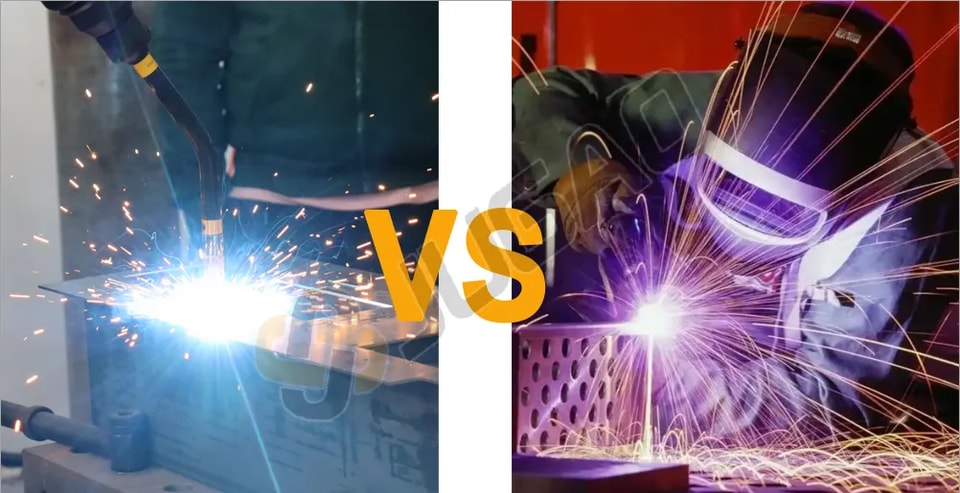
1. Different working principles:
• Laser welding:
Utilizes a high-energy-density laser beam to irradiate the workpiece surface, causing the materials to melt instantly and bond together, achieving welding. Laser welding is characterized by non-contact, localized heating, concentrated energy, and high controllability.
• Traditional welding:
Including arc welding, resistance welding, and gas shielded welding (such as MIG/MAG welding, TIG welding, etc.). These methods mainly use electric arcs, resistance heat, or chemical reaction heat to locally melt the workpiece, completing the weld with the help of filler material or self-fusion.
2. Process Effects:
• Laser Welding: Small heat-affected zone, fast welding speed, high precision, narrow weld with a large depth-to-width ratio, achieving high-quality welding results, especially suitable for precision and thin plate welding, and less prone to deformation.
• Traditional Welding: Relatively large heat-affected zone, welding speed varies depending on the method, wider weld, generally smaller depth-to-width ratio, prone to deformation and hot cracking, but better adaptable to welding thicker materials.
3. Application Scope:
• Laser Welding: Widely used in precision instruments, automotive manufacturing, aerospace, medical devices, 3C electronic products, etc., especially advantageous in applications requiring high precision and complex structure welding.
• Traditional Welding: Widely used in shipbuilding, bridge construction, steel structures, pressure vessels, and general machinery manufacturing, suitable for large-scale production and rough welding operations.
4. Cost and Equipment:
• Laser Welding: Higher equipment investment cost, but due to its high efficiency, precision, and energy saving advantages, the unit cost may decrease in the long run, and it can significantly improve production efficiency in mass production.
• Traditional Welding: Equipment costs are relatively low, the technology is mature, and maintenance costs are relatively low. However, the skill requirements for manual operation, welding efficiency, and post-processing costs (such as grinding and stress relief) need to be considered.
5. Environmental Protection and Safety:
• Laser Welding: The welding process produces less smoke and harmful substances, resulting in a relatively better working environment. However, the safety requirements for the laser itself are higher.
• Traditional Welding: Typically produces large amounts of smoke, toxic gases, and radiant heat, requiring comprehensive ventilation and fume extraction measures and protective equipment.
Laser welding machines and traditional welding methods differ significantly in terms of process, welding quality, efficiency, and applicability. Choosing the appropriate welding method for different welding needs is crucial to achieving the best welding results.
Contact Us