
What Are the Components of a Welding Robot System?
2026-05-06

A complete welding robot system consists of several key components that work in tandem to ensure the precision and efficiency of the welding process.
I. Robot Body
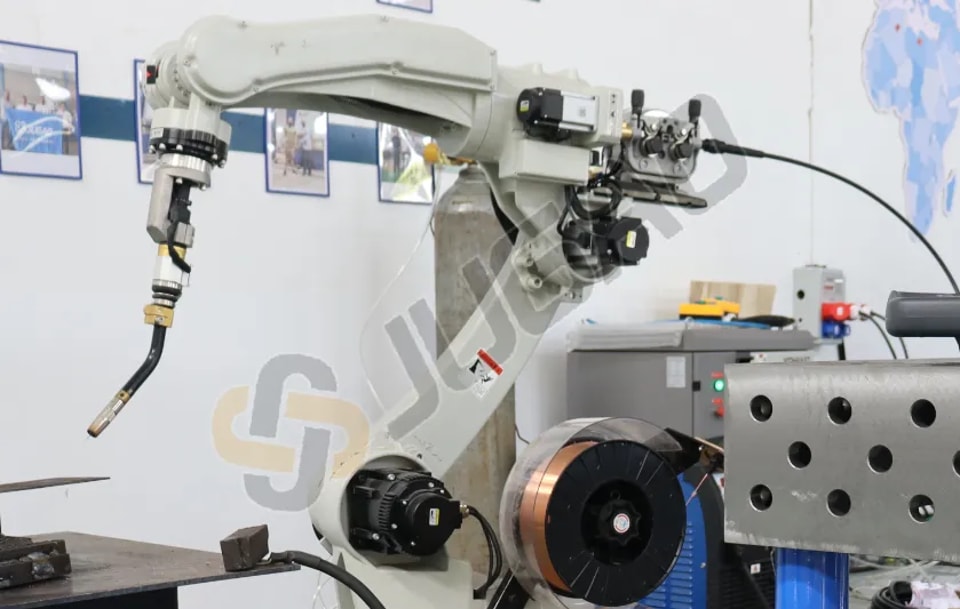
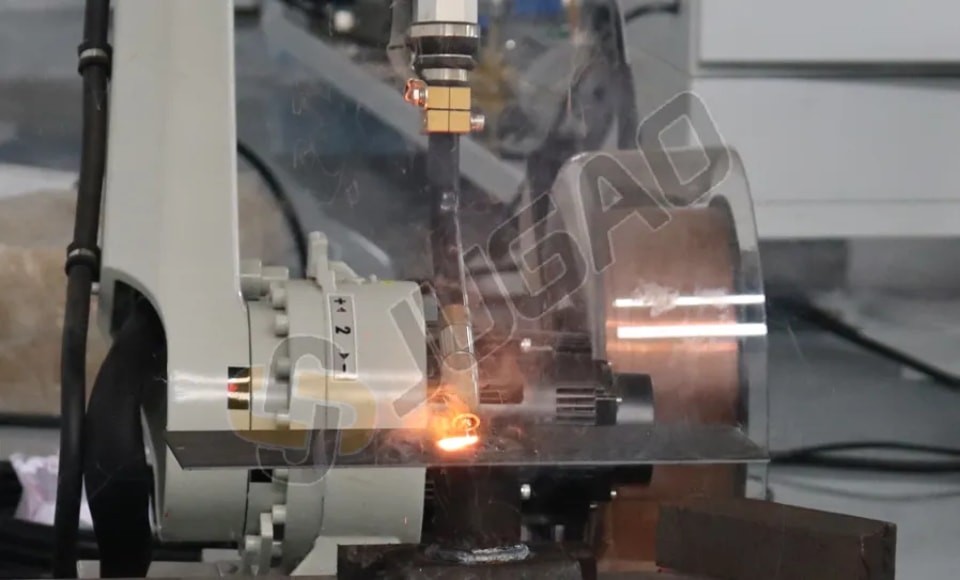
The robot body is the core component of the welding robot system; it typically comprises a mechanical arm, a drive system, and a control system. The mechanical arm is responsible for executing welding movements; it typically features a multi-jointed structure with multiple degrees of freedom (usually six), enabling it to move and position itself flexibly within three-dimensional space. The drive system—consisting of servo motors and reducers—is responsible for providing power and precisely controlling the arm's movements. The control system receives commands and coordinates the actions of the various components, thereby ensuring the accuracy of the welding path.
II. Welding Power Source
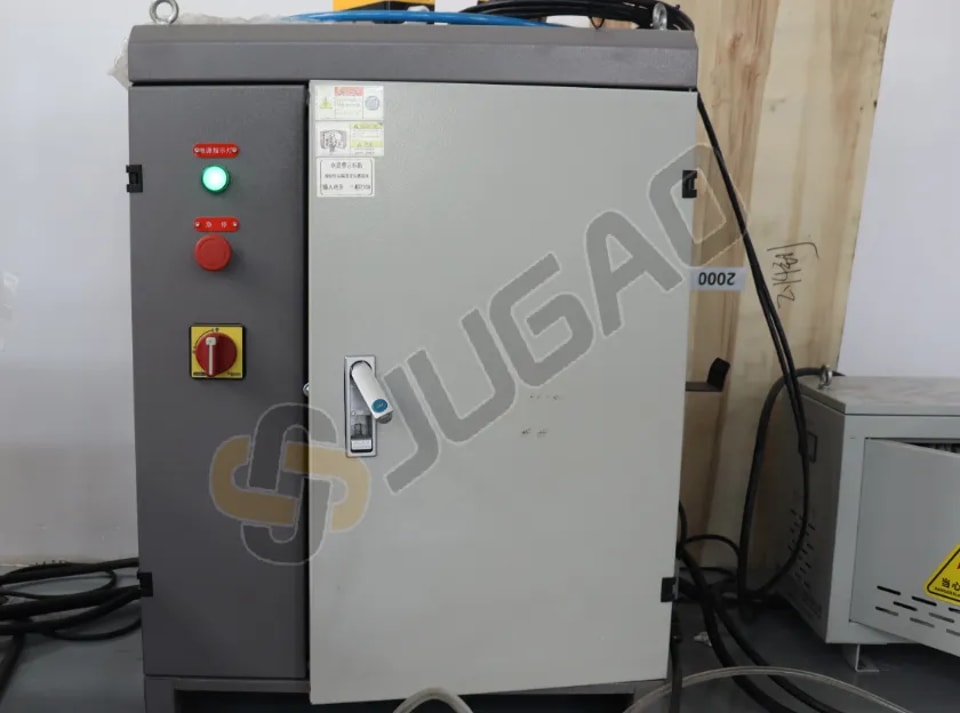
The welding power source serves as the energy supply that enables the welding robot to perform its welding functions. Depending on the specific welding process employed, common power sources include arc welding power supplies, laser welding power supplies, resistance welding power supplies, and others. Among these, the arc welding power supply is the most prevalent, suitable for a wide range of welding methods such as MIG/MAG, TIG, and manual arc welding. The performance of the welding power source directly impacts weld quality; consequently, it must possess characteristics such as stable output, rapid response speed, and high adjustment precision.
III. Welding Torch and Wire Feeding Mechanism
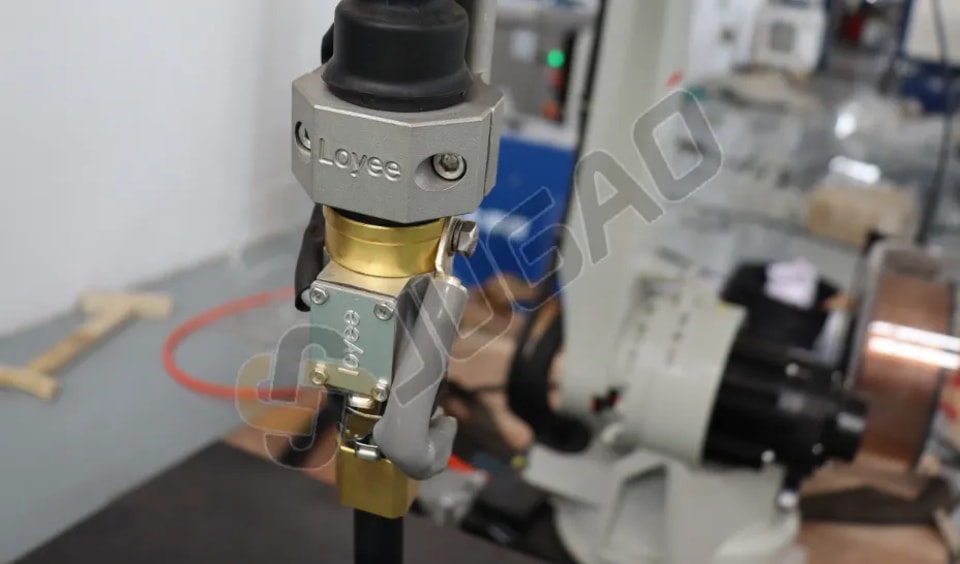
The welding torch is the critical tool through which the welding robot executes welding operations; its function is to feed the welding wire into the weld zone and, under the influence of the power source, generate an electric arc to perform the weld. The wire feeding mechanism is responsible for continuously and uniformly feeding the welding wire from the wire spool into the torch. This mechanism typically consists of components such as a feed motor, feed rollers, and a guide tube; its stability directly influences the quality of the weld. Furthermore, the welding torch must be equipped with a cooling system to prevent damage caused by high temperatures.
IV. Welding Sensors and Vision Systems
To enhance welding precision and the level of automation, modern welding robots are typically equipped with welding sensors and vision systems. Welding sensors are used to monitor parameters—such as current, voltage, and temperature—in real-time during the welding process, thereby ensuring process stability. Vision systems, utilizing cameras and image processing technologies, identify and locate the weld seam, assisting the robot in autonomous positioning and path correction—a capability particularly valuable for welding complex or irregular seams.
V. Control System and Programming Equipment
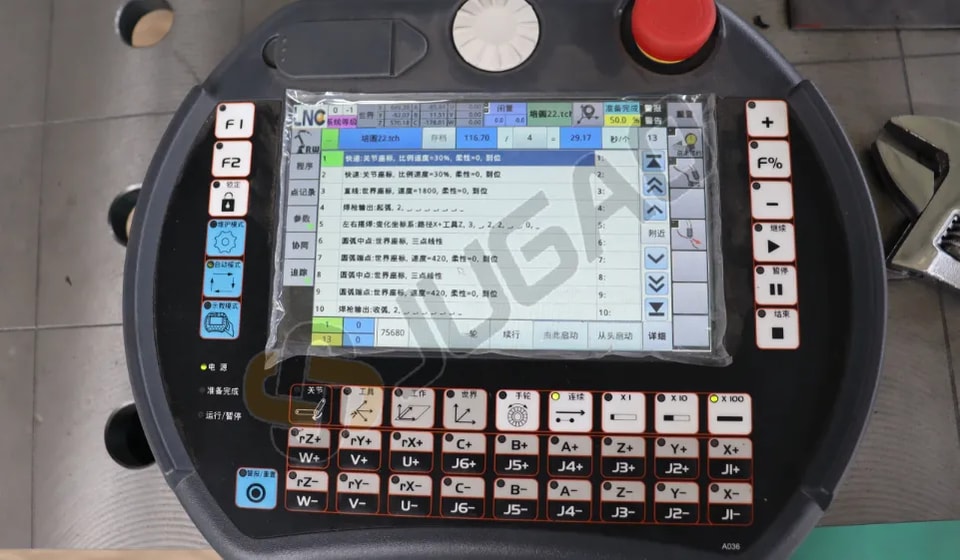
The control system serves as the "brain" of the welding robot system; it typically consists of a main controller, a PLC (Programmable Logic Controller), and an operator interface. The main controller is responsible for coordinating the overall operation of the robot's various components; the PLC handles logic control and signal processing; and the operator interface provides human-machine interaction capabilities. Programming equipment includes teach pendants and offline programming software; operators can manually teach welding paths using the teach pendant or utilize the offline programming software to perform simulations and path planning on a computer.
VI. Safety Systems and Peripheral Equipment
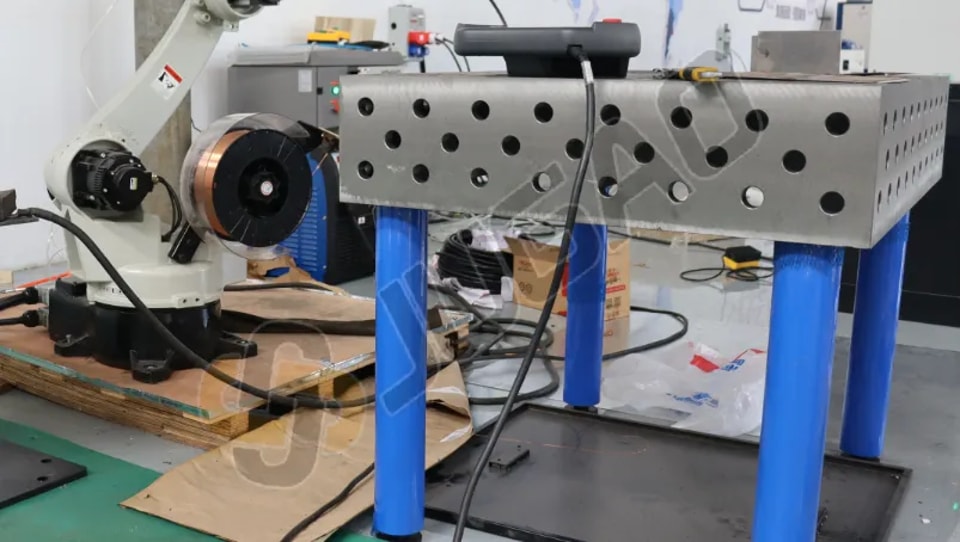
To ensure the safety of operators and the proper functioning of the equipment, the welding robot system is also equipped with a comprehensive safety system. This safety system comprises devices such as emergency stop buttons, safety fences, light curtains, and safety relays, which can rapidly cut off power in the event of an anomaly to prevent accidents. Furthermore, peripheral equipment—such as welding worktables, fixtures, dust extraction systems, and gas shielding devices—constitutes an integral part of the welding robot system, providing essential support and safeguards for the welding process.
VII. Welding Process Databases and Software Support
Modern welding robot systems are typically equipped with welding process databases and associated software support. These databases store optimal welding parameters for various materials, thicknesses, and welding positions; operators can access the appropriate parameters based on actual conditions, thereby enhancing both welding efficiency and quality. Software support encompasses tools such as robot simulation software, path optimization software, and remote monitoring software, all of which facilitate the digital and intelligent management of the welding process.
Contact Us