
Rotational Degrees of Freedom in Welding Robots
2026-04-16

The arm and wrist of a welding robot are its basic motion components. Any designed welding robot arm has three degrees of freedom to ensure that the end effector can reach any point within its working range. The three degrees of freedom of the wrist are rotational movements along three mutually perpendicular coordinate axes x, y, and z in space, commonly referred to as roll, pitch, and yaw.
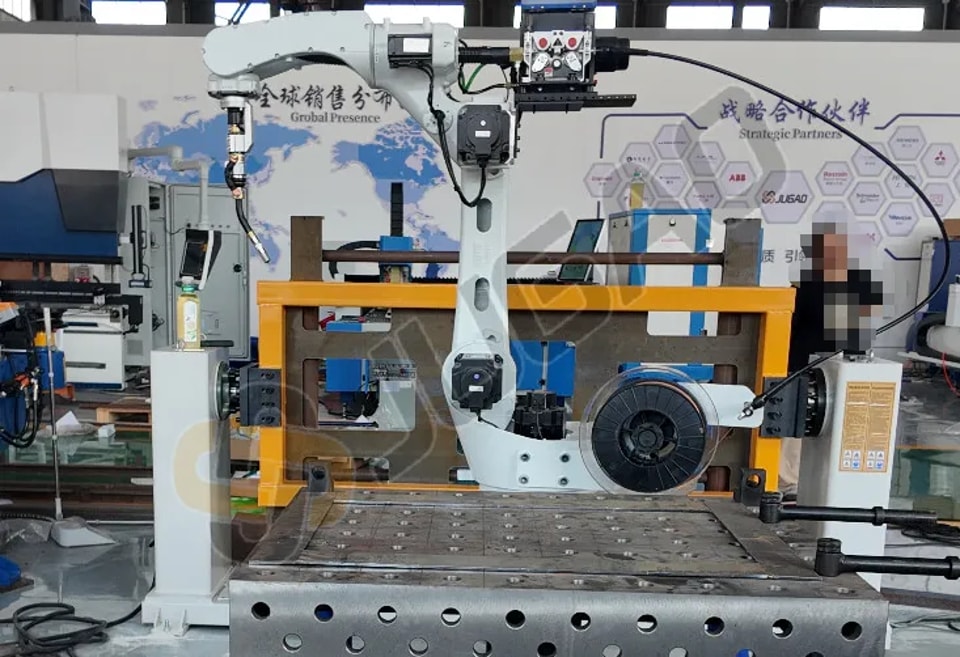
When introducing and selecting a welding robot, the following aspects should be considered:
1) The production type of the weldments is characterized by high variety and small batch production.
2) The structural dimensions of the weldments are mainly small to medium-sized welding machine parts, and the material and thickness of the weldments are conducive to spot welding or gas-shielded welding methods.
3) The dimensional and assembly accuracy of the materials to be welded meets the process requirements of robot welding.
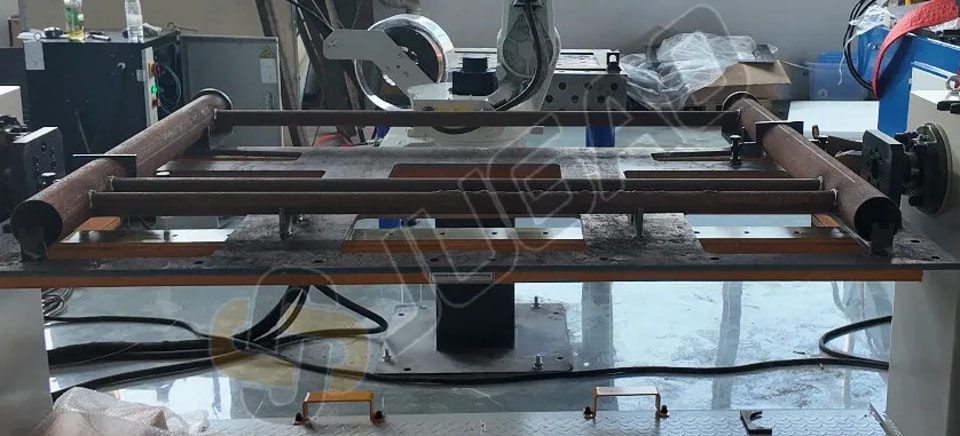
4) The equipment used by the welding robot, such as various types of positioners and conveyors, should be able to coordinate with the robot to maintain production rhythm.
A welding robot is a multi-jointed manipulator or multi-angle machine device for industrial applications. It can automatically perform tasks and is a machine that achieves various functions through its own power and control capabilities. It can be commanded by humans or operate according to pre-programmed procedures. Modern industrial robots can also act according to principles and guidelines established by artificial intelligence technology.
Features:
(1) Programmable. Further development of production automation is flexible automation. Industrial robots can be reprogrammed to meet the needs of changing working environments. Therefore, they play a significant role in flexible manufacturing processes with balanced production volumes and varieties, and are an important component of flexible manufacturing systems.
(2) Anthropomorphic. Industrial robots have mechanical structures similar to human walking, waist rotation, upper arms, forearms, wrists, and grippers, and are controlled by computers. Furthermore, intelligent industrial robots have many human-like "biosensors," such as skin-type contact sensors, force sensors, load sensors, vision sensors, acoustic sensors, and language functions. These sensors enhance the adaptability of industrial robots to their surroundings.
(3) Versatility. Besides specially designed dedicated industrial robots, general industrial robots have good versatility in performing different tasks. For example, changing the end effector (gripper, tool, etc.) of an industrial robot allows it to perform different tasks. (4) Industrial machine technology involves a wide range of disciplines, which can be summarized as a combination of mechanics and microelectronics – mechatronics. Third-generation intelligent robots not only possess various sensors for acquiring information about the external environment, but also have artificial intelligence capabilities such as memory, language comprehension, image recognition, and reasoning. These are all closely related to the application of microelectronics technology, especially computer technology. Therefore, the development of robotics technology will inevitably drive the development of other technologies, and the level of development and application of robotics technology can also verify the level of development of science and technology and industrial technology.
Contact Us