
Working Principle and Operating Procedures of the Four-Roll Plate Bending Machine
2026-10-24

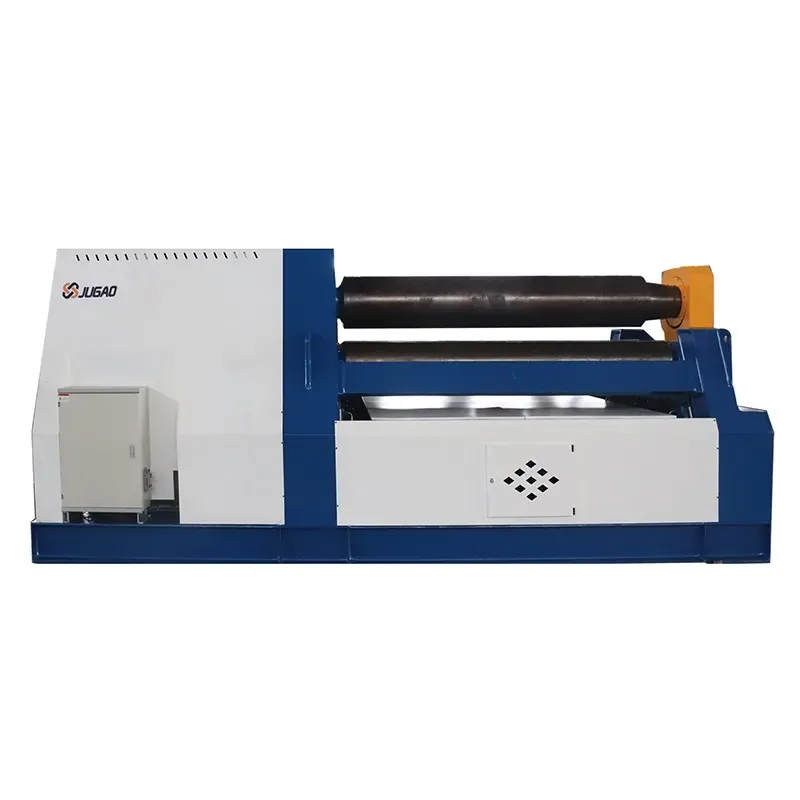
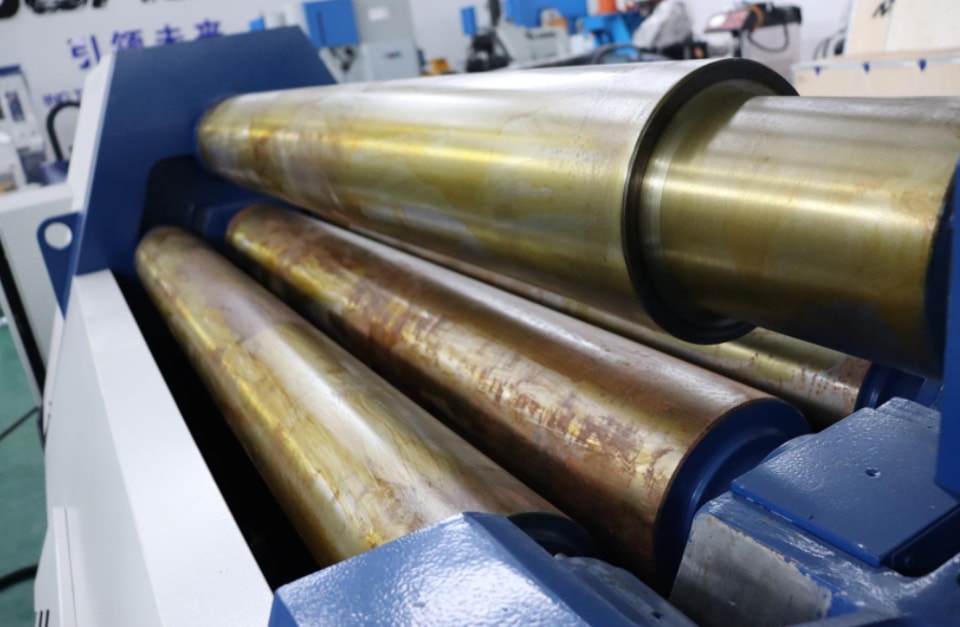
The four-roll plate bending machine consists of four rolls. The top roll serves as the main drive and remains in a fixed position, while the bottom roll is raised and lowered by hydraulic cylinders at both ends. Raising the bottom roll allows it to clamp the leading edge of the plate against the top roll; the distance between the side rolls and the top roll is then adjusted as needed to pre-bend the ends of the plate. Subsequently, the bottom roll is lowered and the two side rolls are raised to roll the plate into a cylindrical shape.
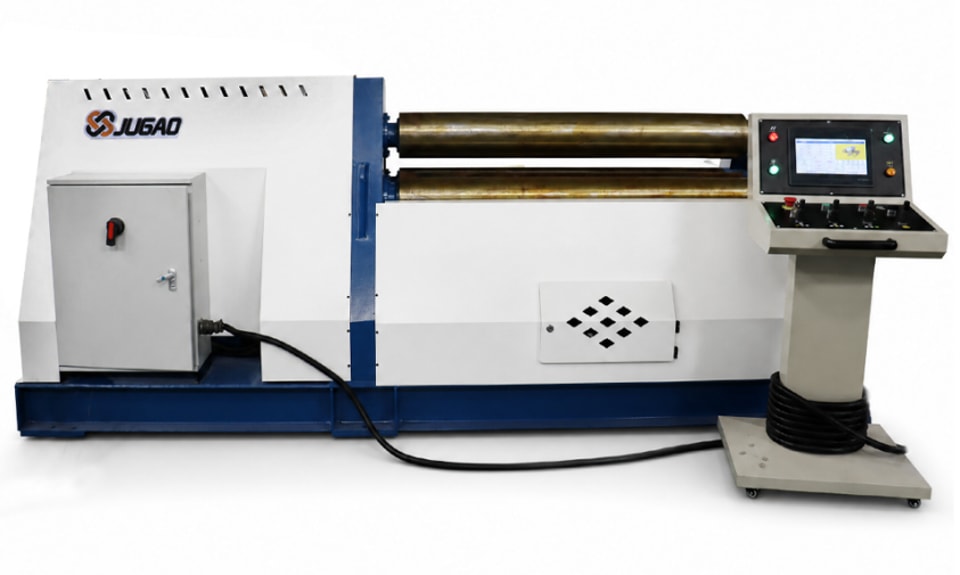
Any machine must be operated correctly in accordance with process requirements; below, we discuss the proper operation of the four-roll plate bending machine.
Preparation generally involves the following aspects:
1. Understand the machine's functions
The plate bending machine is a specialized metal-forming device capable of bending metal plates into cones, spheres, cylinders, or other shapes. This capability is widely utilized in industries such as shipbuilding, boiler and steam equipment manufacturing, the chemical industry, metal structural engineering, and general machinery manufacturing.
2. Understand the machine's working principle
While the roll movement patterns of four-roll and three-roll bending machines differ, their working principles are identical: both utilize the geometric principle that three points define a circle to achieve bending at various radii. The top roll remains stationary, while the bottom roll moves vertically upward to clamp the steel plate. The two side rolls move toward the top roll—either linearly or along an arc—to adjust the curvature radius of the rolled cylinder.
3. Familiarize yourself with operating procedures
(1) The plate bending machine must be under the charge of a designated person.
(2) Operators must be familiar with the machine's structure, performance characteristics, and operating methods; operation is permitted only with the approval of the person in charge.
(3) Before starting the machine, carefully inspect the safety devices to ensure they are in good working order.
(4) During operation, it is strictly prohibited to place hands, feet, or other body parts on the rolls, transmission components, or the workpiece.
(5) When work is interrupted, the clutch should be disengaged (shifted to neutral).(6) Operations involving multiple personnel must be directed by a designated supervisor.
(7) Overloading the machine is strictly prohibited.
(8) Operations such as the lifting and lowering of the top roll, the tilting and resetting of the drop-end bearing, and the balancing of the top roll must be performed only after the main drive has been stopped.
(9) Workpieces and debris must not be piled haphazardly in the work area; the machine and the surrounding area must be kept clean at all times.
(10) Upon completion of work, the power supply must be disconnected and the power cabinet locked.
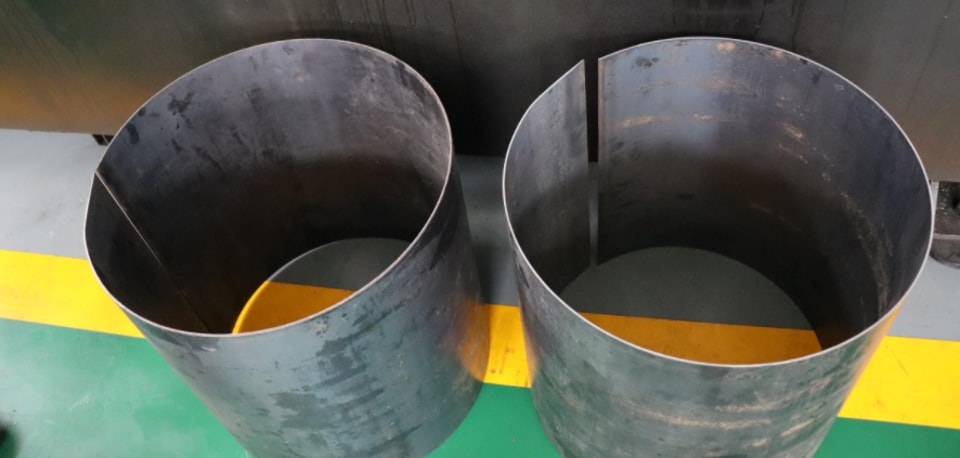
The four-roll CNC plate bending machine is a critical piece of production equipment. It is essential to operate it correctly; failure to do so may not only damage the equipment and disrupt production but could also lead to unforeseen consequences.
Contact Us