
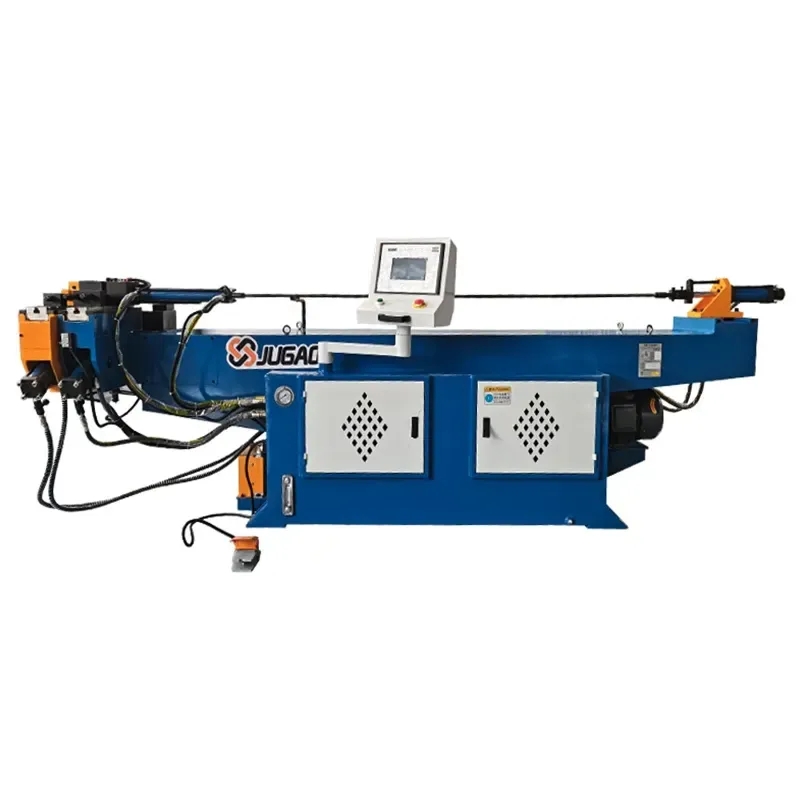
Profile Bending Machine: Core Equipment for Precision Plastic Forming
2026-07-16

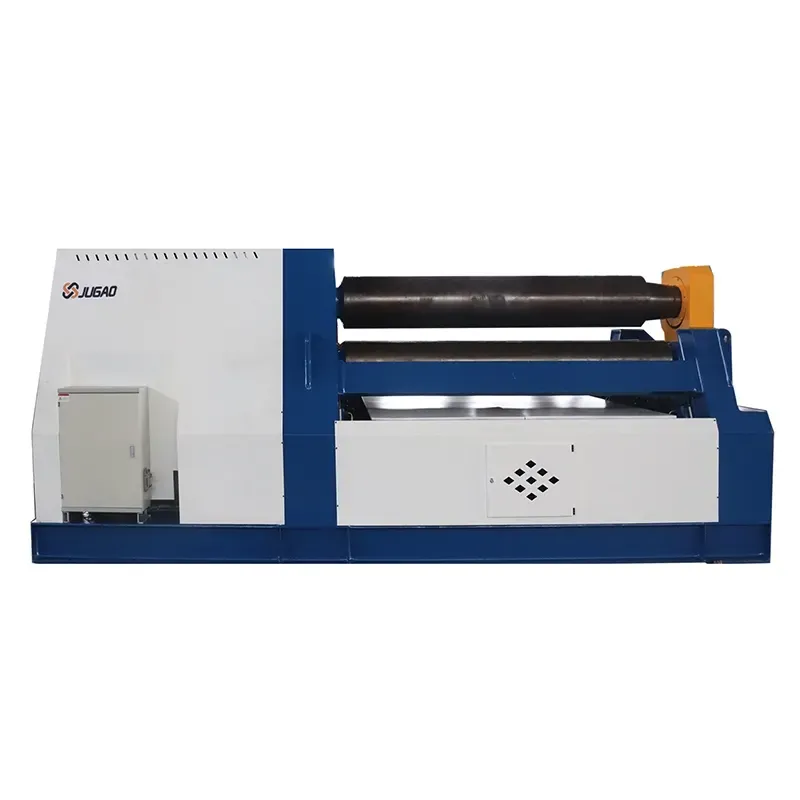
In the landscape of modern manufacturing, profiles (such as angle steel, channel steel, I-beams, square tubes, round tubes, and special-shaped aluminum profiles) are a fundamental and widely used structural material. However, many equipment and building structures do not require straight rigidity, but rather curved components with complex spatial surfaces, high-precision arcs, or specific artistic shapes. How can these originally straight profiles be processed into the shapes required by the design efficiently, accurately, and economically? The profile bending machine is the key equipment to solve this core process problem. It represents the pinnacle of continuous and controllable bending of long strip profiles in metal plastic forming technology.
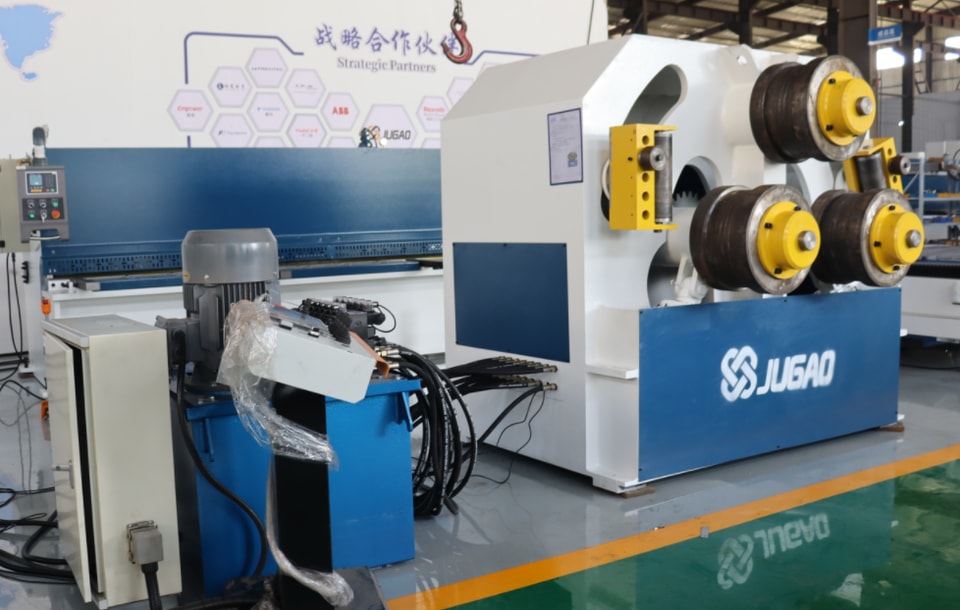
Core Principle: The Evolution from "Cold Bending" to "Stretch Bending"
1. Cold Bending Forming: This generally refers to the process of continuously deforming the cross-sectional shape of a sheet or profile at room temperature through a series of specifically arranged rollers (forming rollers) to ultimately obtain the desired cross-sectional profile (such as the production of C-shaped steel and Z-shaped steel). The key is the change in cross-sectional shape, while longitudinal bending in the length direction is a secondary or incidental result.
2. Tensile Bending: This is the core process performed by the profile bending machine. Its principle is to apply a bending moment to the profile to induce plastic bending while simultaneously applying a continuous tensile force along the profile's axial direction. This tensile force is crucial; it ensures that the deformation of the outer layer (the stretched side) of the profile remains in a unidirectional tensile state, rather than the alternating "tension-compression" state under traditional pure bending.
Mechanism of Tensile Force:
Eliminating Inner Compression Instability: In pure bending, the inner metal layer of the profile is under compression. When the pressure exceeds a critical value, the inner metal layer will become unstable and wrinkle, leading to cross-sectional distortion. The tensile force offsets part of the compressive stress, fundamentally inhibiting wrinkling.
Reducing Springback: Springback is the reduction in curvature caused by elastic recovery after bending. Stretching subjects the entire cross-section to a certain tensile stress, weakening the tendency for elastic recovery after unloading, thus obtaining a more precise bending angle and radius.
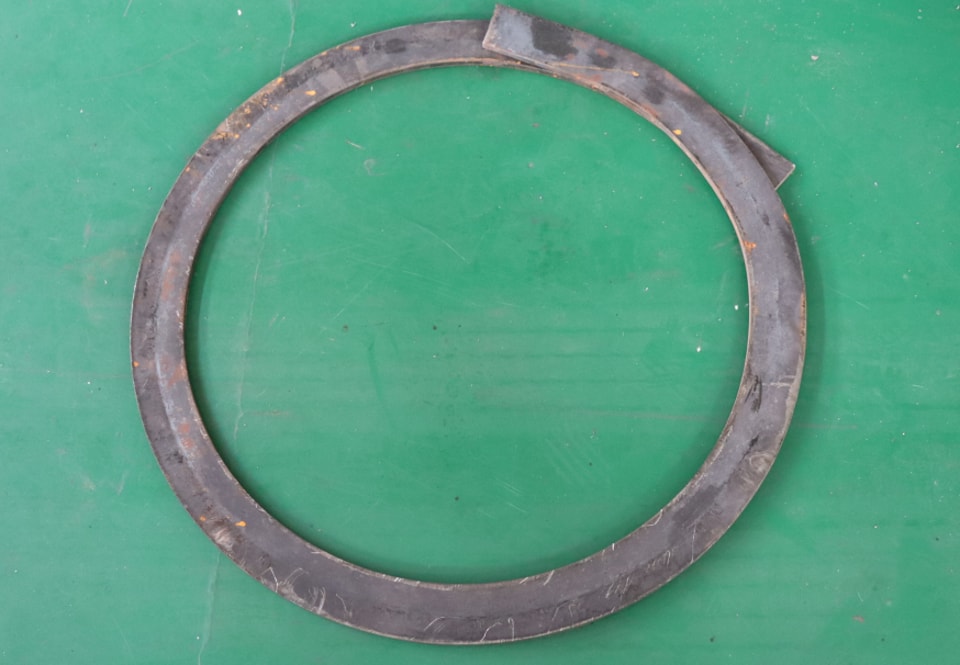
Improving the uniformity of plastic deformation: Tensioning causes the outer metal layer to enter a plastic state earlier, resulting in a smoother deformation transition from the inside to the outside. This reduces the intense shearing between fiber layers in the cross-section, which is beneficial for maintaining the cross-sectional shape.
Reducing deformation resistance: Tensile stress promotes slippage in the metal lattice, reducing the bending moment required for overall bending.
The quality of the stretch bending process is affected by the coupling of multiple parameters, the core of which includes:
1. Springback control: This is the primary challenge. The amount of springback is directly related to the material's mechanical properties (elastic modulus E, yield strength σs), bending radius R (relative radius R/t, where t is wall thickness/thickness), bending angle θ, and elongation ratio (the ratio of tensile force to material yield strength). Operators need to preset the "over-bending" compensation amount in the program through experiments or empirical formulas and precisely control the elongation ratio (usually 5%-20%) to counteract springback.
2. Cross-sectional Deformation (Distortion): Even with tensile force, thin-walled, open, or asymmetrical cross-sections (such as channel steel and angle steel) may still experience flange flaring and web waviness during bending due to uneven bending moment distribution or residual stress. This requires proper support and clamping (such as using a dedicated mandrel or lateral support blocks) to constrain the cross-section and maintain its original shape.
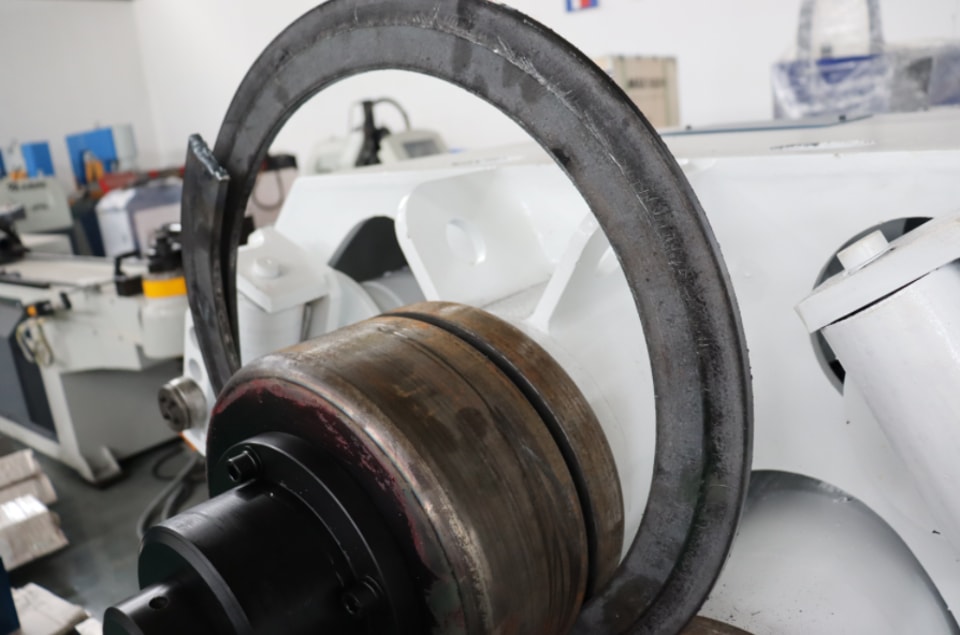
3. Residual Stress Distribution: Ideally, tensile bending should result in a uniform distribution of residual stress with a small amplitude. Uneven residual stress can lead to deformation after subsequent processing (such as welding or aging) or affect the fatigue life of the structure. Optimized tensile processes are key to reducing residual stress.
4. Tensile Force and Bending Speed: The tensile force must be large enough to suppress wrinkling, but not so large as to cause localized necking or fracture. Both must be precisely matched according to material properties. Excessive bending speed may lead to dynamic effects, affecting accuracy.
5. Die/Roller Matching: The contour of the bending element must fit snugly against the outer contour of the profile, and the gap must be precisely calculated to prevent indentation or slippage.
Applications of Profile Bending Machines:
1. Automotive Industry: Body frames (A/B/C pillars, door frames, longitudinal beams), bumpers, exhaust system hangers, seat frames, etc. High precision, high consistency, and good surface quality are required.
2. Aerospace: Aircraft fuselage, wing stringers, rib frames, door frames, etc. Materials are mostly high-strength aluminum alloys or titanium alloys, with extremely stringent requirements for forming accuracy and residual stress control.
3. Architecture and Curtain Walls: Roof trusses, curtain wall frames, spiral staircase handrails, etc., for large stadiums, airport terminals, and landmark buildings. Large-diameter steel pipes or giant aluminum profiles are often used, pursuing smooth architectural lines.
4. Power and Transmission: Substation structures, angle steel towers for transmission lines, and curved arrangements of rigid busbars (copper/aluminum bars).
5. Furniture and Decoration: Metal frames for high-end furniture, art sculptures, shopping mall display props, etc., emphasizing aesthetic appeal and surface finish.
Contact Us