
Practical Methods to Prevent Jagged Cutting Edges for JUGAO Laser Sheet‑metal Processing
2026-09-01

Table of Contents
1. Root Causes Behind Jagged Cut Profiles on Laser‑processed Sheets
○ Improper Laser Parameter Configuration
○ Raw‑material Grade and Surface Status
○ Deviated Optical‑component Alignment
○ Unstable Auxiliary‑gas Delivery Conditions
2. Sequential Operational Solutions to Avoid Jagged Edges
○ Step 1: Fine‑tune Laser Processing Parameters
○ Step 2: Pre‑treat Workpiece Surfaces Prior to Cutting
○ Step 3: Realign and Recalibrate Laser Optical Assemblies
○ Step 4: Optimize Auxiliary‑gas Pressure and Flow Conditions
○ Step 5: Conduct Sample Cutting Tests and Parameter Iteration
○ Step 6: Carry Out Periodic Upkeep for Laser Core Parts
3. Recommended Operating Norms for Premium Laser Cutting Output
○ Pick Qualified Sheet‑metal Raw Materials
○ Archive Valid Process Parameter Presets
○ Deliver Professional Skill Training for On‑site Staff
4. Frequently Asked Technical Queries
5. Closing Summary
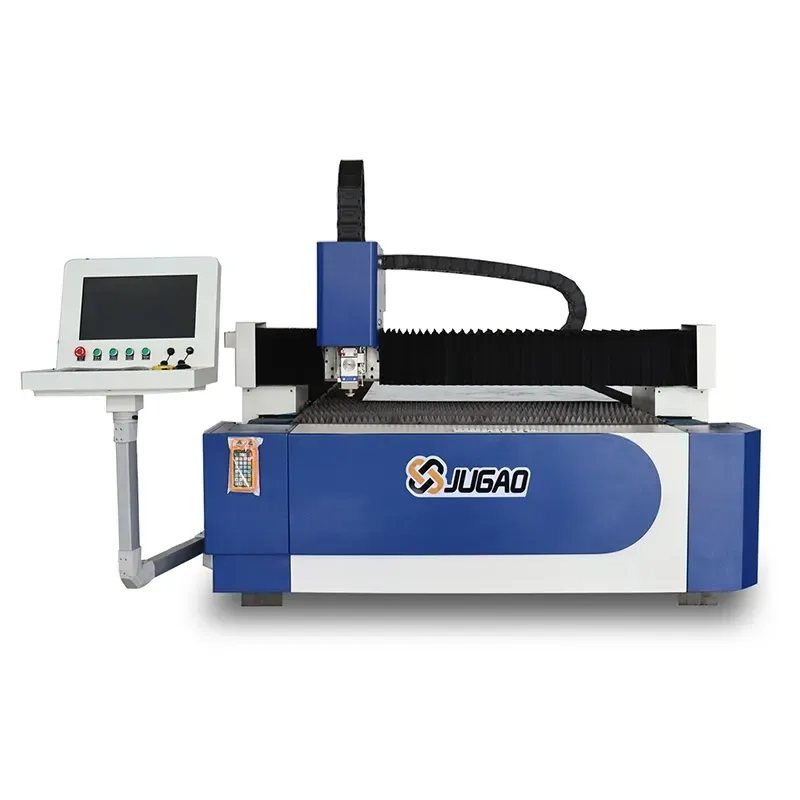
In sheet‑metal laser fabrication, smooth, burr‑free cut profiles are critical for both visual appearance and final assembly performance. Jagged edge flaws from JUGAO laser cutting will degrade finished‑part quality, raise the workload for secondary finishing, and lower raw‑material utilization ratios. This article shares actionable adjustment ideas and preventive countermeasures for equipment operators and maintenance technicians, aiming to curb jagged defects, acquire neat cutting surfaces, and guarantee stable processing results for sheet‑metal manufacturing projects.
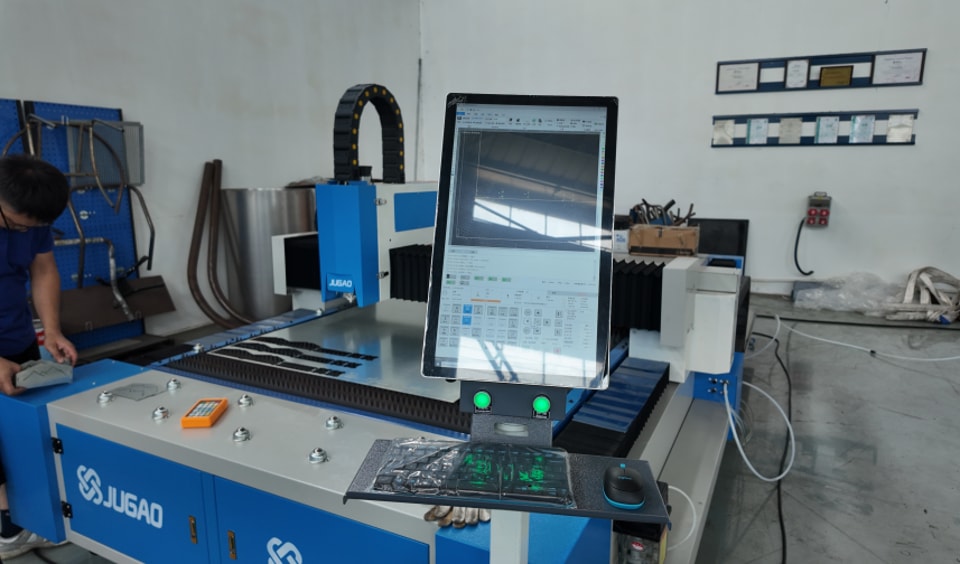
Root Causes Behind Jagged Cut Profiles on Laser‑processed Sheets
Improper Laser Parameter Configuration
Mismatched cutting feed speed, laser power output or focus offset will trigger uneven melting and gasification of metal substrates. As a consequence, ripple‑like jagged traces emerge along the cutting seam path.
Raw‑material Grade and Surface Status
Workpieces featuring elevated carbon proportion, inconsistent plate thickness or heavy surface oxidation tend to generate irregular cutting edges. Surface contaminants such as oil stains and dust residue on sheet stock will also aggravate jagged defect formation.
Deviated Optical‑component Alignment
Position offset for reflectors and focus lenses plus defocused laser beams create uneven energy distribution over the cutting zone. This phenomenon gives rise to coarse, non‑uniform cutting contours throughout processing cycles.
Unstable Auxiliary‑gas Delivery Conditions
Insufficient or fluctuating assist‑gas pressure leads to disordered solidification of molten metal. Jagged marks will appear along cutting kerfs, which severely undermines workpiece dimensional precision and surface finish.
Sequential Operational Solutions to Avoid Jagged Edges
Step 1: Fine‑tune Laser Processing Parameters
Adapt cutting velocity, power magnitude and focus position according to sheet material categories and plate thickness. Adopt parameter benchmarks suggested by JUGAO official documentation to realize steady energy input and suppress edge jagging.
Step 2: Pre‑treat Workpiece Surfaces Prior to Cutting
Make certain sheet‑metal workpieces are free of grease, dust and rust spots, with uniform thickness across the whole plate. Pre‑processing work including degreasing or light surface grinding can eliminate surface defects that contribute to jagged edges.
Step 3: Realign and Recalibrate Laser Optical Assemblies
Implement regular inspection and calibration for mirrors, focus lenses and laser beam coaxiality. Keeping correct focus status and homogeneous beam energy distribution helps deliver smoother kerfs and reduce surface roughness of cutting edges.
Step 4: Optimize Auxiliary‑gas Pressure and Flow Conditions
Confirm the assist‑gas category, pressure setting and nozzle centering status fit the given workpiece material. Stable, well‑directed gas streams efficiently blow away molten metal, effectively restraining jagged edge generation.
Step 5: Conduct Sample Cutting Tests and Parameter Iteration
Before launching mass manufacturing, run trial cutting tests on leftover scrap plates. Evaluate the surface finish of test samples and revise relevant parameters accordingly. Leverage feedback adjustment functions built inside JUGAO CNC control software to iterate process settings for repeatable processing performance.
Step 6: Carry Out Periodic Upkeep for Laser Core Parts
Complete routine cleaning work for lenses, reflectors and cutting nozzles. Inspect component wear conditions and swap out damaged spare parts on schedule, so as to sustain cutting accuracy and keep edge‑related defects under control.
Recommended Operating Norms for Premium Laser Cutting Output
Pick Qualified Sheet‑metal Raw Materials
Select metal sheets with consistent thickness and minimal surface blemishes. High‑grade base materials greatly decrease the risk of jagged defect occurrence during JUGAO laser cutting operations.
Archive Valid Process Parameter Presets
Build up complete filing records of optimized laser parameters corresponding to various material specifications. This practice guarantees consistent outputs among different production batches and cuts down repeated debugging work.
Deliver Professional Skill Training for On‑site Staff
Train machine operators to understand how laser process settings, material properties and daily maintenance influence cutting edge finish. Well‑trained personnel are capable of taking proactive measures to stay away from jagged‑edge troubles.
Frequently Asked Technical Queries
Q1: Is total elimination of jagged marks achievable in laser cutting?
Absolute zero‑defect edges are hard to accomplish in real‑world production. Nevertheless, precise control over laser parameters, workpiece pretreatment and assist‑gas conditions can minimize jagging and deliver nearly flawless cutting surfaces.
Q2: What inspection cycle should be adopted for laser optical components to prevent jagged edges?
Optical assemblies ought to be examined and cleaned every week. For production sites with heavy continuous‑duty workloads, shorten the maintenance interval to secure normal beam focus and coaxial performance.
Q3: Will material varieties exert influence on jagged‑edge generation?
Yes. Thick‑gauge plates, high‑carbon steel and heavily oxidized raw materials are more susceptible to jagged cutting traces. For these materials, targeted parameter fine‑tuning becomes essential.
Closing Summary
Avoiding jagged cutting‑edge defects plays a key role in manufacturing dimension‑accurate high‑quality workpieces and lowering secondary‑processing burden. By optimizing laser parameter groups, standardizing workpiece surface preparation, stabilizing assist‑gas supply and executing regular equipment maintenance, operators can steadily obtain clean cutting seams and lift overall factory productivity. If you require further technical guidance or troubleshooting support for JUGAO laser equipment, please reach out to our technical team to unlock the full cutting potential of your machinery.
Contact Us