
How to Test JUGAO Laser Cutting Machine Frame Rigidity
2026-07-16

Table of Contents
• The Core Value of Rigid Frame for JUGAO Laser Cutting Equipment
• Negative Impacts on Cutting Precision
• Harm to Equipment Service Life
• Restrictions on Factory Production Output
• Primary Triggers for JUGAO Laser Frame Rigidity Loss
• Improper Equipment Installation & Ground Treatment
• Permanent Structural Distortion
• Disconnected Fastening Parts & Brackets
• Over-Vibration from Internal & External Sources
• Standard Testing Procedures for JUGAO Laser Cutting Frame Rigidity
• Step 1: Calibrate the Horizontal Level of Complete Machine
• Step 2: Full Visual Detection of Welded Frame Body
• Step 3: Calibrate Straightness & Parallelism of Linear Guide Rails
• Step 4: Dynamic Vibration Test Under Normal Cutting Running State
• Step 5: Tightness Inspection of All Fasteners & Bearing Supports
• Step 6: Detect Thermal Distortion After Long-Time Continuous Processing
• Daily Preventive Maintenance Methods to Secure JUGAO Frame Rigidity
• Carry Out Cyclic Precision Calibration
• Maintain Solid Anti-Vibration Equipment Foundation
• Avoid Overloading the Machine Bed
• Form Fixed Periodic Inspection Plans
• Frequently Asked Questions
• What’s the Suggested Cycle for JUGAO Laser Frame Rigidity Testing?
• Typical Phenomena Indicating Insufficient Frame Rigidity
• Will Loose Frame Rigidity Lead to Permanent Damage of JUGAO Laser Equipment?
• Summary
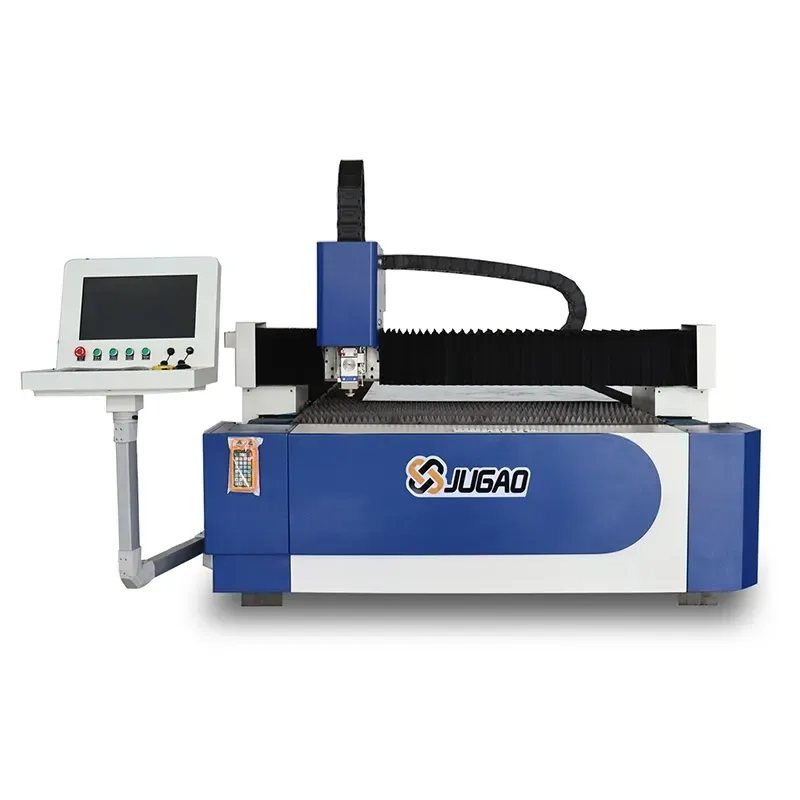
The rigid frame structure acts as the core bearing base of all JUGAO fiber laser cutting machines, which directly decides cutting precision, equipment service cycle and workshop production capacity. Once the frame loses its rigidity due to uneven ground installation, structural deformation or continuous vibration, the finished workpieces will have dimensional deviation, rough cutting sections and rapid abrasion of core transmission parts. This guide sorts out the full set of standardized frame rigidity testing processes exclusively for JUGAO laser cutting equipment, helping daily operators and maintenance staff eliminate hidden structural faults in advance, lower unexpected shutdown time and sustain stable high-precision cutting mass production.
The Core Value of Rigid Frame for JUGAO Laser Cutting Equipment
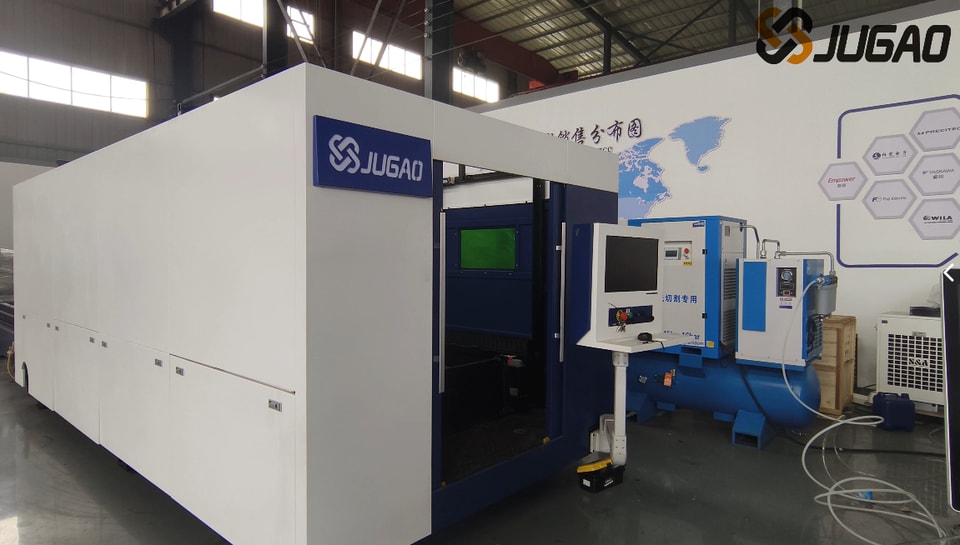
The entire moving system including gantry beams, cutting heads and linear guide rails relies entirely on a high-rigidity, distortion-resistant frame as the supporting base. Any rigidity defect will generate chain negative effects on three key production dimensions.
Negative Impacts on Cutting Precision
A frame with insufficient rigidity will create obvious vibration during high-speed cutting movement. This flaw brings inconsistent cutting edge smoothness, dimensional out-of-tolerance of finished parts and unqualified roundness of small cutting holes, raising product reject rates significantly.
Harm to Equipment Service Life
Continuous frame vibration will generate extra fatigue load on linear guides, ball screw pairs, servo motors and rotary bearings. Long-term operation under such stress will speed up aging and abrasion of core transmission components, shortening the whole machine’s service life greatly.
Restrictions on Factory Production Output
Equipment with poor frame rigidity requires repeated re-calibration and frequent fault maintenance. Frequent machine pause breaks continuous production rhythm, reduces actual daily output and raises comprehensive operating costs.
Primary Triggers for JUGAO Laser Frame Rigidity Loss
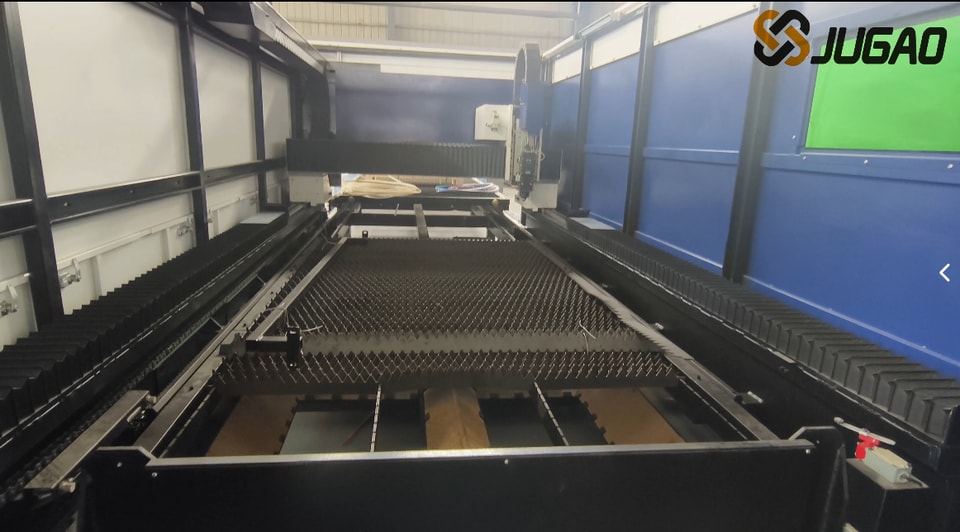
Before launching systematic testing work, maintenance personnel need to master the most common root causes of frame rigidity decline:
1. Improper Equipment Installation & Ground Treatment
If the factory ground is uneven or the machine horizontal adjustment is incomplete, the frame will bear uneven torque under the load of plate materials and gradually produce invisible torsion deformation.
2. Permanent Structural Distortion
Long-term uninterrupted heavy plate cutting operation or non-standard equipment transportation and hoisting will cause irreversible bending and distortion of the machine bed and integrated welding frame.
3. Disconnected Fastening Parts & Brackets
Loose connecting bolts, guide rail fixing bases and auxiliary support frames will form vibration gaps during operation, further weakening the overall structural rigidity of the equipment.
4. Over-Vibration from Internal & External Sources
Strong vibration transmitted from nearby punching, bending and other processing equipment, or insufficient ground anti-vibration treatment will interfere with the frame’s stable operation and damage cutting precision.
Standard Testing Procedures for JUGAO Laser Cutting Frame Rigidity
Step 1: Calibrate the Horizontal Level of Complete Machine
All frame detection work starts with horizontal calibration. Operators adopt high-precision level gauges to conduct multi-point horizontal measurement on the front, rear, left and right positions of the JUGAO frame. Uneven horizontal adjustment will form local stress concentration points and damage the overall stability of the frame.
Step 2: Full Visual Detection of Welded Frame Body
Comprehensively check the whole welding frame of JUGAO laser cutting machine to search for visible cracks, bending deformation and welding process defects. Focus inspection areas cover:
• All welding seam joints
• Right-angle connecting parts of the frame
• Heavy-load bearing support zones
Tiny cracks ignored in daily inspection will expand under long-term vibration and evolve into irreversible structural failures.
Step 3: Calibrate Straightness & Parallelism of Linear Guide Rails
Asymmetric deflection of guide rails is a typical signal of hidden frame distortion. Operators can use laser calibrators or dial indicators to test the straightness of single guide rail and parallelism between two groups of guide rails, to judge whether the frame has internal torsion deformation.
Step 4: Dynamic Vibration Test Under Normal Cutting Running State
Start the JUGAO laser cutting machine and run it under standard production speed, then observe the vibration amplitude of the frame in real time. Obvious abnormal vibration usually comes from three hidden troubles: loose frame connecting parts, unstable ground foundation or insufficient overall structural rigidity. Meanwhile, abnormal friction and impact noise during beam movement is also an early warning signal of rigidity loss.
Step 5: Tightness Inspection of All Fasteners & Bearing Supports
Carry out full inspection on machine foot supports, mounting bolts and all structural connecting fasteners. Any loose connecting gap will weaken the integrated bearing capacity of the frame, so all fasteners need to be locked to the standard torque value specified by JUGAO.
Step 6: Detect Thermal Distortion After Long-Time Continuous Processing
High-power JUGAO laser cutting equipment will accumulate massive heat after several hours of continuous cutting. Maintenance staff should check whether thermal expansion leads to local frame distortion, which will cause positioning deviation of the cutting head.
Daily Preventive Maintenance Methods to Secure JUGAO Frame Rigidity
1. Carry Out Cyclic Precision Calibration
Set fixed cycles to calibrate guide rail parallelism and machine positioning accuracy, offset tiny deformation accumulated from long-term operation.
2. Maintain Solid Anti-Vibration Equipment Foundation
Install the whole machine on a thickened concrete anti-vibration base, isolate external vibration interference from surrounding workshop equipment.
3. Avoid Overloading the Machine Bed
Do not place raw plates exceeding the maximum bearing load marked on the JUGAO machine bed, to prevent permanent bending deformation of the frame from overweight pressure.
4. Form Fixed Periodic Inspection Plans
Arrange regular frame rigidity detection to capture minor structural faults at an early stage, avoiding unplanned production shutdown caused by sudden frame failure.
Frequently Asked Questions
What’s the Suggested Cycle for JUGAO Laser Frame Rigidity Testing?
We recommend implementing a simple surface inspection every month for daily maintenance; a complete comprehensive structural rigidity detection shall be conducted every six months by professional maintenance engineers.
Typical Phenomena Indicating Insufficient Frame Rigidity
The most intuitive abnormal manifestations include violent frame vibration during cutting, continuous dimensional deviation of finished workpieces, unusual mechanical noise during beam movement and inconsistent smoothness of cutting surfaces.
Will Loose Frame Rigidity Lead to Permanent Damage of JUGAO Laser Equipment?
Absolutely yes. Long-term operation under insufficient frame rigidity will accelerate the wear of guide rails, servo motors, bearings and transmission screw components, bringing expensive replacement and maintenance costs.
Summary
Stable frame rigidity is the basic guarantee for JUGAO laser cutting equipment to maintain ultra-high cutting precision, extend service life and lift workshop production efficiency. Operators can effectively avoid major structural failures that interrupt production by regular horizontal calibration, welding seam inspection, dynamic vibration monitoring and guide rail correction.
A high-rigidity complete machine frame enables stable, smooth running and consistent cutting quality for all cutting tasks. If your factory needs professional JUGAO laser cutting equipment maintenance or frame rigidity testing technical support, you can contact our after-sales technical team at any time. We provide full-process technical guidance to keep your JUGAO laser equipment running at optimal working status all year round.
Contact Us