
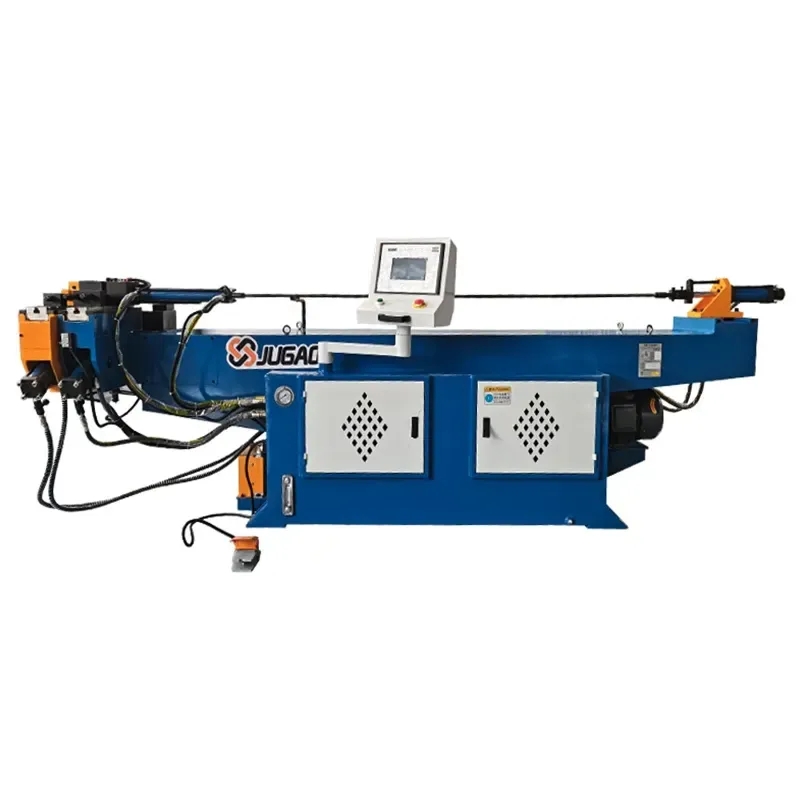
How to optimize the control settings of a pipe bending machine?
2026-08-27

I've seen too many examples of problems with pipe bending machine control settings—the equipment is bought, the parameters are set once, and then never touched again. The resulting pipes are inconsistent in quality, leading people to believe it's a machine issue. In reality, in many cases, simply adjusting the parameters correctly can significantly improve accuracy and stability.
I. Accurate Basic Parameters
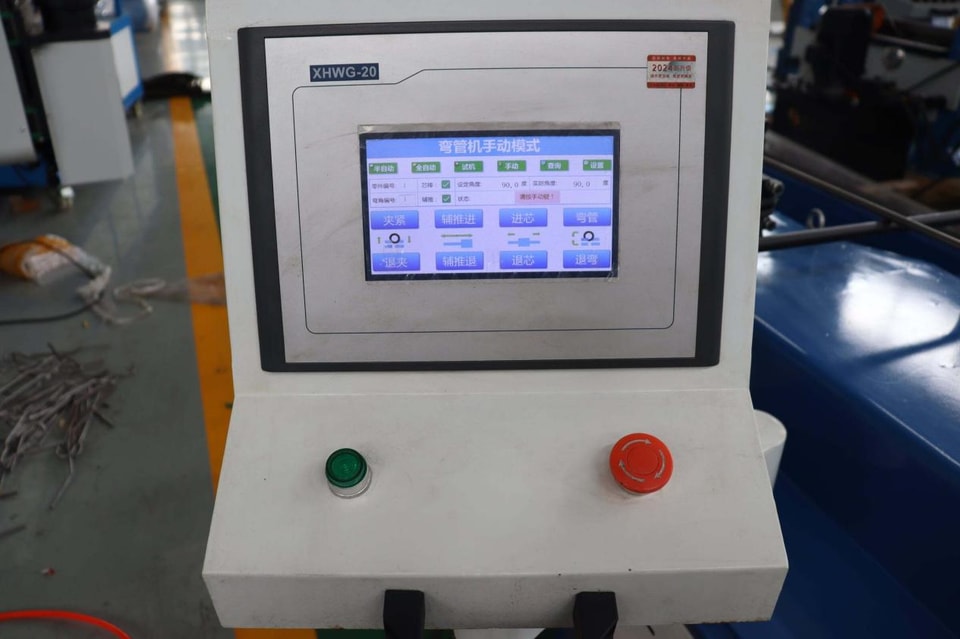
Core material bending parameters are the foundation of all settings. Pipe diameter, wall thickness, bending radius, and material type—these four values directly affect springback compensation and bending force calculation. If these are entered incorrectly, subsequent adjustments are useless.
Special attention is needed when changing materials. Carbon steel and stainless steel have significantly different springback values, and aluminum and copper have different properties. Don't expect a single set of parameters to work for all materials.
II. Feed Length and Rotation Control
The dimensional accuracy of multi-bend pipe fittings largely depends on the accuracy of the feed length and rotation angle. If the encoder feedback is inaccurate, or the servo system's resolution is insufficient, the error might not be noticeable on the first bend, but will accumulate and become apparent on the third or fourth bend.
Feed speed and acceleration/deceleration curves also deserve careful tuning. Too fast a speed will cause the pipe to slip; too slow a speed will result in low efficiency. Finding a balance point is crucial for smooth system operation.
III. Bending speed is not always better the faster it is.
Too fast a speed means the material doesn't have enough time to deform evenly, potentially leading to wrinkling or cross-sectional deformation. Too slow a speed, while ensuring stable quality, will result in low production output.
I generally start with a lower speed for trial bending, gradually increasing it until a critical point where quality issues arise. Then, I reduce the speed slightly as a safety margin. The acceleration curve is equally important—a smooth entry into the bending motion is completely different from a sudden start; the latter places a much greater impact on the die.
IV. Angle calibration and springback compensation
Angle calibration is necessary after each material or pipe diameter change. Bend a sample, measure the actual angle with an angle gauge, and then adjust the springback compensation value in the control system until the actual angle matches the set angle.
This work cannot be estimated based on experience. The springback amount may vary between different batches of material. Actual measurement after each material change is far more reliable than guesswork based on experience.
V. Multi-Axis Synchronization
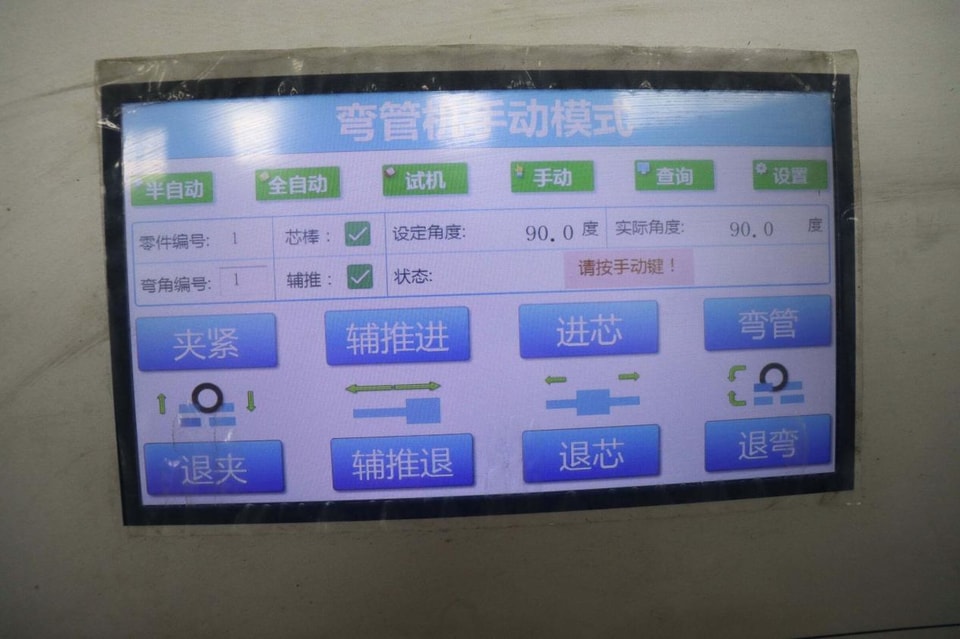
For complex pipe fittings requiring multiple bending and rotations, the coordination of each axis's movements is crucial. If the bending axis is moving before the rotation axis is in position, or if the acceleration/deceleration curve of the feeding axis doesn't match other axes, the bent pipe may have scratches or dimensional deviations.
Check if the response time of each axis is consistent and if the control signals are coordinated correctly.
VI. Troubleshooting Common Problems
Inconsistent Angles: First, check if the springback compensation value is accurate and if the material parameters are correct. Recalibrate the angle if necessary.
Intermittent Alarms: This may be related to excessively high acceleration settings or improper parameter limits. Try reducing the movement speed appropriately.
Poor Repeatability: Check encoder feedback and mechanical backlash. Feed length drift or rotational misalignment can cause this problem.
VII. Several Habits for Maintaining Stable Settings
Every time you change materials or molds, review the key parameters. Don't wait until problems arise to remember. Back up verified parameters for quick recovery after system resets or software updates.
Investing in operator training is worthwhile. If the operator understands the meaning of the parameters and the adjustment logic, they can handle minor problems on-site themselves.
Ultimately, control settings aren't something you set up once and be done with. They require continuous fine-tuning based on actual conditions. Once the parameters are adjusted correctly, the bent pipes will have accurate angles, stable dimensions, and good surfaces, naturally reducing the scrap rate.
Contact Us