
How to Maintain Laser Cutting Machine Cooling System
2026-07-18

Table of Contents
• The Significance of Cooling System Maintenance for JUGAO Laser Cutting Equipment
• Step-by-Step Cooling System Maintenance Procedures for Laser Cutters
○ Step 1: Daily Inspection of Coolant Liquid Level & Fluid Condition
○ Step 2: Regularly Clean Water Chiller Filter Elements & Heat Radiator
○ Step 3: Real-Time Water Temperature Observation & Standard Parameter Setup
○ Step 4: Full Inspection of Water Pipelines & Joint Points for Water Leakage
○ Step 5: Timely Periodic Coolant Replacement & Pipeline Flushing
○ Step 6: Routine Maintenance of the Whole Water Chiller Host
• Typical Cooling System Faults & Corresponding Troubleshooting Methods
○ Insufficient Cooling Capacity
○ Unstable Water Temperature Fluctuation
○ Water Circuit Circulation Blockage
• Frequently Asked Questions
○ What is the reasonable maintenance cycle for laser cutter cooling systems?
○ Is tap water applicable to the laser cooling circulation system?
○ What hazards will be caused by cooling system breakdown?
○ What signs indicate that coolant needs to be renewed?
• Final Summary
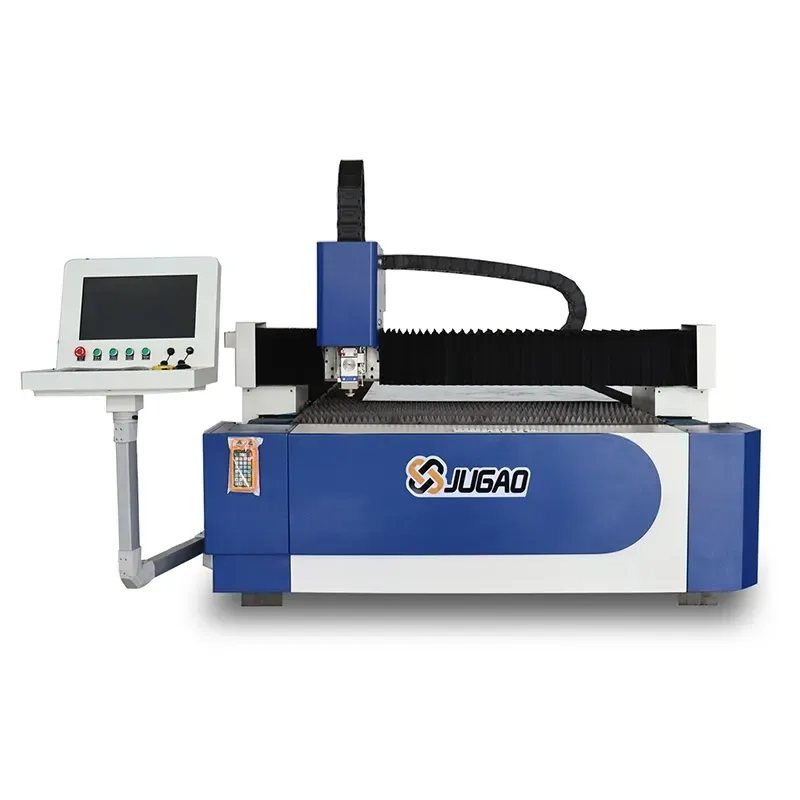
When communicating with our factory customers about stable operation and long service life of laser cutting machines, the cooling circulation system is always a core topic we focus on. If you are looking for complete, operable maintenance guidelines for the cooling unit of your laser cutter, this article is your ideal reference. Systematic and standardized cooling system maintenance can guarantee consistent laser output stability, effectively prevent equipment overheating faults, and prolong the service life of core parts including laser generators and optical lens groups. This manual will share daily inspection habits, standardized operation steps and common fault elimination skills, helping your JUGAO laser cutting machine maintain optimal running status and greatly cut unexpected production stop time.
The Significance of Cooling System Maintenance for JUGAO Laser Cutting Equipment
The cooling circulation unit undertakes the core heat dissipation task of laser cutting equipment. Whether fiber laser cutting machines or CO₂ laser equipment with high power configuration, massive heat will be generated during cutting processing. Once the heat cannot be discharged efficiently, it will directly result in uneven cutting effect, weakened laser energy output, and even irreversible burnout of the laser light source.
Adhering to standardized cooling system maintenance can bring these core benefits:
1. Keep cutting dimensional accuracy and smooth cutting edge effect consistently
2. Extend the service cycle of laser generator core components
3. Reduce equipment failure frequency and later maintenance cost
Neglecting daily cooling system maintenance is the top cause of sudden production shutdowns for most processing factories.
Step-by-Step Cooling System Maintenance Procedures for Laser Cutters
Step 1: Daily Inspection of Coolant Liquid Level & Fluid Condition
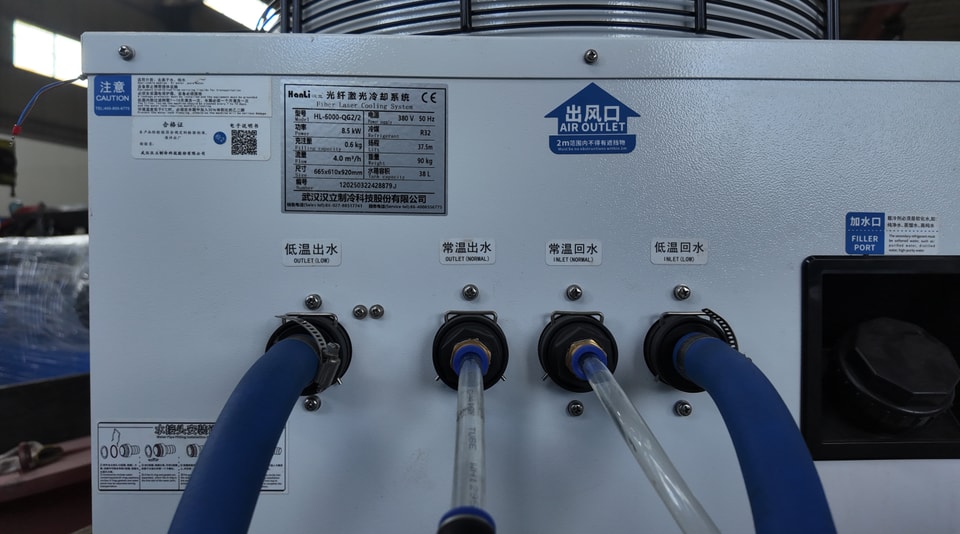
All maintenance work starts with basic coolant inspection, as clean and sufficient cooling fluid is the premise of stable temperature control.
First, check the liquid level observation window of the water chiller to confirm the coolant height stays within the standard scale range. Too little coolant will trigger overheating protection; overfilled fluid will slow down internal circulation speed and lower heat dissipation efficiency. Meanwhile, observe the transparency of the cooling liquid. If the liquid turns turbid, discolored or suspended with sediment impurities, the coolant must be replaced immediately.
To avoid mineral scale adhering to the inner wall of water pipes and radiators, we strongly recommend using distilled water or deionized water as cooling medium for long-term use.
Step 2: Regularly Clean Water Chiller Filter Elements & Heat Radiator
Blocked filter cores will drastically lower the overall heat dissipation efficiency of the laser cooling system. For workshops filled with metal dust and cutting smoke, filter inspection should be arranged every week.
Take out the filter cartridge according to the chiller operation manual, and clean dust and metal debris with compressed air jet or clean water (follow the official operation specification of JUGAO). While cleaning the filter, check the surface of the heat exchanger radiator for accumulated dust. Thick dust layers will block air convection channels and weaken heat exchange capacity, so radiator surface cleaning is an indispensable operation.
Step 3: Real-Time Water Temperature Observation & Standard Parameter Setup
Accurate temperature control directly determines laser running stability. Operators need to check the real-time temperature data displayed on the chiller panel frequently to ensure the temperature matches the parameter requirements of the matched laser equipment.
In general, the circulating water temperature needs to keep steady in a fixed narrow interval (most JUGAO laser equipment requires 20–25°C, subject to machine configuration). Excessively large temperature swings will interfere with laser beam stability and lead to dimensional deviation of cutting workpieces. Modern chillers support custom parameter modification; users should set reasonable high-temperature and low-temperature alarm thresholds to realize automatic early warning of overheating risks.
Step 4: Full Inspection of Water Pipelines & Joint Points for Water Leakage
Tiny water leakage points are easy to ignore in daily production, yet they will trigger a series of subsequent failures. Operators need to carry out comprehensive inspection on all circulating water hoses, pipe joints and quick connectors regularly.
Even micro water seepage will cause system pressure drop and insufficient cooling circulation flow. If water stains, metal corrosion or loose connecting buckles are found on pipeline surfaces, handle them without delay: fasten loose joints or replace aging rubber water pipes to avoid small faults evolving into major shutdown accidents.
Step 5: Timely Periodic Coolant Replacement & Pipeline Flushing
Coolant will gradually lose its purification and anti-corrosion performance after long-term circulation. Impurities, microorganisms and algae will breed inside the water circuit over time.
Based on equipment load and workshop environment, JUGAO suggests full coolant replacement every 3 to 6 months. During the replacement process, complete the whole pipeline flushing operation to wash away scale and sediment attached to the inner wall of the water tank and pipelines, which is the key measure to keep the circulation system smooth and efficient.
Step 6: Routine Maintenance of the Whole Water Chiller Host
The water chiller is the core power component of the entire cooling system, which requires independent regular inspection and maintenance.
Check the running state of the compressor, cooling fan and internal wiring terminals of the chiller in turn. Confirm no abnormal buzzing vibration or harsh noise during operation. Regular preventive maintenance for the chiller host can greatly reduce the probability of sudden system failure during peak production periods.
Typical Cooling System Faults & Corresponding Troubleshooting Methods
Insufficient Cooling Capacity
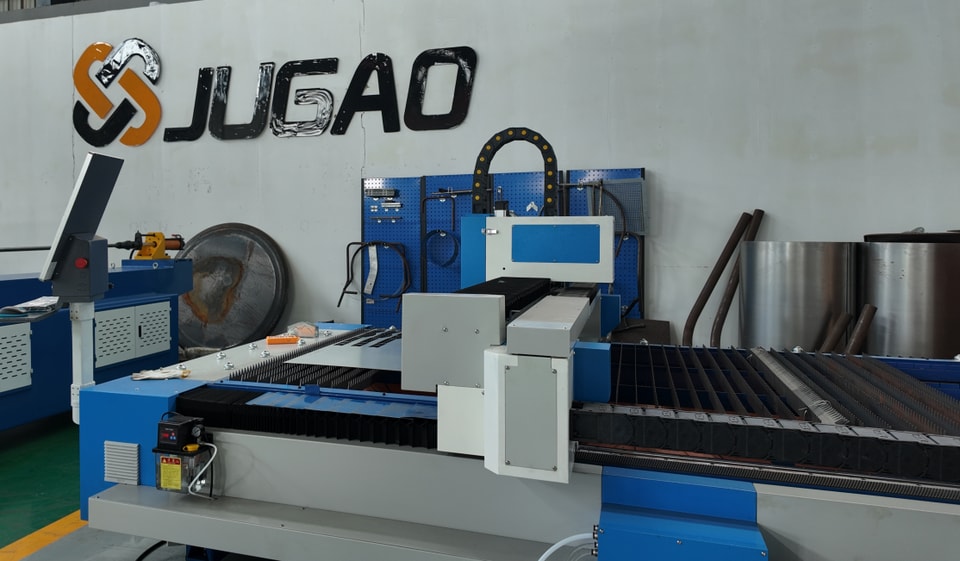
Phenomenon: The machine frequently alarms for overheating, and the cutting finish is unstable.
Priority inspection directions: Air circulation condition and coolant quality. Dirty filter elements or insufficient coolant volume are the most common inducing factors.
Root causes:
1. Blocked filter cartridges or dust-covered heat radiators
2. Coolant liquid level below the standard range
3. Poor ventilation around the chiller host
Solutions:
1. Clean or replace filter elements and thoroughly wipe the radiator surface
2. Refill coolant to the designated liquid level with standard distilled water
3. Reserve enough ventilation space around the chiller and remove surrounding obstacles
Unstable Water Temperature Fluctuation
Phenomenon: The chiller temperature value jumps up and down repeatedly, and laser output power fluctuates abnormally.
Root causes:
1. Improper temperature parameter setting on the control panel
2. Internal failure of the chiller compressor
3. Temperature sensing probe aging or signal deviation
Solutions:
1. Reset and calibrate the standard temperature parameters according to equipment specifications
2. Disconnect power supply to inspect and repair the faulty chiller host
3. Test or replace the damaged temperature sensor probe
Water Circuit Circulation Blockage
Phenomenon: Circulating water flow decreases obviously, and the temperature rises rapidly in a short time.
Root causes:
1. Filter elements blocked by metal dust
2. Mineral scale and debris accumulation inside water pipelines
Solutions:
1. Carry out full flushing treatment for the whole cooling water circuit
2. Clean or replace the clogged filter core
3. Remove scale and impurity residues inside the water tank and pipelines
Frequently Asked Questions
What is the reasonable maintenance cycle for laser cutter cooling systems?
Daily basic inspection items include coolant liquid level and real-time water temperature. Deep maintenance work such as filter cleaning and coolant replacement can be arranged monthly or quarterly, adjusted according to daily equipment working hours and workshop dust concentration.
Is tap water applicable to the laser cooling circulation system?
We do not recommend tap water for long-term use. Tap water contains massive mineral substances, which will form hard scale on the inner wall of pipelines and radiators, causing pipeline blockage in the long run. Distilled water or deionized water is the standard cooling medium for JUGAO laser cutting equipment.
What hazards will be caused by cooling system breakdown?
Once the cooling system stops working normally, the laser source will continuously accumulate heat, leading to weakened cutting power, serious lens burning, and even permanent scrapping of the laser generator. In case of cooling failure, the equipment must be shut down immediately for overall inspection before restarting production.
What signs indicate that coolant needs to be renewed?
When the cooling liquid turns turbid, emits peculiar odor, or has visible suspended particles and sediment at the bottom of the water tank, it means the coolant has failed and needs to be drained and replaced with new liquid. Regular renewal can effectively avoid pipeline contamination and blockage faults.
Final Summary
Cooling system maintenance for JUGAO laser cutting machines does not involve complicated operations, but stable and effective maintenance relies on regular inspection and careful operation. By checking coolant status daily, cleaning filter components regularly, monitoring temperature data in real time and maintaining the chiller host periodically, you can keep the laser cutting equipment running stably all year round and avoid high-cost loss caused by sudden shutdowns.
If you want your JUGAO laser cutter to maintain high-precision, stable cutting performance for a long time, never ignore the maintenance work of the supporting cooling system. If you need professional after-sales technical support or customized equipment operation schemes, you can contact the JUGAO technical service team at any time; we will provide targeted optimization suggestions for your production line.
Contact Us