
Detailed Description of Plate Rolling Machine Performance
2026-09-01

I. Working Principle of Plate Rolling Machine
Widely applicable to industries such as petrochemicals, shipbuilding, pressure vessels, and machinery manufacturing.
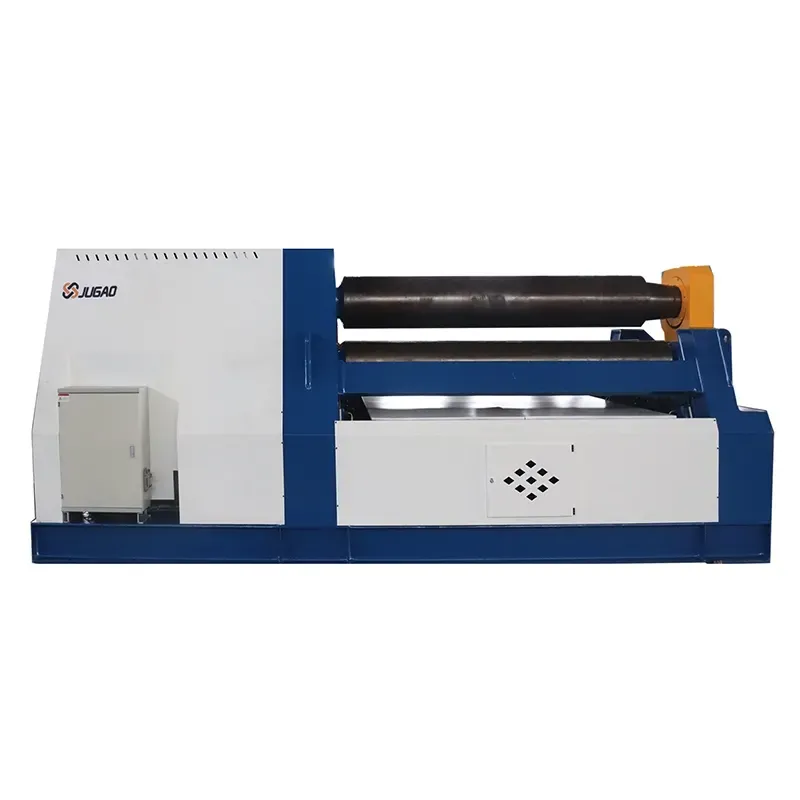
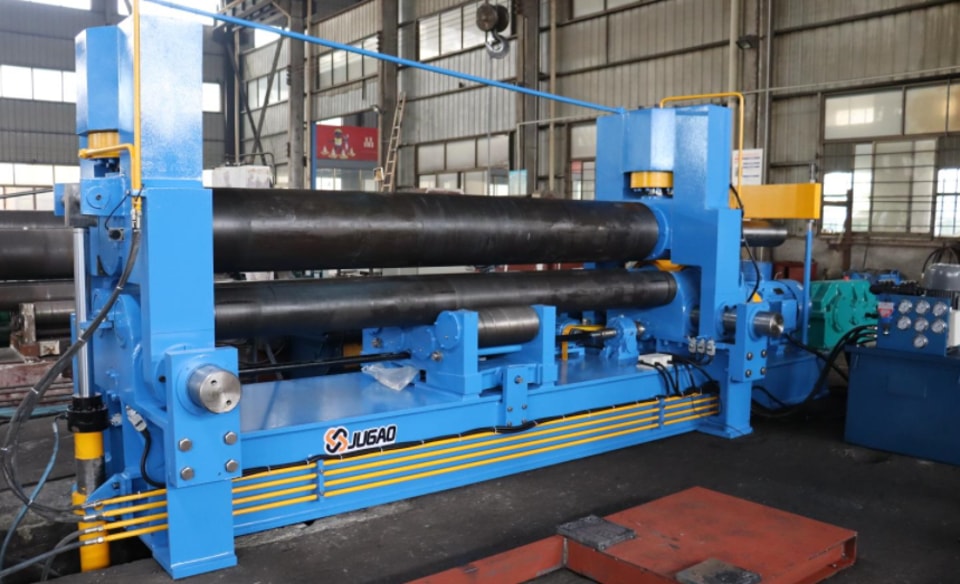
The upper roller of the plate rolling machine is symmetrically positioned between the two lower rollers. Hydraulic oil in a hydraulic cylinder acts on a piston, causing vertical lifting and lowering motion. The final gear of the main reducer drives the meshing gears of the two lower rollers to rotate, providing torque for rolling the plate. Through the downward pressure of the upper roller and the rotation of the lower rollers, the metal plate undergoes multiple continuous bending passes, producing a strong plastic deformation, rolling it into the desired cylinder, cone, or part thereof. A disadvantage of this hydraulic three-roll plate rolling machine is that the ends of the plate need to be pre-bent using other equipment.
II. Troubleshooting Plate Rolling Machine
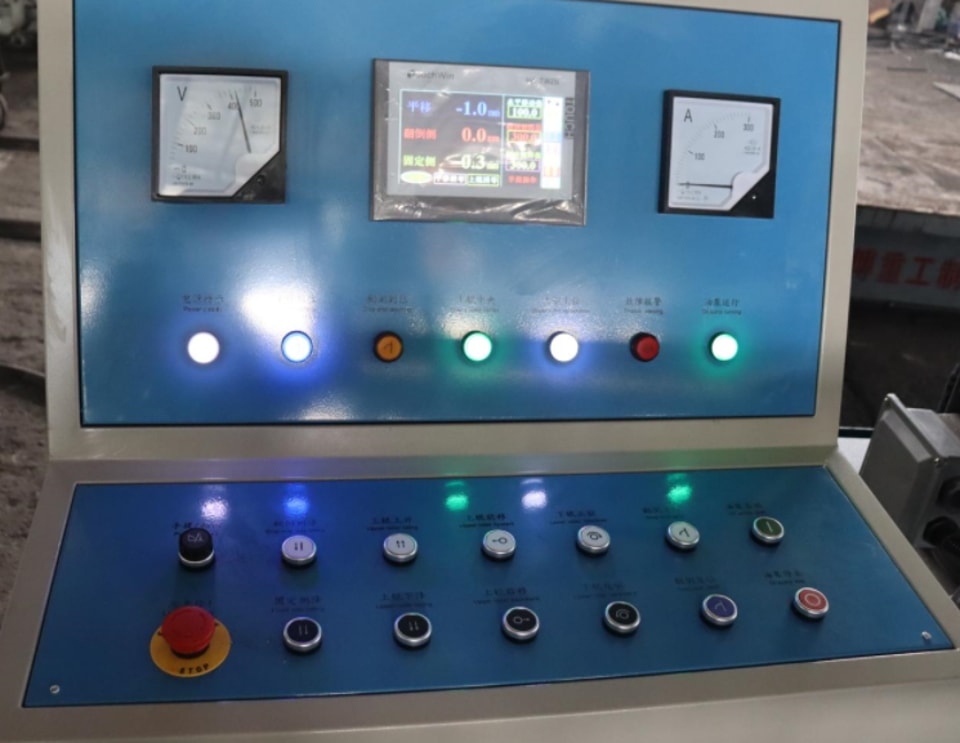
1. Interface Signal Check: By checking the interface signals of the machine tool control system using a programmable plate rolling machine controller and comparing them with the correct signals in the interface manual, the corresponding fault points can be identified. 2. Instrument Measurement: When a plate rolling machine system malfunctions, conventional electrical testing instruments and tools are used to measure the voltage, power supply, and pulse signals of the faulty part according to the system circuit diagram and machine tool circuit diagram to determine the location of the fault. If the power input voltage exceeds the limit, a voltmeter can be used to measure the network voltage, or a voltage tester can be used for real-time monitoring to rule out other causes. If a fault occurs in the plate rolling machine's position control loop, an oscilloscope can be used.
3. PLC Interrupt Status Analysis: When a programmable logic controller (PLC) malfunctions, the interrupt cause is stored in the interrupt stack. Using a plate rolling machine programmer, the interrupt stack and block stack can be retrieved when the system is stopped, and the fault location can be identified according to the indicated cause.
III. Effective Means to Improve the Sealing Performance of Plate Rolling Machines
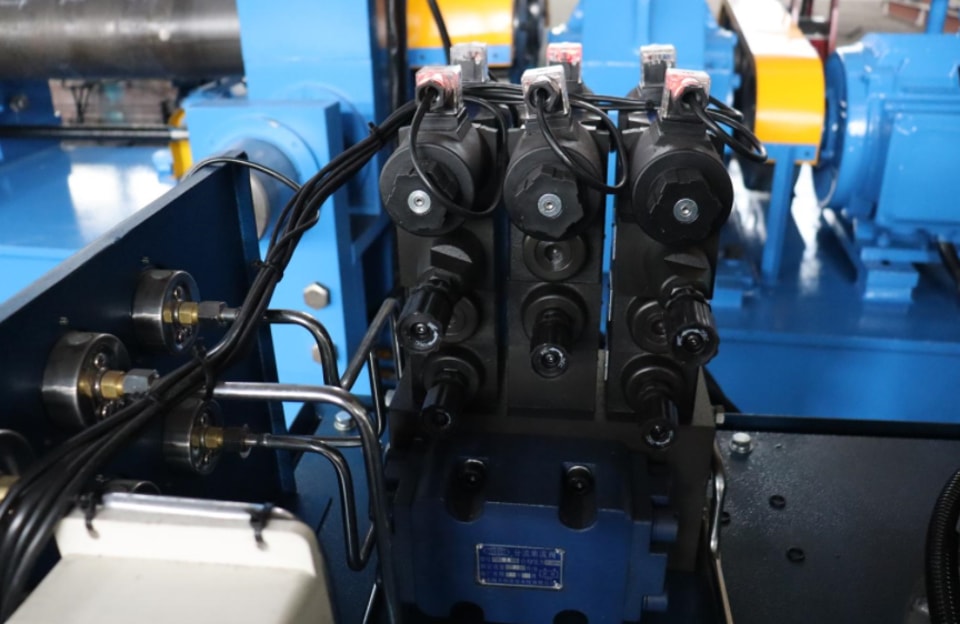
Regardless of the size of the enterprise or factory using plate rolling machines, such equipment must be equipped with sealing devices to prevent leakage and dust ingress during processing. In the hydraulic system of a plate rolling machine, the sealing components, or seals, are used to prevent fluid or solid particles from leaking between adjacent mating surfaces and to prevent external impurities such as dust and moisture from entering the machine's internal components. Leakage of seals in the hydraulic system of a plate rolling machine will waste the working medium, pollute the machine and the environment, and may even cause mechanical malfunctions and personal injury accidents.
The reliability and service life of the seals in the hydraulic system of a plate rolling machine are important indicators of the quality of the hydraulic system.
Except for gap seals, seals are used to control the gap between two adjacent mating surfaces to below the minimum gap that the sealed fluid can pass through. In contact seals, plate rolling machine hydraulic system seals are generally divided into self-sealing compression seals and self-sealing self-tightening seals (also known as lip seals). However, the performance of various seals in a plate rolling machine hydraulic system is affected by different factors. For example, the seals in a three-roll plate rolling machine are also affected by temperature, pressure, and the medium present.
IV. Transmission Performance of Plate Rolling Machines
When a speed reducer is used in the transmission equipment of a plate rolling machine, it reduces the high-speed power of the electric motor by meshing a smaller gear on the input shaft with a larger gear on the output shaft.
The speed reducer of a plate rolling machine is a power transmission mechanism that uses a gear speed converter to reduce the motor's rotational speed to the desired rotational speed while obtaining a larger torque.
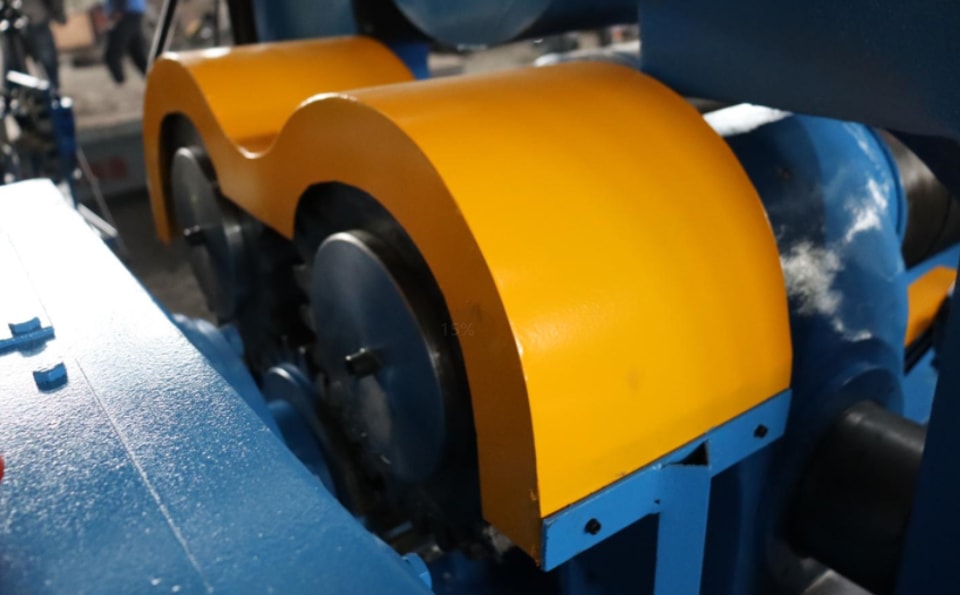
The speed reducer of a plate rolling machine increases the output torque while reducing speed. The torque output ratio is the motor output multiplied by the reduction ratio, but care must be taken not to exceed the speed reducer's rated torque. Simultaneously, the load's inertia is reduced; the reduction in inertia is equal to the square of the reduction ratio.
Contact Us