
Core Structure and Working Mechanism of Profile Bending Machines
2026-07-17

Profile bending machines are crucial equipment in the field of metal plastic processing, designed to meet the forming needs of irregularly shaped profiles. They solve the pain point of traditional plate rolling and bending equipment being unable to adapt to the processing of non-plate profiles. They are widely used in construction, industrial manufacturing, and repair processing, and their technological iterations have consistently focused on three core directions: adaptability, precision, and efficiency.
Basic Attributes and Types of Profile Bending Machines:
1. Industry Positioning and Core Value
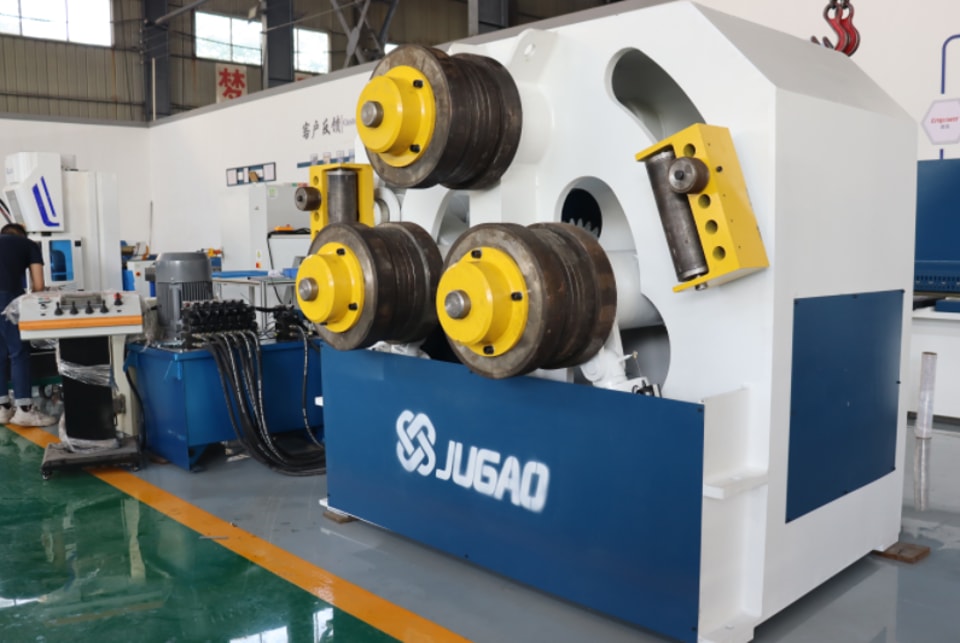
Belonging to specialized forming equipment, their core function is to achieve the arc and irregular shape forming of various cross-section profiles such as angle steel, channel steel, I-beams, square and rectangular tubes, irregular tubes, aluminum profiles, and stainless steel profiles. They support both cold bending processes and hot bending requirements, capable of completing single arc rolling operations as well as complex irregular shape forming with multi-angle and multi-curvature combinations. They are one of the core equipment for processing irregular metal components.
2. Functional Boundaries and Applicable Scope
The equipment's functional boundaries cover the entire process from rough machining to precision forming. In addition to basic bending functions, it can be equipped with auxiliary functions such as leveling, shearing, and punching to achieve one-step forming. It is suitable for the high-efficiency needs of standardized mass production in factories, as well as meeting the non-standard needs of small-batch customization and single-piece processing. Applicable materials include most malleable metals such as carbon steel, stainless steel, aluminum alloy, and copper alloy.
3. Mainstream Type Classification Dimensions
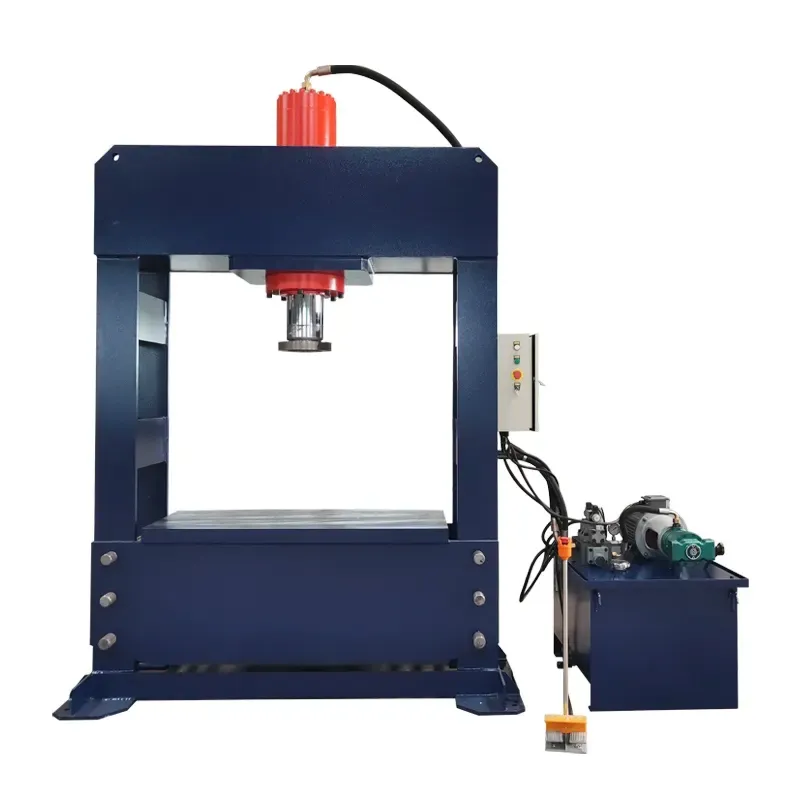
Currently, mainstream bending machines on the market can be classified into three dimensions: by drive method (mechanical drive, hydraulic drive, servo CNC); by deployment form (fixed production line supporting type, mobile on-site operation type); and by forming process (roll bending, pressure bending, tension bending). Different types correspond to different processing scenarios, precision requirements, and cost budgets.
4. Differences from Similar Equipment
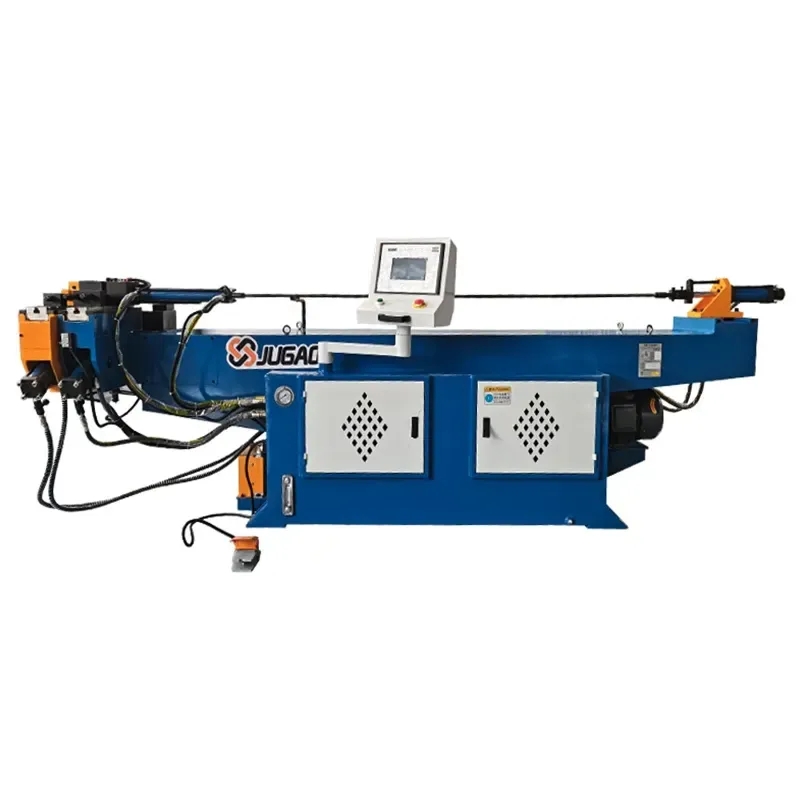
Compared to plate rolling machines, which are only suitable for forming flat materials and cannot handle profiles with closed cavities or open flanges; compared to ordinary bending machines, which can only achieve straight-line angle forming and cannot complete continuous arc bending; and compared to pipe bending machines, which are only suitable for hollow pipes and cannot handle solid profiles or irregularly shaped open profiles, the adaptability range is far greater than that of similar equipment.
Core Structure and Working Mechanism:
1. Power Transmission System
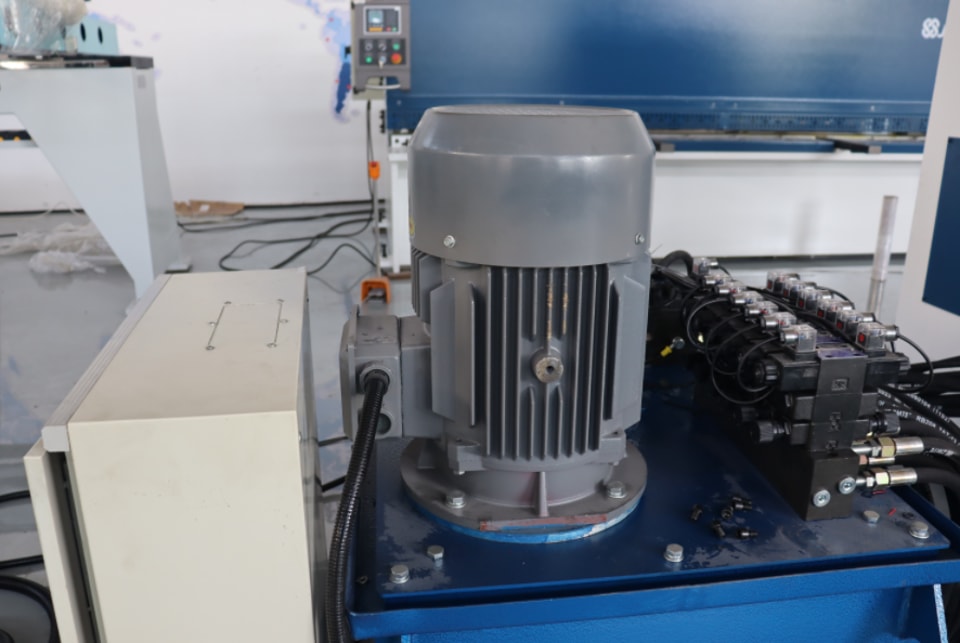
As the core of the machine's power output, different types of power transmission systems are adapted to different application scenarios: Mechanical drive systems transmit power through a motor-driven reducer and rack and pinion structure, resulting in a compact structure and low maintenance costs, suitable for processing light and medium-sized profiles; hydraulic drive systems drive cylinders with stable pressure output from a hydraulic pump station, offering strong overload resistance and stable output force, suitable for processing thick-walled, high-hardness profiles; servo CNC systems directly drive the actuator through a high-response servo motor, offering higher control precision and lower energy consumption, suitable for high-precision processing scenarios.
2. Profile Clamping and Feeding Mechanism
This mechanism is responsible for the precise positioning, secure clamping, and on-demand feeding of the profile. It is typically equipped with adjustable-spacing clamping modules to accommodate profiles with different flange widths and cross-sectional heights. Some models also feature anti-slip rollers, positioning baffles, and angle feedback devices to prevent slippage and displacement during processing, ensuring the stability of the bending dimensions from the clamping perspective.
3. Bending Actuation Mechanism
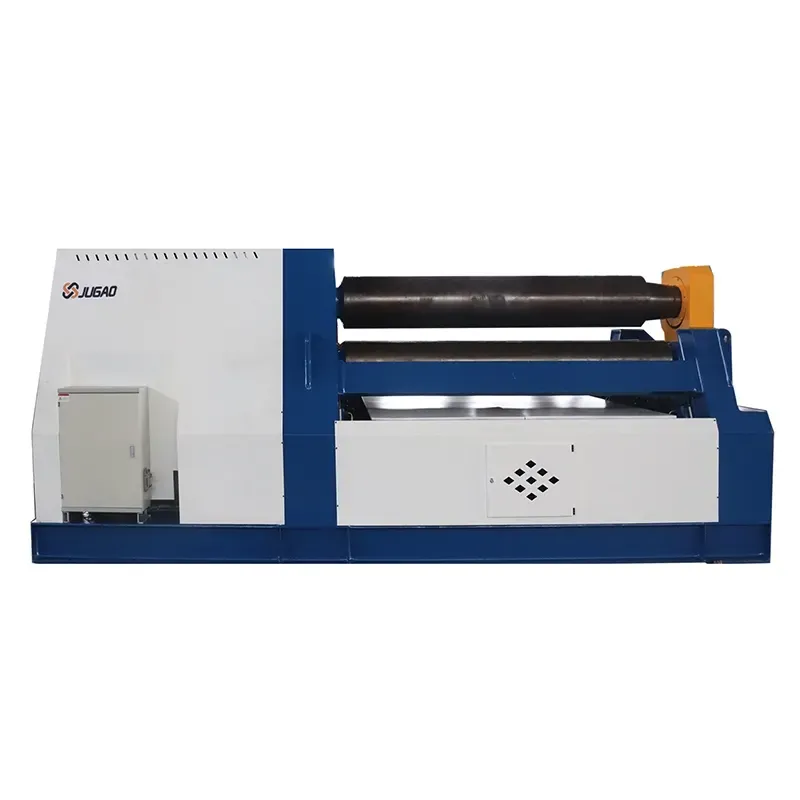
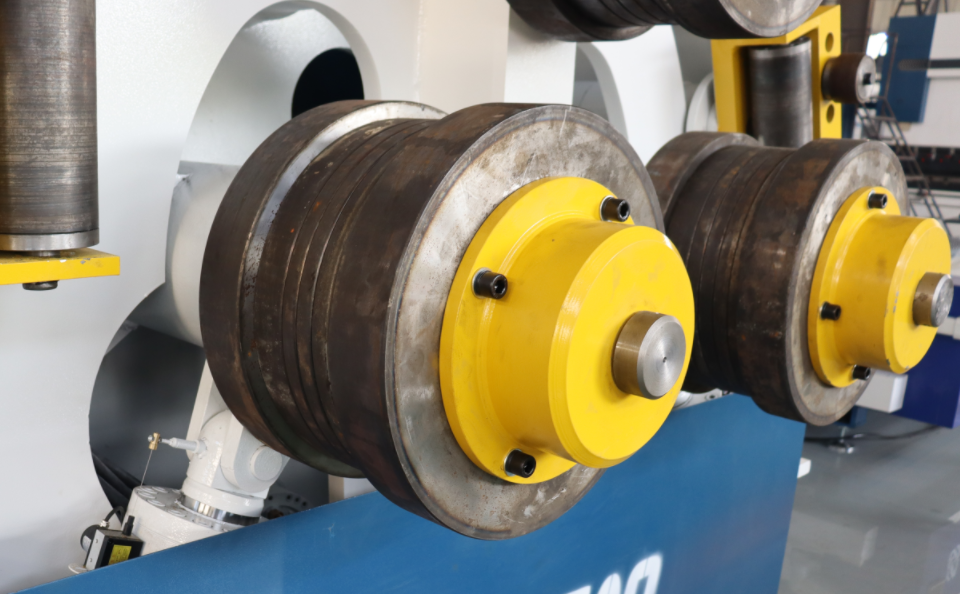
This is the core component that directly achieves profile forming. Different types are suitable for different forming requirements: Roll bending uses multiple sets of adjustable-angle rollers, which rotate to gradually bend the profile, resulting in uniform deformation, suitable for large-radius arc forming; Press bending uses the closing action of upper and lower molds to compress the profile, achieving high forming precision, suitable for small-radius, high-precision angle/arc forming; Pull bending applies tension to both ends of the clamped profile while simultaneously bending with a pressure head, avoiding inner wrinkles that occur when bending long profiles, suitable for forming long components with large curvatures.
4. Auxiliary Supporting Systems
These systems include two categories: safety protection modules and process support modules. Safety protection modules typically feature overload protection, emergency braking, and anti-pinch hand guards to prevent operational accidents from a hardware perspective. Process support modules, depending on functional requirements, include hot bending temperature control devices, profile surface anti-scratch pads, and waste material discharge mechanisms to adapt to specific process needs and improve the yield of finished products.
Profile Bending Machine Process Adaptation and Operating Logic:
1. Process Adaptation for Different Profile Materials
For ductile metal profiles such as carbon steel and stainless steel, cold bending can be achieved by adjusting the bending speed and clamping force, eliminating the need for additional heating and increasing efficiency. For highly ductile materials such as aluminum alloys and copper alloys, the bending rate must be controlled to prevent surface tensile cracks. For high-hardness alloy steel and thick-walled profiles, preheating or hot bending processes are usually required to reduce material deformation resistance and prevent forming cracks.
2. Key Control Points for Bending Forming
Before processing, the profile needs to be pre-treated to remove burrs and surface oil, preventing slippage or surface damage during clamping. During bending, the bending rate must be matched to the profile material and cross-sectional specifications; too fast a rate can lead to material cracking, while too slow a rate will reduce production efficiency. For multi-segment bending workpieces, it is crucial to control the positioning accuracy of each segment to ensure proper fit during subsequent assembly.
3. Methods to Avoid Common Forming Defects
If cracks appear on the outer side of the profile, it is usually because the bending deformation exceeds the material's elongation limit. This can be resolved by adjusting the bending radius, reducing the bending rate, and appropriate preheating. If wrinkles appear on the inner side, it is often due to excessive compressive stress during bending. This can be improved by adjusting the die gap and increasing the drawing force. If springback causes deviations in the forming angle, this can be corrected by setting a compensation angle and increasing the holding time.
4. Advanced Logic of Digital Operation
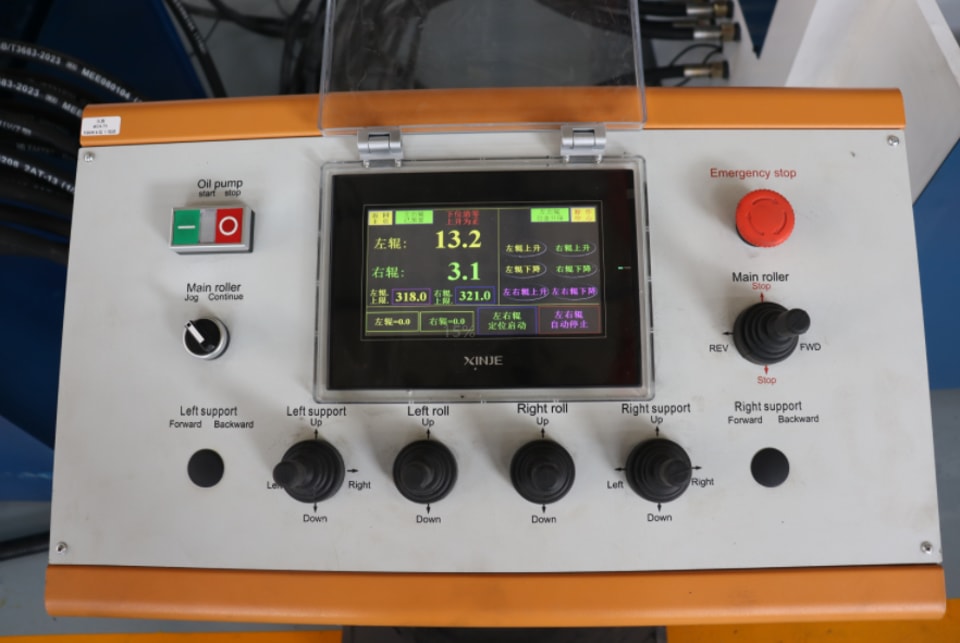
CNC machines can automatically match the corresponding bending process path by pre-entering profile cross-section parameters, material properties, and forming drawings, eliminating the need for repeated manual adjustments; the equipment can store a library of commonly used forming processes, and parameters can be directly called when processing similar workpieces, greatly reducing the operational threshold; some models are also equipped with real-time monitoring functions for the forming process, which will immediately alarm if abnormal bending force or positioning deviation occurs, avoiding the generation of batch scrap.
Contact Us